
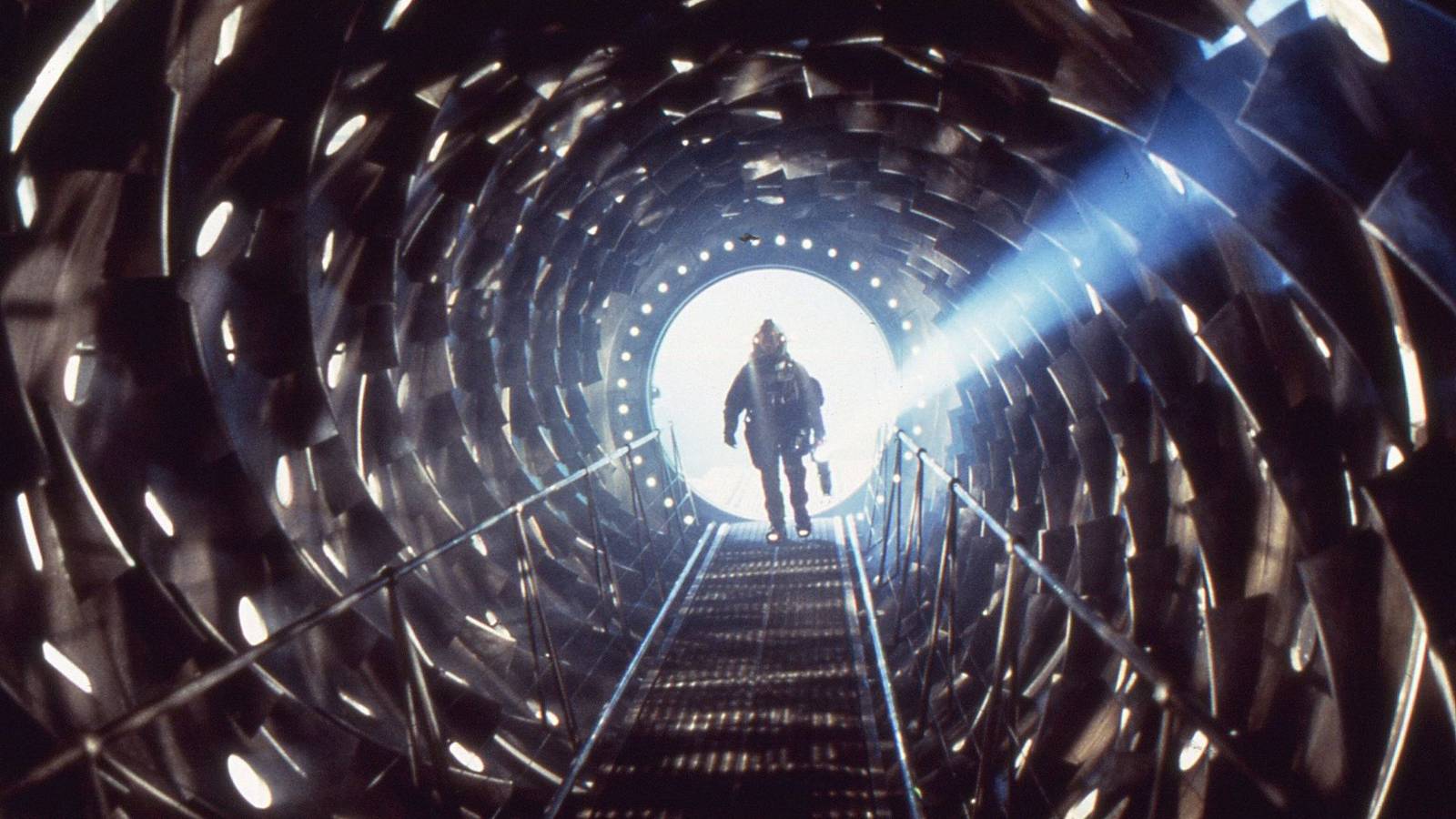
Published Aug 30, 2026, 10:01 AM EDT Misty Layne started as an actor and sketch comedy writer before deciding to concentrate mainly on writing. Utilizing both her love of television and film and her behind-the-scenes knowledge, she began a website reviewing films in 2013, with a focus on horror and indie media. Eventually, she began writing about all things television and film for other sites as well. Misty shares a home with five cats, a ton of books, and a fairly impressive vinyl collection. Names like H.P. Lovecraft and Stephen King are among the most recognizable figures in the cosmic horror genre. However, several great authors and stories fit into that genre and may not have as much mainstream fame. For those seeking horror of this nature, there's a wide world out there, not just in novels, but also in podcasts, TV shows, and movies. Whether someone wants a story about dealing with grief, a gripping tale told through the lens of the unknown, or a journey that explores a mysterious place that might not be a place at all, cosmic horror can be an undeniably thrilling genre. The Fisherman By John Langan Novel (2016) Credit: Word Horde What would someone be willing to do to bring a loved one back from the dead? In the novel The Fisherman by John Langan, Abe is struggling after his wife's death. He eventually takes up fishing as a way to cope, then becomes friends with a younger co-worker who is also grieving his family's death. The two begin fishing together, but when they decide to go to a new spot rumored to bring back people from the dead, they run into something far greater and more terrifying than they could have imagined. The Fisherman offers up a lot of cosmic horror elements, from Leviathans to strange worlds in other dimensions to people who come back to live terribly wrong. Other horror genres are mixed in with the cosmic, but the narrative's cosmic aspects are front and center, serving as a device to explore these men's trauma and grief. Focus Features acquired the rights to this book in July 2026, so hopefully there will be a film adaptation in the next couple of years. David Lowery is already attached to direct. Archive 81 Podcast (2016-2019) & Netflix Original Adaptation (2022) "Archive 81" originally began as a podcast created by Daniel Powell and Marc Sollinger, presented as found footage about an archivist hired to review old audio tapes. To do this, he must work in an extremely isolated bunker in the middle of the woods and record himself the entire time. The tapes consist of interviews with people living in a building who keep hearing a strange, terrible song that affects them. By the end of season 1, the archivist has disappeared. Season 2 sees him in an entirely different reality known as The City, and a creature named Dromen is introduced. Throw in a cult, a little body horror, and Leviathans, and the cosmic horror vibes are fairly strong. Netflix eventually adapted the podcast into a show in 2022. While it was canceled after only one season and differs a bit from the source material, it's a fun bonus for fans of the audio drama. Uzumaki By Junji Ito Horror Manga (1998-1999) Credit: Big Comic Spirits Junji Ito’s Uzumaki was a horror manga that originally came out in the late 1990s. It went on to inspire a live-action film released in 2000 and a four-episode anime series that premiered in 2024. The premise is fairly simple; in the quiet little town of Kurôzu-chô, a spiral pattern corrupts the entire community. One by one, people in Kurôzu-chô start becoming obsessed with spirals. It begins small, with a potter making clay coils. Things soon escalate, though, until women start giving birth to snail-like children, tongues twist into loops, and lighthouses burn spirals into people's eyes. By the end of it all, the entire town itself has become a spiral. What makes Uzumaki such a fantastic cosmic horror tale is the way the horrors are initially minute but slowly grow into something revealed as inescapable and uncaring. People are helpless to the spiral's endless patterns, can do nothing to stop what's happening, and Junji Ito treats the spirals as a cosmic force indifferent to the havoc it creates. Tanis Podcast (2015-2020) Public Radio Alliance and Minnow Beats Whale The Tanis podcast, put out by the same group behind The Black Tapes and Rabbits, can be classified by many genres. It's a mystery, a pseudo-documentary, Gothic horror, and so much more. Most importantly, though, it has several of the trappings of cosmic horror, particularly in season 2. The story is complicated, but the simple version is that podcast host Nic Silver is hunting Tanis. What is Tanis? It's everything and nothing. It might be a concept, a place, an alternate reality, or an ancient god. It's constantly evolving, but it does have ties to occult practices and ancient magic rituals. Throughout the story, things get increasingly chaotic as Silver and his sidekick, hacker extraordinaire Meerkatnip, discover more about Tanis. Along the way, they run across the Cult of Tanis and the Cult of Hermes, learn that Tanis has also been referred to as "Eld Fen" and might be an eldritch abomination, and get mixed up with possibly evil corporations. Throughout it all, Tanis is changing Silver's brain, but whether it's for the better is questionable. The Croning By Laird Barron Novel (2012) Credit: Night Shade Books This novel by Laird Barron is one of those stories of pure cosmic horror, focused on the things lurking just outside the edges of humanity's perception and beings that have always been around and always will be. The plot is non-linear, which only adds to the feeling of a universe where things don't always make sense. Most of The Croning follows Donald Miller, an academic who has a run-in with a mysterious cave that leads not only to a brush with death, but also to an encounter with something far worse. Decades later, Mill has a few gaps in his memory and an unexplainable fear of the dark. Those aren't the scariest things he has to deal with, though, not by a long shot. With strange cults and entities known as The Children of Old Leech, this novel is one of the stories most often recommended for those seeking cosmic horror. Event Horizon Movie (1997) This 1997 cosmic horror B-movie might not have been exceptionally acclaimed when it came out, but it has become a cult classic, thanks to its terrifying cosmic horror that still haunts people today. A mix of space and hell dimensions, Event Horizon leaves viewers horrified by the thought of the vast unknown by the time it ends. A rescue ship is headed into deep space to find another ship that disappeared 7 years ago. Once there, they board the other vessel to investigate what happened to its missing crew. What they find is something more frightening than they expected, something that defies comprehension. Between the crew seeing visions of the dead, the discovery of a mysterious gateway, and one character's mind being completely corrupted by the cosmic force they've discovered, this film is a fantastic example of cosmic horror. (Plus, the late Sam Neill delivers one of the scariest movie lines of all time.) The House On The Borderland By William Hope Hodgson Novel (1908) Credit: Penguin Books The House on the Borderland by British writer William Hope Hodgson was a milestone that helped shift the focus from Gothic fiction to fiction with a more cosmic-horror bent after its publication in 1908. Many have praised this book, including H.P. Lovecraft and Terry Pratchett. In it, two men stumble upon an abyss and find a journal at the top. They read the journal, which details the life of an old man who lived in an ancient house where strange things happened. Among the occurrences he experienced were randomly visiting other worlds, meeting unusual creatures, and essentially staring into the abyss only to find it staring back at him. The tale is truly unsettling, even today. Considering how it influenced so many other authors, The House on the Borderland is pretty essential reading for those who adore everything cosmic horror. The Horla By Guy De Maupassant Short Story (1887) Public domain This short horror story from 1887 by French writer Guy de Maupassant features a man who believes he has been influenced by an unseen entity referred to as the Horla. Though "Horla" isn't a real word, a translator for the book suggested it was a combination of French words meaning "outside" and "there," so the name could be translated to something like "the Outsider." Written in the style of a personal journal, "The Horla" is one of the works Maupassant is most well-known for. The narrator writing the journal tells a story about him waving at a ship and, unsuspectingly, inviting the Horla into his home. First, the man begins suffering from physical ailments, then nightmares. Throughout the story, the entity takes up more and more of the narrator's thoughts. Things get worse from there, and the narrator's feelings of alienation and anxiety are front and center for most of the tale. The ambiguity of whether the Horla even exists helps keep this short story's tension high. Because there's a good chance the narrator is unreliable, the story becomes even more frightening. multi-answer What most appeals to you about cosmic horror as a genre? The overwhelming, unknowable forces beyond human control The overwhelming, unknowable forces beyond human control 0% Psychological tension, paranoia, and unreliable realities Psychological tension, paranoia, and unreliable realities 0% Slow-burn dread and atmosphere instead of jump scares Slow-burn dread and atmosphere instead of jump scares 0% Mythology, cults, and strange occult worldbuilding Mythology, cults, and strange occult worldbuilding 0% Stories that use cosmic horror to explore grief, trauma, or big existential questions Stories that use cosmic horror to explore grief, trauma, or big existential questions 0%
8 Masterpiece Cosmic Horror Stories You May Not Know About
Full Article
Original Source
Read the full article at Screenrant →KhanList aggregates and links to publicly available news content. We do not host full articles from third-party sources. Always verify important information with original sources.