
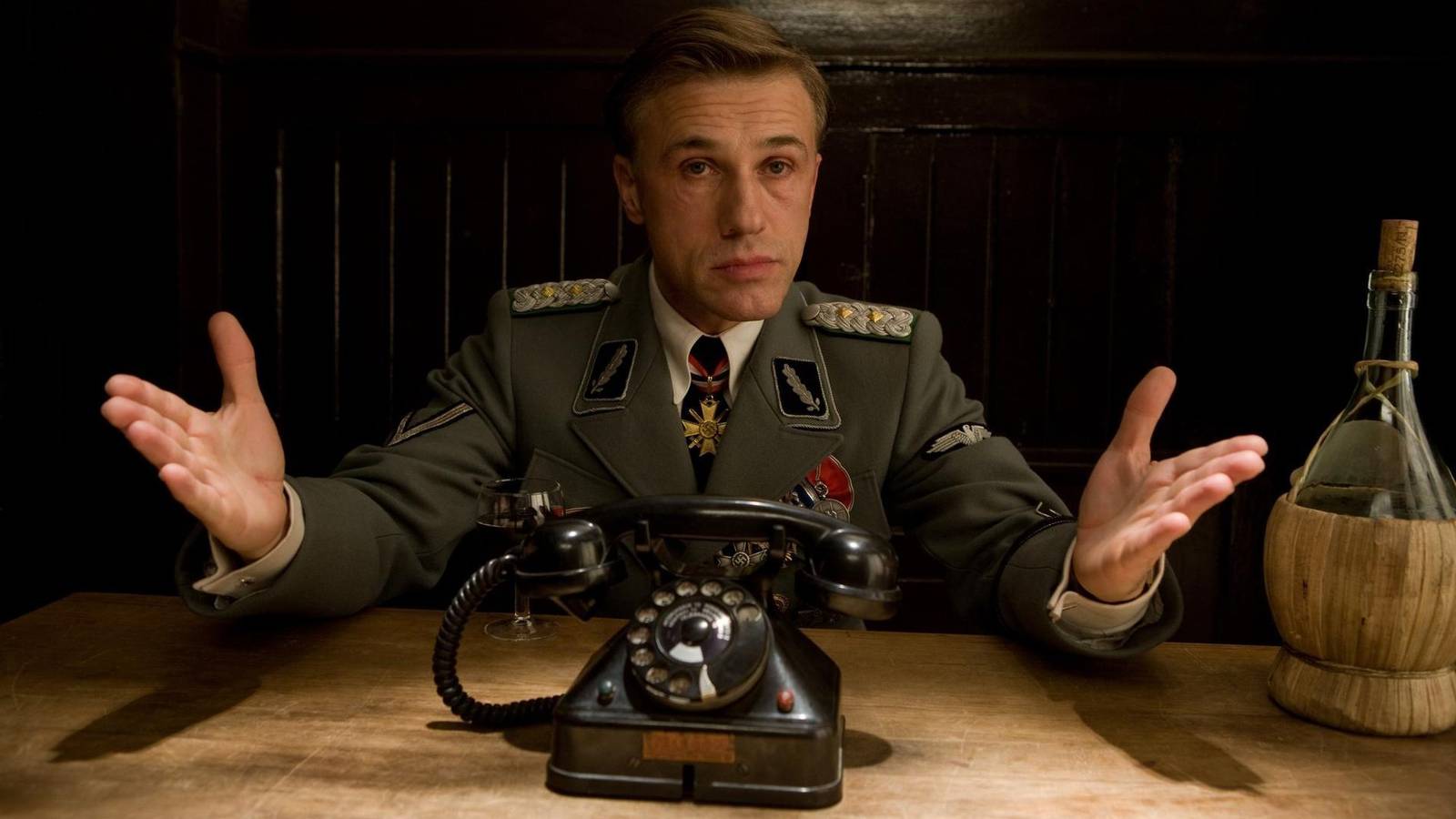
Published Sep 9, 2026, 9:34 AM EDT Senior Music Editor at Screen Rant, Sarah's love of sound and story drive the beat. A globetrotting brand whisperer and award-winning journalist, she’s built cross-cultural narratives around the world—but music has always been her true north. She launched DJ Mag North America, successfully introducing the iconic UK brand to the U.S. market. Previously, she carved a space for EDM inside the pages of VIBE, blending electronic and hip-hop culture long before it was trendy. Few war movie setups create tension faster than sending someone into territory controlled by the enemy. Sometimes it is a carefully planned infiltration. Other times, a pilot is shot down or a mission goes catastrophically wrong, leaving the characters stranded with no clear way home. That setup has powered everything from classic World War II adventures to modern survival thrillers. Many of the war movies of the 20th century that became genuine masterpieces used hostile territory to make enormous conflicts feel surprisingly intimate. Once a soldier or small unit is cut off from reinforcements, the story becomes about getting through the next mile alive. The best examples do more than simply place their heroes in danger. Saving Private Ryan turns its mission into a question about sacrifice, while The Covenant makes going back into hostile territory a matter of personal obligation. Movies such as Sisu may push wartime action toward comic-book extremes, and its follow-up even ranks among the war movie sequels actually worth watching, but these films find their suspense in characters who cannot simply call for help. From Nazi-occupied Europe to the jungles of Southeast Asia, these eight war movies make going behind enemy lines exceptionally difficult to forget. Behind Enemy Lines Custom image by Yeider Chacon. The title does not leave much room for confusion. John Moore's 2001 action thriller follows U.S. Navy flight officer Chris Burnett (Owen Wilson), whose reconnaissance jet is shot down over Bosnia after he photographs evidence of a massacre. With his pilot killed and hostile forces closing in, Burnett is forced to make his way across dangerous territory while waiting for rescue. The movie was loosely inspired by the real-life ordeal of U.S. Air Force pilot Scott O'Grady, although Behind Enemy Lines turns the basic premise into a much more exaggerated action thriller. That works in its favor. Wilson spends much of the movie running for his life through forests, abandoned buildings, and frozen terrain while Gene Hackman's Admiral Reigart fights to bring him home. Land Of Bad Land of Bad updates the behind-enemy-lines formula for modern warfare. Liam Hemsworth plays Sergeant JJ Kinney, an inexperienced JTAC attached to a Delta Force extraction team operating in the Philippines. When the mission collapses, Kinney is left isolated in hostile territory with enemy fighters searching for him. What separates William Eubank's 2024 movie from older entries in the genre is the role technology plays in keeping Kinney alive. Russell Crowe's drone pilot, Reaper, is thousands of miles away but becomes his most important lifeline. The distance between them gives Land of Bad an unusual tension: Kinney may be physically alone, but another soldier can see almost everything happening around him without being able to simply pull him out. The Covenant Guy Ritchie's The Covenant begins as a survival story before turning its premise around. Jake Gyllenhaal plays U.S. Army Sergeant John Kinley, whose unit is ambushed in Afghanistan. After Kinley is badly wounded, his interpreter Ahmed (Dar Salim) drags and carries him across hostile territory while Taliban fighters hunt them. Kinley eventually makes it home, but discovering that Ahmed and his family have been unable to escape Afghanistan changes the movie completely. He chooses to return and find the man who saved his life, knowingly entering an area where both of them are targets. That second journey gives The Covenant its emotional weight. Going behind enemy lines is no longer an assignment Kinley has been ordered to complete; it is a debt he decides he cannot ignore. Inglourious Basterds Quentin Tarantino takes the familiar World War II infiltration movie and rewrites history with it. Lieutenant Aldo Raine (Brad Pitt) leads a unit of Jewish-American soldiers dropped into Nazi-occupied France with orders to terrorize German forces. Their campaign eventually intersects with a British undercover operation and Shosanna Dreyfus' plan to destroy the Nazi leadership during a movie premiere. Much of Inglourious Basterds works because the characters are constantly one wrong word away from exposure. The famous tavern sequence barely needs conventional combat to become unbearable, as a group of disguised Allied operatives attempts to maintain its cover in a room full of German soldiers. Tarantino makes infiltration itself the weapon, then lets the suspense build around how long the deception can possibly last. Rescue Dawn Werner Herzog's Rescue Dawn is based on the extraordinary story of Dieter Dengler, a U.S. Navy pilot shot down over Laos in 1966. Christian Bale plays Dengler, who is captured shortly after surviving the crash and taken to a remote prison camp controlled by Pathet Lao forces. Rather than turning Dengler into an unstoppable action hero, Rescue Dawn concentrates on what survival actually costs. Escape from the camp is only the beginning; once Dengler reaches the jungle, he still has to navigate hostile territory while starving and exhausted. Bale's performance gives the movie much of its power, capturing a man whose optimism gradually becomes less about confidence than the stubborn refusal to accept that he is going to die there. The Guns Of Navarone Few movies helped define the behind-enemy-lines adventure more clearly than The Guns of Navarone. Gregory Peck, David Niven, and Anthony Quinn lead an Allied team sent to infiltrate the fictional Nazi-held Greek island of Navarone and destroy enormous guns threatening British naval ships. The mission gives the 1961 movie nearly everything audiences could want from a classic war adventure without losing sight of how badly things can go wrong. Getting onto the island requires scaling an apparently impossible cliff, and the team still has to survive enemy patrols while dealing with suspicion from within its own ranks. Its influence can be felt across countless great World War II movies that followed, particularly those built around a small group being asked to accomplish something an entire army cannot. Saving Private Ryan Saving Private Ryan is remembered first for its devastating Omaha Beach sequence, but most of Steven Spielberg's movie takes place after the landing. Captain John Miller (Tom Hanks) is ordered to take a small squad through German-held France to find Private James Ryan, whose three brothers have been killed in the war. Spielberg turns a rescue operation into the movie's central moral argument. That mission creates a different kind of behind-enemy-lines story. Miller's men are not trying to destroy a secret weapon or assassinate an important commander. They are risking their lives to locate one soldier so he can be sent home. As the casualties mount, the squad begins questioning whether saving a single man can possibly justify losing several others. Spielberg turns a rescue operation into the movie's central moral argument. The Dirty Dozen The Dirty Dozen takes one of the most irresistible war movie premises ever devised: 12 military prisoners are offered a chance at reduced sentences if they survive a near-suicidal mission in Nazi-occupied France. Lee Marvin's Major John Reisman is tasked with turning them into a functional unit before sending them behind enemy lines ahead of the D-Day invasion. Their target is a château where high-ranking German officers are gathering, making secrecy essential until the attack begins. Robert Aldrich's 1967 classic spends enough time with the team's training that the eventual mission feels earned rather than automatic. Once they reach France, the movie becomes the kind of dangerous infiltration adventure that generations of later war films would imitate. The men may be deeply unconventional heroes, but that is precisely why the mission works. Release Date June 15, 1967 Runtime 150 min Director Robert Aldrich Writers E.M. Nathanson, Nunnally Johnson, Lukas Heller
8 Great War Movies Where The Hero Goes Behind Enemy Lines
Full Article
Original Source
Read the full article at Screenrant →KhanList aggregates and links to publicly available news content. We do not host full articles from third-party sources. Always verify important information with original sources.