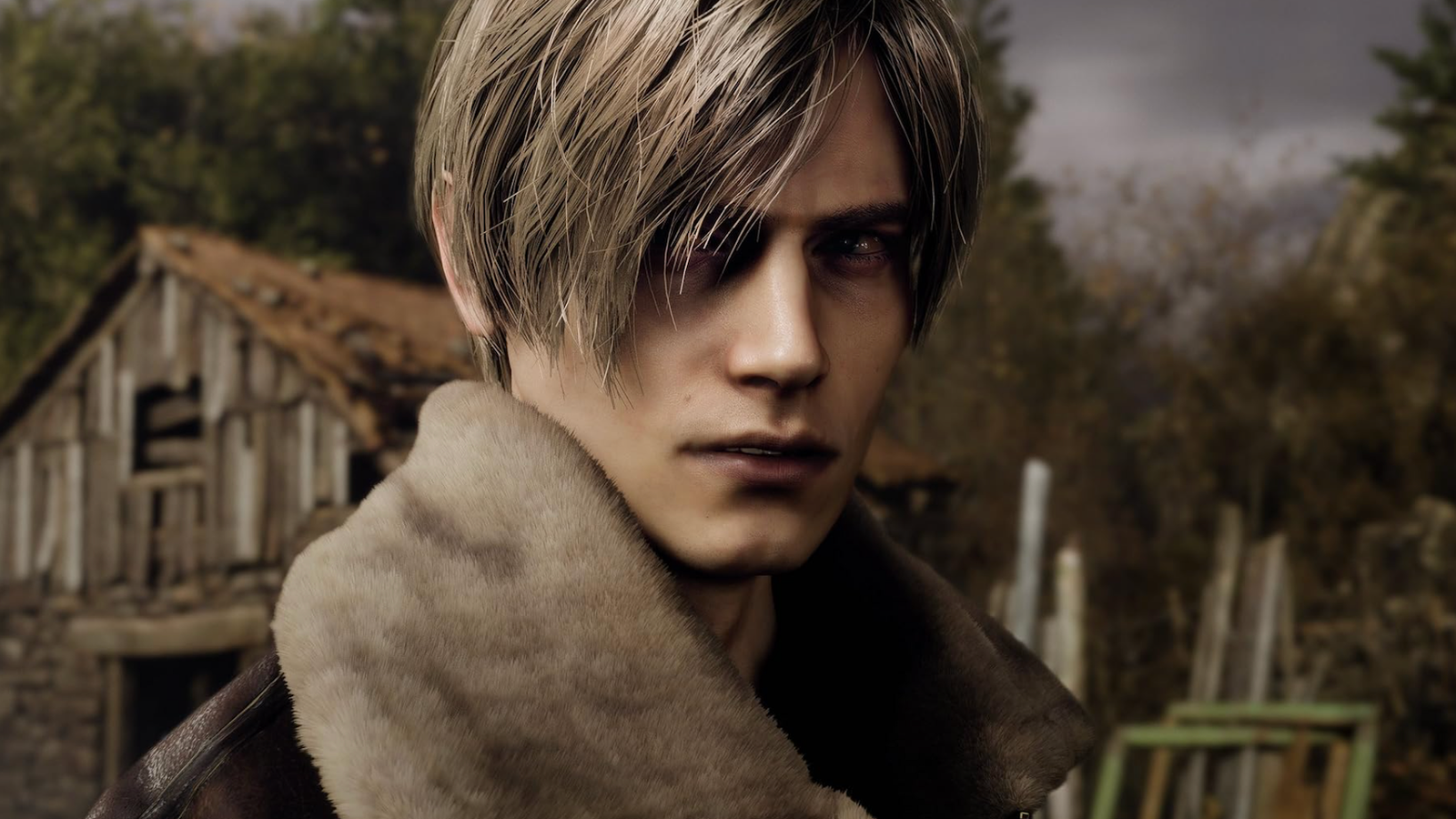
Image via Capcom Published Aug 17, 2026, 7:04 AM EDT Sign in to your Collider account Horror games have one unfair advantage over horror movies. They make you open the door yourself. You control the flashlight, choose whether to inspect the noise, and decide how long you can tolerate hiding while something searches the room. And that very fear becomes participation. These eight games changed what interactive horror could accomplish. While games like House of the Dead started it all, they were scarcely scary thanks to centuries old graphics (it’s an exaggeration). But these games weaponize helplessness. They hand you a shotgun and still keep your pulse elevated. Scroll down if that interests you. 8 'Fatal Frame II: Crimson Butterfly' (2003) Image via Tecmo Fatal Frame II: Crimson Butterfly takes twin sisters Mio and Mayu Amakura into Minakami Village, an abandoned settlement trapped in endless night. Mayu follows a crimson butterfly deeper into the village, leaving Mio to search through decaying houses filled with vengeful spirits and clues about a forbidden ritual. Her only real defense is the Camera Obscura, a supernatural camera capable of capturing ghosts. Lovely holiday. Terrible accommodation. That camera creates the game’s brilliant central tension. Dealing greater damage requires keeping an approaching spirit inside the frame and waiting for the strongest possible shot. Survival therefore means staring directly at the thing every instinct tells you to escape. The slow movement, Japanese folk-horror imagery, and fragile bond between the sisters give the scares real sadness. Its reputation remained strong enough to inspire a complete remake released in March 2026, more than two decades after the original PlayStation 2 game. Start with the lights low. Keep the camera ready. 7 'Outlast' (2013) Image via Red Barrels Independent journalist Miles Upshur enters Mount Massive Asylum after receiving information about secret activity connected to the Murkoff Corporation. The facility has recently reopened under the cover of research and charity, yet the corridors tell a very different story. Miles finds mutilated bodies, escaped patients, corporate experiments, and several residents who take an immediate dislike to investigative reporting. His main tool is a camcorder. His fighting ability is nonexistent. Running and hiding had existed in horror games before Outlast, though few titles built such an aggressive rhythm around complete vulnerability. Night vision turns black corridors into grainy green tunnels while limited batteries add pressure to every second spent looking. Lockers offer uncertain shelter. Beds provide just enough space to reconsider every life choice. The game’s chases can become relentless, but the visual identity, found-footage perspective, and commitment to helplessness made it a defining release for a generation of horror players and spectators. Wear headphones. Your neighbors deserve to hear the scream naturally. 6 'SOMA' (2015) Image via Frictional Games SOMA drops Simon Jarrett into PATHOS-II, an underwater research facility where damaged machines speak like people and the remaining signs of human life raise increasingly disturbing questions. Simon begins with a simple desire to understand where he is. That search expands into a confrontation with consciousness, identity, memory, and the possibility that a person may survive in ways the original person never experiences. The monsters can still send Simon scrambling beneath desks, though the deepest fear comes from the ideas waiting between those encounters. Frictional Games deliberately wanted a different kind of terror from the primal pursuit found in Amnesia. The studio built SOMA around questions concerning consciousness and what qualifies as human life. Those questions become personal through decisions that initially appear technical. Avoid spoilers at all costs. This is one of those games where an innocent discussion can steal half the experience. Play it slowly, read the terminals, and prepare to think about a coin toss for an uncomfortable amount of time. 5 'Amnesia: The Dark Descent' (2010) Image via Frictional Games A man named Daniel wakes inside Castle Brennenburg with almost no memory of his past. A note written by Daniel himself explains that he deliberately erased those memories and instructs him to descend through the castle and kill its master, Alexander. That sounds manageable until the halls begin shifting, creatures start hunting him, and the darkness itself starts damaging his sanity. Amnesia: The Dark Descent made defenselessness into a complete design philosophy. Daniel cannot defeat the creatures stalking him, so players must hide, run, manage lamp oil, preserve tinderboxes, and decide whether seeing clearly is worth using limited resources. Looking directly at monsters can make the situation worse. Very rude of them. Physical interactions also pull the player deeper into the environment as doors are pushed open, drawers are searched, and objects are manipulated by hand. The original release emphasized atmosphere and story over the era’s heavily armed action heroes. It succeeded spectacularly. Enter Brennenburg when you have several free hours and no urgent need to feel safe. Collider Exclusive · Horror Survival Quiz Which Horror Villain Do You Have the Best Chance of Surviving? Jason Voorhees · Michael Myers · Freddy Krueger · Pennywise · Chucky Five killers. Five completely different ways to die — if you're not smart enough, fast enough, or self-aware enough to avoid it. Only one of them is the villain your particular set of instincts gives you a fighting chance against. Eight questions will figure out which one. 🏕️Jason 🔪Michael 💤Freddy 🎈Pennywise 🪆Chucky TEST YOUR SURVIVAL → 01 Something feels wrong. You can't explain it — you just know. What do you do? First instincts are the difference between the survivor and the first act casualty. ALeave immediately. I don't need to understand a threat to respect it. BStay quiet and observe. If I can see it, I can understand it. If I can understand it, I can avoid it. CStay awake. Whatever this is, I am not going to sleep until I feel safe again. DConfront it directly. Fear grows in the dark — I'd rather know what I'm dealing with. ECheck everything, trust nothing. The threat might be closer than I think — and smaller. NEXT QUESTION → 02 Where are you most likely to find yourself when things go wrong? Setting is everything in horror. Where you are determines which rules apply. ASomewhere remote — a cabin, a campsite, off the grid and away from people. BA quiet suburban neighbourhood where nothing ever happens. Except tonight. CIn my own head — the most dangerous place of all, depending on what's already in there. DWherever children are — because something about this place attracts the worst things. ESomewhere ordinary — a house, a toy store, a place where the last thing you'd expect is a threat. NEXT QUESTION → 03 What is your most reliable survival asset? Every survivor has a quality the villain didn't account for. What's yours? APhysical fitness — I can run, I can swim, I can outlast something that relies on brute persistence. BSpatial awareness — I always know the exits, the hiding spots, the fastest route out. CPsychological resilience — I've faced my worst fears before. They don't have the same power over me. DEmotional steadiness — I don't panic. Panic is what gets you caught. EScepticism — I don't underestimate threats because of how they look. Size is irrelevant. NEXT QUESTION → 04 What kind of fear is hardest for you to fight through? Knowing your weakness is the first step to not dying because of it. AThe unstoppable — something that will not stop, cannot be reasoned with, and is always getting closer. BThe invisible — a threat I can feel but can't locate, watching from somewhere I can't see. CThe psychological — something that uses my own mind and memories against me. DThe unknowable — something ancient, shapeless, that feeds on the fear itself. EThe mundane — a threat so ordinary-looking that no one will believe me until it's too late. NEXT QUESTION → 05 You're with a group when things start going wrong. What's your role? Horror movies are brutally clear about who survives group situations and who doesn't. AThe one who says "we need to leave" first — and means it, even when no one listens. BThe one who stays quiet, watches the others, and figures out the pattern before anyone else does. CThe one who holds the group together when panic sets in — because someone has to. DThe one who asks the questions nobody wants to ask — because ignoring them gets people killed. EThe one who takes the threat seriously when everyone else is laughing it off. NEXT QUESTION → 06 What's the horror movie mistake you're most likely to make? Honest self-assessment is a survival skill. Denial is not. AGoing back for someone — I know I shouldn't, but I can't leave them behind. BAssuming I'm safe once I've found a hiding spot. That's when it finds me. CFalling asleep when I absolutely cannot afford to. Exhaustion is its own enemy. DLetting my curiosity override my instincts — I always need to understand what I'm dealing with. EDismissing the threat because of how it looks. That's exactly what it wants. NEXT QUESTION → 07 What's your best weapon against something that can't be stopped by conventional means? Every horror villain has a weakness. The survivors are always the ones who find it. AThe environment itself — I use the terrain, the water, the geography against it. BPatience — I wait, I watch, and I strike at the one moment it doesn't expect. CLucidity — if I can stay in control of my own mind, it loses its primary weapon. DCourage — facing it directly, refusing to run, taking away the fear it feeds on. EImprovisation — I use whatever's at hand, however unconventional. Creativity over brute force. NEXT QUESTION → 08 It's the final scene. You're the last one standing. How did you make it? The final survivor always has a reason. What's yours? AI kept moving. I never stopped, never hid for too long, never let it corner me. BI figured out the pattern before anyone else did — and I used it against the thing following it. CI stayed awake, stayed lucid, and refused to give it the one thing it needed most. DI stopped being afraid of it. And the moment I did, everything changed. EI took it seriously from the start — and I never once made the mistake of underestimating it. REVEAL MY VILLAIN → Your Survival Odds Have Been Calculated Your Best Chance Is Against…Your instincts, your strengths, and your particular way of thinking under pressure point to one villain you actually have a fighting chance against. Everyone else — good luck. Jason VoorheesJason is relentless, but he is also predictable — and that is the gap you would exploit. He moves in straight lines toward his target. He doesn't strategise, doesn't adapt, doesn't outsmart. He simply pursues. Your ability to keep moving, use the environment, and resist the panic that freezes most victims gives you a genuine edge. The Crystal Lake survivors were always the ones who stopped running in circles and started thinking about terrain, water, and distance. You think like that. Which means Jason, for all his indestructibility, would face someone who simply refused to be where he expected. Michael MyersMichael watches before he moves. He is patient, methodical, and almost impossible to detect — until it's too late for anyone who isn't paying close enough attention. But you are paying attention. You notice the shape in the window, the car parked slightly wrong, the silence where there should be sound. Michael's power lies in the invisibility of ordinary suburbia — the fact that nothing ever looks wrong until it already is. Your spatial awareness and instinct to map every room, every exit, and every shadow before you need them is precisely the quality Laurie Strode had. You are not a victim waiting to happen. You are someone who already suspects something is wrong — and acts on it. Freddy KruegerFreddy wins by getting inside your head — using your own fears, your own memories, your own subconscious as weapons against you. That strategy requires a target who can be destabilised. You are harder to destabilise than most. You've faced uncomfortable truths about yourself and you haven't looked away. The survivors on Elm Street were always the ones who understood what was happening and chose to face it rather than flee from it. Freddy's greatest weakness is that his power evaporates in the presence of someone who refuses to give him the fear he feeds on. Your psychological resilience — the ability to stay grounded when reality itself becomes unreliable — is exactly the quality that keeps you alive here. PennywisePennywise is ancient, shapeshifting, and feeds on terror — but it has one critical vulnerability: it cannot function against someone who genuinely stops being afraid of it. The Losers Club didn't survive because they were braver than everyone else. They survived because they faced their fears together, and faced them honestly. You ask the questions others avoid. You look directly at what frightens you rather than turning away. That directness — the refusal to let fear fester in the dark — is Pennywise's worst nightmare. It chose the wrong target when it chose you. You are exactly the kind of person whose fear tastes like nothing at all. ChuckyChucky's greatest advantage is that nobody takes him seriously until it's already too late. He exploits the gap between how something looks and what it actually is. You don't have that gap. You take threats seriously regardless of how they present — and you never make the mistake of underestimating something because of its size or appearance. Chucky relies on surprise, on the delay between recognition and response. You close that delay faster than almost anyone. Your instinct to treat every unfamiliar thing with appropriate scepticism — rather than dismissing it because it seems absurd — is the exact quality that keeps you breathing. Against Chucky, not laughing is already winning. You are very good at not laughing. ↻ RETAKE THE QUIZ 4 'Alien: Isolation' (2014) Image via Creative Assembly Set fifteen years after the original Alien, Alien: Isolation follows Amanda Ripley as she searches for answers about the disappearance of her mother, Ellen. A recovered flight recorder leads her to Sevastopol, a deteriorating space station filled with desperate survivors, hostile androids, corporate secrets, and one fully grown Xenomorph. One is plenty. Creative Assembly understood the assignment. Sevastopol recreates the chunky computers, analogue screens, industrial corridors, and retro-futuristic technology of the 1979 film with obsessive care. The Alien is driven through systems that allow it to respond to sound, movement, and the player’s habits instead of appearing only at rigidly scripted points. Flares, noisemakers, and the motion tracker provide options without creating comfort. Even the tracker’s beep can betray how frightened you already are. The campaign runs longer than its concept strictly requires, yet few games sustain this level of physical anxiety. Save often. Breathe quietly. Never assume the vent above you is decorative. 3 'Dead Space' (2008) Image via EA Redwood Shores Engineer Isaac Clarke boards the planet-cracking vessel USG Ishimura expecting a repair mission. He finds the communications system broken, the crew slaughtered, and the corridors overrun by Necromorphs created from human remains. Isaac also hopes to locate his partner Nicole, who was serving aboard the ship before contact disappeared. This is how the original Dead Space made combat part of its horror rather than an escape from it. Shooting enemies in the head wastes precious ammunition, so Isaac must sever limbs with repurposed engineering equipment. Strategic dismemberment forces players to abandon familiar shooter instincts while grotesque bodies keep advancing. Health information appears along Isaac’s suit, ammunition displays sit on weapons, and menus exist inside the world, leaving almost nothing between the player and the Ishimura. Sound finishes the job through scraping vents, distant machinery, and noises that may signal an attack or simple mechanical cruelty. The 2023 remake is excellent. The 2008 original remains essential. Cut off their limbs and enjoy your completely normal repair shift. 2 'Resident Evil 4' (2005) Image via Capcom Resident Evil 4 sends Leon S. Kennedy to rural Europe to rescue Ashley Graham, the kidnapped daughter of the United States president. Instead of traditional zombies, Leon encounters villagers controlled by Las Plagas and a religious cult determined to derail the rescue. The opening village fight immediately establishes the new rules. Enemies communicate, surround buildings, climb through windows, and keep coming until the church bell offers a temporary reprieve. Then everyone leaves. Leon is understandably confused. The over-the-shoulder perspective gave aiming greater precision while keeping danger close enough to crowd the screen. Contextual melee attacks, upgradeable weapons, the attaché case inventory, dynamic enemy groups, and the merchant created a loop that action games spent years studying. Capcom itself describes the 2005 release as the first series entry to adopt that camera perspective, and its influence quickly spread across the wider gaming landscape. The balance is the real triumph. Resident Evil 4 can be tense, funny, grotesque, and spectacular within the same hour. Pick up every treasure. Respect the chainsaw. Buy something from the merchant. He has excellent energy. 1 'Silent Hill 2' (2001) Image via Konami Silent Hill 2 begins when James Sunderland receives a letter from his wife Mary asking him to meet her in Silent Hill, the town where they once shared precious memories. Mary has been dead for three years. James travels there anyway and finds a fog-covered community filled with empty streets, locked buildings, disturbing creatures, and people carrying private reasons for entering the same nightmare. Placing it first has little to do with mechanical perfection. The combat is deliberately awkward, and some puzzles can become obscure. Silent Hill 2 remains unmatched in the way its environments, creature designs, music, dialogue, and symbolism serve one psychological portrait. Pyramid Head became the recognizable monster, though the quieter details carry equal force. A radio crackles when danger is close. Akira Yamaoka’s music shifts between industrial noise and aching melody. The town seems to understand James before he understands himself. Twenty-five years later, people are still debating its imagery and returning to that fog. Go in with patience and minimal knowledge. Silent Hill will handle the rest. Resident Evil 4 Released January 11, 2005 ESRB M for Mature: Blood and Gore, Intense Violence, Language Developer(s) Capcom Publisher(s) Capcom Engine RE Engine Franchise Resident Evil
8 Essential Horror Video Games
Full Article
Original Source
Read the full article at Collider →KhanList aggregates and links to publicly available news content. We do not host full articles from third-party sources. Always verify important information with original sources.