
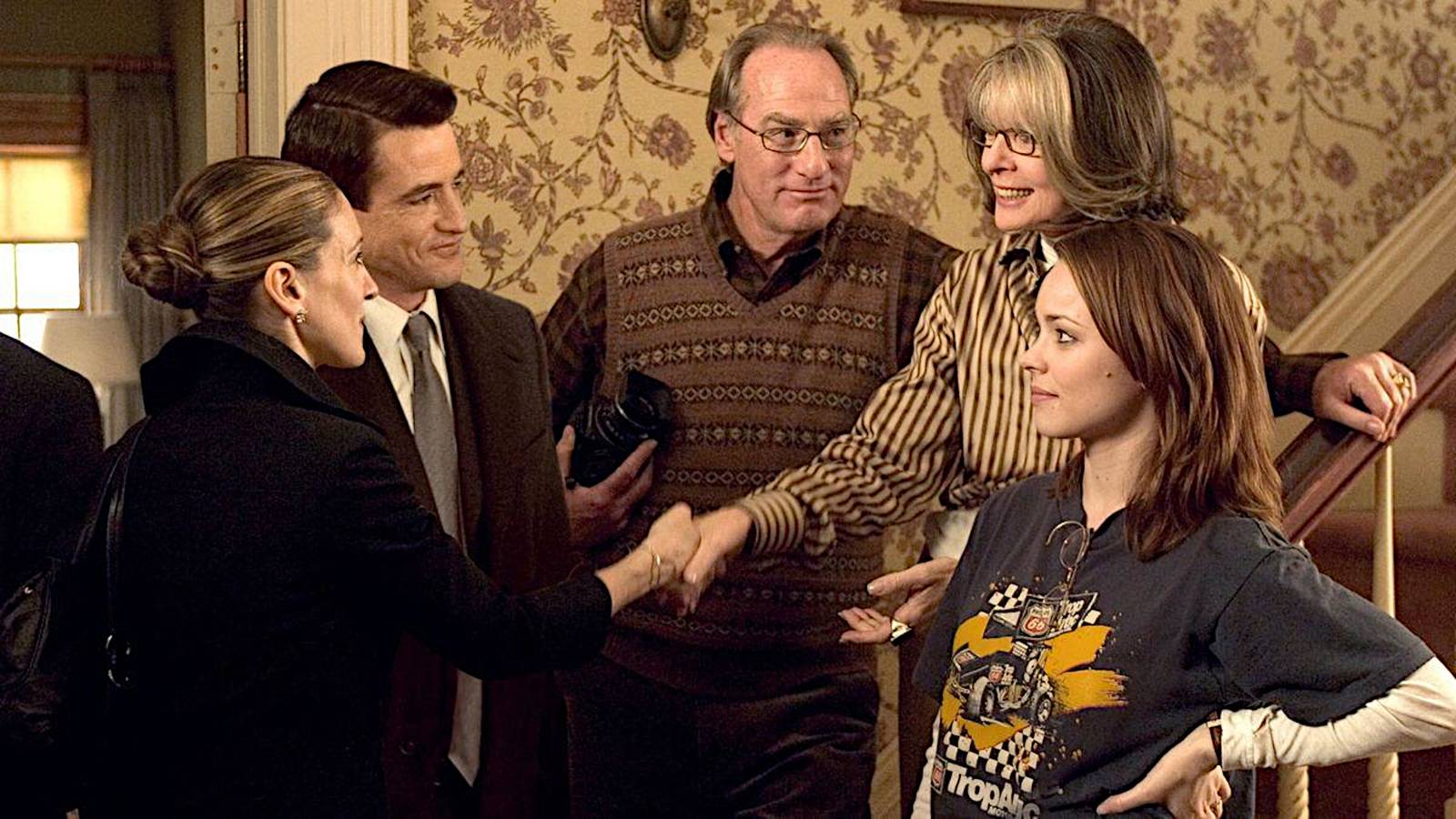
Christmas comes with certain traditions. Decorating the tree, exchanging presents, and watching the same holiday movies we've already seen approximately a thousand times. By December, audiences are happily revisiting familiar favorites, even if the critics who originally reviewed them weren't particularly impressed. Some of the most recognizable Christmas movies have surprisingly disappointing Rotten Tomatoes scores. While critically acclaimed classics like It's a Wonderful Life and Miracle on 34th Street remain essential holiday viewing, other seasonal favorites have earned their place in Christmas traditions without receiving anything close to universal praise. Part of that disconnect comes from what viewers want from a holiday movie. Originality and technical excellence certainly matter, but so do warmth, humor, memorable performances, and the ability to make an otherwise ordinary December evening feel festive. Sometimes predictability is precisely what makes these movies comforting. The Tomatometer also measures the percentage of critics who gave a movie a positive review, rather than its average quality on a scale of one to 100. A score of 35% doesn't necessarily mean a movie is irredeemably terrible, although it certainly suggests most reviewers weren't enthusiastic. These eight Christmas movies deserve another look, even if their original criticisms weren't entirely misplaced. Some have become seasonal favorites, while others have individual performances or surprisingly effective moments that their disappointing scores don't adequately reflect. None is flawless, but a few have been treated rather more harshly than their holiday appeal warrants. Home Alone 2: Lost In New York (1992) Rotten Tomatoes: 35% Copyright © 20th Century Fox Film Corp / Courtesy Everett Collection Apparently, setting an entire Christmas movie in New York City, bringing back Macaulay Culkin, and adding Tim Curry wasn't enough to satisfy critics. Chris Columbus' Home Alone 2: Lost in New York received largely negative reviews, with many dismissing the sequel as a repetition of the original. Admittedly, Kevin McCallister getting separated from his family again requires an extraordinary suspension of disbelief. But the change of setting brings a considerable amount of fresh entertainment. Kevin's adventures at the Plaza Hotel, his encounters with the suspicious concierge, and his reunion with Harry and Marv make excellent use of Manhattan. There's also a surprisingly touching subplot involving a lonely woman who spends her days feeding pigeons in Central Park. The sequel may be less inventive than its predecessor, and the increasingly violent slapstick occasionally becomes excessive. Nevertheless, it captures the excitement of Christmas in New York better than many films with considerably stronger reviews. A 35% score seems particularly severe for a movie that delivers so much of what audiences loved about the original. Jingle All The Way (1996) Rotten Tomatoes: 20% Anyone who has attempted to purchase an impossibly popular Christmas present at the last minute can probably appreciate Jingle All the Way more than its critics did. Arnold Schwarzenegger plays Howard Langston, a workaholic father desperately searching for a Turbo-Man action figure after realizing he neglected to buy his son's most important gift. The movie is frequently ridiculous, particularly when Howard's increasingly desperate search turns into a bizarre confrontation with another father played by Sinbad. Yet underneath the broad slapstick is a recognizable satire of holiday consumerism. The adults are so obsessed with acquiring presents that they've almost completely forgotten the children they're supposed to be making happy. Schwarzenegger's willingness to make a fool of himself is part of the appeal, and some of the behind-the-scenes stories from Jingle All the Way are almost as entertaining as Howard's increasingly frantic shopping expedition. The movie also turns 30 in 2026, making its depiction of '90s toy-store hysteria a nostalgic pleasure. Critics weren't wrong about its uneven execution, but 20% feels excessively punitive for a Christmas comedy with this much personality. How The Grinch Stole Christmas (2000) Rotten Tomatoes: 50% Jim Carrey's performance as the Grinch should probably count as an extreme endurance sport. Buried beneath elaborate green prosthetics, the comedian brings Dr. Seuss' famously miserable creation to life with such extravagant physicality that it's difficult to imagine another actor approaching the role quite the same way. Ron Howard's live-action adaptation received mixed reviews, with critics questioning its excessive visual spectacle and expanded storyline. Those complaints aren't entirely unreasonable. The movie stretches a relatively simple children's story into a considerably longer production, filling Whoville with elaborate sets, increasingly outrageous characters, and humor that sometimes feels unnecessarily frantic. Yet Carrey's performance is an extraordinary achievement, particularly considering the extraordinary behind-the-scenes challenges of making The Grinch.Taylor Momsen also brings genuine warmth to Cindy Lou Who, whose kindness provides a welcome contrast to the relentless commercialism surrounding Christmas. The movie may be excessive, but that exuberance is part of its appeal. A 50% score doesn't entirely capture its considerable imagination. The Polar Express (2004) Rotten Tomatoes: 55% Robert Zemeckis' The Polar Express has one of the most divisive visual styles in Christmas cinema. Its early motion-capture animation was technologically ambitious, but the unusually realistic characters frequently appeared unsettling rather than convincingly human. Critics understandably questioned whether the animation undermined the magic of Chris Van Allsburg's beloved children's book. The criticism overlooks some of the movie's extraordinary achievements, particularly its spectacular depiction of a mysterious train traveling toward the North Pole. The journey is packed with elaborate action sequences, atmospheric winter landscapes, and an unmistakable sense of childhood wonder. Tom Hanks' multiple performances also give the adventure an unusual theatrical quality. Most importantly, the story understands something about growing older: belief becomes increasingly difficult to maintain, even when part of us desperately wants to preserve it. The film's final moments give that idea an emotional payoff that works regardless of the animation's imperfections. Despite its divisive animation, there's a compelling case for The Polar Express deserving its status as a holiday classic, particularly given how successfully it captures the anticipation surrounding Christmas Eve. The Santa Clause 3: The Escape Clause (2006) Rotten Tomatoes: 17% By the third installment of The Santa Clause franchise, critics had apparently lost almost all patience with Tim Allen's Scott Calvin. The Santa Clause 3: The Escape Clause received a dismal 17% score, with reviewers finding little enthusiasm for another adventure at the North Pole. The movie certainly suffers from an overcrowded storyline and some increasingly tired franchise humor. However, Martin Short's introduction as Jack Frost gives the sequel an entertaining villain. Determined to take control of Christmas, Frost manipulates Scott into revisiting the moment he first became Santa Claus, creating an alternative reality in which the holiday has become a commercialized spectacle. It's a familiar concept, but one that allows the movie to explore what Scott's life might have been without his extraordinary responsibilities. Short clearly enjoys playing the flamboyant antagonist, and the North Pole remains an appealing fantasy setting for younger audiences. The sequel falls short of the original film's charm, but there are entertaining ideas beneath its cluttered execution. It may be the weakest Santa Clause movie, although a 17% score makes it sound considerably less enjoyable than its best moments suggest. The Family Stone (2005) Rotten Tomatoes: 52% Anyone convinced that Christmas automatically brings out the best in families should probably spend an evening with the Stones. Thomas Bezucha's holiday dramedy assembles an impressive cast, including Diane Keaton, Sarah Jessica Parker, Rachel McAdams, and Luke Wilson, for a family gathering that becomes increasingly uncomfortable. Parker plays Meredith Morton, an anxious outsider whose attempts to impress her boyfriend's family go spectacularly wrong. The Stones aren't particularly welcoming, and their behavior sometimes becomes downright cruel. Yet the movie's willingness to portray unpleasant family dynamics is what makes it more interesting than the average sentimental Christmas comedy. Critics were divided over the film's abrupt changes in tone, particularly as its awkward humor gives way to more serious emotional developments. But real family gatherings rarely maintain a consistent mood, either. Keaton's performance gives the story much of its emotional weight, while the ensemble makes the complicated relationships feel surprisingly authentic. Its 52% score undersells an imperfect but affecting movie about the people we love and occasionally struggle to tolerate. Last Christmas (2019) Rotten Tomatoes: 46% A Christmas romantic comedy starring Emilia Clarke and Henry Golding, featuring George Michael's music, sounds like a fairly safe proposition. Yet Paul Feig's Last Christmas received a disappointing critical response, with reviewers particularly unimpressed by its unconventional narrative twist. Clarke plays Kate, a disillusioned young woman working at a year-round Christmas shop in London. Her life changes after she meets the mysterious Tom (Golding), whose encouragement gradually inspires her to reconsider her increasingly self-destructive behavior. What initially appears to be a conventional romance eventually becomes something rather different. The movie's central revelation is divisive, but Clarke gives Kate enough personality to make her emotional journey worthwhile. Emma Thompson is also excellent as Kate's overbearing mother, whose concern for her daughter is complicated by the family's immigrant experience.The film is also a particularly literal example of how popular songs can inspire entire movies, building its unusual romantic premise around Wham!'s enduring Christmas hit. Its 46% Tomatometer contrasts sharply with an 81% audience score, suggesting that viewers were considerably more receptive to its emotional ambitions. Last Christmas isn't a flawless romance, but its generous spirit and appealing performances deserve greater recognition. The Holiday (2006) Rotten Tomatoes: 51% If there's one movie on this list whose Rotten Tomatoes score seems particularly difficult to reconcile with its reputation, it's Nancy Meyers' The Holiday. The romantic comedy has become a seasonal favorite, with audiences repeatedly returning to its charming English cottage, spectacular Los Angeles home, and two women attempting to recover from romantic disappointment. Kate Winslet and Cameron Diaz play Iris and Amanda, whose decision to exchange homes introduces each to an entirely different environment. Winslet is especially wonderful as Iris, a woman who has spent far too long accepting disappointment from a man who doesn't deserve her. Her friendship with an elderly Hollywood screenwriter, played by Eli Wallach, provides some of the movie's most touching moments. Jude Law and Jack Black are equally appealing romantic leads, although the movie's real attraction is its understanding that starting over can be both frightening and exhilarating. Meyers also creates the kind of inviting interiors that make viewers want to abandon their responsibilities and spend December somewhere considerably more picturesque. Critics complained about the movie's predictability and excessive sweetness, but those qualities aren't necessarily weaknesses in a Christmas romance. The film knows exactly what kind of experience it wants to provide and delivers it with considerable charm. Its 80% audience score offers a persuasive counterargument to the 51% Tomatometer, making The Holiday one of the clearest examples of a Christmas favorite that deserves a little more critical respect. Release Date December 5, 2006 Runtime 136 minutes Director Nancy Meyers Writers Nancy Meyers Producers Bruce A. Block, Nancy Meyers
8 Christmas Movies That Deserve Higher Rotten Tomatoes Scores, Including Home Alone 2
Full Article
Original Source
Read the full article at Screenrant →KhanList aggregates and links to publicly available news content. We do not host full articles from third-party sources. Always verify important information with original sources.