
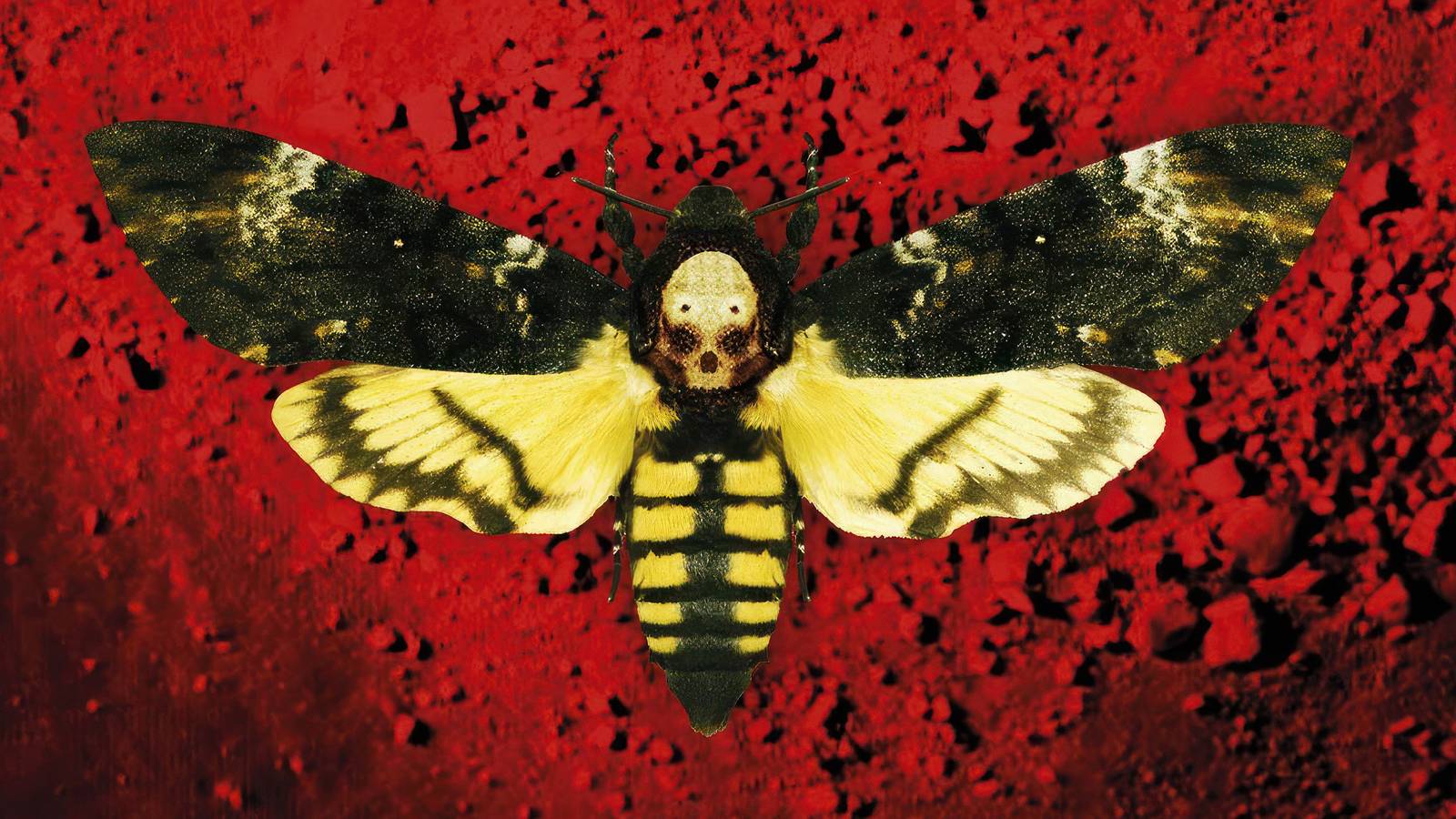
Image via St. Martin's Press Published Aug 18, 2026, 12:18 AM EDT Dyah (pronounced Dee-yah) is a Senior Author at Collider, responsible for both writing and transcription duties. She joined the website in 2022 as a Resource Writer before stepping into her current role in April 2023. As a Senior Author, she writes Features and Lists covering TV, music, and movies, making her a true Jill of all trades. In addition to her writing, Dyah also serves as an interview transcriber, primarily for events such as San Diego Comic-Con, the Toronto International Film Festival, and the Sundance Film Festival. Dyah graduated from Satya Wacana Christian University in October 2019 with a Bachelor's degree in English Literature, concentrating on Creative Writing. She is currently completing her Master's degree in English Literature Studies, with a thesis on intersectionality in postcolonial-feminist studies in Asian literary works, and is expected to graduate in 2026. Born and raised between Indonesia and Singapore, Dyah is no stranger to different cultures. She now resides in the small town of Kendal with her husband and four cats, where she spends her free time cooking or cycling. Sign in to your Collider account Thriller books are everywhere, but it’s rare for one to keep a reader completely hooked, churning through every page in the hope of getting closer to the truth. Traditional thrillers often contain familiar elements: an unresolved conflict, flawed characters, and the suspense of knowing that we could be just one revelation away from the answer. However, the perfect thriller is the one that completely throws you off your trail, constantly challenging your expectations while keeping you desperate to uncover what happens next. The best thrillers are also the ones that aren't ambiguous about the message they're trying to deliver, whether it's a commentary on the upper class and their belief that they have the resources to manipulate the truth, or a story about underdogs who start off as unlikely heroes and ultimately become them. From a Stephen King '80s favorite to books that have been adapted into global movie phenomena, here are thriller books that are perfect from first page to last. 1 'And Then There Were None' (1939) Image via Collins Crime Club And Then There Were None introduces eight strangers who share nothing in common, except that they're all visiting a secluded island off the Devon coast. However, instead of meeting their hosts, they all encounter an empty house. All the more eerie is a disturbing gramophone recording accusing each of causing a death. Thrillers aren't supposed to be fun, but And Then There Were None somehow makes them so. The premise revolves around a ghastly nursery rhyme that serves as a vividly graphic premonition for the strangers who die one by one. Think of it as musical chairs, but instead of losing when you don't get a seat when the song ends, you drop dead. The thrilling part is that there is no detective to seek out the culprit. It's the job of these eight strangers, but like a game of Werewolf, it's all a guessing game. It's psychological torture at its best. 2 'The Silence of the Lambs' (1988) Image via St. Martin's Press Now a cult classic, The Silence of the Lambs follows young FBI trainee Clarice Starling, who is assigned to question the enigmatic Hannibal Lecter. Instead of helping her identify the serial killer Buffalo Bill, Lecter gives Clarice a series of cryptic clues for her to follow. Clarice is sent on a puzzle-piece investigation of sorts, but with another victim kidnapped, she has no time for second-guessing. The Silence of the Lambs is a brilliant example of how gender dynamics and vulnerability can be weaponized. It's not surprising that Clarice gets the brunt of the criticism at the FBI simply for being a woman, let alone hailing from rural West Virginia. Unexpectedly, Lecter becomes her most attentive listener and unlikely sympathizer. However, the novel makes it complicated for readers to root for Lecter. Apart from being a killer, the only way he's willing to help Clarice is if she exchanges details about her traumatic past with him. Lecter's empathy toward Clarice is inseparable from his manipulation of her openness. 3 'The Day of the Jackal' (1971) Image via Penguin Featuring a fictional assassination plot, The Day of the Jackal is set in the aftermath of a failed attempt on the life of the President of France, Charles de Gaulle. Unbeknownst to him, an OAS-backed assassin known as the Jackal is hired to finish the job. As that's happening, Detective Claude Lebel races to identify the Jackal. For thriller fans who want to get into the nitty-gritty of a methodical procedural, The Day of the Jackal is the perfect pick. Although the assassination itself is fictional, the author's real-life objective and journalism experience give it a grounded quality without the unnecessary Hollywood espionage theatrics. Being an assassin may seem sleek and stylish, but the Jackal's work is anything but glamorous. He undergoes continuous disguises, posing as a French student while obsessing over details like which hair dye to buy and which suitcase matches his identity. It's meticulous, exhausting, and tense, proving that assassination is all about the details. 4 'Gone Girl' (2012) Image via Phoenix There's no telling right or wrong in Gone Girl. On their fifth wedding anniversary, pop-culture journalist Nick Dunne becomes the subject of a murder investigation when his wife, Amy Dunne, goes missing. Known for being the inspiration for her parents' popular children's book series, Amy's disappearance immediately pulls Nick into a media frenzy. Gone Girl is a true modern thriller because it completely twists the traditional notion of marriage, which is often viewed as sacred and a source of comfort. In the book, marriage becomes a weapon for manipulation, with nearly every conflict between Nick and Amy stemming from their fractured relationship. While most couples keep their problems behind closed doors, Gone Girl takes those private marital issues to disturbing extremes, showing just how far resentment and deception can push someone. Apart from Amy's now-famous "Cool Girl" monologue, the novel's massive plot twist remains one of its greatest strengths, turning marital dysfunction into a shocking, suspenseful mystery. Collider Exclusive · Horror Survival Quiz Which Horror Villain Do You Have the Best Chance of Surviving? Jason Voorhees · Michael Myers · Freddy Krueger · Pennywise · Chucky Five killers. Five completely different ways to die — if you're not smart enough, fast enough, or self-aware enough to avoid it. Only one of them is the villain your particular set of instincts gives you a fighting chance against. Eight questions will figure out which one. 🏕️Jason 🔪Michael 💤Freddy 🎈Pennywise 🪆Chucky TEST YOUR SURVIVAL → 01 Something feels wrong. You can't explain it — you just know. What do you do? First instincts are the difference between the survivor and the first act casualty. ALeave immediately. I don't need to understand a threat to respect it. BStay quiet and observe. If I can see it, I can understand it. If I can understand it, I can avoid it. CStay awake. Whatever this is, I am not going to sleep until I feel safe again. DConfront it directly. Fear grows in the dark — I'd rather know what I'm dealing with. ECheck everything, trust nothing. The threat might be closer than I think — and smaller. NEXT QUESTION → 02 Where are you most likely to find yourself when things go wrong? Setting is everything in horror. Where you are determines which rules apply. ASomewhere remote — a cabin, a campsite, off the grid and away from people. BA quiet suburban neighbourhood where nothing ever happens. Except tonight. CIn my own head — the most dangerous place of all, depending on what's already in there. DWherever children are — because something about this place attracts the worst things. ESomewhere ordinary — a house, a toy store, a place where the last thing you'd expect is a threat. NEXT QUESTION → 03 What is your most reliable survival asset? Every survivor has a quality the villain didn't account for. What's yours? APhysical fitness — I can run, I can swim, I can outlast something that relies on brute persistence. BSpatial awareness — I always know the exits, the hiding spots, the fastest route out. CPsychological resilience — I've faced my worst fears before. They don't have the same power over me. DEmotional steadiness — I don't panic. Panic is what gets you caught. EScepticism — I don't underestimate threats because of how they look. Size is irrelevant. NEXT QUESTION → 04 What kind of fear is hardest for you to fight through? Knowing your weakness is the first step to not dying because of it. AThe unstoppable — something that will not stop, cannot be reasoned with, and is always getting closer. BThe invisible — a threat I can feel but can't locate, watching from somewhere I can't see. CThe psychological — something that uses my own mind and memories against me. DThe unknowable — something ancient, shapeless, that feeds on the fear itself. EThe mundane — a threat so ordinary-looking that no one will believe me until it's too late. NEXT QUESTION → 05 You're with a group when things start going wrong. What's your role? Horror movies are brutally clear about who survives group situations and who doesn't. AThe one who says "we need to leave" first — and means it, even when no one listens. BThe one who stays quiet, watches the others, and figures out the pattern before anyone else does. CThe one who holds the group together when panic sets in — because someone has to. DThe one who asks the questions nobody wants to ask — because ignoring them gets people killed. EThe one who takes the threat seriously when everyone else is laughing it off. NEXT QUESTION → 06 What's the horror movie mistake you're most likely to make? Honest self-assessment is a survival skill. Denial is not. AGoing back for someone — I know I shouldn't, but I can't leave them behind. BAssuming I'm safe once I've found a hiding spot. That's when it finds me. CFalling asleep when I absolutely cannot afford to. Exhaustion is its own enemy. DLetting my curiosity override my instincts — I always need to understand what I'm dealing with. EDismissing the threat because of how it looks. That's exactly what it wants. NEXT QUESTION → 07 What's your best weapon against something that can't be stopped by conventional means? Every horror villain has a weakness. The survivors are always the ones who find it. AThe environment itself — I use the terrain, the water, the geography against it. BPatience — I wait, I watch, and I strike at the one moment it doesn't expect. CLucidity — if I can stay in control of my own mind, it loses its primary weapon. DCourage — facing it directly, refusing to run, taking away the fear it feeds on. EImprovisation — I use whatever's at hand, however unconventional. Creativity over brute force. NEXT QUESTION → 08 It's the final scene. You're the last one standing. How did you make it? The final survivor always has a reason. What's yours? AI kept moving. I never stopped, never hid for too long, never let it corner me. BI figured out the pattern before anyone else did — and I used it against the thing following it. CI stayed awake, stayed lucid, and refused to give it the one thing it needed most. DI stopped being afraid of it. And the moment I did, everything changed. EI took it seriously from the start — and I never once made the mistake of underestimating it. REVEAL MY VILLAIN → Your Survival Odds Have Been Calculated Your Best Chance Is Against…Your instincts, your strengths, and your particular way of thinking under pressure point to one villain you actually have a fighting chance against. Everyone else — good luck. Jason VoorheesJason is relentless, but he is also predictable — and that is the gap you would exploit. He moves in straight lines toward his target. He doesn't strategise, doesn't adapt, doesn't outsmart. He simply pursues. Your ability to keep moving, use the environment, and resist the panic that freezes most victims gives you a genuine edge. The Crystal Lake survivors were always the ones who stopped running in circles and started thinking about terrain, water, and distance. You think like that. Which means Jason, for all his indestructibility, would face someone who simply refused to be where he expected. Michael MyersMichael watches before he moves. He is patient, methodical, and almost impossible to detect — until it's too late for anyone who isn't paying close enough attention. But you are paying attention. You notice the shape in the window, the car parked slightly wrong, the silence where there should be sound. Michael's power lies in the invisibility of ordinary suburbia — the fact that nothing ever looks wrong until it already is. Your spatial awareness and instinct to map every room, every exit, and every shadow before you need them is precisely the quality Laurie Strode had. You are not a victim waiting to happen. You are someone who already suspects something is wrong — and acts on it. Freddy KruegerFreddy wins by getting inside your head — using your own fears, your own memories, your own subconscious as weapons against you. That strategy requires a target who can be destabilised. You are harder to destabilise than most. You've faced uncomfortable truths about yourself and you haven't looked away. The survivors on Elm Street were always the ones who understood what was happening and chose to face it rather than flee from it. Freddy's greatest weakness is that his power evaporates in the presence of someone who refuses to give him the fear he feeds on. Your psychological resilience — the ability to stay grounded when reality itself becomes unreliable — is exactly the quality that keeps you alive here. PennywisePennywise is ancient, shapeshifting, and feeds on terror — but it has one critical vulnerability: it cannot function against someone who genuinely stops being afraid of it. The Losers Club didn't survive because they were braver than everyone else. They survived because they faced their fears together, and faced them honestly. You ask the questions others avoid. You look directly at what frightens you rather than turning away. That directness — the refusal to let fear fester in the dark — is Pennywise's worst nightmare. It chose the wrong target when it chose you. You are exactly the kind of person whose fear tastes like nothing at all. ChuckyChucky's greatest advantage is that nobody takes him seriously until it's already too late. He exploits the gap between how something looks and what it actually is. You don't have that gap. You take threats seriously regardless of how they present — and you never make the mistake of underestimating something because of its size or appearance. Chucky relies on surprise, on the delay between recognition and response. You close that delay faster than almost anyone. Your instinct to treat every unfamiliar thing with appropriate scepticism — rather than dismissing it because it seems absurd — is the exact quality that keeps you breathing. Against Chucky, not laughing is already winning. You are very good at not laughing. ↻ RETAKE THE QUIZ 5 'Misery' (1987) Image via Viking After bestselling author Paul Sheldon crashes his car during a Colorado snowstorm, he wakes up in the home of Annie Wilkes, his self-proclaimed number one fan. But Annie isn't exactly the sweet rescuer Paul hoped for. Trapped with two broken legs, Paul is forced to revive his beloved Misery series while desperately looking for a way to escape. Thanks to the internet, people have become desensitized to "stan culture" and the one-sided parasocial relationships we develop with the people we idolize. While it's easy to stan someone from behind a screen today, Misery shows how much deadlier that obsession can become when there's no screen separating the fan from the object of her devotion. Much of the plot takes place in a single bedroom inside a remote cabin, where Paul is completely trapped and unable to escape his captor. Then there's Annie, who keeps Paul alive enough to write coherently, but she's also willing to torture him with medication to force him to write. 6 'The God of the Woods' (2024) Image via Riverhead Books The God of the Woods begins in 1975, when teenager Barbara Van Laar disappears from her family's Adirondack summer camp. This isn't the first time the family's been struck with tragedy—fourteen years earlier, it was Barbara's brother who went missing. Rookie investigator Judyta Luptack is up for the job, but the answers are protected by a family desperate to protect its reputation. The God of the Woods unfolds across two timelines, showing how tragedy doesn't simply end but instead morphs into the future when left unkempt. With the title alluding to the woods themselves, the wealthy Van Laars are ultimately no match for the wilderness they seek to control, which could swallow them at any moment. Set in an era when female detectives are notoriously undermined in the male-dominated profession, Judyta's perseverance feels all the more human, with her anxieties and the need to work twice as hard to prove herself making her someone many female readers can relate to. 7 'The Girl with the Dragon Tattoo' (2005) Image via Norstedts Förlag The David Fincher neo-noir wouldn't exist without the original book. The Girl with the Dragon Tattoo follows disgraced journalist Mikael Blomkvist, who is hired by a wealthy businessman, Henrik Vanger, to dig into the disappearance of his niece, Harriet. Presumably vanished from the family's remote island, Mikael and his hacker partner, Lisbeth Salander, find the perfect scoop, only for it to lead to the Vangers' family secrets. In true Nordic noir, The Girl with the Dragon Tattoo is grim, dark, and bleak—all qualities that translate directly into the case itself: a cold case dating back a whopping 40 years, as well as the tragic backstories of its protagonists. Most importantly, it introduced Lisbeth to the world, a woman who has lived through the kind of pain that many women are unfortunately familiar with. Rather than allowing that pain to shatter her, she chooses to survive and seek justice outside the boundaries of the law. The Girl With the Dragon Tattoo Release Date December 21, 2011 Runtime 158 minutes Cast Rooney Mara Lisbeth Salander Journalist Mikael Blomkvist is aided in his search for a woman who has been missing for 40 years by young computer hacker Lisbeth Salander. Director David Fincher Writers Steven Zaillian Producers Ceán Chaffin, Ole Søndberg, Scott Rudin, Søren Stærmose Sequel(s) The Girl Who Played With Fire, The Girl Who Kicked The Hornet's Nest Franchise(s) Girl with the Dragon Tattoo Main Genre Thriller Budget $90 million Studio(s) 20th Century Distributor(s) 20th Century Executive Producer(s) Mikael Wallen, Steven Zaillian
7 Thriller Books That Are Perfect From First Page to Last
Full Article
Original Source
Read the full article at Collider →KhanList aggregates and links to publicly available news content. We do not host full articles from third-party sources. Always verify important information with original sources.