
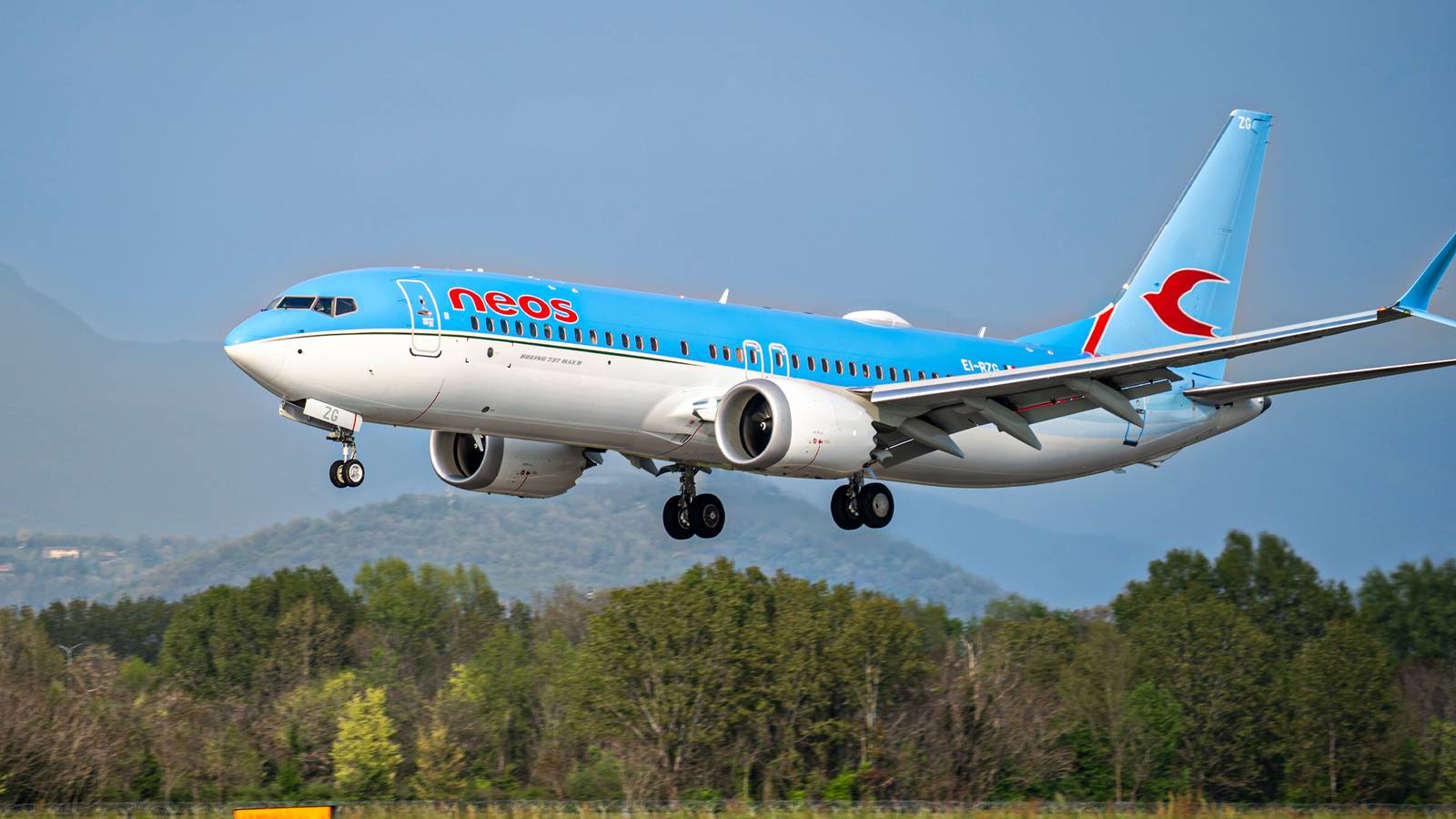
Ask a pilot who has flown both Airbus and Boeing narrowbodies to describe the Boeing 737, and the conversation will probably turn to something other than speed, range, or passenger capacity. It might be the feel of the controls, or the way the aircraft responds to a pilot's hands. Boeing has repeatedly updated the aircraft since the late 1960s, as its own history of the family shows. But despite all those changes, the 737 has retained some characteristics that have become rather unusual in modern commercial aviation. These differences are particularly noticeable to pilots who have experience with both Boeing and Airbus aircraft. Some appreciate the physical feedback and the involvement it demands, while others point to additional workload and features that newer designs have automated. So what actually makes the 737 such a distinctive aircraft to fly? We have picked seven characteristics that pilots often discuss on aviation forums and that have featured in our previous reporting. The countdown moves from the broader philosophy behind the aircraft to the mechanical feature that arguably explains everything else. The last one is particularly important, because it is the reason several of the others still exist. Its Design Still Reflects A Manual-First Philosophy The thinking behind the 737's cockpit Credit: Robin Guess | Shutterstock To understand why the 737 feels different, it helps to look at the philosophy behind its design. Boeing has traditionally maintained a more direct relationship between the pilot and several aircraft systems, allowing crews to see, hear, and physically feel things that newer aircraft increasingly handle through automation. This does not mean the 737 lacks advanced systems. The Boeing 737 MAX, in particular, has a thoroughly modern flight deck. However, some of the fundamental design choices made decades ago remain visible in the way pilots interact with the aircraft. The difference becomes particularly apparent when airlines move crews between Boeing and Airbus fleets. Simple Flying examined how Qantas pilots transitioning from the 737 to the Airbus A321XLR leave behind traditional control columns and a different approach to flight control for fly-by-wire sidesticks and flight envelope protection. The aircraft are built around fundamentally different control philosophies, which is why moving between them requires a full type rating, and not simply learning a different arrangement of cockpit buttons. For pilots, the adjustment involves changing familiar habits and learning to interpret the aircraft's responses in a different way. This broader philosophy is difficult to describe through a single component. It is an attitude towards aircraft design that runs through much of the 737's cockpit. And one of those design choices is visible even before the aircraft leaves the gate. The Boeing 737 Sits Unusually Low To The Ground Why its main landing gear wheels remain exposed Credit: Antonio Di Trapani | Simple Flying Walk around a parked 737 and look underneath the wings. Unlike most modern commercial aircraft, the Boeing narrowbody does not have conventional doors covering its main landing gear wheels when they retract. Instead, the wheels remain partially exposed, with their hubs and rubber seals forming the visible outer surface of the landing gear installation. It is one of those details that makes the aircraft instantly recognizable to aviation enthusiasts, although most passengers probably never give it a second thought. There is a practical reason for the arrangement. According to Inside Flyer, the 737's main landing gear design reflects an emphasis on simplicity and reduced mechanical complexity. The aircraft was originally intended to operate from smaller airports, where ground handling and maintenance requirements mattered considerably. Its relatively low stance also made it easier for baggage handlers and mechanics to reach cargo holds and engine components without requiring additional lifting equipment. Boltflight's engineering analysis explores the reasoning behind the exposed wheels, while Simple Flying has also examined how this particular characteristic has survived successive generations of the aircraft. There is also an engineering price to pay for keeping the aircraft so close to the ground. A 2019 HeraldNet report highlighted how the 737's low profile became a constraint when engineers attempted to modernize the aircraft. Raising the airframe or substantially changing the landing gear arrangement would have involved much more than a cosmetic redesign. Still, this characteristic does not explain why pilots can have such strong opinions about actually flying one. For that, we need to move into the cockpit, where a seemingly small difference can make itself felt on every flight. 737 Pilots Have More Manual Trim Work A task that newer aircraft automate Credit: Tanya Keisha | Shutterstock One of the less obvious differences between the 737 and many newer airliners concerns something pilots use throughout practically every flight: pitch trim. The system helps maintain the aircraft's desired attitude without requiring the pilots to apply continuous pressure to the control column. On many modern aircraft, automatic trim adjustments are integrated into the flight control system. The 737 MAX, however, retains a more traditional approach, leaving pilots with a greater degree of manual involvement in managing trim. It might sound like a relatively minor distinction, but the difference becomes noticeable during a busy operating day. Trim settings need to change as the aircraft accelerates, climbs, descends, and changes configuration. The autopilot can also make adjustments, but pilots still have to understand what the aircraft is doing and manage the trim accordingly. The workload is not necessarily dramatic, yet it is another task that remains part of the 737 flying experience. Not every pilot considers this a disadvantage. In fact, opinions on the subject are quite divided. Some appreciate having more direct control over the aircraft and feel that manual trimming is simply part of flying a conventional airliner. Others would happily let the automation take care of more of the work. One former 737 Classic pilot, writing on PPRuNe, described the frustration of disconnecting the autopilot during an approach only to find that the aircraft was not properly trimmed. It is hardly the ideal moment to discover that another adjustment is needed, particularly when the crew is already managing a busy approach. This illustrates how the same characteristic can be appreciated by one pilot and disliked by another. The 737 makes it difficult to forget that a human being is still managing the machine. And sometimes, the aircraft makes that involvement particularly obvious by moving something that pilots can actually see. The Autothrottle Physically Moves The Thrust Levers Automation that pilots can see and feel Imagine sitting in the cockpit with your hands resting near the thrust levers when, without anyone touching them, both levers begin moving forward. There is no malfunction and no mysterious force at work. It is simply the 737's autothrottle doing its job. Unlike systems that adjust engine power without physically moving the cockpit controls, the Boeing system drives the thrust levers forward and backward as the required thrust changes. For pilots, this creates a very tangible connection between the automation and the aircraft's engines. The crew can see the thrust levers move and, if their hands are resting on them, physically feel the adjustments. It is a small detail, but one that gives the flight deck a rather different character from aircraft where the automation operates largely out of sight. The system is still doing much of the work, but it is not hiding its actions from the people responsible for the flight. This familiarity also extends across generations of the aircraft. Simple Flying's look at the 737 MAX cockpit explains how pilots moving from the Next-Generation 737 to the MAX encounter a familiar yoke, throttle quadrant, and general cockpit arrangement despite the introduction of newer displays and systems. The moving thrust levers are part of that continuity. A pilot transitioning between generations does not have to relearn the basic relationship between the thrust controls and the automation. The system offers something pilots can appreciate immediately. There is no need to look through a technical manual to understand what is happening: the thrust levers move, and the crew knows that the autothrottle is making an adjustment. But there is another cockpit component that takes this physical feedback considerably further. It is positioned right beside the pilots' knees, and when it starts moving, nobody in the cockpit needs a display to know about it. The Boeing 737 Has Audible, Spinning Trim Wheels A mechanical feature pilots can hear from their seats Credit: SturmUfa | Shutterstock Look down beside a 737 pilot's knees, and you will find two large stabilizer trim wheels. They are among the most recognizable features of the aircraft's cockpit. Whenever the stabilizer trim system makes an adjustment, the wheels rotate, often producing a distinctive mechanical whirring or rattling sound. During certain phases of flight, particularly when the aircraft is climbing or changing configuration, that sound becomes part of the cockpit's background noise. The wheels provide a visible indication of what the trim system is doing, but their usefulness does not stop there. Pilots can physically grab them and operate the stabilizer trim manually, including when overriding electric trim or the autopilot. This is an unusual arrangement in modern commercial aircraft, where flight control systems have progressively moved away from large, exposed mechanical controls. Simple Flying has described the wheels as a feature that quietly disappeared from newer aircraft, making them one of the more distinctive parts of the 737 cockpit. Their importance is also apparent to aviation enthusiasts who build home flight simulators. Guides to constructing a home 737 cockpit devote considerable attention to reproducing the trim wheels and their position beside the pilots. The wheels are an integral part of the way the aircraft is operated, giving crews a direct mechanical indication of stabilizer movement. Few cockpit details make the 737's traditional approach to flight controls quite so apparent. The wheels are visible, audible, and physically accessible, even when the aircraft is operating under autopilot. Yet their importance becomes even clearer when something goes wrong. The mechanical connection has a very important job when the aircraft loses the hydraulic assistance that normally makes its controls easy to operate. Manual Reversion Keeps The 737 Controllable After Hydraulic Failures The mechanical backup that can keep the aircraft flying Credit: Ryken Papy | Shutterstock A failure of both main hydraulic systems is not something any pilot wants to experience. Hydraulic power is essential to the normal operation of an airliner's flight controls, and losing it would create an extremely serious situation. The 737, however, has a feature that gives it an additional layer of protection: manual reversion. Even after losing hydraulic assistance, pilots retain a mechanical connection through cables that allows them to operate certain flight controls, including the ailerons and elevators. This is one of the more unusual characteristics of the aircraft when compared with many other twin-engine commercial jets. Simple Flying has noted how the 737's flight control arrangement retains mechanical connections that provide a means of control when hydraulic assistance is unavailable. The system is not designed to make the aircraft feel normal after such a failure. Rather, it provides a way for the crew to retain control and attempt to bring the aircraft to a safe landing. Pilots discussing the subject on PPRuNe have offered a useful comparison: flying the aircraft in manual reversion is like driving a car without power steering. The mechanical connection remains, but moving the controls requires considerably more physical effort. The aircraft can still be controlled, but the workload and physical demands are substantially different. There is also an interesting discussion about how often crews should practice this kind of operation. One PPRuNe thread makes the case for regular manual reversion training, highlighting how important it is for pilots to understand what the aircraft will feel like when hydraulic assistance is lost. It is one thing to know that a backup system exists; it is quite another to experience the force required to operate the controls. Manual reversion demonstrates just how much of the 737's original mechanical architecture remains relevant. It is a backup that pilots hope never to need, but one that can make a critical difference when normal systems are no longer available. And it leads directly to the most important characteristic on this list: the physical connection between the pilots and the aircraft. The Boeing 737 Still Uses A Traditional Yoke And Mechanical Controls The connection that explains the entire cockpit The defining characteristic of the 737 is arguably the simplest one to identify: it is flown using a traditional control wheel, or yoke, connected to the aircraft's flight control surfaces through a mechanical system. This is a fundamental difference from Airbus fly-by-wire aircraft, where pilots use sidesticks, and their inputs are transmitted electronically to the flight control computers. On the 737, the yoke is connected through cables and pulleys to the ailerons and elevators, maintaining a physical connection between the pilot's movements and the aircraft's controls. Simple Flying examined some of the most striking differences between the Airbus A320 and Boeing 737 cockpits, including this traditional control arrangement. That does not mean pilots are moving the control surfaces entirely through their own physical strength. The 737 uses two main hydraulic systems, A and B, to provide the assistance needed to operate the controls during normal flight. Either system can provide hydraulic power to the flight controls, giving the aircraft redundancy in the event of a single-system failure. Simple Flying's detailed tour of the 737 MAX flight controls explains how this arrangement works in the latest generation of the aircraft. The mechanical linkage remains an important part of the system, while hydraulic assistance makes the controls manageable throughout the flight. This is the number one feature because it provides the foundation for almost everything else on the list. The mechanical connections explain why manual reversion remains possible. The hydraulic systems explain how the aircraft combines that traditional arrangement with the assistance needed for normal commercial operations. The trim wheels and their physical movement are another expression of the same design philosophy, as is the cockpit's emphasis on letting pilots see and feel what the aircraft is doing. The 737 has evolved enormously since its first generation entered service. Its engines, avionics, cockpit displays, and performance have all changed, and the MAX is a considerably more sophisticated aircraft than the original Boeing 737-100. Yet the basic relationship between the pilot and the flight controls remains recognizable. That is ultimately what makes the aircraft so distinctive to fly. Even with modern automation doing much of the work, the 737 still gives its pilots a cockpit in which the machinery has a very visible, and sometimes very audible, presence.
7 Things Pilots Say That Make The Boeing 737 A Unique Jet To Fly
Full Article
Original Source
Read the full article at Simpleflying →KhanList aggregates and links to publicly available news content. We do not host full articles from third-party sources. Always verify important information with original sources.