
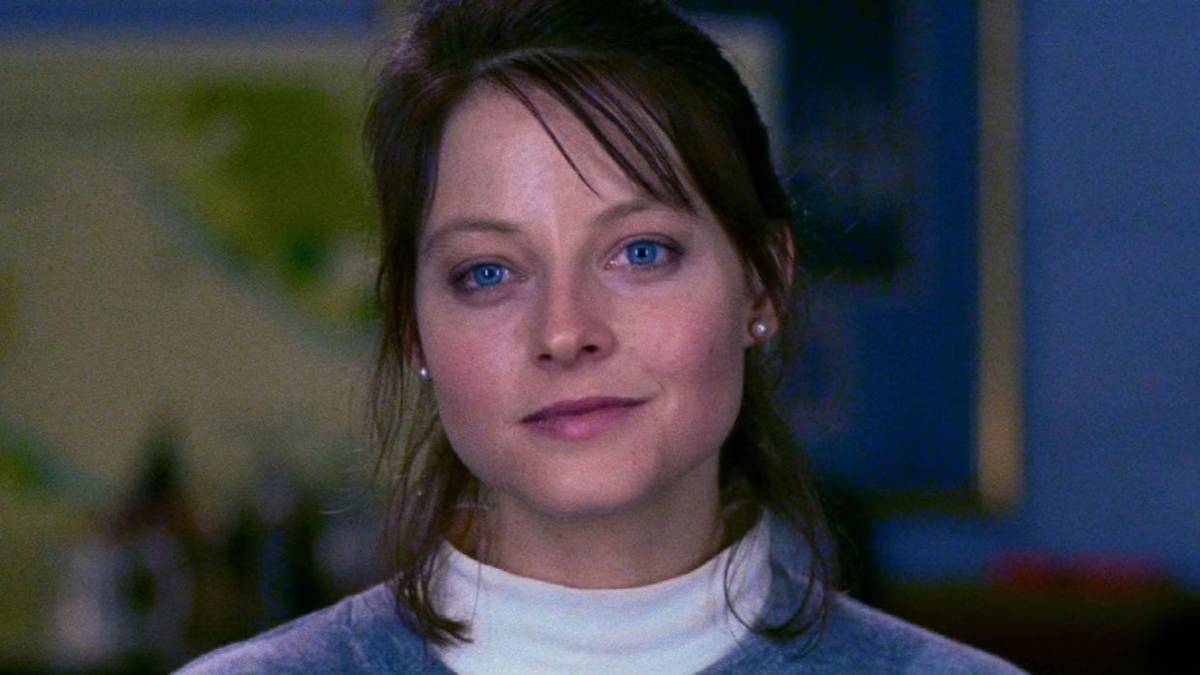
Image via Orion Pictures Published Nov 14, 2026, 1:57 PM EST Andrea M. Ciriaco is a long-time script reader and former entertainment editor who specializes in classic movies and Hollywood history. She was a student film critic at Kent State University for three years and worked at Warner Bros Studio in Burbank and The Safran Company for several years. Based on her vast taste and range of knowledge, many consider Andrea to be a walking IMDb who knows dozens of underrated movies and is a vital assesst to any trivia night. While movies are her expertise, Andrea is also a diehard fan of iconic shows including The Sopranos, Boardwalk Empire, Rod Serling's The Twilight Zone, Will & Grace and South Park. Some of her favorite filmmakers are Walt Disney,John Huston, Fritz Lang, Alfred Hitchcock, John Ford, Mel Brooks, Quentin Tarantino, Martin Scorsese and Howard Hawks. Sign in to your Collider account Few genres get under the skin the way the psychological thriller does. Where other thrillers rely on chases and shootouts, the great ones work inside your head, turning perception, memory, and trust into unexpected weapons. Unlike other traditional thrillers, there is a collection of perfect psychological thrillers that do something rarer than scare and surprise audiences; they make them complicit in piecing clues together alongside the protagonist, build theories, and trust the wrong person, only to have the floor give way beneath them. Movies such as Alfred Hitchcock's iconic classic Psycho and David Fincher's gritty crime thriller Se7en are where craft and psychology fuse, delivering performances that reveal a flicker of doubt, direction that holds a shot a beat too long, and screenplays built with precision and patience. Out of all the potential candidates, this list highlights psychological thrillers that don't just play with the audience's nerves but instead leave a permanent mark on them about the thin line between sanity and madness. 1 'Memento' (2000) Image via Newmarket Films Christopher Nolan's Memento earns a spot among the greatest psychological thrillers by making its structure the very thing that unsettles audiences. Adapted from a short story written by his brother Jonathan Nolan, the movie follows Guy Pearce as Leonard Shelby, a man with anterograde amnesia who can't form new memories, as he hunts for the person who not only caused him to develop his condition but also killed his wife. To mirror Shelby's condition, Nolan tells the story in reverse, so each scene ends where the previous one began. Audiences never know more than Pearce's character, creating a shared disorientation that is ultimately the film's central trick. Nolan's script is a model of precision, and the film’s moody, noir-tinged visuals reinforce its sense of paranoia. Memento doesn’t just thrill; it makes you question the reliability of your own mind. That unsettling, intellectually daring quality is exactly why Memento remains a benchmark of the genre. Pearce gives a remarkable performance, conveying confusion, determination, and a creeping dread often within a single scene, while Carrie-Anne Moss and Joe Pantoliano also deliver exceptional performances that add layers of ambiguity, leaving audiences constantly unsure of who is manipulating whom. 2 'Se7en' (1995) Image via New Line Cinema David Fincher's hopeless thriller Se7en endures as one of the finest psychological thrillers because it unnerves audiences through dread rather than spectacle and features outstanding performances by an all-star cast. The movie centers around two detectives, William Somerset (Morgan Freeman), a disillusioned veteran close to retirement, and an eager newcomer, David Mills (Brad Pitt), who find themselves in a relentless pursuit of a serial killer who stages his crimes around the seven deadly sins. Initially, the premise sounds a bit outlandish, but Fincher and screenwriter Andrew Kevin Walker use it to build something far more disturbing than anyone could have ever imagined. Cinematographer Darius Khondji drenches nearly every scene in rain, shadows, and sickly light to create a city that feels suffocating and hopeless, making the film's atmosphere its greatest strength. Fincher rarely shows the violence directly and instead lets the horrific aftermath and the audience's imagination do the work, which proves to be more horrifying than any gore or bloodshed. The infamous final sequence, set in a barren desert, is devastating because it feels inevitable yet still shocks. Fincher refuses to soften it, and that uncompromising choice is why Se7en continues to haunt viewers decades later, leaving a lasting chill that few thrillers have ever matched. 3 'Gaslight' (1944) Image via Metro-Goldwyn-Mayer George Cukor’s Academy-Award-winning classic Gaslight deserves its place among the great psychological thrillers because it helped define the genre’s central fear: being driven mad by someone you trust. Ingrid Bergman stars as a young woman, Paula Alquist, who, after her famous aunt is murdered, is sent to Italy, where she eventually meets and marries a charming pianist, Gregory Anton (Charles Boyer). When the newlyweds return to London to live in her aunt's old home, Alquist begins to experience strange occurrences that slowly lead her to believe that she's losing her mind. The brilliance of Gaslight lies in how intimate its menace is. There are no intense chase scenes or elaborate set pieces, only a marriage that gradually turns into an inescapable prison. Bergman gives an Oscar-winning performance as the fragile but capable Paula, effectively shifting between fits of hysteria and doe-eyed confusion and conveying flickers of defiance with equal conviction. Boyer is just as effective, playing Anton with silky charisma that curdles into something chilling once you recognize it, while a young Angela Lansbury, in her screen debut, adds a colorful sharpness as the insolent maid. Gaslight is a staple of the genre that endures because its terror is psychological, relatable, and timeless, and its payoff in the end is deeply satisfying. COLLIDER The Mystery Desk Case File 0481 · Open Collider/ Movies/ Mystery/ Which Classic Mystery Movie Are You 8 Questions · 2 Minutes Which Classic Mystery Movie Are You? Every answer counts toward the verdict. Four films that solve a mystery four completely different ways, from a comedy with three separate endings to a thriller told backwards. One of them has been describing you all along. The Suspects 01🕯Clue1985 02🪟Rear Window1954 03📦Se7en1995 04📸Memento2000 Open the Case File Evidence logged automatically Exhibit 01 of 08Film Night What kind of film night are you after? Pick the one that sounds most like you ASomething funny with a big cast. BSomething old and close to perfect. CSomething that will ruin my week. DSomething I will have to rewatch. Press 1 to 4 to log an answerNext Evidence logged automatically Exhibit 02 of 08Character Witness How would your friends describe you? Be honest AObservant and a bit nosy. BChaotic and very funny. CHard to follow, in a good way. DIntense, and you never let go. Press 1 to 4 to log an answerNext Evidence logged automatically Exhibit 03 of 08Whereabouts What do you do when you are stuck at home? One answer only AGo over the same problem again. BMake lists I later cannot read. CInvite seven people round. DWatch the neighbours. Press 1 to 4 to log an answerNext Evidence logged automatically Exhibit 04 of 08The Twist How do you react to a plot twist? Pick the closest answer AStart the whole thing again. BShout at the television. CClaim I saw it coming. DSit in silence for a while. Press 1 to 4 to log an answerNext Evidence logged automatically Exhibit 05 of 08The Scene Pick a room. No wrong answers here AA window overlooking everybody. BA motel room covered in notes. CA library with a secret door. DA room with one bare bulb. Press 1 to 4 to log an answerNext Evidence logged automatically Exhibit 06 of 08Testimony What is your memory like? Pick the closest answer AI remember what I could not fix. BHonestly, not good. CSelective, and very loud. DI remember everything I saw. Press 1 to 4 to log an answerNext Evidence logged automatically Exhibit 07 of 08Closing Argument How do you feel about endings? Think about the last film that got you AI want to argue about it after. BIt should hurt a little. CGive me three and let me pick. DTie it up neatly, please. Press 1 to 4 to log an answerNext Evidence logged automatically Exhibit 08 of 08The Verdict What should a mystery film do to you? Last one AMake me laugh the whole way through. BMake me watch very closely. CStay with me for days afterwards. DMake me work it out myself. Press 1 to 4 to log an answerDeliver the Verdict Case Closed Verdict Your Mystery Movie Is 🕯 Clue Jonathan Lynn · 1985 You are the most fun thing in the room, and you are not remotely in control of it. Clue is a murder mystery built from a board game, played at farce speed by one of the best comic ensembles ever assembled, and it refuses to commit to a single answer. That is you: loud, quick, impossible to plan around, and the reason anybody had a good time. Case Notes You keep the energy up and the plan loose, and people have a much better evening because of it. Three different endings were sent to different cinemas in 1985, so the answer depended on which screen you walked into. It flopped completely, found its audience on video, and went back into cinemas for its fortieth anniversary with the endings randomised again. Your flaw is that chaos is excellent company and a terrible plan. Chaotic Quick Sociable Unserious 🪟 Rear Window Alfred Hitchcock · 1954 You watch, and you notice the thing everybody else walks past. Hitchcock trapped James Stewart in one room with a broken leg and a view of his neighbours, and built an entire thriller out of a man looking out of a window and being right. You are the one who clocks the detail nobody announced, and you are usually correct before you can prove it. Case Notes You are quietly the most observant person in your circle and you notice changes before anybody mentions them. The courtyard was one of the largest sets ever built at Paramount, with thirty-one apartments and working plumbing. It was nominated for four Academy Awards including Best Director and is still taught as the cleanest thriller ever constructed. Your risk is that watching and doing something about it are not the same, and you know it. Observant Patient Curious Detached 📦 Se7en David Fincher · 1995 You take things on, and you do not put them down. Fincher made a serial killer film where the detectives are losing the entire time, shot it so dark the studio complained, and refused to change an ending that everybody told him would sink the film. You have that same refusal in you, and it has cost you more than you let on. Case Notes You are the one who keeps going after everybody else has accepted it cannot be solved. New Line wanted a different ending and Brad Pitt reportedly refused to make the film without the one they shot. It turned Fincher from the director who had a bad time on Alien 3 into the defining thriller director of his generation. Your weakness is that carrying something this long does real damage, and you are usually the last to notice. Relentless Serious Principled Haunted 📸 Memento Christopher Nolan · 2000 Nobody can quite follow your thinking, and you get there anyway. Nolan told the story backwards, so the audience knows as little as the man at the centre of it does, and the whole film becomes an argument about how much of what you believe you simply decided to believe. You arrive at the right answer by a route nobody else would have taken. Case Notes You work things out sideways, and explaining the route takes longer than the answer did. It was nominated for Best Original Screenplay and Best Film Editing in 2002 and won neither, which still annoys people. It cost around nine million dollars, made over five times that, and built the career that led to everything after. Your flaw is trusting your own version of events slightly more than the evidence supports. Lateral Private Analytical Unreadable Evidence Log Clue Rear Window Se7en Memento Reopen the Case Copied to clipboard Case filed by COLLIDER Collider.com · The Mystery Desk 4 'Psycho' (1960) Alfred Hitchcock's Psycho is a universally loved thriller based on Robert Bloch's novel that rewrote the rules of what audiences expected from a film, then used that shock to explore the darkest corners of the human mind, making it one of the greatest psychological thrillers ever made. Janet Leigh stars as a secretary, Marion Crane, who steals a large amount of money from her employer and quickly skips town with a plan to meet up with her boyfriend later. When a severe storm and exhaustion force Crane to pull over for the night, she checks into a remote hotel where she meets the owner's strange but kind son, Norman Bates (Anthony Perkins), unaware that the young man harbors a dark and terrible secret. The film’s daring structure is essentially what makes Psycho a legendary piece of classic cinema. By killing off its apparent protagonist barely a third of the way through, The Master of Suspense pulls the rug out from under audiences and leaves them with no safe ground. After that, nothing can be trusted, and the tension never fully lets go. The infamous shower scene, built from rapid cuts and Bernard Herrmann’s now-iconic score, implies far more than it shows, proving that suggestion can be more terrifying than explicit violence. Perkins gives one of cinema’s most memorable performances, portraying his character as sympathetic, nervous, and quietly tragic, which makes the revelation of his fractured psyche all the more disturbing. In short, Psycho earns a place on the list for ultimately shattering conventions and revealing that the scariest horrors are not supernatural but human, as well as its immense influence, which still runs through the genre to this day. 5 'The Silence of the Lambs' (1991) Image via Orion Pictures Jonathan Demme’s The Silence of the Lambs stands among the greatest psychological thrillers because it turns conversation into a weapon and understands that the most frightening thing isn't violence itself but a mind that can see straight through you. Adapted from Thomas Harris' 1988 novel of the same name, the story follows Jodie Foster as Clarice Starling, a young FBI trainee who is sent to interview the imprisoned psychiatrist and cannibal Dr. Hannibal Lecter (Anthony Hopkins), hoping he can help her catch a serial killer known as Buffalo Bill (Ted Levine). The core of the film is built from the relationship between Starling and Lecter. Their exchanges inside his glass-walled cell are electric, built on quid pro quo: he offers insight into the killer, but only in exchange for pieces of her past, adding a sense of unpredictability that ultimately heightens the already intense atmosphere. Foster gives Starling a quiet resilience, showing a woman who is underestimated and constantly watched, yet refuses to be intimidated. Hopkins, with only about 16 minutes of screen time, creates an unforgettable presence through stillness, unblinking eye contact, and a velvety, unnervingly polite voice. The Silence of the Lambs was a massive hit that earned seven Academy Award nominations and went on to become the third film in Oscar history to win in all five major categories. 6 'The Conversation' (1974) Image via Paramount Pictures Francis Ford Coppola's neo-noir mystery thriller The Conversation turns surveillance inward and exposes the paranoia and guilt of the man doing the watching, making it one of the finest psychological thrillers of all time. Gene Hackman stars as Harry Caul, a reclusive San Francisco surveillance expert who is hired by a mysterious client to record a couple talking in a crowded public square. When he begins to suspect the recording may lead to the couple's murder, his professional detachment starts to crack, and his guilt from a previous job begins to take hold. The film’s brilliance lies in its obsessive focus on sound and silence. Caul replays the muffled recording again and again, isolating and cleaning the audio until a single line takes on a different meaning. Sound designer Walter Murch, whose work here became legendary, makes the act of listening itself suspenseful. Coppola directs with cold restraint. The opening shot, a slow zoom over Union Square, establishes the voyeuristic tone, and the story unfolds with deliberate, creeping dread rather than action. Hackman delivers one of his greatest performances, presenting audiences with a curious but disturbing portrait of a man who is trapped by his own isolation, paranoia, and guilt, proving that the most frightening prison is the one inside your own head. 7 'Gone Girl' (2014) Image via 20th Century Studios David Fincher's adaptation of Gillian Flynn's best-selling novel Gone Girl takes the familiar missing-wife mystery and turns it into a savage dissection of marriage, the media, and the masks people wear, rightfully earning a place among the best psychological thrillers. Adapted by Flynn herself, the movie stars Rosamund Pike as Amy Dunne, who, on the morning of her fifth wedding anniversary, mysteriously vanishes from her Missouri home. As news of her disappearance sweeps the country, her husband, Nick (Ben Affleck), quickly becomes the prime suspect, but as the investigation deepens, it's clear that nothing about this couple is what it seems. Flynn's screenplay alternates between Nick’s present-day ordeal and Amy’s diary entries, feeding the audience a carefully curated version of events, which makes the film's structure its sharpest weapon. Like the best of the genre, Gone Girl makes audiences complicit in believing a story. Pike gives a powerhouse performance as a modern femme fatale, shifting between roles with unsettling ease, from the “Cool Girl” fantasy to the wronged victim to something far more dangerous. What lingers most is the ending, which refuses easy justice. Instead of a clean resolution, the film leaves its central couple trapped in a toxic, mutually assured bond, treating marriage itself as the ultimate psychological battleground, where the scariest question is how well you can ever truly know another person. Gone Girl Release Date October 3, 2014 Runtime 149 minutes
7 Psychological Thriller Movies Everyone Should Watch at Least Once
Full Article
Original Source
Read the full article at Collider →KhanList aggregates and links to publicly available news content. We do not host full articles from third-party sources. Always verify important information with original sources.