
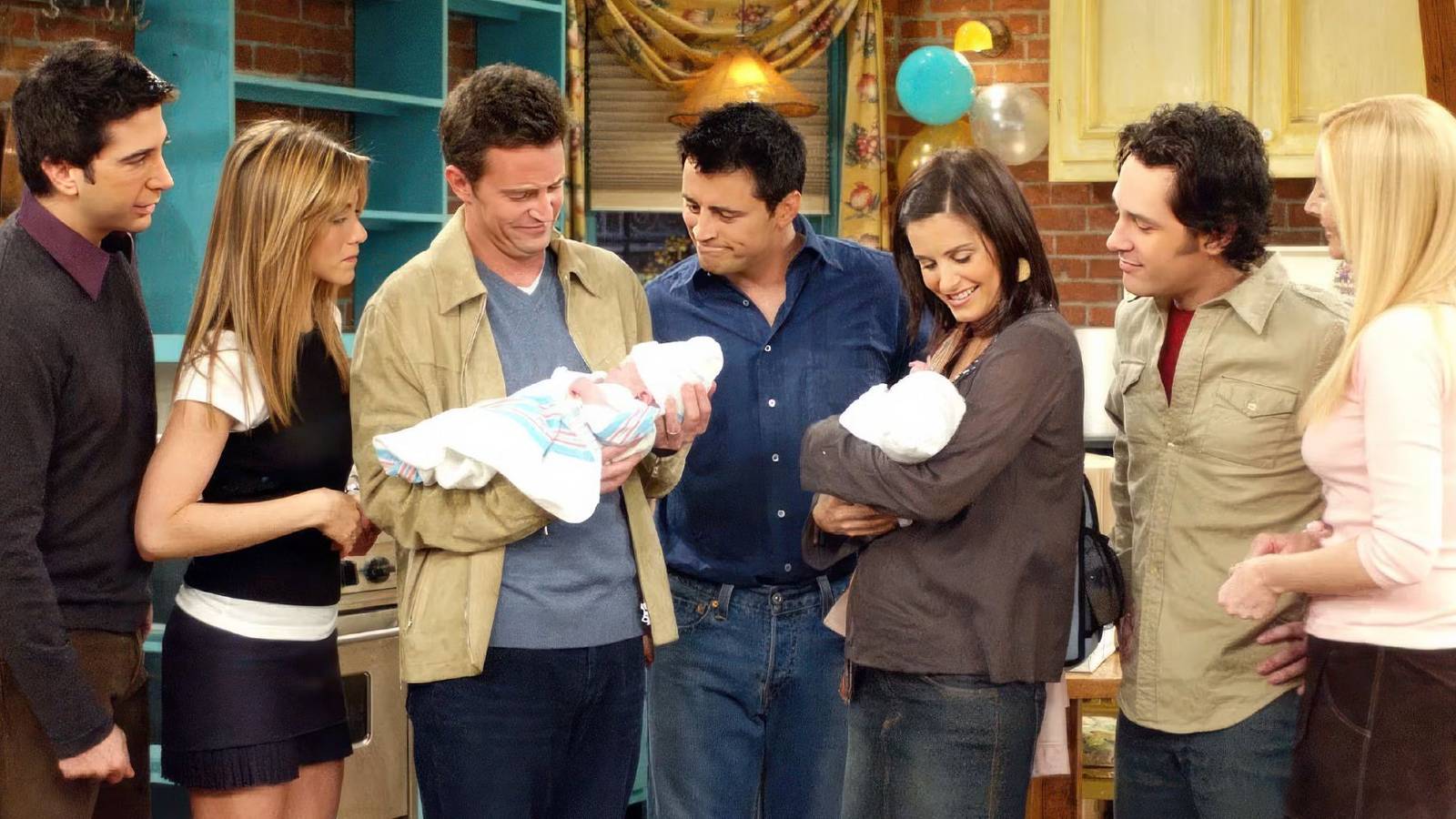
Image via NBC Published Aug 29, 2026, 9:33 PM EDT Remus is a writer, editor, journalist, and author with an eye for detail and an extremely active imagination. He is an enthusiast of everything to do with the graphic medium, whether it's Western comics and their adaptations or manga and anime. Remus is also the author of the sci-fantasy novel Once Upon a Time in Hyperspace and several works of short fiction in the mystery, comedy, and horror genres. Sign in to your Collider account In its century-long existence, NBC has dished out some of the most iconic shows and series of all time on American broadcast television. Across dramas, sitcoms, procedurals, live events, and more, the first and oldest major broadcast network has proudly remained a home to titles that have not only shaped American pop culture but have also become global cultural landmarks. Especially during the late '80s and through the '90s, primetime shows, dubbed as Must-See TV, drew large audiences. Dramas like ER and sitcoms like Cheers and Seinfeld raked in massive viewership for the network, a trend which continued with Friends. All of these NBC productions have since remained television legends with massive followings, amassing fans from around the world and breaking records for television networks. While many of these shows, or parts of them, might not seem as culturally relevant today, at their time, they were definitive of their genre. With viewership of millions in many episodes, these shows played an undeniable part in ushering in the Second Golden Age of American television. Now, without further ado, here’s a look at some of the most-watched episodes in NBC history. 7 “Stress Relief” (Season 5, Episodes 14 and 15) 'The Office' (2005–2013) Image via NBC A cult hit turned pop culture sensation, Greg Daniels’ The Office boasts some of the greatest episodes seen in the history of American sitcoms that changed workplace comedy forever. While the workplace misadventures of the staff of The Dunder Mifflin Paper Company continued for nine years, the show’s most-watched episode came halfway through, in Season 5. The two-parter season finale features a fire drill in which Dwight (Rainn Wilson) fakes an office fire to test his coworkers' preparedness, Stanley (Leslie David Baker) suffers a heart attack, and Michael (Steve Carell) plans ways to relieve stress in the office. The episode also stars Jack Black, Jessica Alba, and Cloris Leachman as guest stars. “Stress Relief” arguably features the most chaotic cold open of The Office and perhaps of sitcom history, and is also the most high-energy episode of the show. Airing immediately following Super Bowl XLIII, the season finale garnered 22.5 million views and earned the highest rating of the show’s entire run. Packed with meme-worthy, self-contained gags that resonate even with first-time viewers, “Stress Relief” is often considered the peak of The Office. 6 “Goodnight, Seattle” (Season 11, Episodes 23 and 24) 'Frasier' (1993–2004) Image via NBC Created as a spin-off of Cheers by David Angell, Peter Casey, and David Lee, Frasier grew to become much more than just an offshoot of its legendary parent show. The endeavors of psychiatrist Dr. Frasier Crane (Kelsey Grammer) in helping troubled people in Seattle as the host of a call-in psychiatry radio show while he struggled with his personal life were both humorous and heartfelt at the same time. The critically hit sitcom ended with its two-part, 264th episode, “Goodnight, Seattle," where the titular therapist signs off from the radio station, quoting Alfred Lord Tennyson’s "Ulysses," bidding farewell not only to the city he helped for over a decade but also to those who watched him from across the screen. Frasier was an important hit for NBC, arguably just as much as Cheers, garnering widespread acclaim and often surpassing the accolades of its parent. Episodes 23 and 24 of Season 11 garnered over 25 million views and became one of the most-watched series finales in television history. A very emotional goodbye for fans, “Goodnight, Seattle” overturned the typical sitcom status quo and set a new benchmark for how to successfully conclude a long-running sitcom. 5 “Hell and High Water” (Season 2, Episode 7) 'ER' (1994–2009) Image via NBC An iconic NBC drama and one of the network’s longest-running shows, Michael Crichton’s ER reached its peak in the earlier seasons, even though the show ran for 15 years. The second season’s seventh episode, “Hell and High Water," became a phenomenal success and a cultural milestone for the overall series. Directed by Christopher Chulack, the episode follows the fan-favorite Dr. Doug Ross (George Clooney), who, following his final shift at the County General Hospital, performs a dangerous, televised rescue of a young boy trapped in a flooded storm drain. “Hell and High Water” attracted a massive 48 million viewers and became critically acclaimed for transforming the popular medical drama into a high-stakes, cinematic thriller. The episode arrived at a time when the medical drama was dominating the television ratings and capitalized on that popularity. Considered a must-watch, the second-season episode of ER marked a new turning point for Dr. Ross, carving a new path for the character and thrusting Clooney to national stardom. Collider Exclusive · TV Medicine Quiz Which Fictional Hospital Would You Work Best In? The Pitt · ER · Grey's Anatomy · House · Scrubs Five hospitals. Five completely different ways medicine goes sideways on television — brutal, chaotic, romantic, brilliant, and ridiculous. Only one of them is the ward your instincts were built for. Eight questions will figure out exactly where you belong. 🚨The Pitt 🏥ER 💉Grey's 🔬House 🩺Scrubs FIND YOUR HOSPITAL → 01 A critical patient comes through the door. What's your first instinct? Medicine under pressure reveals who you actually are. AStay completely present — block everything else out and work through it step by step, right now. BTriage fast and delegate — get the right people on the right problems immediately. CTrust my gut and move — I work best when I stop overthinking and just act. DAsk the question everyone else is ignoring — what's the thing that doesn't fit? ETake a breath, make a joke to cut the tension, and then get to work — panic helps no one. NEXT QUESTION → 02 Why did you go into medicine in the first place? The honest answer says more about you than the one you'd give in an interview. ABecause I wanted to be where it matters most — right at the edge, when someone's life is actually on the line. BBecause I wanted to help people — genuinely, one patient at a time, in a system that makes it hard. CBecause I was drawn to the intensity of it — the stakes, the drama, the feeling of being fully alive. DBecause medicine is the most interesting puzzle there is — and I needed a problem worth solving. EBecause I wanted to make a difference — and also, honestly, I didn't know what else to do with my life. NEXT QUESTION → 03 What do you actually want from the people you work with? Who you want beside you under pressure is who you are. ACompetence and calm — I need people who don't fall apart when things get bad. BTrust and reliability — I want to know that when I pass something off, it's handled. CConnection — I want colleagues who become family, even if that gets complicated. DIntelligence and the willingness to be challenged — I have no interest in people who just agree with me. EFriendship — people I actually like spending twelve hours a day with, because those hours are going to happen either way. NEXT QUESTION → 04 You lose a patient you fought hard to save. How do you carry it? Every doctor who's worked a long shift has had to answer this question. AI carry it. All of it. I don't look for ways to put it down — that weight is part of doing this work honestly. BI process it and move — you have to, or the next patient suffers for the one you just lost. CI feel it deeply and lean on the people around me — I don't think you're supposed to handle that alone. DI go back over every decision — not to punish myself, but because I need to understand what I missed. EI grieve it genuinely, find some way to laugh about something unrelated, and try to be kind to myself — imperfectly. NEXT QUESTION → 05 How would your colleagues describe the way you work? Your reputation on the floor is usually more accurate than your self-image. AIntense and completely present — no small talk during a shift, but exactly who you want there. BSteady and dependable — not the flashiest in the room but never the one who drops something. CPassionate and occasionally chaotic — brilliant on the hard cases, prone to drama everywhere else. DBrilliant and difficult — right more often than anyone else, and everyone knows it, including me. EWarm and self-deprecating — not the most intimidating presence, but genuinely good at this and easy to like. NEXT QUESTION → 06 How do you feel about hospital protocol and procedure? Every institution has rules. What you do with them is a choice. AProtocol is the floor, not the ceiling — I follow it until the patient needs something it can't provide. BI respect it — the system is broken in places, but the structure is there for a reason and I work within it. CI follow it until my instincts tell me not to — and my instincts are usually right, even when they cause problems. DRules are for people who haven't thought hard enough about when to break them. EI try to follow it and mostly do — with a few memorable exceptions that still come up in meetings. NEXT QUESTION → 07 What does this job cost you personally? Nobody works in medicine without paying a price. What's yours? AEverything outside these walls — I've given this job my full attention and the rest of my life has gone around it. BMy idealism, mostly — I came in believing the system could be fixed and I've made a complicated peace with that. CStability — my personal life has been as chaotic as the OR, and that's not entirely a coincidence. DMy relationships — I am not easy to know, and the people who've tried to would probably agree. EMy sense of gravity — I use humour as a coping mechanism, which not everyone appreciates in a hospital. NEXT QUESTION → 08 At the end of a long shift, what keeps you coming back? The answer to this question is the most honest thing about you. AThe fact that it's real — that nothing else I could be doing would matter this much, right now, today. BThe patients — individual human beings who needed something and got it because I was there. CThe people I work with — I have walked through impossible things with these people and I'd do it again. DThe next unsolved case — there's always another puzzle, and I'm not done yet. EBecause despite everything — the exhaustion, the loss, the absurdity — I actually love this job. REVEAL MY HOSPITAL → Your Assignment Has Been Made You Belong In…Your answers have pointed to one fictional hospital above all others. This is the ward your instincts, your temperament, and your particular brand of dysfunction were built for. The PittYou are built for the most unsparing version of emergency medicine television has ever shown — one that puts you inside a single fifteen-hour shift and doesn't let you look away. You need your work to be real, not romanticised — meaning over drama, honesty over aesthetics. You find purpose inside the work itself, not in the chaos surrounding it. You've made peace with the fact that this job takes from you constantly, and gives back in ways that are harder to name. Pittsburgh Trauma Medical Center demands exactly that kind of person — and you would not want to be anywhere else. ERYou are the person who keeps the whole floor running — not the most brilliant in the room, but possibly the most essential. You show up, do the work, absorb the losses, and come back the next day without needing the job to be anything other than what it is. You care about patients as individual human beings, not as cases to solve or dramas to live through. You believe in the system even when it fails you — and you understand that emergency medicine is about holding the line just long enough. ER is television about endurance. You have it. Grey's AnatomyYou came to medicine with your whole self — your ambition, your emotions, your relationships, your history — and you have never quite managed to leave any of it at the door. You feel things fully and form deep attachments to the people you work with. Your personal and professional lives are permanently, chaotically entangled — and that entanglement drives both your greatest disasters and your most remarkable saves. You understand that extraordinary medicine often happens at the intersection of clinical skill and profound human connection. It's messy at Grey Sloan. You would not have it any other way. HouseYou are drawn to the problem above everything else — the symptom that doesn't fit, the diagnosis hiding underneath the obvious one. You're not primarily motivated by the patient as a person — though you are capable of caring, even if you'd deny it. You work best when the stakes are highest and the standard answer is wrong. Princeton-Plainsboro exists to house one extraordinary, impossible mind — and everyone around that mind is there because they're smart enough to keep up. The only way forward here is to think harder than everyone else in the room. That is exactly what you do. ScrubsYou understand that medicine is tragic and absurd in almost equal measure — and that the only sane response is to hold both of those things at the same time. You are warm, self-aware, and funnier than most people in your field. You use humour to get through terrible moments — and at Sacred Heart, that's not a flaw, it's a survival strategy. You lean on the people around you and let them lean back. The laughter and the grief are genuinely inseparable here. Scrubs is a show about learning to become someone worthy of the job. You are still very much in the middle of that process — which is exactly right. ↻ RETAKE THE QUIZ 4 “The Last One” (Season 10, Episodes 17 and 18) 'Friends' (1994–2004) Image via NBC After 10 years and 236 episodes, Marta Kauffman and David Crane’s decade-long television phenomenon ended with its two-part finale, “The Last One." The final chapter of Friends closed all the long-running storylines, making it worth the wait for fans. Episodes 17 and 18 of Season 10 gave closure to Ross (David Schwimmer) and Rachel’s (Jennifer Aniston) love story as they confess their love for each other, while Monica (Courteney Cox) and Chandler (Matthew Perry) move to the suburbs with their adopted twins. As all of them close the door to Monica’s beloved apartment one last time and head out towards their respective futures, it not only marked the end of an era but became the most emotional moment of the show. A culture-defining sitcom that is still popular today (well, mostly), Friends forever changed how people viewed comedy, turning its characters into beloved and instantly recognizable icons. And that is why it was no surprise when the series finale drew a whopping 52.5 million viewers. Ranking fifth among the most-watched television finales in U.S. history, “The Last One” remains a major viewership milestone for NBC. 3 “The One After the Super Bowl” (Season 2, Episodes 12 and 13) 'Friends' (1994–2004) Image via Warner Bros. Television Even though the series finale of Friends remains its most popular and memorable episode, the credit for the highest-viewed episode by numbers goes to another two-parter, "The One After the Super Bowl." The episodes follow Ross, who finds out that his former pet monkey, Marcel, has been hired for a film being shot in New York City. As he sets out to see him, Chandler has a chance encounter with an old friend with whom he had a complicated history. The season finale also became noteworthy for featuring guest stars like Julia Roberts, Brooke Shields, and Jean-Claude Van Damme. NBC’s attempt to schedule such a prominent episode of an existing, semi-new series in the high-profile post-Super Bowl timeslot turned out to be a phenomenal success. Friends’ Season 2 finale garnered a massive viewership of 52.9 million and remains the show’s most-watched episode. It also became the highest-rated scripted episode for a post-Super Bowl broadcast and brought massive exposure to the sitcom, eventually pushing it to the top of the network charts in the following seasons. 2 “The Finale” (Season 9, Episodes 22 and 23) 'Seinfeld' (1989–1998) Image via NBC Larry David and Jerry Seinfeld’s highly influential sitcom classic Seinfeld broke all conventions of comedy television with no emotional sentimentality, no personal growth, and no moral takeaways. Neither did it end with a bang. Seinfeld’s nine-year run ended with the most absurd final episodes people had seen in sitcoms at the time. In “The Finale," Jerry (Seinfeld), George (Jason Alexander), Elaine (Julia Louis-Dreyfus), and Kramer (Michael Richards) are accused of violating a local Good Samaritan law after mocking a carjacking victim instead of helping him, and a massive trial ensues, where various characters from their past testify to their terrible characters. “The Finale” was massively polarizing at the time of its release, largely due to its lack of moral theme and the intentionally unsatisfying conclusion. And yet, the two-part final chapter of the NBC comedy behemoth garnered a colossal viewership of 76.3 million. Season 9's Episodes 22 and 23 ironically abandoned its principle of being “nothing," becoming a plot-heavy moment about everything. And that is largely what drew such a massive audience for the episode, making the Seinfeld finale the second most-watched episode in NBC’s history. 1 “One for the Road” (Season 11, Episode 26) 'Cheers' (1982–1993) Image via NBC For 11 years, Glen Charles, Les Charles, and James Burrows’s classic sitcom served in style and went out with even more style with its 275th and final episode, “One for the Road." While Sam Malone (Ted Danson) did not close the doors of his beloved bar to his patrons, the last episode of Cheers marked the end of an era for TV’s favorite bartender and his patrons as they drank, socialized, and escaped their daily problems at the titular Boston bar. The episode remains memorable for the bittersweet reunion of Sam and his on-off love interest, Diane (Shelley Long), who come together only to realize how different their worlds are and part ways again. “One for the Road” makes for a fitting finale that stays true to the show’s premise and honors its core message, both literally and figuratively, and brings back all the major characters one last time. While the sitcom itself was a pop culture sensation during its 11-season run, the finale became a massive national television event. Season 26, Episode 11 amassed 93.5 million viewers when it aired, making it the second-highest-rated series finale of all time in U.S. television history, surpassed only by the finale of CBS’s M*A*S*H. Release Date 1982 - 1993-00-00 Network NBC Showrunner James Burrows, Glen Charles, Les Charles, Ken Estin, Sam Simon, David Angell, Peter Casey, David Lee, Bill Steinkellner, Cheri Steinkellner, Phoef Sutton, Tom Anderson, Dan O'Shannon Directors John Ratzenberger, George Wendt, Michael Zinberg, Andy Ackerman, James Burrows, Tim Berry, Tom Moore Writers David Lloyd, Kathy Ann Stumpe, Jonathan Stark, Tracy Newman, Andy Cowan, Janet Leahy, Sue Herring, Tom Leopold, Chris Cluess, David Pollock, Elias Davis, Elliot Shoenman, Jeff Abugov, Daniel Palladino, Katherine Green, Jeffrey Duteil, Michael J. Weithorn, Joanne Pagliaro, Eugene B. Stein, Kimberly Hill Cast Billie Bird Lillian Miller Kirstie Alley Rebecca Howe Creator(s) Les Charles, James Burrows, Glen Charles Seasons 11
7 Most-Watched TV Episodes in NBC History, Ranked
Full Article
Original Source
Read the full article at Collider →KhanList aggregates and links to publicly available news content. We do not host full articles from third-party sources. Always verify important information with original sources.