
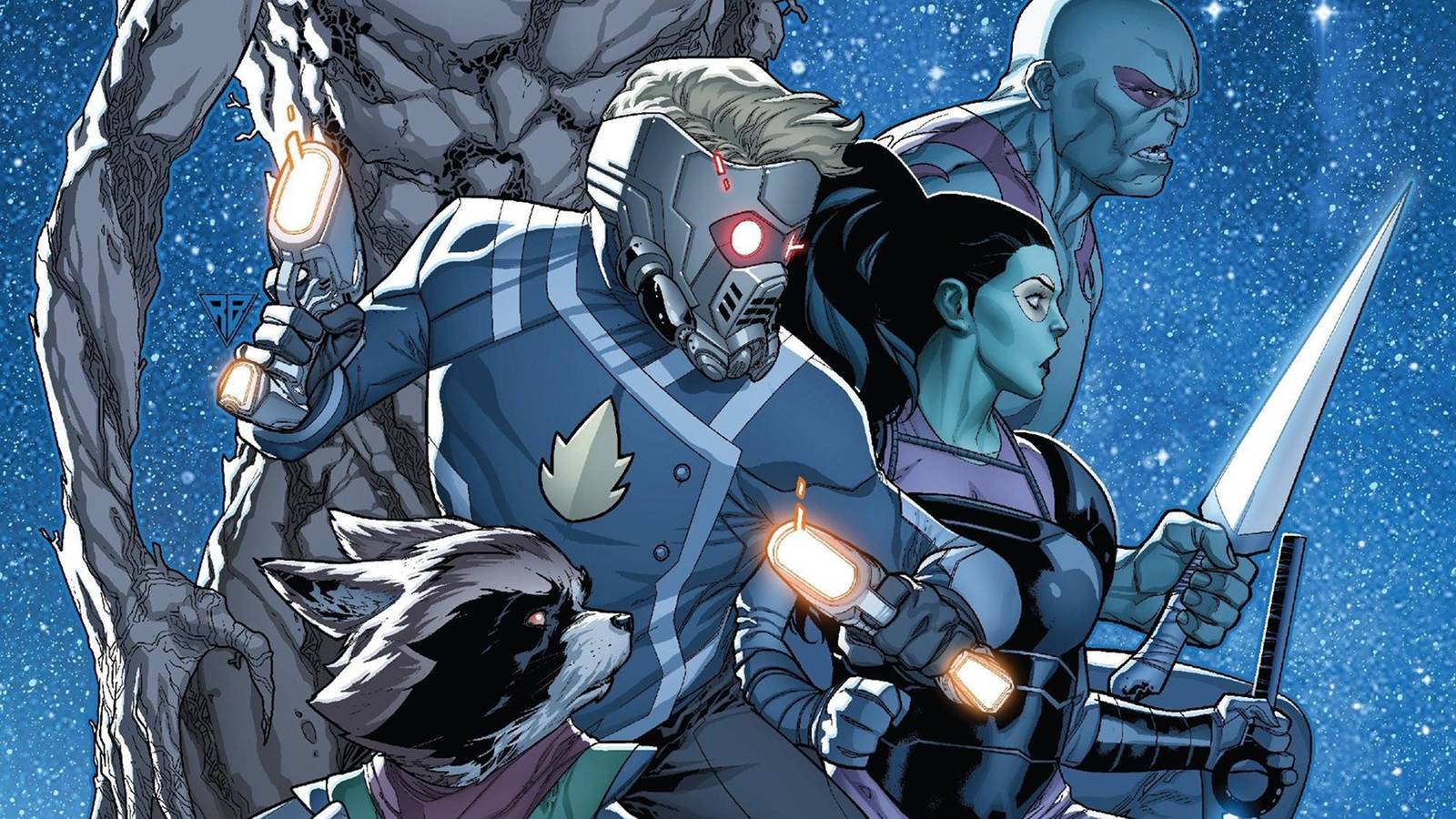
Published Aug 30, 2026, 8:30 PM EDT Emedo Ashibeze is a tenured journalist and critic specializing in the entertainment industry. Before joining ScreenRant in 2025. he wrote for several major publications, including GameRant. The Guardians of the Galaxy are a delightfully chaotic bunch, as James Gunn’s trio of MCU films have proven time and again. Star-Lord's swagger, Gamora and Nebula's lethal sisterly rivalry, Drax's blunt comedy, Mantis's empathy, Groot's three-word wisdom, and Rocket's sarcasm masking real pain somehow make a galactic peril feel like a road trip. That light-heartedness is exactly why audiences keep coming back for Peter Quill’s team. But peel back the jokes and the mixtape needle-drops, and the Guardians of the Galaxy lore has flirted with genuinely bleak territory, none of which has featured in the Marvel Cinematic Universe bar Rocket’s in Guardians of the Galaxy Vol.3 and Gamora’s in Avengers: Infinity War. The comic Guardians of the Galaxy have some very disturbing events that deserve its own R-rated branch under the MCU, that is, if Kevin Feige and friends at Marvel Studios are brave enough to greenlit it. Don't expect any Guardians material coming soon, though. Especially with Spider-Man: Brand New Day and Avengers: Doomsday dominating Marvel headspace. 7 Drax's Origin Before Drax becomes a force of vengeance, he is just an ordinary man who loves Elvis and his family, right up until a quiet night out in 1953 changed everything. Driving home, his car crosses paths with a paranoid, untested Thanos, who mistakes a glance for a threat and destroys the vehicle with Douglas' wife and daughter still inside. When Arthur's soul drifts into space, the Titan Kronos captures it and forges it into an artificial body built for one purpose: killing Thanos. There is no consent involved, and no chance to grieve his own family on his own terms. The MCU’s Guardians of the Galaxy films merely mention this tragedy and don’t show it. Worse, it portrays Dave Bautista's Drax as a dumb, incompetent combatant, a move that further diminishes his background. 6 Moondragon's Origin Heather Douglas, also known as Moondragon, is a cosmic hero in the Marvel Universe. Though barely an adult when Thanos killed her parents, Titan's answer to that grief is discipline rather than comfort. Raised by the Shao-Lom monks, she eventually confronts the cosmic entity known as the Dragon of the Moon and believes she'd destroyed it. She hadn't: it had simply moved on. Feeding quietly on her ego from within, the Dragon turns Moondragon's genuine desire to help people into something closer to tyranny. She begins mind-controlling teammates and enemies alike, convinced her own judgment is infallible enough to override anyone else's consent, including, at one point, the entire Avengers roster. This unsettling dynamic transforms a trauma survivor into something monstrous through the very mentorship meant to save her. Consequently, a studio built on optimistic blockbusters has little use for a hero whose core arc is "raised by cosmic forces into someone who no longer entirely respects human life," no matter how compelling the tragedy underneath it is. 5 Annihilation: Conquest Where Drax and Moondragon are personal tragedies, Annihilation: Conquest operates on an industrial scale. The techno-organic Phalanx infects and absorbs entire populations into a single hive mind, dropping a virus onto the Kree homeworld of Hala that quarantines billions behind an impenetrable shield. Behind it all is Ultron, who hijacks Adam Warlock's body partway through the event and wears it better than Adam ever had. Victory only comes when Phyla-Vell drives a blade through what remained of him, and the wreckage left behind — Groot dead, Moondragon dead — is what directly gives rise to Peter Quill's first Guardians lineup. A full-on genocide is something a PG-13-friendly MCU can hardly muster the courage to depict on the silver screen. Especially not something with this level of gore. 4 Genocide of the Zehoberei Yes, Avengers: Infinity War has already introduced the genocide of the Zehoberei race to mainstream audiences. But it only gave a sneak peek and is much less brutal, both physically and psychologically. A child adopted by her own people's killer, raised through violence disguised as care, isn't necessarily a backstory the MCU can dramatize in full. Before he ever played the role of father to Gamora, Thanos was the architect of an industrial-scale massacre, wiping out half of Gamora's people and her entire way of life in a single, brutal afternoon. Her mother vanished in the chaos. In exchange for comfort, Gamora got cybernetics, discipline, and a new father who measured love strictly in victories. Shielding her from watching the slaughter directly, Thanos spends the next two decades years shaping Gamora entirely around it. He pitts her against her adoptive sister Nebula until violent victory became the only love language she understood. 3 The Asgard-Heven War The ancient war between Asgard and Heven stands as one of the deadliest conflicts in Asgardian history. Odin starts the war out of grief, convinced the Queen of Angels had murdered his infant daughter. He severs the realm of Heven from the World Tree entirely and damns its people to drift forever in the void. It’s a curse Heven's inhabitants eventually learned to power their entire civilization with. Centuries later, Angela repays an old debt by invading the realm she once called home and unleashing an army of undead gods through the Naglfar Beacon. She leaves Heven in ruins, its queen dead and its survivors abandoned to fend for themselves. Infanticide, exile, and reanimated corpses don't sit comfortably next to Marvel's family-friendly version of Asgard. There’s a reason why the darkest depiction of that realm in the MCU came in Hela’s reign in 2017’s Thor: Ragnarok. Asgard's been destoryed in the current MCU timeline anyway, and mentions of the Thorverse within Marvel Studios' offices aren't as loud at the moment. 2 The Thanos Imperative Just when Thanos looked like the worst thing cosmic Marvel had to offer, the Thanos Imperative proved otherwise. Writers Dan Abnett and Andy Lanning introduced the Cancerverse," an alternate reality where death has simply stopped functioning, trapping every living thing inside endless, undying suffering. Entities from that universe invade Earth's reality to spread the same horror further, and the Guardians' solution is nearly as disturbing as the threat itself: resurrecting Thanos — arguably the single most destructive being in the galaxy — because his particular relationship with death is the only weapon capable of sealing the breach. The story ends in sacrifice upon sacrifice with no clean victory anywhere in sight. It's cosmic horror wearing a crossover event's costume, and the MCU has never once been willing to sit inside that kind of existential dread for more than a passing scene. 1 War of Kings Vulcan, an Omega-level mutant in the original Guardians of the Galaxy lineup, usurps the throne of the Shi'ar Empire to become its volatile Emperor. He does this by incinerating the Galactic Council's ambassadors just to prove diplomacy was over. His own brother, Havok, later beat him nearly to death without a shred of remorse. If family couldn't hold the line, the galaxy at large stood no chance. A wedding meant to unite the Kree and Inhuman empires turns into a massacre the moment the Imperial Guard descends mid-ceremony, cutting down soldiers at the altar and vanishing with a hostage while the bodies were still falling. There's no clean protagonist to root for in a war where the villain's own family can't stop him. Kevin Feige and friends at Marvel Studios need stakes that resolve into triumph, not a conflict that consumes weddings, empires, and siblings with total indifference. Created by Dan Abnett, Andy Lanning First Film Guardians of the Galaxy Latest Film Guardians of the Galaxy Vol. 3 Upcoming Films guardians of the galaxy 4 First TV Show Guardians of the Galaxy Latest TV Show I Am Groot The Guardians of the Galaxy franchise, rooted in Marvel Comics, has expanded into a prominent series within the Marvel Cinematic Universe (MCU), blending action, humor, and a distinctive 1970s and 1980s soundtrack.
7 Guardians Of The Galaxy Storyline Too Dark For The MCU To Ever Adapt
Full Article
Original Source
Read the full article at Screenrant →KhanList aggregates and links to publicly available news content. We do not host full articles from third-party sources. Always verify important information with original sources.