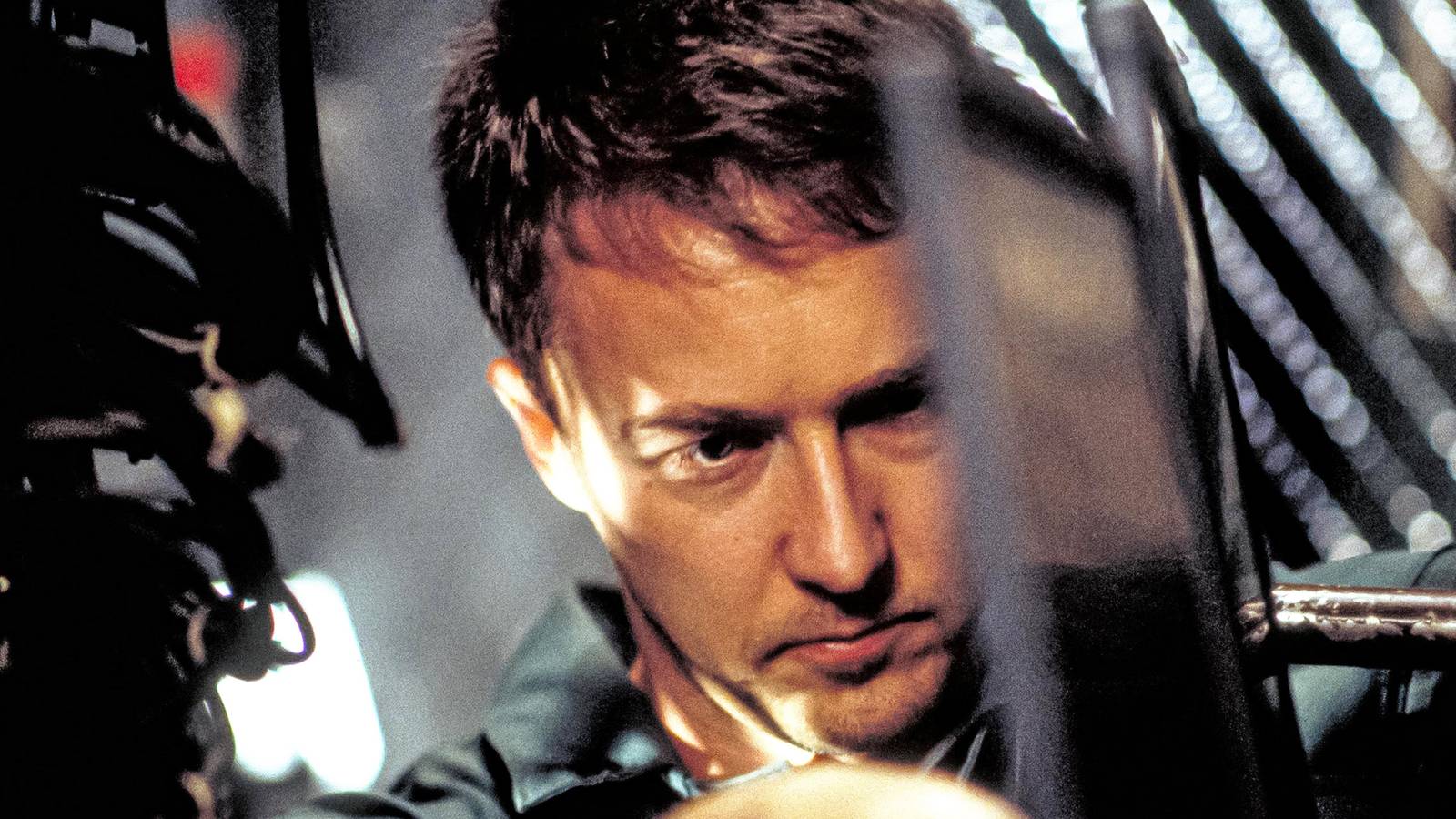
Image via Paramount Pictures Published Jul 19, 2026, 12:41 PM EDT Anja Djuricic was born in Belgrade, Serbia, in 1992. Her first interest in film started very early, as she learned to speak English by watching Disney animated movies (and many, many reruns). Anja soon became inspired to learn more foreign languages to understand more movies, so she entered the Japanese language and literature Bachelor Studies at the University of Belgrade. Anja is also one of the founders of the DJ duo Vazda Garant, specializing in underground electronic music influenced by various electronic genres. Anja loves to do puzzles in her spare time, pet cats wherever she meets them, and play The Sims. Anja's Letterboxd four includes Memories of Murder, Parasite, Nope, and The Road to El Dorado. Sign in to your Collider account The heist movie genre is one of cinema's most undeniable pleasures. There's something deeply satisfying about watching a crew of professionals (or lovable amateurs) execute an elaborate, impossible plan against equally impossible odds. The genre offers a unique medley: the tension of the setup, the precision of the execution, the inevitability of the double-cross, and the catharsis of the escape. Some of the best heist movies out there have that inevitable and beloved "gathering the crew" montage—arguably the best part of any heist movie. For every Ocean's Eleven or Heat that becomes a cultural touchstone, there's a plethora of heist films that slipped through the cracks and remained in the "forgotten gems" category; although they likely didn't get the blockbuster marketing push, time has been kind to them, and they remain underrated. From the first frame to the last, the forgotten heist movies that are perfect from start to finish deliver the tension, the twists, and the catharsis that they promise. 'The Bank Job' (2008) Image via Lionsgate Jason Statham built a career on being the most reliably entertaining action star working today, but The Bank Job is a reminder that he can do more than throw punches; he can carry a real thriller. Directed by Roger Donaldson and loosely based on the real 1971 Baker Street robbery, the film is set in London and follows Terry Leather, a small-time used-car dealer and petty crook who's offered what sounds like a simple job: tunnel into a bank vault and empty out the safety deposit boxes inside. Terry, of course, quickly learns that nothing about this job is simple. The boxes in the bank turn out to hold secrets tied to British intelligence and the royal family, secrets powerful people are willing to kill to protect, and the film spends its runtime escalating from a straightforward heist into a genuine conspiracy. Statham gives one of his most restrained performances here, anchoring the chaos with a working-class charm that never crosses the line into camp, and Donaldson's sharp, grimy-glamorous period cinematography keeps the whole thing feeling dangerous. It's the type of tight thriller that explains why Statham became a star in the first place; it's also the most popular title on this list, making it easy to overlook how good it is. 'Quick Change' (1990) Image via Warner Bros. Bill Murray has one directing credit to his name, and almost nobody talks about it, which is a genuine shame given how much Quick Change still feels relevant and rewatchable (though Geena Davis' account may not deem it as such). Murray also stars in the film, playing Grimm, a New Yorker who's had enough of the city and decides to rob a midtown Manhattan bank while dressed as a clown, alongside his girlfriend Phyllis (Davis) and best friend Loomis (Randy Quaid). The premise sounds like a singular, sketch-worthy gimmick, but the film uses it as a launchpad into even bigger, widespread chaos. Quick Change stands out among similar movies of its class by making the robbery the easy part of the story. The real ordeal is getting out of New York City afterward, as the trio gets tangled in bureaucratic nonsense, rotten luck, and the sheer chaos of the five boroughs just trying to reach the airport. The film gleefully subverts heist-movie conventions, finding comedy in the most mundane obstacles possible rather than shootouts or double crosses. Murray's deadpan delivery is razor-sharp, and the supporting cast — Jason Robards, Tony Shalhoub, and Stanley Tucci — is impressive. Quick Change flopped at the box office, grossing about $15.3 million against a $17 million budget, but it's since become a cult favorite that only gets funnier with each viewing. 'The Score' (2001) Image via Paramount Pictures Some casts are so stacked they sometimes tend to feel like a marketing gimmick; on paper, The Score looks like exactly that: Robert De Niro, Edward Norton, Angela Bassett, and Marlon Brando are first billing here, and for each of them, the 2000s were a defining era in many ways (for Brando, in particular, this turned out to be a final screen role). Directed by Frank Oz, The Score is a straightforward "one last job" story; De Niro plays Nick Wells, a veteran safecracker who's ready to retire and run his Montreal jazz club full-time, until his fence, Max (Brando), talks him into one final heist: stealing a priceless scepter locked inside the city's customs house. The issue is that Nick has to work with Jackie (Norton), a brash young thief with an inside connection to the building and an agenda nobody else is quite sure about. The film builds its tension almost entirely out of that pairing, with Norton's unpredictable energy keeping both Nick and the audience off-balance long before the actual robbery starts. Oz wisely lets the performances carry the suspense rather than leaning on flashy set pieces, which makes the film feel more grounded than most heist movies from the same era. Made on a $68 million budget, it grossed around $114 million worldwide, which is a solid if unspectacular return for a film that deserves to be remembered as more than a novelty gathering of cinema legends. 'Grand Slam' (1967) Image via Paramount Pictures Of everything on this list, Grand Slam is by far the most obscure; it's an Italian-Spanish-German co-production most audiences today have never heard of, let alone seen, which, if anything, only strengthens its case as a forgotten gem. Edward G. Robinson stars as Professor James Anders, a mild-mannered American teacher living in Rio de Janeiro who, after decades of watching a diamond company from across the street, decides he's bored enough to plan the perfect crime. He recruits a team of international specialists, played by Janet Leigh, Klaus Kinski, and Robert Hoffmann, to pull off the theft during the chaos of Rio's Carnival. The structure of Grand Slam is flawless; the actual robbery unfolds with stunning precision, closer in spirit to the greatest heist film of all time, Rififi, than any particular shootout-heavy caper. The real tension shows up only afterward, in the paranoia and slow-building distrust among a crew that no longer needs each other after a done deal. With a score by Ennio Morricone and location work that makes full use of Rio's skyline and streets, Grand Slam earns a place alongside the genre's best. It's lean, stylish, and proof that a heist movie's characters matter as much as its vision. Collider Exclusive · Action Hero Quiz Which Action Hero Would BeYour Perfect Partner? Rambo · James Bond · Indiana Jones · John McClane · Ethan Hunt Five legends. Five completely different ways of getting out alive — with style, with muscle, with charm, with luck, or with a plan so intricate it probably shouldn't work. Ten questions will reveal which action hero was built to have your back. 🎖️Rambo 🍸James Bond 🏺Indiana Jones 🔧John McClane 🎭Ethan Hunt FIND YOUR PARTNER → 01 You're dropped into a dangerous situation with no warning. What do you need most from a partner? The first few seconds tell you everything about who belongs beside you. ASomeone who already has three contingency plans running and is calmly working through all of them. BSomeone who reads the terrain instinctively and knows exactly how to use it against the enemy. CSomeone who keeps their nerve and their sense of humour when everything is falling apart. DSomeone who knows the history of wherever we are and what we're walking into. ESomeone with the right contact, the right cover identity, and the right exit already arranged. NEXT QUESTION → 02 You have to get somewhere dangerous, fast. How do you travel? How you get there is half the mission. AOn foot through terrain no one else would attempt — I move where vehicles can't follow. BOn a motorcycle, a cargo plane, or anything else that gets me there before I think too hard about it. CIn something that belongs to someone else — borrowed, stolen, or improvised under fire. DFirst class, with a cover identity and a gadget that does something I won't explain until it's needed. EBy whatever means are available — I've driven, flown, and once arrived by camel. The destination matters, not the method. NEXT QUESTION → 03 You're pinned down and outnumbered. What does your ideal partner do? This is when you find out what someone is really made of. ADisappears into the environment, flanks them silently, and ends it before I've reloaded. BCracks a one-liner, grabs a fire extinguisher or a chair, and improvises something that somehow works. CProduces a gadget specifically designed for this exact scenario and uses it with infuriating precision. DPulls out a whip, a pistol, and an archaeological insight that somehow gets us out alive. ENeutralises the threat with maximum efficiency and minimum words — they were already three moves ahead. NEXT QUESTION → 04 The mission is paused. You have one evening to decompress. What does your partner suggest? Who someone is when the pressure drops is who they actually are. AA bar with terrible lighting, cold beer, and absolutely no questions about feelings. BThe finest restaurant in the city, a bottle of something expensive, and a conversation that is equal parts brilliant and exhausting. CA local dig site, a museum after hours, or a long story about why that particular artefact matters to human civilisation. DPizza. Bad TV. Falling asleep halfway through a movie neither of you were watching anyway. EA debrief that turns into three hours of contingency planning that somehow becomes the most fun you've had all week. NEXT QUESTION → 05 How do you prefer your partner to communicate mid-mission? Good communication is the difference between partners and a liability. APrecise and minimal — tell me what I need to know and nothing else. Every word has a cost. BDeadpan and dry — keeping it light keeps me sharp, even when everything is on fire. CEnthusiastic and slightly chaotic — but always with useful information buried somewhere in the noise. DCalm and controlled through an earpiece, with a plan that covers every variable I haven't thought of yet. EBarely at all — silence is a language and they speak it fluently. NEXT QUESTION → 06 Your enemy is powerful, well-resourced, and has the upper hand. How should your partner approach them? The approach to the enemy defines the partnership. AInfiltrate their inner circle, learn everything, and dismantle them from inside out before they know we're there. BStudy the historical pattern — every villain of this type has a weakness written somewhere in the past. CGet them talking. The more they monologue, the more time I have to figure out how to beat them. DGo through them. Directly. With as much force as the terrain allows. EFind the one thing they haven't accounted for — there's always one thing — and make sure we're holding it. NEXT QUESTION → 07 Things go badly wrong and you're captured. What do you trust your partner to do? Who someone is when you need them most is the only thing that matters. ACome in alone, quietly, and get me out before anyone knows they were there. BHave already been working on the extraction since the moment I disappeared — the plan is already running. CCome in loud, come in fast, and worry about the collateral damage later — I'd do the same for them. DUse every resource, every contact, and bend every rule until I'm out — they don't leave people behind. ECharm their way in somehow, bluff through the hard part, and still manage to look good doing it. NEXT QUESTION → 08 What does your ideal partner bring to the table that you couldn't replace? A great partner fills the gap you didn't know you had. ATechnology that shouldn't exist yet and the training to use it under any conditions. BSurvival instinct so refined it borders on supernatural — and the scars to prove it's been tested. CKnowledge of history, language, and culture that makes them invaluable in places where force is useless. DThe ability to walk into any room in the world and immediately become the most trusted person in it. EStubbornness that refuses to accept a situation is hopeless — and the improvisational skill to back it up. NEXT QUESTION → 09 Every partnership has a cost. Which of these can you live with? No one comes without baggage. The question is whether you can carry it together. AA partner who never fully switches off — always watching exits, always calculating threats, even at dinner. BA partner who gets the job done brilliantly but has the emotional availability of a locked filing cabinet. CA partner who makes everything ten times more complicated than it needs to be — but who always comes through. DA partner who gets personally attached to every relic, ruin, and artefact we encounter, which slows everything down. EA partner who was not built for this and knows it — but shows up anyway, every time, without being asked. NEXT QUESTION → 10 It's the final moment. Everything is on the line. What do you need from your partner right now? The last question is the most honest one. AOne line. Absolutely dry. Delivered like the world isn't ending. Then we move. BNothing said at all — just a look that means we both already know what has to happen. CA plan I don't fully understand that somehow accounts for everything, delivered in thirty seconds flat. DA piece of historical context that reframes the entire situation and tells us exactly what to do next. ESomeone who steps forward instead of back — because that's who they've always been. REVEAL MY PARTNER → Your Partner Has Been Assigned Your Perfect Partner Is…Your answers have pointed to one action hero above all others. This is the person built to have your back — for better or considerably, spectacularly worse. RamboYour partner doesn't talk much, doesn't need to, and will have assessed every threat in your immediate environment before you've finished your first sentence. John Rambo is not a man of plans or politics — he is a force of nature shaped by survival, loyalty, and a capacity for endurance that goes beyond anything training can produce. He will not leave you behind. He has never left anyone behind who deserved to come home. What you get with Rambo is the most capable, most quietly ferocious partner imaginable — one who has been through things that would have broken anyone else, and who chose to keep going anyway. You'll never need to ask if he has your back. You'll just know. James BondYour partner will arrive perfectly dressed, perfectly briefed, and with a cover story so convincing it'll take you a moment to remember what's actually true. James Bond is the most professionally dangerous person in any room he enters — and the most disarmingly charming, which is the point. He operates in a world of layers, where nothing is what it appears and every advantage is used without apology. You'll never be bored. You'll occasionally be furious. But when it matters — when the mission is genuinely on the line and the margin for error has collapsed to nothing — Bond is exactly the partner you want. He has survived things that have no business being survivable. He does it with style. That is not nothing. Indiana JonesYour partner will know the history, the language, the cultural context, and exactly why the thing everyone else is ignoring is actually the most important thing in the room. Indiana Jones is brilliant, reckless, and occasionally impossible — but he is also one of the most resourceful, most genuinely knowledgeable partners you could find yourself beside. He approaches every situation with a scholar's eye and a brawler's instinct, which is an unusual combination and a remarkably effective one. He hates snakes and gets personally attached to objects of historical significance, both of which will slow you down at least once. It doesn't matter. What Indy brings is irreplaceable — and the adventures you'll have together will be the kind people write books about. Assuming you survive them. John McClaneYour partner was not supposed to be here. He does not have the right equipment, the right information, or anything approaching the right odds. He has a sarcastic remark and an absolute refusal to accept that the situation is as bad as it looks. John McClane is the greatest accidental hero in the history of action cinema — a man whose superpower is stubbornness, whose contingency plan is improvisation, and whose capacity to absorb punishment and keep moving would be alarming if it weren't so useful. He will complain the entire time. He will make it significantly more chaotic than it needed to be. And he will absolutely, unconditionally, without question come through when it counts. Yippee-ki-yay. Ethan HuntYour partner has already run seventeen scenarios by the time you've finished reading the briefing, and the plan he's settled on involves at least two things that should be physically impossible. Ethan Hunt operates at the absolute edge of human capability — technically, physically, and intellectually — and he brings the same relentless precision to protecting his partners that he brings to dismantling organisations that shouldn't exist. He is not easy to know and he will never fully tell you everything. But he will carry the weight of the mission so completely, so absolutely, that your job is simply to trust him — and the remarkable thing is that trusting him always turns out to be the right call. The mission will be impossible. He will complete it anyway. ↻ RETAKE THE QUIZ 'Logan Lucky' (2017) Steven Soderbergh built his reputation on the Ocean's trilogy, so it's telling that when he came out of a brief retirement in 2017, he chose to make Logan Lucky, which has fondly been referred to as "Ocean's 7-Eleven." Logan Lucky is a heist movie stripped of tailored suits and Vegas glamour and dropped into rural West Virginia instead; Channing Tatum stars as Jimmy Logan, a construction worker who's just been laid off and decides, almost on a whim, to rob the Charlotte Motor Speedway during a NASCAR race. He recruits his one-armed bartender brother Clyde (Adam Driver), his hairdresser sister Mellie (Riley Keough), and a locked-up, deadpan safe cracker named Joe Bang, played by Daniel Craig in one of the most outstanding performances of his career. Logan Lucky steers away from the genre's usual playbook through how it treats the characters it introduces. They're working-class people with real financial stakes, and the film takes their plan just as seriously as it would a team of George Clooney-style professionals. The heist itself is genuinely clever, the humor is bone-dry, and Soderbergh directs with the same effortless confidence he brought to his glossier work. Made for around $29 million, it earned back roughly $48 million worldwide, a modest return the film's critical reception never quite matched; Logan Lucky is a joyful movie that actually gets better with repeat viewing. 'Thief' (1981) Image via United Artists Before Michael Mann became the filmmaker behind Heat and Collateral, he made his feature debut with Thief, a film that already has his entire visual language fully formed: neon-soaked nights, rain-slick streets, and criminals defined more by their code than by the crimes they commit. Though Thief barely escaped the jaws of time, modern audiences remember it for its influence on later cinematography, particularly in the crime caper genre. James Caan stars as Frank, a professional safecracker in Chicago who wants nothing more than to leave that life behind and build a family. Standing in his way is Leo (Robert Prosky), his mentor and fence, who has no intention of letting his best earner walk away. Thief is the kind of heist film that's less interested in the mechanics of a single job than in the crushing weight of the job that forces Frank to stay trapped inside it; retirement from a life of crime is harder than he imagines, as it turns out. Tangerine Dream contributed a stunning synth score that gives the film its hypnotic, almost dreamlike rhythm, and Caan delivers one of the greatest performances of his career, portraying rage beneath a carefully maintained calm. Thief had a quiet release, but its influence far outweighed its financial gains, allowing Mann's debut to reverberate through crime cinema for decades. It's moody, aesthetic, and human, and it rewards anyone who sits with it. 'Ronin' (1998) Image via United Artists John Frankenheimer spent much of his career making sharp, paranoid political thrillers, and Ronin is what happens when that sensibility and his undeniable talent are pointed at the crime caper/heist genre instead. Robert De Niro portrays Sam, leading an ensemble of former intelligence operatives, played by Jean Reno, Stellan Skarsgård, and Sean Bean; Sam and his crew are hired by a mysterious handler named Deirdre (Natascha McElhone) to steal a heavily guarded briefcase. What's inside is never revealed, and the film is smart enough to know that that very mystery matters more than any answer could. Ronin, unlike some of the other entries on the list, is primarily about the job itself, depicting the shifting loyalties of people who no longer have a country or cause, as well as the cold professionalism they resort to instead. Its car chases through Nice and Paris are still among the best ever filmed, and David Mamet's rewrites give the dialogue a bite that most action films of the time lacked. Ronin underperformed significantly at the box office when it was released, but audiences that have seen it gave it overwhelmingly positive reviews (though critics didn't seem as thrilled). Ronin has aged pretty well, and we could argue for it to be the best forgotten heist film on this list. Ronin Release Date September 25, 1998 Runtime 122 minutes Director John Frankenheimer Writers David Mamet Producers Frank Mancuso Jr. Main Genre Action Budget $55 Million Studio(s) United Artists, FGM Entertainment Distributor(s) MGM Distribution Co.
7 Forgotten Heist Movies That Are Perfect From Start to Finish
Full Article
📰 Original Source
Read full article at Collider →KhanList aggregates and links to publicly available news content. We do not host full articles from third-party sources. Always verify important information with original sources.