
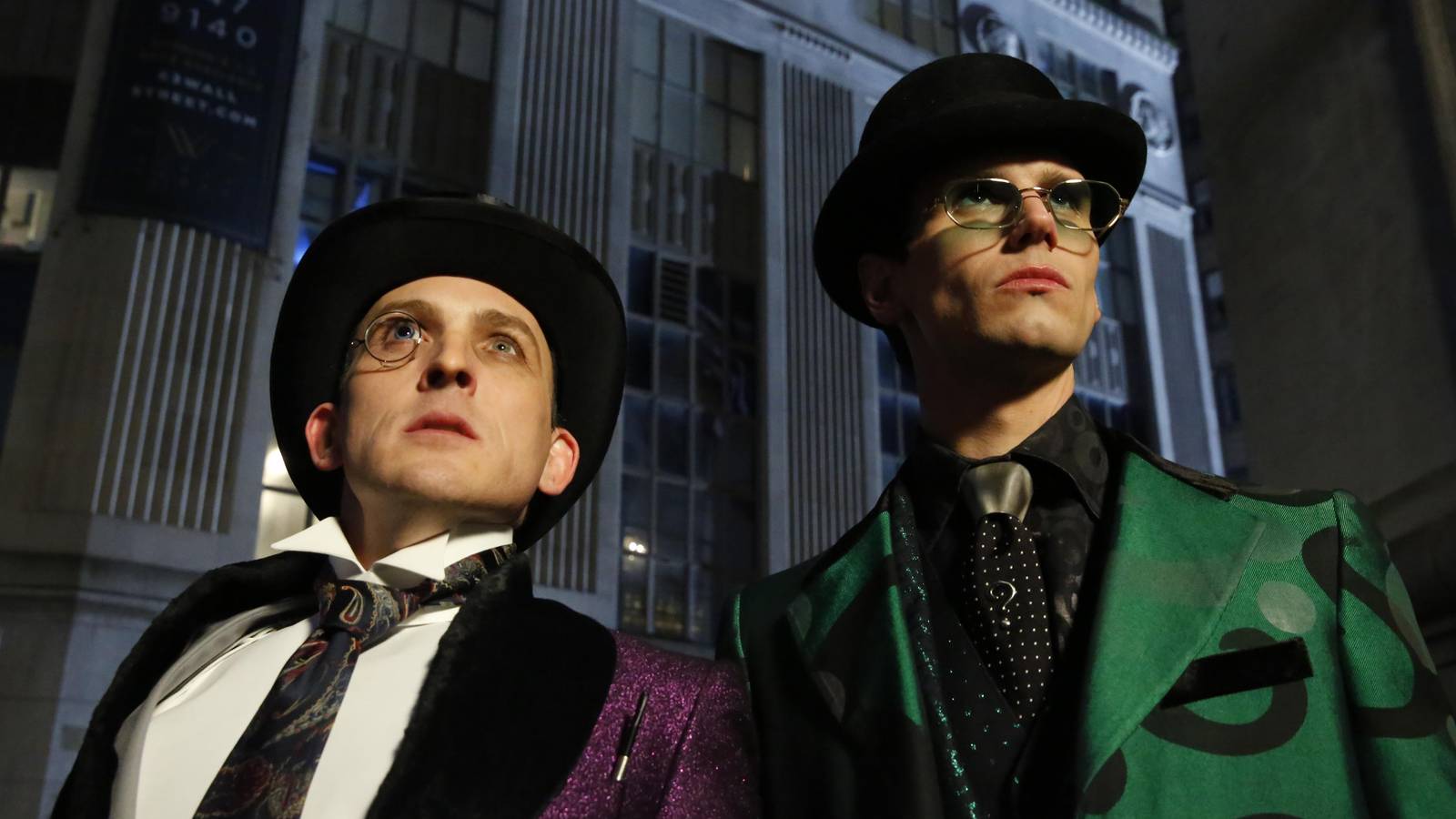
Published Sep 19, 2026, 6:47 PM EDT Ben is a Senior Writer on the New TV team at Screen Rant. He graduated from the University of Central Lancashire with a First Class B.A. Degree in English Literature and History. Born and raised in Ireland, Ben has always had a love for storytelling in all forms of media and operates multiple projects under the name Benjamin Blogs. Ben is a comic book writer and podcast host, in addition to his work as an entertainment journalist. He has worked as both a writer and editor for Screen Rant, Collider, and other media outlets across various departments, including features, news, reviews, and interviews. Gotham took a big risk with adapting the Batman story from a whole different angle, which didn't always pay off when it came to adapting villains. I'm all for experimentation and innovation when it comes to reimagining a superhero story and trying to find a fresh new angle, but there's no denying that this also introduces a lot of challenges. For Gotham in particular, a series that shines a spotlight on the grimy and gritty world of Gotham City, the home of Batman and a vast and intricate villain network controlled by syndicates, powerful corrupt families, and numerous other secretive organizations, the attempt to create a prequel story is admirable and ambitious in a way that few shows even attempt. Of course, we get a young Bruce Wayne, prior to his training and refinement as the Gotham Guardian, but much of the story focuses instead on Officer James Gordon, years before his promotions, as he struggles to keep this city and its deeply corrupt inhabitants under control. And unfortunately, this led to many iconic Batman villains having their stories drastically altered to the point of being almost unrecognizable in the show. Bane (Eduardo Dorance) Starting off strong, one of the most upsetting departures has to be Bane. While the character retains a very similar version of his name, and there is a loose connection to the figure in the comics, Eduardo Dorance in Gotham was a major downgrade from the tactical mastermind that is seen in the comics. Bane is a serious threat to Batman in the comics, with an intense rivalry that sees these characters repeatedly butt heads, but in Gotham, with Batman absent from the story, the alteration sees this character become an old military buddy of Jim Gordon who loses his way. Rather than the venom-fueled behemoth who wreaks havoc, Eduardo in the series is a sidekick at best, with a metal faceplate, and no real resemblance to the monster that is willing to go to such extremes to take down his rivals. Poison Ivy (Ivy Pepper) Another issue that stems from the timeline of the series comes in the form of some characters being young, to match the teenage Master Wayne, and others being considerably older, making them a better candidate to face off against Jim Gordon. But of course, no way would age stop the story from barreling on however the writers' room saw fit. This plays out in a frankly bizarre and uncomfortable way with Ivy Pepper in particular, who is clearly meant to be Gotham's version of Poison Ivy. Initially, she starts out as a young girl with a connection to Selina Kyle. Then, through a chemical accident, she not only gains incredible powers to communicate with plants, but also becomes a fully matured adult woman. Doubling down on the creepy and confusing nature of this edit, the character is then used primarily as a supernatural siren who attempts to lure her unsuspecting victims away, but remember, this is a literal child in a woman's body. It eliminates any sense of the brilliant botanist on a mission to save nature, and replaces it with a deeply uncomfortable story that should never have made it onto TV. The Joker (The Valeska Twins) One of the absolute best villains in comic book history, beyond the realm of Batman or Gotham, is, of course, the Joker. So, it makes sense that the character was closely protected, and the show was not allowed to directly translate the character to the small screen. However, there is no doubt who the Valeska twins were supposed to imitate. Now, Cameron Monaghan's performance was outstanding. There is no denying that, and it would have been incredible to see this talented actor tackle the role more directly, without the strings that held him back. But, the convoluted way that the Valeska twins ended up being a pair of cursed young men who were lacking any real control over their destiny massively betrayed the character. There should have been either a stronger distinction to ensure this character was not comparable to the Joker, or full approval to simply make this canon, and avoid the messier plot. As a result, we could have finally had an origin to the mysterious Clown King of Gotham, but alas, it was not meant to be. Harley Quinn (Ecco) Meanwhile, a character who was less protected than the iconic Joker was, of course, his faithful assistant and ally, Harley Quinn. Now, to ensure the Joker divide was still upheld, rather than call the character Harleen Quinzel and fully dive into their connection, the show opted to have a character that strongly resembles the core concept of Harley and call her Ecco. Ecco is interesting in the show, but again, because of the confusing distinctions and attempts to mask any connection, it felt like a lackluster rip-off who was constantly compared to a more fully realized character than something that stood out independently. With her loyalty established from the outset, and a complete absence of her history as an accomplished psychiatrist who is won over by the charm and madness of the Joker, this iteration fails to live up to the original, and loses almost every detail that made her worth engaging with. Ra's al Ghul One of the most challenging parts of the Gotham lore revolves around when and why Bruce Wayne leaves Gotham and trains to become Batman. From the start of the series, Bruce has already lost his parents, and is in the care of his loyal butler and family friend, Alfred Pennyworth. However, rather than run away and train in the mountains under tutors like Ra's al Ghul to become the vigilante hero of Gotham, he spends a lot of time moping around, some time training with Alfred, and his spare time waving his money around to try and get a closer look at the darker corners of Gotham. So, when Ra's al Ghul shows up, there is no tension. The character stops being a powerful and manipulative leader of a highly trained terrorist organization, and he becomes an odd mystical evildoer surrounded by underqualified members of a secret organization that fails to come close to enacting their evil plans. The Mad Hatter (Jervis Tetch) One of the most egregious reimaginings of a classic Batman villain, Jervis Tetch, is downgraded from a brilliant but broken monster who uses his scientific and technological knowledge to bring about change, to a lunatic hypnotist with an uncomfortable infatuation with his sister; this was a bizarre shift away from the comics in favor of something so much worse. For instance, Jervis Tetch in the comics has an obsession with Alice in Wonderland, not his sister. This change alone warps the story and turns it into something that feels so much more grotesque, and so much less impactful or articulate. It just doesn't do anything to add to the character in favor of removing anything that makes them unique or interesting while turning them into an unsuccessful magic act. Mr. Freeze (Victor Fries) Notably, the depiction as Victor Fries in live-action has been disappointing to say the least. While the most true-to-form iteration of Mr. Freeze comes from Batman: The Animated Series, Gotham had so much more runway to try and develop and expand the character, in the same way that they did for standout figures like the Penguin and the Riddler. Unfortunately, Mr. Freeze takes on the form of a low-level enforcer with some interesting equipment, rather than a tragic genius who is on a mission to save his wife. In fact, the show killed off his wife early in the arc, taking away his motivation and turning him into a loser underling who fails to capture even a piece of the extraordinary narrative that belongs to him in the comics. Gotham had a lot of potential, and in some cases, they did manage to deliver intriguing stories and characters. It's just a shame that so many legendary parts of the narrative fell victim to needless changes that resulted in them losing any defining traits, and ultimately weakening Gotham as a series. Release Date 2014 - 2019-00-00 Network Fox Showrunner Danny Cannon Directors Danny Cannon Writers Bruno Heller Franchise(s) Batman
7 DC Villains Gotham Got Very, Very Wrong
Full Article
Original Source
Read the full article at Screenrant →KhanList aggregates and links to publicly available news content. We do not host full articles from third-party sources. Always verify important information with original sources.