
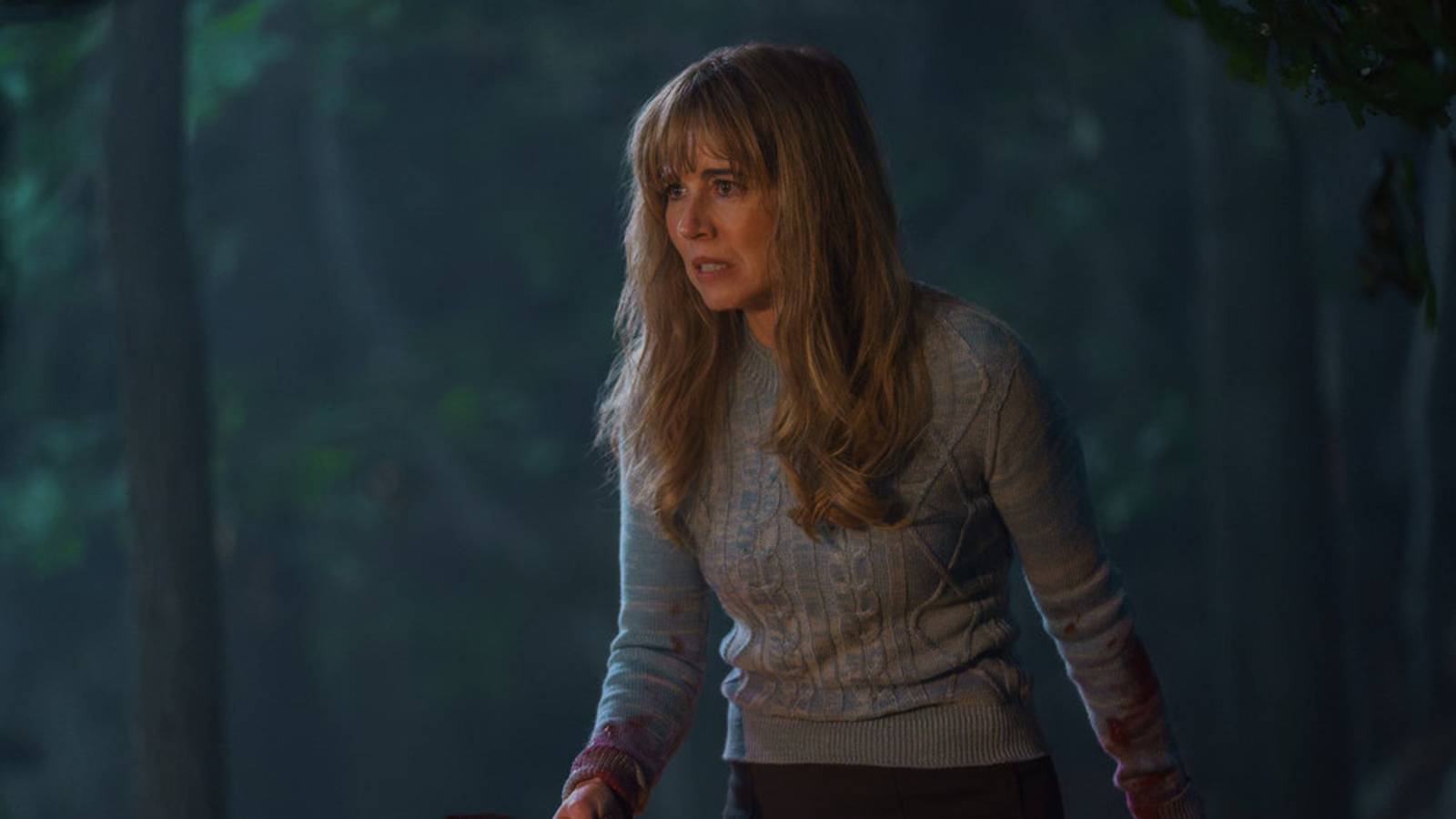
Published Oct 25, 2026, 8:13 AM EDT Senior Music Editor at Screen Rant, Sarah's love of sound and story drive the beat. A globetrotting brand whisperer and award-winning journalist, she’s built cross-cultural narratives around the world—but music has always been her true north. She launched DJ Mag North America, successfully introducing the iconic UK brand to the U.S. market. Previously, she carved a space for EDM inside the pages of VIBE, blending electronic and hip-hop culture long before it was trendy. Pamela Voorhees was already one of horror cinema's most terrifying mothers before Peacock decided to give her an entire television series. Now, Crystal Lake is exploring how a grieving parent became a notorious killer, revealing that the story behind Jason Voorhees' childhood may be considerably more complicated than audiences originally believed. Starring Linda Cardellini as Pamela, the Friday the 13th prequel returns to the 1970s, when Camp Crystal Lake was still welcoming unsuspecting children. The series begins with the tragedy that changes Pamela's life forever, but the premiere also introduces mysterious visitors, disturbing secrets, and the suggestion that someone has been manipulating events behind the scenes. As ScreenRant's Crystal Lake review explores, Cardellini brings considerable emotional complexity to a character previously defined almost entirely by her violent actions. The show's approach makes Pamela simultaneously sympathetic and frightening, particularly as the consequences of her son's death become increasingly horrific. The series also draws inspiration from an unexpected corner of horror history. Beyond the familiar summer-camp murders, Crystal Lake embraces the atmosphere of 1970s paranoid thrillers, in which apparently ordinary communities conceal sinister organizations and powerful individuals who cannot be trusted. That combination makes the series an ideal companion to several horror classics. From the movie that helped inspire the original Friday the 13th to a Brian De Palma thriller involving dangerous experiments and desperate parents, these seven films capture different sides of Crystal Lake's increasingly disturbing mystery. Halloween John Carpenter's Halloween introduced audiences to Michael Myers in 1978, establishing a new blueprint for the modern slasher. Jamie Lee Curtis stars as Laurie Strode, a teenager stalked by a seemingly unstoppable masked killer who returns to his hometown after escaping a psychiatric institution. Carpenter's patient camerawork and unforgettable score create an atmosphere of dread long before the violence begins. The film's commercial success directly inspired the creation of Friday the 13th, making it essential viewing for anyone interested in the origins of Crystal Lake. However, the two franchises approach their villains differently. Michael Myers is presented as an almost unknowable embodiment of evil, while Pamela Voorhees has a painfully recognizable motivation. Revisiting Halloween reveals how effectively the earliest slashers could terrify audiences while revealing surprisingly little about their killers. The Texas Chain Saw Massacre Five young people traveling through rural Texas encounter a family whose horrifying secrets make their road trip a desperate fight for survival. Tobe Hooper's The Texas Chain Saw Massacre, released in 1974, introduced Leatherface, one of cinema's most recognizable killers. Yet the film's true horror extends well beyond its chainsaw-wielding villain, exposing an entire household seemingly divorced from ordinary human morality. Hooper captures a particularly disturbing vision of rural America, where isolated communities can conceal unimaginable violence. His grimy, almost documentary-like filmmaking style makes the encounters feel alarmingly authentic. As explored in why the original Texas Chain Saw Massacre remains so effective, the film achieves much of its terror through atmosphere and implication. That sense of danger lurking beneath an apparently ordinary setting also informs the world of Crystal Lake. The Burning Summer camps have provided horror filmmakers with an unusually reliable supply of isolated victims, and Tony Maylam's The Burning is among the nastiest examples. Released in 1981, the film follows Cropsy, a former camp caretaker who suffers horrific burns following a cruel prank. Years later, he returns to the wilderness seeking revenge, armed with an enormous pair of garden shears. Arriving shortly after Friday the 13th, The Burning embraces the increasingly elaborate violence of the early slasher boom. Special effects legend Tom Savini delivers several spectacularly gruesome sequences, including a notorious attack on campers aboard a raft. Cropsy remains among the most underrated slasher villains, although his motivation is considerably more personal than that of many masked killers. His transformation from victim to murderer makes the film particularly appropriate for viewers fascinated by Pamela Voorhees' descent into violence. Sleepaway Camp Robert Hiltzik's Sleepaway Camp begins with an apparently familiar premise: a group of teenagers arrives at a summer camp where someone starts brutally murdering the residents. Felissa Rose plays Angela Baker, a painfully shy girl who becomes the target of cruel bullying. As the body count increases, the apparently innocent surroundings begin revealing a deeply disturbing history. The 1983 slasher has become infamous for its extraordinarily shocking conclusion, which remains controversial because of its treatment of gender identity. However, the film's unsettling family dynamics and psychological undercurrents give it a distinctive identity beyond its notorious twist. As explored in why Sleepaway Camp has such a complicated legacy, its influence extends far beyond its gruesome murders. For Crystal Lake viewers, the parallels between childhood trauma, family secrets, and summer-camp violence are especially compelling. Carrie Image via MovieStillsDB Brian De Palma's 1976 adaptation of Stephen King's Carrie stars Sissy Spacek as a painfully isolated teenager whose emerging telekinetic abilities become increasingly dangerous. Tormented by classmates and subjected to religious abuse by her mother, Margaret (Piper Laurie), Carrie struggles to understand her powers while longing for an ordinary adolescence. Her eventual transformation into an instrument of destruction remains one of horror's most tragic stories. The relationship between Carrie and Margaret provides an interesting counterpoint to Pamela Voorhees' obsessive devotion to Jason. Both stories tap into the same disturbing family dynamics explored in horror movies even scarier than Other Mommy, where the people closest to a child can become their greatest source of fear. Laurie's terrifying performance as Margaret White makes the character as frightening as anything supernatural in the film. De Palma also refuses to make Carrie's suffering feel insignificant, ensuring that her horrifying revenge carries an overwhelming sense of tragedy. The Stepford Wives Bryan Forbes' 1975 adaptation of Ira Levin's The Stepford Wives follows Joanna Eberhart (Katharine Ross), a photographer who relocates with her family to an idyllic Connecticut suburb. Unfortunately, the town's women appear strangely submissive, and Joanna gradually becomes convinced that something sinister is happening within the apparently respectable community. Her growing suspicions place her in an increasingly dangerous position. The film helped establish a particularly effective brand of paranoid horror, in which the people who should provide reassurance become the greatest source of anxiety. Its exploration of conformity and powerful men controlling women's lives also makes it a sharp piece of social satire. Among the movies that influenced Jordan Peele's Get Out, The Stepford Wives is especially significant. Its atmosphere of manipulation and institutional secrecy feels remarkably appropriate for the sinister conspiracy developing in Crystal Lake. The Fury Brian De Palma returned to supernatural horror with 1978's The Fury, a thriller that combines extraordinary psychic abilities with government conspiracies and a parent's desperate search for his child. Kirk Douglas plays Peter Sandza, a former intelligence agent whose telekinetic son, Robin, has been abducted by a secretive organization seeking to exploit his powers. Amy Irving co-stars as Gillian Bellaver, another young psychic whose abilities place her in considerable danger. The film's mixture of personal tragedy and institutional paranoia makes it an especially fascinating companion to Crystal Lake. Its combination of extraordinary psychic abilities and genuine terror also recalls superhero movies that are basically horror films, although De Palma approaches those powers through the lens of a 1970s conspiracy thriller. Release Date March 10, 1978 Runtime 118 minutes Director Brian De Palma Producers Frank Yablans Cast John Cassavetes Ben Childress Kirk Douglas Peter Sandza Amy Irving Gillian Bellaver
7 Best Horror Movies To Watch If You Love Crystal Lake (Besides Friday The 13th)
Full Article
Original Source
Read the full article at Screenrant →KhanList aggregates and links to publicly available news content. We do not host full articles from third-party sources. Always verify important information with original sources.