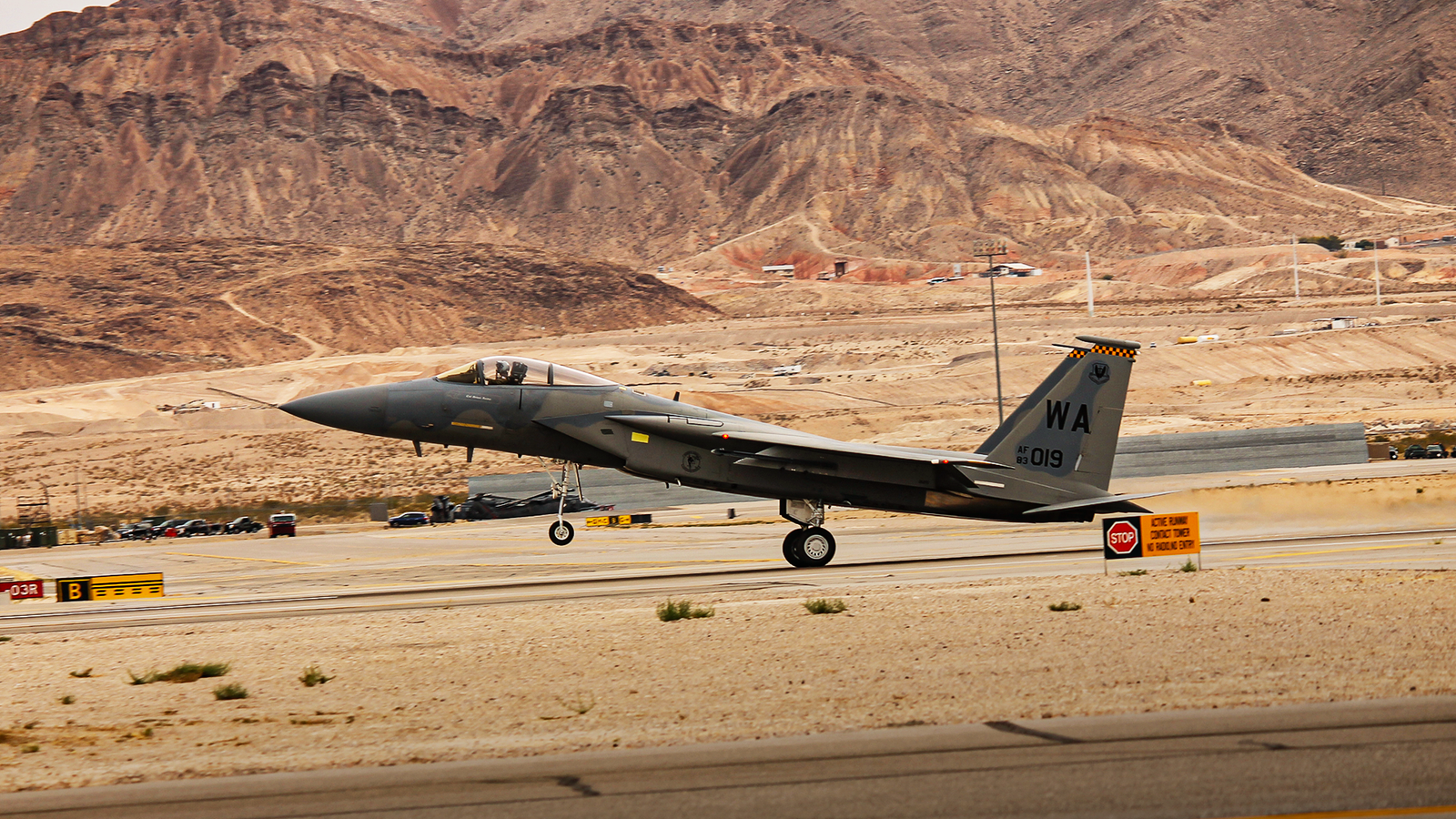
Published Aug 18, 2026, 7:00 PM EDT Luke Diaz is a freelance military writer with experience with active duty experience in the US Navy as well as defense and industrial engineering. He is a former Naval Flight Officer who performed tactical air control on the carrier-based E-2 Hawkeye. Since Operation Epic Fury was launched on February 28, 2026, 42 American aircraft have been lost in combat. Of those, 24 were MQ-9 Reaper drones and one an exceptionally rare MQ-4C Triton drone. The remaining were crewed aircraft, with four shot down and two destroyed on the ground by enemy fire. The Pentagon has reported 18 US military service members killed and 624 wounded in the course of the OEF. Six of those casualties were US Air Force and Air National Guard who lost their lives in the line of duty. Five incidents account for the 17 piloted airframe hulls written off during OEF, including the six that were lost in combat. Friendly Fire Over Kuwait Three fighter jets were shot down Credit: US Air Force Half of the combat losses experienced by the US Air Force were due to friendly fire and not enemy action. There were three Boeing F-15E Strike Eagles shot down by air defenses over the Kuwaiti border on March 1–2. Six aircrew ejected and were recovered without any major injuries reported in the aftermath. However, the three jets will cost the US Air Force roughly $300 million to replace. It was initially believed that surface-to-air missiles incorrectly targeted and shot down the three Strike Eagles, but Air and Space Forces magazine later reported that a Kuwaiti F/A-18 Hornet likely fired the shots. It remains unconfirmed, but it is widely speculated that the two planes were not sharing the same identification friend-and-foe (IFF) data, which led to the Kuwaiti aircrew mistakenly targeting the Americans. Theories have also been put forward that electronic jamming from Iranian systems across the border may have contributed to the friendly fire. Retired Air Force intelligence officer Robert Riggleman summed up the professional reaction bluntly, attributing the loss to compounding failures in operations tempo, training, and mission planning rather than a single point of failure. He was quoted by Military.com as saying: "Friendly fire does happen. But three F-15Es? Downstream effects of ops tempo + lack of training + faulty mission planning + panic. I mission planned F-15Es for a living in the USAF… our military is in Kuwait on permanent station in multiple locations. This is operational incompetence." The shoot-down occurred during a massive, regional barrage which saw Americans lose their lives for the first time in OEF. Six US Army Reserve soldiers from the 103rd Expeditionary Sustainment Command were killed in a drone attack on Port Shuaiba. Kuwaiti forces were on edge after the dense wave of ballistic missiles and cruise missiles, and drone swarms. The Fog Of Battle Claims American Lives Two tankers collide during nighttime combat support Credit: US Air Force The most tragic incident for US aircrews supporting OEF so far was not attributed to friendly or enemy fire but rather a midair collision on March 12. Details surrounding the mishap are scarce, but publicly released information indicates that one Boeing KC-135 Stratotanker jet struck another plane of the same type. Photos shared on Facebook show the top of the tail sheared off on the plane that landed. The second tanker crashed in Western Iraq, and all six souls aboard perished. The USAF has not carried parachutes aboard KC-135s since 2008, meaning that an emergency landing is the only means of safely egressing from a crippled Stratotanker. It is unclear if the plane immediately lost control or if the pilot attempted to land in the desert. Of the six service members killed, three were from the Air Force, and three from the Air National Guard. These are the names, as released by the Pentagon: Position Service Member Lost In The Line Of Duty Pilot Major John A. Klinner (33, Auburn, Alabama) Co-Pilot Captain Ariana G. Savino (31, Covington, Washington) Boom Operator Technical Sergeant Ashley B. Pruitt (34, Bardstown, Kentucky) Relief Pilot Captain Seth R. Koval (38, Mooresville, Indiana) Relief Co-Pilot Captain Curtis J. Angst (30, Wilmington, Ohio) Relief Boom Operator Technical Sergeant Tyler H. Simmons (28, Columbus, Ohio) The KC-135 is a decades-old airframe that first entered service in the Eisenhower era. These planes were tasked with serving as the airborne refueling bridge, supporting long-range combat sorties to extend the range of tactical planes such as fighters and bombers. This typically keeps them far from the frontlines, and the antiquated airframes and modestly upgraded avionics greatly increase aircrew workload during intense ops. Air-to-air tankers fly in extreme proximity to other planes during refueling rendezvous. At night, this is performed in blackout conditions, with external lights off and electronics in receive-only mode or fully silenced. Under these conditions, the aircrew of all the planes involved rely on data link and night vision. All the full details are not available to the public; the tragic accident on March 12 remains the deadliest incident for the USAF since OEF began. Caught In A Crossfire On The Tarmac One tanker and one command plane were destroyed on the ground Credit: US Air Force One of the most costly losses to the US Air Force fleet during the OEF took place on the ground when Iranian missiles and drones targeted Prince Sultan Air Base in Saudi Arabia. Located 60 miles (96 km) behind the front line, the airfield was attacked on March 27–28 by a heavy bombardment. The strike destroyed a KC-135 tanker parked on the ramp as well as one Boeing E-3 Sentry Airborne Early Warning and Control aircraft. The E-3 is one of just a handful of Cold War-era examples that are still operational. The command and control plane has a massive radar array on board and carries an aircrew of 20 to 30 officers and airmen who operate a vast suite of radars, sensors, and data-link systems. The Sentry is an irreplaceable asset because the airframe maker, Boeing, and the radar builder, Lockheed Martin, have not provided industrial support for these in decades. Fortunately, there were no casualties reported from the destruction of the two planes on the apron, but losing an E-3 delivered a stinging blow to the coalition fleet's combat capability. The USAF also took the rare step of bringing a mothballed KC-135 out of the Davis-Monthan AFB 'Boneyard' for restoration and reintroduction into the tanker fleet to fill the fleet gap. Dude 44 Is Lost Behind Enemy Lines One fighter jet shot down Credit: US Air Force On April 3, another F-15E Strike Eagle was hit by Iranian ground fire. Call sign 'Dude 44' was downed over Southern Iran and became the first crewed aircraft lost to enemy fire in the air campaign. The pilot and the weapons systems officer were able to eject, but only one was recovered in the hours that followed. A combat search and rescue operation was conducted over the next 48 hours to bring home the WSO stranded in enemy territory. On April 5, a massive strike package of between 100 and 150 aircraft assembled to suppress any Iranian forces in the vicinity of the survivor. SEAL Team Six, Delta Force, and other Special Forces deployed deep into Iran's deserts aboard Lockheed MC-130J Commando II transports as well as helicopters. They were supported by strike fighters and bombers operating at high altitude to provide close air support. The extraction of Dude 44 proved successful but also led to additional airframe losses. No aircraft of the strike team were shot down by the enemy during the evacuation phase. Instead, the aircraft were intentionally destroyed because they could not take off after touchdown. Two MC-130 transports became severely bogged down in wet, unstable sand at the makeshift forward landing zone. The MC-130Js and two MH-6 Little Bird helicopters were blown up as the remaining planes extracted the strike team and survivors. At the same time, the lead CAS plane was struck repeatedly by a combination of heavy Iranian anti-aircraft fire and small arms. Sandy Takes The Hit For The Team One tank buster was shot down Credit: US Air Force The unseen mission commander for the close air support assets during a CSAR op goes by the call sign 'Sandy,' and is typically a Fairchild Republic A-10 Thunderbolt II. The venerable Cold War tank killer remains the top choice for troops on the ground calling in air support, making it the preferred low-level CAS asset during combat rescues. When the special warfare team landed to extract Dude 44, they reportedly engaged in a 'vicious' gunfight. The A-10 on mission used its famous cannon to strafe targets in support of the spec war operators and their helicopter support team. In the course of defending the boots on the ground, Sandy was severely damaged by enemy fire. The pilot successfully navigated the plane out of Iranian airspace, but it was decided that the Warthog could not be landed in its condition. The pilot cleared the border with Kuwait and 'punched out' over the Persian Gulf in range of friendly naval forces. The stricken 'flying tank' was lost at sea, becoming the sixth aircraft downed by combat action during the OEF. The US Navy and coalition maritime assets immediately conducted search and rescue ops and pulled the pilot from the water. Thankfully, there was no loss of life during the CSAR op to rescue Dude 44, and the exceptional performance of the A-10 on this mission and others in the OEF inspired Congress to delay the retirement of the remaining fleet, which was slated for the Boneyard this year.
6 Combat Aircraft Losses & Rescues That Defined Operation Epic Fury
Full Article
Original Source
Read the full article at Simpleflying →KhanList aggregates and links to publicly available news content. We do not host full articles from third-party sources. Always verify important information with original sources.