
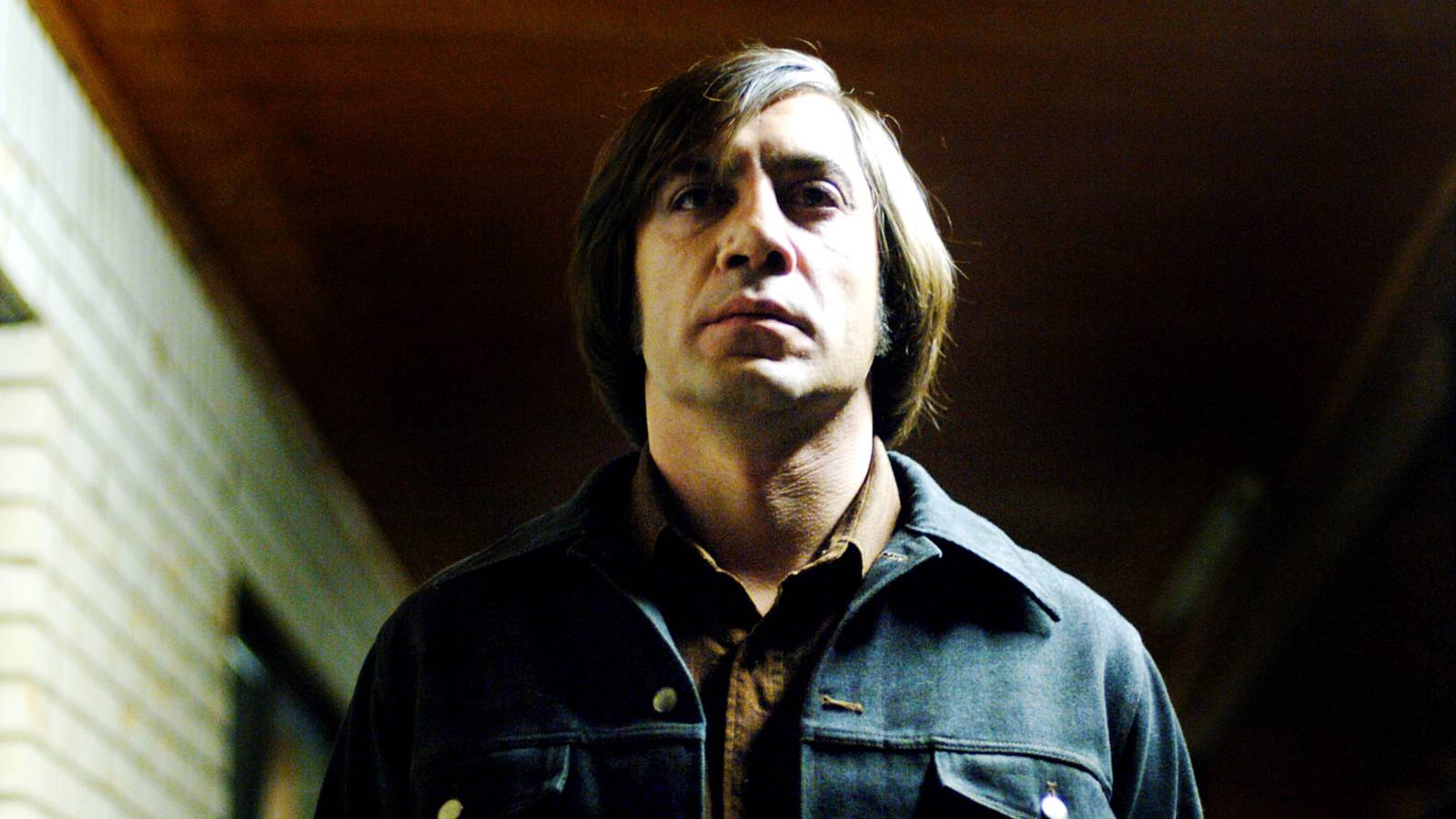
Image via Miramax Films Published Oct 20, 2026, 12:45 PM EDT Sign in to your Collider account I have a weakness for characters who believe they're smarter than the trouble they've walked into. The confidence is usually magnificent. They've calculated everything, prepared their excuses, and identified precisely how much they're willing to compromise. Then somebody asks an unexpected question, their expression changes ever so slightly, and you realize you're about to watch an entire life fall apart. I absolutely love that moment. And please, can we stop discussing neo-noir as though attractive cinematography were its greatest achievement? A beautifully photographed city means very little without interesting people doing questionable things inside it. Give me somebody whose desires are becoming indistinguishable from their mistakes. Make me understand their decisions so thoroughly that I catch myself defending the indefensible. I'll remember a character like that considerably longer than the most spectacular nighttime skyline. These are the 6 best neo-noirs released since 2000. 6 'Collateral' (2004) Image via DreamWorks Pictures In this film, Max (Jamie Foxx) has spent twelve years driving a Los Angeles taxi while planning to establish his own limousine business. One evening, he accepts a lucrative offer from Vincent (Tom Cruise), a seemingly sophisticated passenger who needs transportation between several appointments. Unfortunately, Vincent is a professional assassin, and Max discovers the truth when a body crashes onto his cab. Collateral suddenly becomes an extraordinary contest between two men trapped together, each possessing precisely the qualities the other lacks. Max is compassionate but incapable of making meaningful changes to his life. Vincent makes decisions instantly and considers practically everybody disposable. I could watch their conversations all night. Michael Mann directed the film, and his best approach in this film is making their relationship considerably more interesting than the assassinations themselves. Vincent constantly lectures Max about wasting his life, yet this supposedly liberated killer has devoted his entire existence to a profession that prevents genuine human connection. The jazz-club encounter is particularly chilling because Vincent briefly appears interested in his victim's life before casually disposing of him. Max eventually begins challenging Vincent's entire philosophy, recognizing that his passenger's apparent freedom is another kind of imprisonment. And that final subway scene brings their opposing worldviews together beautifully. Vincent has spent the evening treating human lives as insignificant. And if revealed more, I’d be ruining the film. 5 'Nightcrawler' (2014) Image via Open Road Films Lou Bloom (Jake Gyllenhaal) is an unemployed petty criminal who discovers that freelance cameramen can earn money filming accidents and violent crimes for local television news. He purchases a camera, memorizes the industry's terminology, and gradually establishes himself as an exceptionally ambitious supplier of disturbing footage. Nightcrawler follows his professional development with the enthusiasm of a conventional entrepreneurial success story. The unfortunate difference is that Lou possesses practically no moral instincts, and his career becomes increasingly profitable as he discovers exactly how much suffering television audiences will consume. I find Lou absolutely fascinating because he rarely behaves like somebody who considers himself evil. He speaks almost entirely in motivational jargon, treating exploitation as professional initiative and human relationships as opportunities for negotiation. His dinner with news director Nina (Rene Russo) is especially uncomfortable because he uses his increasing professional value to manipulate their personal relationship. Dan Gilroy wrote and directed the film, and his nastiest decision show when Lou deliberately places his assistant Rick (Riz Ahmed) in danger, then films the consequences. Lou has finally learned everything he needs to know about the business. His reward is an expanding company and a workforce of enthusiastic young employees. That ending makes me considerably angrier than watching him get arrested ever would. 4 'Drive' (2011) Image via FilmDistrict An unnamed Hollywood stunt driver (Ryan Gosling) moonlights as a getaway specialist, offering criminals exactly five minutes of his extraordinary driving abilities before disappearing. His carefully controlled existence changes when he befriends his neighbor Irene (Carey Mulligan) and her young son. After Irene's husband returns from prison, the Driver agrees to help him execute a robbery intended to settle his debts. Naturally, the operation goes catastrophically wrong, dragging the Driver into an increasingly violent conflict with dangerous criminals. Drive gives its protagonist an almost romantic conception of himself as somebody capable of protecting the people he loves through absolute competence. Then comes that elevator scene. The Driver realizes an assassin is standing beside Irene, gently kisses her, and proceeds to kill the man with horrifying brutality. The abrupt transformation is amazing. Irene finally witnesses the violence concealed beneath the quiet man she has come to trust. Her expression destroys the romantic fantasy more effectively than any dialogue could. Gosling's extraordinary restraint makes the Driver fascinating, but his inability to reconcile affection with brutality is what makes him tragic. Nicolas Winding Refn directed this film. Collider Exclusive · 8 Questions · 2 Minutes Which Coen Brothers Movie Would You Thrive In? Lebowski · O Brother · Fargo · No Country Nobody writes people like the Coen brothers. The decent ones. The talkers. The ones who stopped trying years ago. And the ones who can already see how bad this is going to get. Four films, four completely different ways of handling trouble. Eight questions decide which one you would actually walk out of. 🎳Lebowski(1998) 🎸O Brother(2000) ❄️Fargo(1996) 🪙No Country(2007) FIND YOUR FILM → 01 A bag of money lands in your lap. What happens next? Every Coen film starts roughly here. It never goes smoothly. AI do not overthink it. Rent is paid, evening is free. BI have a plan for this. It involves other people. CI hand it in. Somebody is looking for this. DI am gone before anyone knows I have it. NEXT QUESTION → 02 Somebody is being completely unreasonable with you. How does it go? Coen dialogue is mostly people failing to understand each other. AI let it go. It is not worth the energy. BI talk. At length. Until they are on my side. CI stay polite and repeat myself until they hear me. DI stop talking. Talking has not been working. NEXT QUESTION → 03 What is your actual relationship with work? Everyone in these films is either working far too hard or not at all. AI have arranged things so I do as little as possible. BI would rather chase one big idea than hold a steady job. CI do it properly, including the boring parts. DIt pays. I do not need it to mean anything. NEXT QUESTION → 04 Long drive, bad weather, nobody else on the road. How are you? There is always a drive in these films. It is never a good drive. AMusic on, in no hurry, perfectly content. BTalking the whole way, whether anybody answers or not. CBoth hands on the wheel, checking everyone is warm enough. DQuiet, watching the mirrors. NEXT QUESTION → 05 You are offered a shortcut that is not quite legal. This is the moment where the Coens find out who you really are. ANo, but not on principle. It sounds like effort. BYes, and I will make it sound like a great idea. CNo. And I would probably say something about it. DOnly if I am certain nobody finds out. NEXT QUESTION → 06 The plan has fallen apart completely. What is your move? In a Coen film the plan always falls apart. That is the genre. AOrder a drink and let things settle down. BImprovise loudly and hope momentum carries it. CStart again from the beginning and do it right. DCut my losses and leave before it gets worse. NEXT QUESTION → 07 Which of these sounds most like something you would say? Nobody writes a line quite like the Coens. Which one is yours? AIt is really not that serious. BTrust me, I have thought about this. CI just think we could all be a bit kinder. DThat was always going to happen. NEXT QUESTION → 08 How does your film end? Eight questions in, this is the one that decides your movie. ANothing is resolved and I am completely fine with it. BA ridiculous piece of luck saves everybody. CQuietly, at home, with somebody I love. DSomebody older admits they no longer understand the world. REVEAL MY FILM → The Verdict Is In Your Coen Film Is…Four films, four completely different ways of handling money, trouble and other people. This is the one you would survive, why it suits you, and what it would cost you to be there. The Big LebowskiYou have quietly arranged your life so that very little can get to you, and a surprising number of people find that infuriating. You would be completely at home here. The Dude is the only person in the film with no ambition, and the only one who comes out the other side undamaged. That is not an accident. You do not chase things. You let situations arrive and you deal with them at your own pace, which is a genuine skill however lazy it looks. This is a full crime plot happening around a man who mostly wants his rug back, and that is exactly the energy you would bring to it. Everything goes wrong. You abide. The film ends. O BrotherYou talk your way through life and it works far more often than it should. Give you a bad situation and an audience and you will find a way out of both at once. Everett never has a plan that survives contact with reality. He has something better, which is the ability to keep talking until a new one turns up. You are the optimist in the group, the one who makes a ridiculous idea sound reasonable at two in the morning. This is the warmest film the Coens have made. It is a chase, a comedy and a musical at once, and nobody in it is quite beyond saving. You would end up famous entirely by accident, and act like you planned it all along. FargoYou would survive Fargo because you are the only kind of person who does: patient, decent, and completely unimpressed by anybody trying to be clever. Marge Gunderson solves the whole case by being polite, thorough and unhurried while everybody around her panics. That is the entire argument of the film. You do the boring parts of the job, which is precisely why you would notice the thing everyone else walked straight past. Fargo is about ordinary greed causing enormous damage, and about one person who simply refuses to be corrupted by any of it. You would go home at the end of it, have dinner, and sleep perfectly well. No CountryYou do not expect the world to be fair and you stopped being surprised about it a long time ago. That clear-eyed quality is exactly what this film asks for. No Country is the Coens at their coldest: a film where being smart, fast and careful might still not be anywhere near enough. You plan for the worst, you keep your own counsel, and some part of you is already working out the exit. Llewelyn Moss is competent, prepared and resourceful, and the film is honest about whether any of that is ever sufficient. You would see it coming. Whether that helps is the one question the film refuses to answer. ↻ RETAKE THE QUIZ 3 'Memento' (2000) Image via Newmarket Films Memento presents much of its investigation in reverse chronological order, meaning we repeatedly witness the consequences of decisions before discovering what motivated them. Christopher Nolan directed a thriller where the audience is constantly forced to experience Leonard's (Guy Pearce) uncertainty rather than simply observing his condition. Leonard Shelby suffers from anterograde amnesia, leaving him unable to form new long-term memories after a traumatic attack involving his wife. He believes identifying and killing her attacker will give his life purpose, so he relies on photographs, handwritten notes, and elaborate tattoos to preserve information. What fascinates me is how thoroughly Leonard trusts information simply because he previously decided it deserved preserving. Natalie (Carrie-Anne Moss) recognizes this weakness and deliberately provokes him, knowing she can manipulate his understanding of events once his memory resets. Yet the movie's most disturbing revelation concerns Leonard's own willingness to manufacture certainty. His investigation provides meaning to a life that might otherwise become unbearable, and abandoning that purpose could be considerably more frightening than continuing to pursue somebody. I love how the reverse chronology initially feels like an elaborate cinematic puzzle. 2 'Mulholland Drive' (2001) Image via Universal Pictures Betty Elms (Naomi Watts) arrives in Los Angeles hoping to become an actress and discovers a mysterious woman suffering from amnesia inside her aunt's apartment. The stranger adopts the name Rita (Laura Harring), and the two begin investigating her identity, gradually uncovering suspicious money, disturbing connections, and a particularly unsettling corpse. Meanwhile, a filmmaker encounters increasingly bizarre interference with his casting decisions. David Lynch’s Mulholland Drive seems determined to become an elaborate Hollywood mystery, although practically every development creates further uncertainty about the world these characters inhabit. I would recommend this movie for Watts' audition scene alone. Betty initially appears almost painfully innocent, yet her performance suddenly reveals an extraordinary capacity for emotional manipulation and sexual intensity. That transformation contains something essential about the relationship between Hollywood fantasy and personal identity. Then comes Club Silencio, where a singer collapses while her recorded performance continues. The scene practically explains the film's fascination with illusion without making its mysteries any less disturbing. As Betty's story fractures, the glamorous possibilities of her imagined Hollywood existence become inseparable from jealousy, rejection, and despair. I find the final section genuinely devastating. 1 'No Country for Old Men' (2007) Image via Miramax Films I once called No Country for Old Men, The Godfather of westerns, and somebody said I compared it to The Godfather itself. I didn’t. I just meant to convey how good this film was. The movie follows Llewelyn Moss (Josh Brolin), who discovers the aftermath of a disastrous drug deal in the Texas desert and decides to take a briefcase containing approximately two million dollars. Returning to the scene with water for a dying man exposes his involvement, attracting the attention of Anton Chigurh (Javier Bardem), a terrifying contract killer determined to recover the money. Meanwhile, aging Sheriff Ed Tom Bell (Tommy Lee Jones) investigates the escalating violence while struggling to understand the increasingly disturbing world around him. The movie establishes a relatively straightforward criminal pursuit before systematically dismantling practically everything audiences expect from one. Chigurh's conversation with a gas-station proprietor is among my favorite scenes in modern cinema. An apparently meaningless exchange gradually becomes a terrifying confrontation as Chigurh demands that the unsuspecting man gamble his life on a coin toss. The Coen brothers directed the film, and their decision to make Chigurh's violence feel almost procedural is extraordinary. I've revisited the film countless times, and it's Bell's quiet disappointment with the world that follows me home.
6 Best Neo-Noirs Released Since 2000, Ranked
Full Article
Original Source
Read the full article at Collider →KhanList aggregates and links to publicly available news content. We do not host full articles from third-party sources. Always verify important information with original sources.