
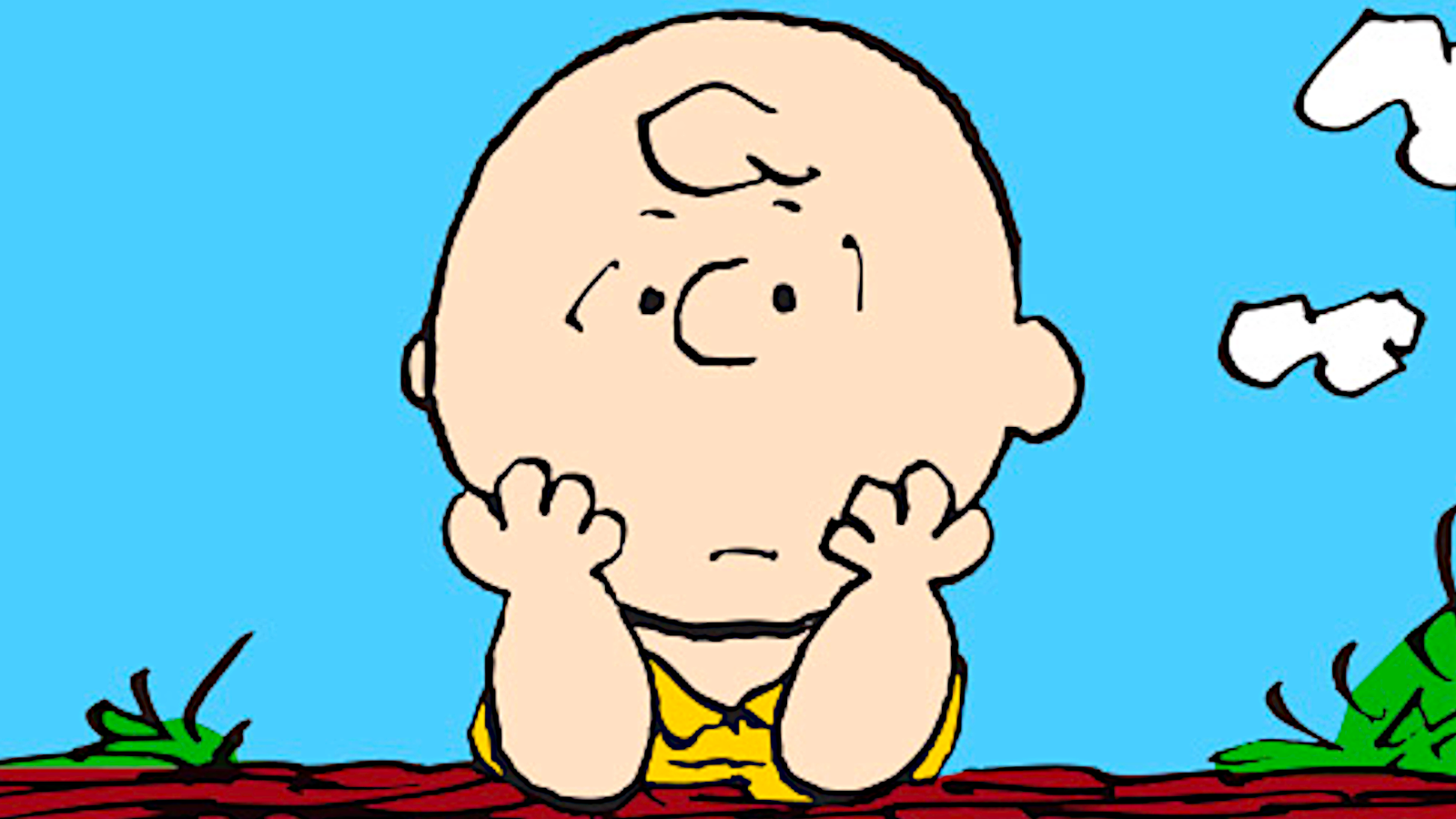
Published Aug 23, 2026, 9:30 PM EDT An experienced Editor representing Canada via ScreenRant's Team Anime, J.R. has been reading manga since the first printing of Shonen Jump in North America. This passion drove him to write about anime, manga, and manhwa since 2022, having recently served as Lead Anime Editor for ComicBook.com. His favorite moments in media coverage include reviewing the series premieres of Zom 100 and Bleach: TYBW Part 2 back-to-back and briefly meeting Junji Ito at a VIZ gallery event in 2023. Sign in to your ScreenRant account Charlie Brown has never been one not to see the numerous setbacks he would face in his perpetual, 50-year childhood that was Peanuts. The Kite-Eating Tree made a point of ruining the boy's fun for decades, lunch would often be a solitary experience, and rejection in its many forms was a common occurrence. For Charlie Brown, though, he retained his famous underdog resilience and shouldered these experiences. But one particular Peanuts arc from 1969 proved too unbearable for him, offering another telling glimpse into the mind of its creator, Charles M. Schulz. The story of Schulz's life famously shares plenty of parallels with that of Charlie Brown, and despite decades of life experiences, he always found a way to communicate his existential and emotional insights through that of a young boy. Schulz may have used comedic gags with Charlie Brown as the wishy-washy butt of the joke, but the arc where his longtime crush, the Little Red-Haired Girl, moved away as perhaps the biggest emotional arc in quite some time. Rather than overcoming his immense shyness, Charlie Brown missed his chance, with the July 23, 1969 Peanuts comic strip giving the biggest gut-punch of all. Charlie Brown's Biggest Emotional Gut Punch Was Peanuts At Its Most Relatable Following close to a week and a half of urgency, paralyzing self-doubt, and ultimately Charlie Brown's self-fulfilling prophecy playing itself out as he's rejected by a girl he's never met, the Little Red-Haired Girl moved away in July 1969. All throughout this arc, Linus Van Pelt is seen with Charlie Brown, continuously warning him that his chance is fading fast. But before they knew it, the boy lost his chance to say goodbye to his crush; he never even got to say hello to her. While the girl would move back to the neighborhood in 1978, there have been few Peanuts strips as heartbreaking as on July 23, 1969, where Sally Brown hears Charlie crying in the night, knowing exactly why. Many people, whether during childhood, adolescence, and even throughout adulthood, have experienced unrequited love and regrets about not telling somebody how they feel before it's too late. Charlie Brown hardly took this as a learning experience, either, wallowing a bit after this strip and even in denial before a swift kick in the pants from Linus the very next day. But what's truly fascinating is learning, or indeed even just reviewing how deep the roots of inspiration run for this particular story in Charlie Brown's life, and how they lead back to Schulz himself. Peanuts' Little Red-Haired Girl Gives A Glimpse Of The Creator's Greatest Heartbreak Charles M. Schulz never made it difficult to tell who inspired various characters of his. Charlie Brown's namesake was a colleague at Schulz's at his old job with Arc Intstruction, Inc., as was Linus Maurer. The Little Red-Haired Girl was no exception, standing in for Donna Mae Wold, born Donna Mae Johnson who worked in their accounting department, and whom Schulz dated until he proposed in 1950, only for Donna to make the difficult but understandable choice of choosing another suitor after her heart, Al Wold. But Donna would remember her time with the Peanuts creator fondly, recognizing his many tributes to her and holding onto many keepsakes until her final years. Schulz had expressed his desire to marry Donna as early as the third date, as Vanity Fair tells it, with Donna proving a remedy for his incredible shyness around girls before then, but as Peanuts and its decades of Little Red-Haired Girl moments show, Schulz was "adept at transmuting his woes." It shows in Charlie Brown regaling Peppermint Patty with the story of his father's old 1934 sedan and the girl he was saying who'd playfully lock him out of it, saying that's what he thinks love is. This exact strip is a reference to the same routine, in a nutshell, that Donna would play with Schulz. October 2, 1950 – February 13, 2000 · 17,897 Strips How Well Do You Know Peanuts? “Good grief!” ⚾Charlie BrownGood Ol’ Chuck 🐕SnoopyThe Flying Ace 🧣LinusSecurity Blanket 🏈LucyPsychiatric Help 🐥WoodstockBest Friend PLAY BALL → 01 Before Peanuts launched in 1950, Charles M. Schulz drew a weekly cartoon panel for the St. Paul Pioneer Press. What was it called? ALi’l Folks BSmall Fry CThe Sandlot DJust Kids ✓ Correct! Li’l Folks ran from 1947 to 1950. When the syndicate renamed the new strip “Peanuts,” Schulz hated the title for the rest of his life. ✗ Not quite! It was Li’l Folks — and Schulz never forgave United Feature for rechristening his strip “Peanuts.” NEXT → 02 Which member of the gang is almost never seen without his security blanket — and waits every year in the pumpkin patch for the Great Pumpkin? ASchroeder BLinus van Pelt CPig-Pen DShermy ✓ Correct! Linus — Lucy’s little brother, the strip’s resident theologian, and the reason “security blanket” entered the dictionary. ✗ Not quite! It’s Linus van Pelt, whose blanket gave the English language the term “security blanket.” NEXT → 03 Schroeder hammers away at his toy piano in devotion to a single composer — whose bust sits on top of it. Who? AJohann Sebastian Bach BWolfgang Amadeus Mozart CLudwig van Beethoven DFrédéric Chopin ✓ Correct! Beethoven. Schroeder even observes Beethoven’s birthday every December 16 — while ignoring Lucy entirely. ✗ Not quite! It’s Beethoven — the one thing in the world Schroeder loves more than tuning out Lucy. NEXT → 04 When Snoopy climbs onto his doghouse in goggles and a scarf, he becomes the World War I Flying Ace — forever hunting which nemesis? AThe Cat Next Door BThe Head Beagle CThe Great Pumpkin DThe Red Baron ✓ Correct! The Red Baron — and the Sopwith Camel doghouse always goes down in flames, sending the Ace off to curse him in a French café. ✗ Not quite! It’s the Red Baron. Snoopy’s doghouse is a Sopwith Camel, and it never once wins the dogfight. NEXT → 05 Lucy runs a curbside psychiatric help booth out of a lemonade stand. What does she charge per session? A1¢ B5¢ C10¢ D25¢ ✓ Correct! Five cents, please. The nickel never went up in 50 years — and the advice was never once worth it. ✗ Not quite! It’s 5¢ — “The doctor is in.” Lucy held that price for half a century. NEXT → 06 Snoopy’s tiny yellow best friend went unnamed for years before Schulz finally christened him. What was he named after? AA brand of birdseed BSchulz’s hometown in Minnesota CThe 1969 Woodstock music festival DA character from a Beethoven opera ✓ Correct! Woodstock got his name in 1970, borrowed straight from the music festival held the summer before. ✗ Not quite! He’s named for the 1969 Woodstock festival — Schulz gave the bird the name in 1970, years after he first appeared. NEXT → 07 The jazz score for A Charlie Brown Christmas — including the immortal “Linus and Lucy” — was written by which musician? AVince Guaraldi BDave Brubeck CHenry Mancini DDuke Ellington ✓ Correct! Pianist Vince Guaraldi scored the 1965 special, and network executives were sure the jazz soundtrack would sink it. It became a permanent holiday fixture. ✗ Not quite! It’s Vince Guaraldi, whose trio gave Peanuts its unmistakable sound. NEXT → 08 Schulz drew every Peanuts strip himself for nearly 50 years. What made the final original Sunday strip — February 13, 2000 — so haunting? ACharlie Brown finally kicked the football BThe Little Red-Haired Girl was shown at last CIt was the only strip Schulz left unfinished DIt ran the morning after Schulz died ✓ Correct! Schulz died the evening of February 12, 2000 — and his farewell strip, signed off with “Charlie Brown, Snoopy, Linus, Lucy... how can I ever forget them,” appeared in papers the very next morning. ✗ Not quite! Schulz died on February 12, 2000 — hours before his own farewell strip ran in the Sunday papers. SEE YOUR SCORE → The Doctor Is In · Five Cents, Please Your Peanuts Report Card ⚾ / 8 Good grief — or good ol’ Charlie Brown? Either way, the football is still there. Wanna try again? ⤴ ONE MORE KICK It's not even specific instances, either, that tell not only about Schulz's love life, but the many lingering regrets decades later. The 1969 arc comes perhaps as no coincidence amid his first marriage falling apart via Salon, citing the crushes of his that would vex his wife and would grow increasingly distant with her by the end. The timing of this arc with their growing rift is fascinating, although even moments like the famous November 19, 1961 strip in which Charlie Brown eats his lunch alone, wishing the Little Red-Haired Girl would come and sit with him. I'd give anything in the world if that Little Girl with the Red Hair would come over and sit with me.. This strip would be the first reference to the character, who would remain at most only a silhouette, and at all other times would be completely off the page in Peanuts as practically more of an idealized reality than anything tangible for Charlie Brown. Schulz's unrequited love would go fully unanswered, but not unnoticed, as Donna would cherish her memories of him until she passed away in 2016. Schulz moved on in a sense, in that he got remarried to somebody who would essentially tolerate his unrequited crushes. But even decades later, this relatable expression of the dread surrounding the agonizing possibility of choosing to talk to her, and stepping into the unknown. This doesn't stop the overall franchise from giving heartwarming reassurances for the readers or indeed Charlie Brown. Friends come to support the boy during his heartbreak, even if his self-pity occasionally gets in the way of seeing that. The Peanuts movie even mercifully gave Charlie Brown and the girl a chance to finally meet, with her appearing onscreen as they ultimately become pen-pals. However, it's clear that the Little Red-Haired Girl is destined to represent unrequited love for both Charlie Brown and his troubled creator, who chose to channel his hurt into a truly legendary comic strip loved long after his passing. TV Show(s) The Snoopy Show, Peanuts by Schulz First Film The Peanuts Movie Cast Christopher Shea, Kathy Steinberg, Bill Melendez, Sally Dryer, Peter Robbins, Noah Schnapp, Hadley Belle Miller, Mariel Sheets, Lisa DeFaria, Venus Omega Schultheis Created by Charles M. Schulz Movie(s) The Peanuts Movie, A Charlie Brown Christmas, A Boy Named Charlie Brown, Charlie Brown's All Stars!, A Charlie Brown Thanksgiving, It's the Great Pumpkin, Charlie Brown, It's the Easter Beagle, Charlie Brown Character(s) Charlie Brown, Snoopy, Lucy van Pelt, Linus van Pelt, Sally Brown, Pig-Pen, Marcie (Peanuts), Peppermint Patty, Woodstock
57 Years Later, This Charlie Brown Strip Still Packs Peanuts' Biggest Emotional Gut-Punch
Full Article
Original Source
Read the full article at Screenrant →KhanList aggregates and links to publicly available news content. We do not host full articles from third-party sources. Always verify important information with original sources.