
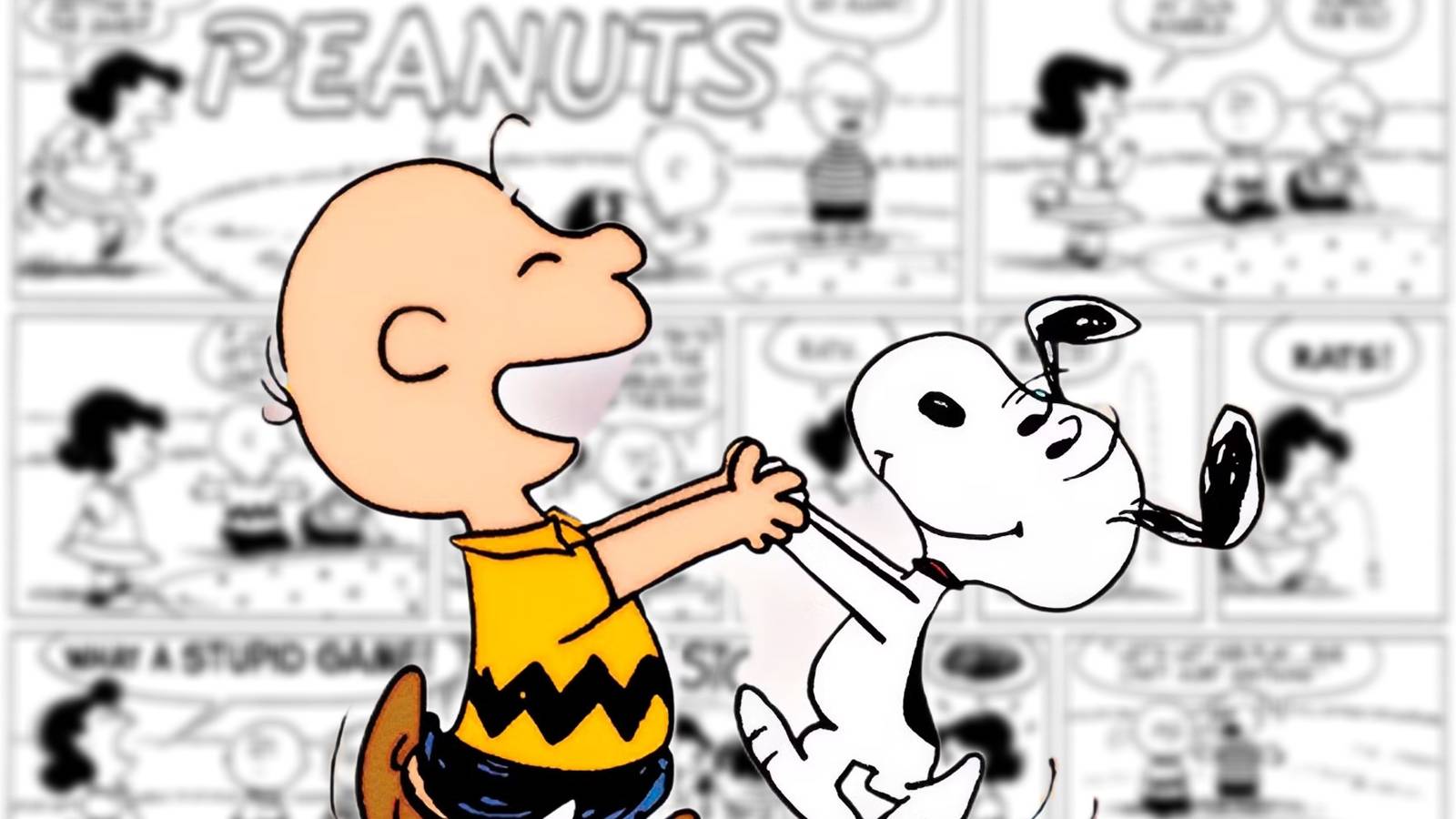
Published Nov 16, 2026, 8:02 PM EST Ambrose Tardive is an editor on ScreenRant's Comics team. Over the past two years, he has developed into the internet's foremost authority on The Far Side. Outside of his work for ScreenRant, Ambrose works as an Adjunct English Instructor. Volumes have been written about what makes Peanuts great. And rightly so. But what about the moment when Peanuts became great? That's a different story. What was the comic where things really clicked for Charles M. Schulz? Where Peanuts leveled up and officially became what it was destined to be? It all goes back to a small but significant milestone for the strip's unexpected breakout hit character: Snoopy. The Peanuts Gang never grew up. They might have celebrated birthdays now and then, but they never got older. They never matured. They did, however, evolve, especially early in the strip's 50-year run. And no character evolved faster, or more significantly, than Snoopy. The black-and-white beagle started out as a canine companion, a scrappy sidekick for Charlie Brown. By 2000, when Peanuts ended, Snoopy was the star of the show, and arguably had the most developed personality out of the whole Gang. Over time, Snoopy's internal monologue became a Peanuts staple. It became familiar to readers to watch him react in his head, via thought balloon, to something Charlie Brown, or Lucy, or Linus just said. Or to carry on entire, one-sided conversations with himself. Or to lapse into fantasy entirely, imagining himself as a World War I pilot or a famous writer. Snoopy's interior life became more fleshed out than many of Peanuts' more ancillary characters. To get to that point, there had to be a first time Snoopy had a thought. Or otherwise, the first time the audience was privy to what Snoopy was thinking. It might have just been a fun wrinkle for Charles Schulz to throw into the mix at the time, but it wound up having a profound effect on Peanuts, helping seal its place in pop culture in perpetuity. 1952 Was Huge For Peanuts, But 1 Milestone Changed Everything: Snoopy's Internal Monologue Debuts It is May 1952. Peanuts has been running for about a year and a half. It is still trying to get its syndication numbers up to 50 newspapers across the United States. The strip has steady momentum. Back in January, it started running extra-sized Sunday strips, a signal that publisher United Features Syndicate and the editors at the papers that bought Peanuts believed in it. It is a milestone year creatively too. Lucy van Pelt debuts in March. Linus, her brother, first appears later that fall. The catchphrase "good grief" pops up for the first time. The infamous "football gag" starts before the end of the year. And Snoopy, most of all, becomes a main cast member. That starts in May, when his interiority is depicted for the first time. Before considering the moment everything changed for Snoopy, it is worth putting his look under the microscope. In '52, the beagle is still barely more than a doodle of a dog. He hasn't taken on his more recognizable form yet. That's still a few years off. So, to get all philosophical for a moment, like Peanuts was occasionally prone to, existence preceded essence for Snoopy, but once he gained the essential component of an interior monologue, he was finally able to evolve into the beloved pop culture icon that has existed ever since. The First Time Peanuts Fans Heard Snoopy's "Voice," Explained May 27, 1952. It is a Tuesday. Readers in 40-45 newspapers, from Allentown, Pennsylvania to Seattle, Washington open up the funny pages to find this strip. In the first frame, Snoopy sits serenely on the lawn, minding his own business. In the second panel, along comes Charlie Brown, humming some tune to himself. In panel three, Charlie Brown playfully tugs on Snoopy's ear and says, "kind of warm out today for ear muffs, isn't it?" It is a dumb joke. A childish joke. Which makes sense. It is made by a child. But it is playful, and innocent enough. It is a joke, but it isn't this Peanuts strip's punchline. Instead, it is the set-up for the punchline, which comes in the final frame. For readers at the time, in '52, it would have been a delightful surprise. Snoopy can speak like a human! Or at least, think like one. "Why do I have to suffer such indignities?" Snoopy thinks, walking away in a huff. The dog's thought bubble is a squiggly line, perhaps to convey that Snoopy is rattled by the interaction, or maybe just to visually differentiate it from the human Peanuts characters' dialogue. Either way, that stylistic touch wouldn't last, but what would is the portrayal of Snoopy as not just thinking complex human thoughts, but having complex human emotions. Sure, Snoopy would become a bit more Zen as time went on, but he also demonstrated a temper at times. In this gamechanging Peanuts comic, he's indignant at having his idyllic moment interrupted. The foundations of Snoopy's long-term character had already been laid by the time Charles M. Schulz decided to give him an internal voice; that decision allowed Schulz to build Snoopy up from there in ways that never would have been possible otherwise. Snoopy Became A 3-Dimensional Character In 1952 & Ensured Peanuts' Place In History Within a few years of Snoopy's first thought, Peanuts exploded in popularity. The strip went from appearing in dozens of newspapers to hundreds. It got media attention, as a result of its exponential growth and developing fandom. Snoopy's voice, and Snoopy's personality, were arguably the missing pieces of the puzzle that pushed Peanuts from good to great, from "meh" to masterpiece. Another big moment for Snoopy in '52 was the first time he danced, something that would become a key part of his character when the Peanuts Gang made the jump to TV in the 1960s. It was another step toward humanizing him as a character. In turn, it was another level of depth added to Peanuts, opening up a whole new world of jokes for the series to make. So, this was a pivotal moment for more than just furthering the strip's appeal to readers. It was also critical to the longevity of Peanuts. It might not have been immediately evident as a "level up" moment for Peanuts, but in retrospect, it is the moment that Charles M. Schulz figured up the missing ingredient to his series and compensated. It was when Schulz solidified his place, and his characters' place, in the pop culture canon forever.
54 Years Ago, Peanuts Went From Meh To Masterpiece With Just One Comic
Full Article
Original Source
Read the full article at Screenrant →KhanList aggregates and links to publicly available news content. We do not host full articles from third-party sources. Always verify important information with original sources.