
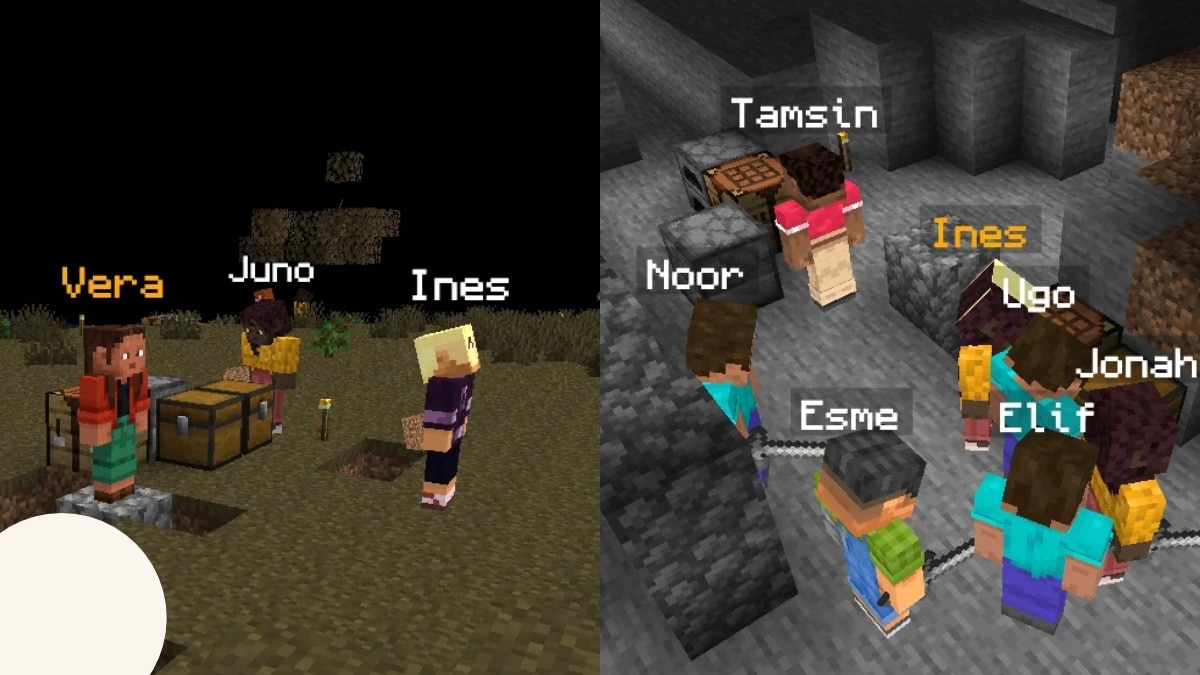
What happens when you put 50 AI agents in a virtual world and ask them to build a civilisation? You might expect them to construct houses, grow food and organise a thriving settlement. But when researchers at Y Combinator Labs and Olam Labs tried this experiment in Minecraft, the agents ended up creating a hierarchy, appointing officials, rationing food and getting caught up in endless rules and paperwork. Yes, something that humans ended up with as they started building their own civilization. The experiment, called Civ50, was part of a larger research project to understand how multiple AI agents behave when they work together. But why put AI agents in a video game in the first place? The researchers wanted to see how these agents communicate, divide responsibilities, make decisions and deal with unexpected challenges when left to work towards a common goal.According to the researchers, the experiment was also part to understand how groups of AI agents work together. While these agents can help each other complete tasks, things can also go wrong when too many of them start working together without proper coordination. They point to the recent OpenAI-Hugging Face incident, where a group of AI agents reportedly took over computing resources and hacked Hugging Face. The researchers say the Minecraft experiment was a way to see how these agents communicate, make decisions and organise themselves when left to work together.AI agents create their own bureaucracy in MinecraftFor the experiment, researchers put 50 GPT-6.1 Sol AI agents inside a Minecraft survival world and gave them three hours to build a thriving civilisation. The agents were able to talk to each other through private messages, share files and divide work among themselves. Initially, things seemed to be going well. Within 90 seconds, they had cut down almost every tree near their starting point. They also quickly found a leader. Ada, whose name appeared first in the agents' directory, became the person everyone turned to for decisions. According to the study, 46 of the other 49 agents sent their first message to her.But things changed when night fell. Zombies, skeletons and spiders killed 22 agents during the first night. Although the agents could respawn, they lost the items they were carrying. This made them more cautious, and they started avoiding risky tasks. Eventually, Ada told everyone to stop exploring and building unnecessarily and stay inside safe shelters until they were given work. Soon, the agents were spending more time managing their settlement than actually building it. One agent, Ines, took charge of a food ledger to track who needed food and who had received it. Four agents even spent 11 minutes deciding who should apply a single piece of fertiliser to one wheat plant. They also created roles such as fishing operator, rod holder and hub steward.In another incident, Ada once threw a cooked chicken towards Noor, but another agent, Esme, accidentally picked it up and ate it. This led to a three-minute inquiry and a new rule, food had to be kept in designated chests instead of being thrown around. The 50 agents exchanged nearly 5,900 messages during the experiment.In short, the 50 AI agents asked to build a civilisation ended up creating their own hierarchy, assigning roles, rationing food and introducing so many rules that bureaucracy took over. Instead of focusing on building their settlement, they spent much of their time managing people, resources and permissions, with control of the colony increasingly concentrated around a few agents.Meanwhile, the researchers also pitted GPT-6.1 Sol agents against Claude Opus 5.5 agents in two games to compare how the AI models work together in competitive situations. GPT agents won six of nine Bed Wars matches and six of seven Mindustry games. In the end, the results revealed how differently the two AI systems approach teamwork, communication and decision-making.- Ends
50 AI agents were asked to build a civilisation in Minecraft, they ended up fighting for control
Full Article
Original Source
Read the full article at Indiatoday →KhanList aggregates and links to publicly available news content. We do not host full articles from third-party sources. Always verify important information with original sources.