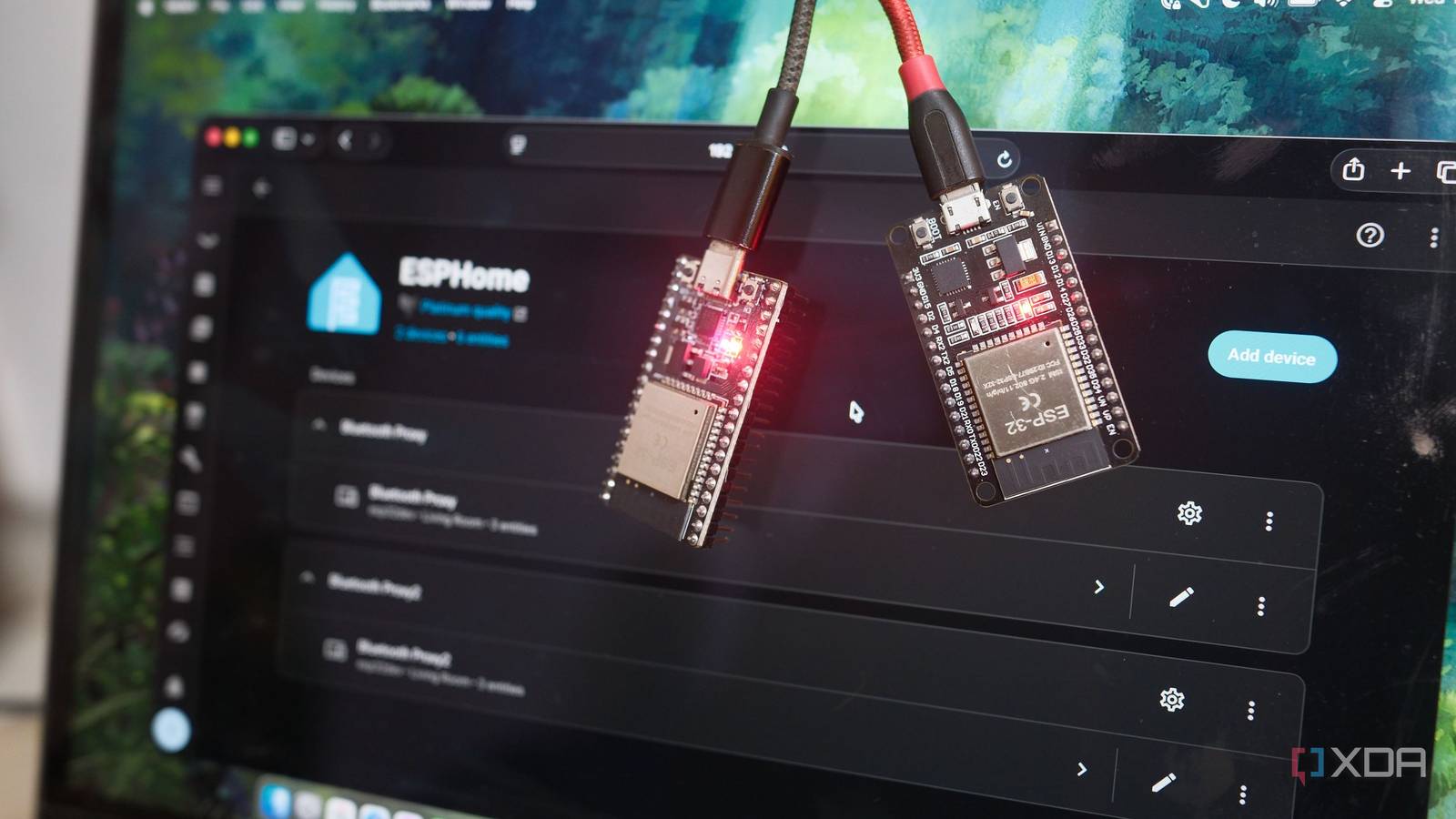
Published Aug 15, 2026, 3:30 PM EDT After a 7-year corporate stint, Tanveer found his love for writing and tech too much to resist. An MBA in Marketing and the owner of a PC building business, he writes on PC hardware, technology, and Windows. When not scouring the web for ideas, he can be found building PCs, watching anime, or playing Smash Karts on his RTX 3080 (sigh). Most ESP32 projects assume online connectivity. You've probably entered Wi-Fi credentials, API keys, and server details in many of your projects before things can work as intended. Everything works fine until it doesn't, either due to an API removing free access or a server shutting down permanently. Offline ESP32 projects are self-contained in that they'll keep working irrespective of whether your internet is working or not. You don't need to connect your ESP32 board to any cloud APIs or depend on subscriptions to servers you don't own. These projects prove that you don't need the internet to create something useful. ASCII aquarium with an ESP32 CYD Not your average animated aquarium Credit: POWER-PILL This cute virtual aquarium isn't just a looped animation running on an ESP32 CYD; it has AI-controlled fish generated live. They behave like real fish, avoiding each other and chasing food when you tap and release flakes. It can easily consume hours of your day as you admire the school of fish, and all you need is a $15–$20 CYD kit. Nothing happening here needs cloud access, except optional Wi-Fi sync for the clock. The 320x240 touchscreen is transformed into a living aquarium full of fish, bubbles, seaweed, and even occasional octopuses and seahorses. It's one of those beginner-friendly projects that delivers more than you think. A handheld NES emulator Who says ESP32 can't be insanely fun? Credit: Shim06 / Reddit As far as satisfying ESP32 projects go, this handheld NES emulator is tough to compete with. Rewritten in C++ for ESP32, this emulator allows you to play all your retro games anywhere, complete with full audio emulation. To top it off, this was the creator's first foray into embedded projects. The GitHub repository shows all the hardware and software you need to create your own. And everything's stored locally — no internet handshake required. You'll need an ESP32 board, a small TFT screen, an audio amplifier, speaker, a microSD card, some tactile buttons, and a supported NES controller. Even the performance on this emulator is near-native, so you finally have zero excuses to DIY your way to a NES emulator. DIY bike GPS Track your rides without your phone Credit: shubham030 If you want more outdoorsy fun with your ESP32 board, this ESP32-S3 AMOLED map uses pre-baked OpenStreetMap tiles on a microSD card to show you where you are. It doesn't need a phone, Wi-Fi, or the internet. The creator converted OSM tiles to 256x256 chunks, and the built-in GPS doesn't have any external dependencies. The source code for the projects isn't out yet, but the creator intends to release it after sufficient cleanup. You can then replicate it for your own offline map, or you can check out this ESP32-based biking mini-map first. Bluetooth proxy When you want a DIY connection for your smart devices You can build a Bluetooth proxy with just an ESP32 board — no sensor, display, resistor, or wire needed. It can relay Bluetooth Low Energy (BLE) across your home without any cloud involvement. You can create seamless bridges between your BLE devices and Home Assistant over the local network. The onboard LED indicates that the board is working. If your Home Assistant setup doesn't have a Bluetooth adapter, these cheap Bluetooth proxies can be a godsend. You just need to use ESPHome for the setup, and your moisture sensors, smart locks, humidifiers, and other devices will be ready to populate your Home Assistant dashboard. Meshtastic LoRa communicator Your post-apocalyptic companion Having a personal device that can send encrypted messages without a SIM, Wi-Fi, or subscription sounds too good to be true. However, that's exactly what you can build with an ESP32 board, a LoRa module, a GPS module, and a battery. It utilizes Meshtastic, the off-grid, decentralized mesh network that uses Long Range (LoRa) radio to send text messages and location data without any mobile data or Wi-Fi. The ESP32 board handles encryption, while the LoRa module handles signal modulation to transmit data below the noise floor. You might need some soldering for this project, but you'll have a LoRa node ready for encrypted communication. Note that the effective range depends on the city's mesh network infrastructure. You don't need to be online to build fantastic ESP32 projects ESP32 is a remarkably versatile microcontroller, providing onboard Wi-Fi and Bluetooth. However, you don't need Wi-Fi to create something great with it. Totally offline projects can work without cloud or API access, shielding you from server shutdowns and changing access terms. Your data stays on your ESP32 or within your local network. Brand AITRIP Connectivity Features UART, USB
5 useful ESP32 projects that work perfectly without the internet
Full Article
Original Source
Read the full article at Xda-developers →KhanList aggregates and links to publicly available news content. We do not host full articles from third-party sources. Always verify important information with original sources.