
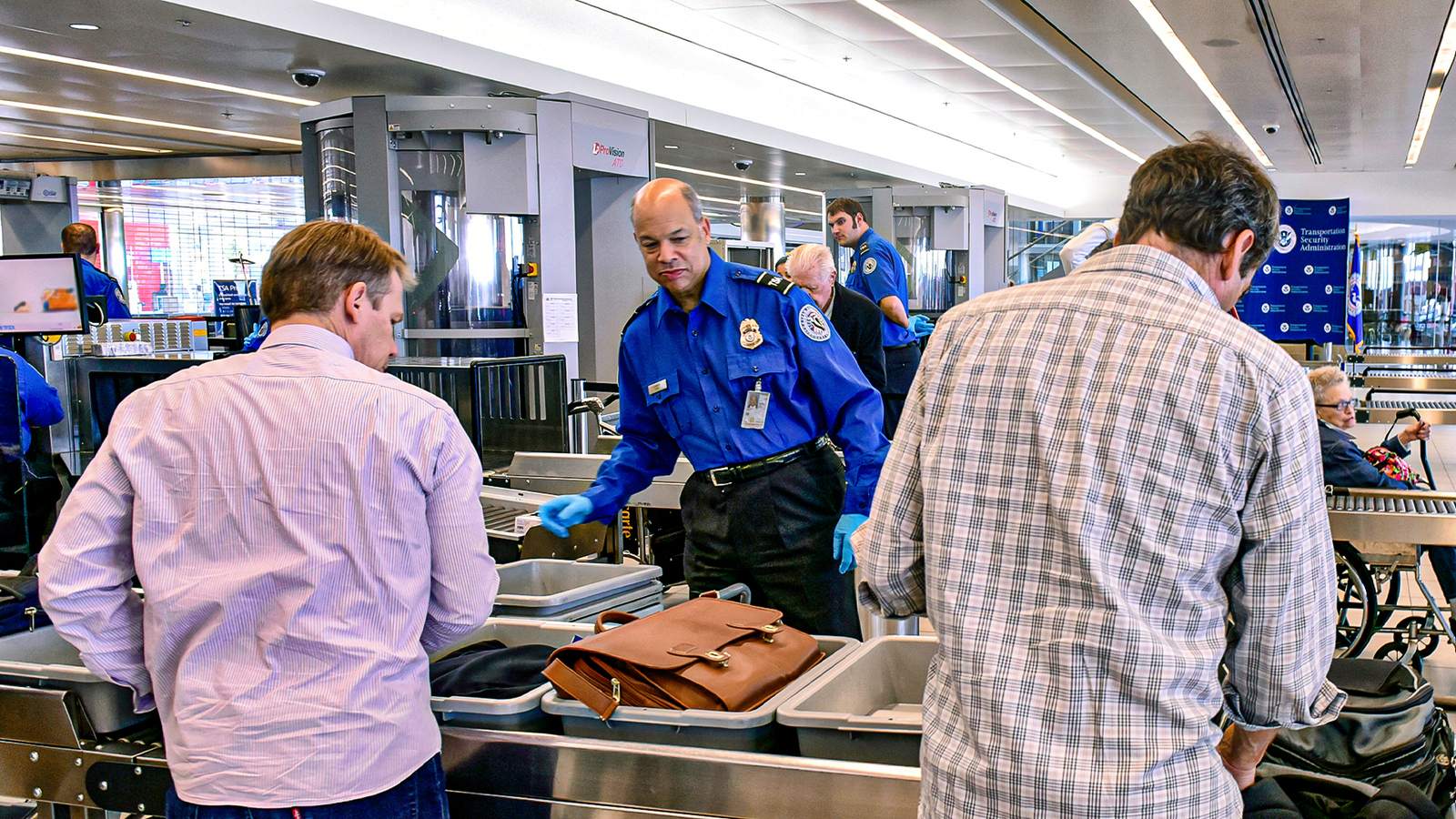
Published Oct 31, 2026, 9:00 PM EDT Journalist - Steven has a varied background in communications, and it was this passion for writing combined with his in-depth knowledge of the aviation industry that led him to Simple Flying. A keen linguist, he also has experience in translation and interpreting. Based in Palma, Spain Sign in to your Simple Flying account Airport security remains an important part of the air travel experience, with passengers often having to factor checkpoint queues into their journey before reaching the departure gate. While some airports consistently move travelers through screening within minutes, others have significantly longer average waits. Delays can also affect passengers who arrive with limited time to check baggage, complete document checks, or reach a departure gate before boarding closes. A 2026 study by Travel Bulletin examined security wait times at 50 of the busiest airports in the US, using historical estimates from the MyTSA app alongside Transportation Security Administration (TSA) passenger throughput figures. Covering approximately eight weeks between mid-June and mid-August, the findings revealed substantial differences between airports. 5 George Bush Intercontinental Airport 13.6 minutes Houston George Bush Intercontinental Airport (IAH) recorded an average security wait of 13.6 minutes, placing it sixth in Travel Bulletin's 2026 ranking. Although the airport narrowly missed the five longest waits, its average remained 3.7 minutes above the overall figure of 9.9 minutes across the 50 airports examined. The results demonstrate that lengthy security queues are not limited to the country's largest coastal gateways, with airports serving major inland cities also experiencing delays during busy travel periods. The airport is a hub for United Airlines, with the carrier recently unveiling a brand new lounge. Houston processed approximately 2,394 passengers per hour through security during the study period, substantially fewer than the figures recorded at larger gateways like New York John F. Kennedy International Airport (JFK) and Chicago O'Hare International Airport (ORD). Nevertheless, Houston's average wait remained above the national benchmark, illustrating that passenger throughput alone cannot explain checkpoint performance. According to data from the US Bureau of Transportation Statistics, the busiest destination from the airport last year was Mexico City (MEX): Ranking Destination Passengers 1 Mexico City (MEX) 852,000 2 Chicago (ORD) 831,000 3 Denver (DEN) 824,000 4 Los Angeles (LAX) 795,000 5 Cancun (CUN) 708,000 Passengers departing from Houston George Bush Intercontinental Airport should therefore avoid assuming that a relatively moderate average translates into a consistently short queue. Wait times can fluctuate depending on the departure schedule, terminal, and number of travelers arriving simultaneously, meaning some passengers may clear security considerably faster than others. 4 Ted Stevens Anchorage International Airport 16.3 minutes Credit: SNEHIT PHOTO | Shutterstock Ted Stevens Anchorage International Airport (ANC) recorded an average TSA security wait of 16.3 minutes, giving it the fourth-longest wait among the 50 airports in the study. The result was particularly notable because Anchorage handles substantially fewer passengers than the major metropolitan hubs appearing higher in the ranking. Its position challenges the assumption that the airports processing the greatest numbers of travelers will necessarily experience the longest queues at security checkpoints. According to Travel Bulletin's findings, Anchorage processed approximately 516.7 passengers per hour through security, the lowest volume recorded among the airports examined, although it used to be one of the world's busiest airports. Despite this comparatively modest throughput, its average wait was considerably higher than the overall figure of 9.9 minutes. The contrast suggests that passenger volume is only one element of airport security performance, although the available data do not establish whether staffing, checkpoint availability or other operational circumstances were responsible for Anchorage's relatively long waits. It also demonstrates why average screening times should be considered alongside other information rather than used as a complete measure of an airport's efficiency. Seattle-Tacoma International Airport (SEA) was by far the busiest destination from Anchorage last year, as outlined in the table below: Ranking Destination Passengers 1 Seattle (SEA) 864,000 2 Portland (PDX) 198,000 3 Fairbanks (FAI) 173,000 4 Minneapolis/St. Paul (MSP) 139,000 5 Chicago (ORD) 114,000 For passengers flying from Anchorage, which is a hub for Alaska Airlines, the figures underline the importance of planning ahead rather than assuming a smaller airport will automatically provide a quicker experience. Travelers should bear in mind that security queues can still develop when passenger arrivals coincide with scheduled departures, and historical averages cannot predict the exact conditions on a particular day. 3 Newark Liberty International Airport 17.9 minutes Credit: John McAdorey | Shutterstock Newark Liberty International Airport (EWR) ranked third in the 2026 study, recording an average security wait of 17.9 minutes. Serving the New York metropolitan area alongside John F. Kennedy International Airport (JFK) and LaGuardia Airport (LGA), Newark is a United Airlines hub and an important gateway for domestic and international travelers. The airport processed approximately 3,040 passengers per hour through TSA checkpoints during the period examined, and has major expansion plans on the horizon. This was considerably lower than the hourly figures recorded at JFK and Chicago O'Hare, yet Newark still reported a longer average wait than most airports in the sample. The comparison suggests that overall throughput does not tell the entire story of checkpoint efficiency, since passenger arrival patterns, screening capacity, and the time required for individual checks can influence how quickly queues progress. Last year, Orlando International Airport (MCO) was the busiest route from the airport, followed by London Heathrow Airport (LHR): Ranking Destination Passengers 1 Orlando (MCO) 998,000 2 London (LHR) 952,000 3 Los Angeles (LAX) 903,000 4 Atlanta (ATL) 883,000 5 San Francisco (SFO) 872,000 Passengers departing from Newark should account for security screening when arranging their journey to the airport, especially when traveling during busy periods or with checked baggage. A historical average of nearly 18 minutes does not mean every traveler will encounter the same delay, but it does indicate that assuming a consistently quick passage through security could be risky. Checking airport information before departure and following the airline's recommended arrival guidance can help passengers maintain a more comfortable margin before boarding begins, particularly when a missed flight could disrupt onward connections. 2 Chicago O'Hare International Airport 20.2 minutes Credit: MKPhoto12 | Shutterstock Chicago O'Hare International Airport (ORD) recorded the second-longest average security wait in the study, at 20.2 minutes, placing it well above the average 9.9-minute figure recorded across all 50 airports in the study. As a major domestic and international connecting hub, O'Hare handles substantial passenger traffic, with travelers passing through its terminals for journeys across the US and to destinations around the world. O'Hare processed approximately 4,216.7 passengers per hour through security, the third-highest figure in the study. However, its position becomes more striking when compared with Chicago Midway International Airport (MDW), which recorded an average wait of just 5.7 minutes. Last year, New York LaGuardia Airport (LGA) was the busiest route from Chicago O'Hare, as outlined in the table below: Ranking Destination Passengers 1 New York (LGA) 1,378,000 2 Los Angeles (LAX) 1,155,000 3 London (LHR) 1,047,000 4 Denver (DEN) 1,004,000 5 Orlando (MCO) 987,000 For passengers departing from O'Hare, the findings reinforce the importance of allowing sufficient time for security, particularly when an itinerary includes an international departure or a busy connecting schedule. Queue lengths can vary considerably throughout the day, so the reported average should be treated as a useful planning reference rather than a guarantee. Checking current airport information, preparing identification and travel documents in advance, and following airline arrival recommendations can help reduce the likelihood of an unexpectedly long queue disrupting a journey. Travelers should also remember that security is only one part of the airport process, with baggage drop and walking distances potentially requiring additional time. 1 John F. Kennedy International Airport 23.1 minutes Credit: Scott Heaney | Shutterstock New York John F. Kennedy International Airport (JFK) recorded the longest average security wait among the 50 airports examined, with passengers waiting an average of 23.1 minutes. The figure was more than twice the overall average of 9.9 minutes, placing JFK clearly ahead of every other airport in the ranking. As a major international gateway serving the New York metropolitan area, the airport accommodates extensive domestic and international traffic, creating substantial demands on its terminals and security screening facilities. The study found that JFK processed approximately 4,282 passengers per hour through security, making it the second-busiest airport in the sample by this measure. Only Los Angeles International Airport (LAX) recorded a higher hourly screening volume, at approximately 4,306 passengers, yet Los Angeles did not appear among the airports with the longest average waits. The airport is a major hub for American Airlines, Delta Air Lines, and JetBlue, with its busiest route last year being to London Heathrow Airport (LHR): Ranking Destination Passengers 1 London 2,984,000 2 Paris 1,658,000 3 Los Angeles 1,504,000 4 Santiago de los Caballeros 1,030,000 5 San Francisco 953,000 For passengers departing from JFK, the results make advance planning particularly important, especially during busy summer travel periods when flight schedules can bring large numbers of travelers to the terminals at similar times. An average wait of 23.1 minutes does not mean every passenger will encounter a queue of that length, but travelers should avoid relying on an unusually quick screening experience when planning their arrival.
5 US Airports With The Longest Security Lines In 2026
Full Article
Original Source
Read the full article at Simpleflying →KhanList aggregates and links to publicly available news content. We do not host full articles from third-party sources. Always verify important information with original sources.