
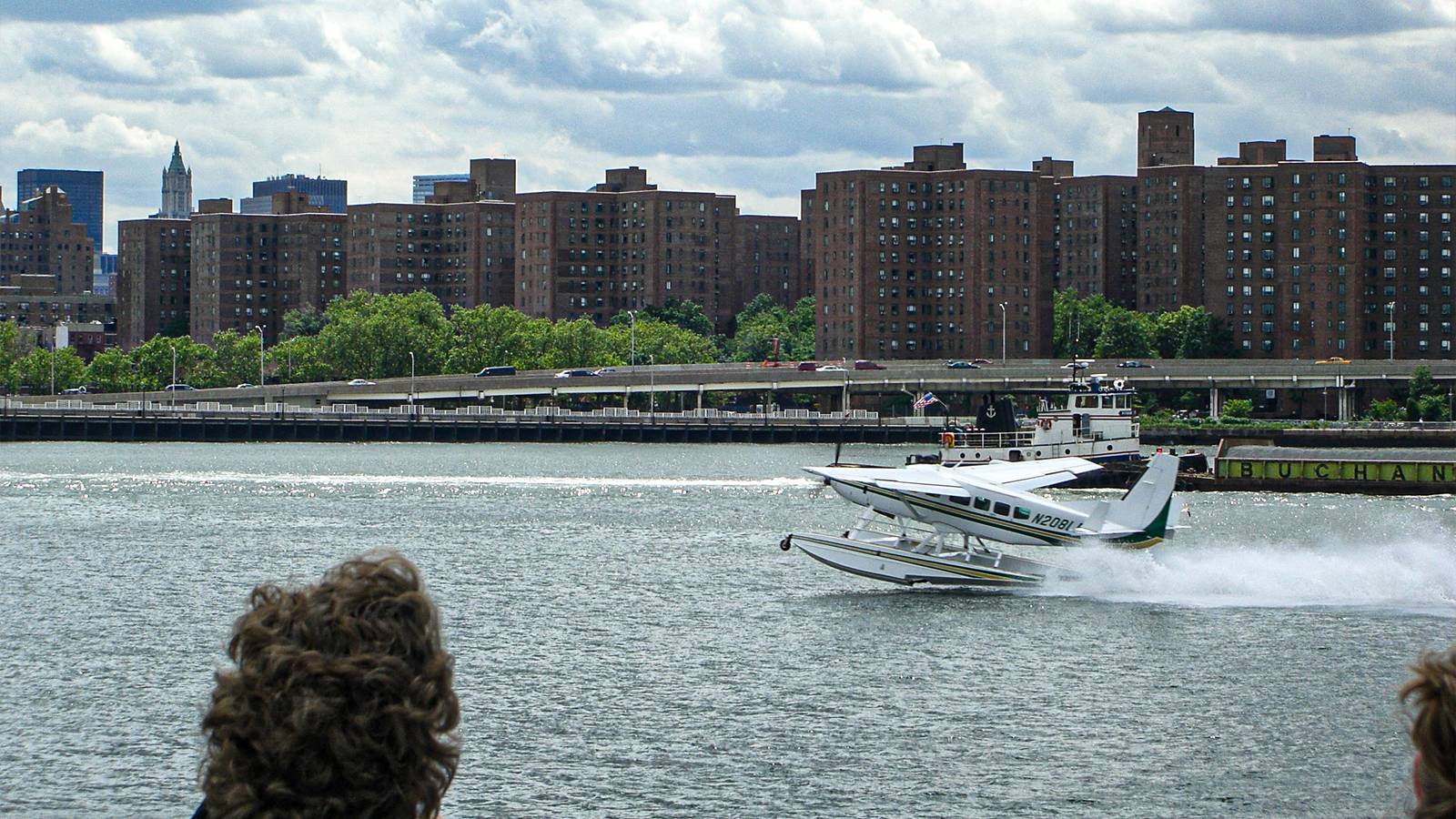
Published Nov 2, 2026, 2:00 PM EST Airline and Airport Management Graduate, Student Commercial Pilot and Commercial Aviation Writer. Based in London & Nagoya The Cessna Caravan amphibian is easily one of the most versatile utility airframes in modern aviation. It combines a high-wing turboprop design with massive Wipline floats equipped with retractable wheels, allowing the aircraft to operate out of traditional airport runways and open bodies of water with equal ease. Powered by a reliable Pratt & Whitney Canada PT6A engine, the Grand Caravan delivers an operational cruise speed of roughly 160 knots (184 mph / 296 km/h) while providing a quiet, air-conditioned cabin for up to nine passengers. For island archipelagos, coastal resort towns, and crowded metropolitan waterways, amphibious aircraft open up direct access where building traditional concrete runways is geographically or environmentally impossible. From remote island docks in the Caribbean to historic saltwater creeks in the Middle East, seaplane operators leverage the Caravan’s dual-land-and-water capability to bypass congested terminal gates. Here are five iconic destinations where passengers can experience the Cessna Caravan amphibian in scheduled and charter service today. The Bahamas Providing essential connections for remote island communities With over 700 islands and cays scattered across shallow turquoise waters, the Bahamian archipelago is an ideal operational environment for amphibious aviation. Major hubs like Nassau and Freeport boast long asphalt runways, but only a fraction of the outer islands feature paved airstrips capable of handling conventional regional aircraft. As per Tropic Ocean Airways, the Fort Lauderdale-based operator relies on its fleet of Cessna Grand Caravan EX amphibians to link South Florida directly with dockside landings across the Abacos, Harbour Island, and Bimini. The flexibility of an amphibious floatplane completely changes how passengers access remote island communities. Landing directly alongside private marina docks, the Caravan takes away the need for lengthy ground transfers or secondary water taxi rides after landing at a regional airport. According to operational details highlighted by Textron Aviation, the Caravan’s short-field water performance allows it to operate out of tight cays and still carry a full load of baggage, sports gear, and passengers in air-conditioned comfort. Safety regulations also play a key role in how these island routes are flown. Federal regulations permit single-pilot operations for aircraft of this size, but Tropic Ocean Airways enforces a strict internal policy requiring two fully qualified pilots on every flight deck, so that there is an added layer of redundancy when navigating variable coastal weather and marine traffic across the Caribbean. Dubai & The United Arab Emirates Offering sights like no other In the United Arab Emirates (UAE), amphibious aviation combines luxury tourism with a deep historical nod to early commercial flight routes. Operating out of Dubai Creek, local operator Seawings flies nine-seat Cessna Caravan amphibians from the very waters where Imperial Airways Short Empire flying boats touched down during transatlantic and regional mail runs in the 1930s. According to reporting from Gulf News, the operator established daily scheduled water links connecting Ajman’s Al Zora Marina directly to Dubai Creek, alongside scenic aerial excursions over Abu Dhabi. The unique geography of the UAE's coastline makes the Caravan amphibian an ideal platform for city sightseeing and inter-emirate transit. A typical 45-minute flight takes off from the saltwater channels of the creek, climbing smoothly to give passengers sweeping aerial views over iconic landmarks like the Palm Jumeirah, Dubai Marina, and the towering 2,717 feet (828 meters) structure of the Burj Khalifa, sights that are on the bucket list of many around the world. Analysis from the Royal Aeronautical Society highlights how the Caravan’s large, panoramic cabin windows and high-wing layout provide unobstructed views for all nine passengers. Through the use of water runways along the Persian Gulf, operators can deliver executive tours and transfer flights easily, not needing to find runway slots at congested international hubs like Dubai International Airport (DXB). The Hamptons, New York When traffic gets too heavy, take to the skies During the peak summer season, the congested highways linking New York City to Long Island’s East End turn a standard drive into a grueling multi-hour journey. The best way to skip gridlocked road traffic is using amphibious Cessna Grand Caravan EX aircraft, which operators use to offer rapid point-to-point transfers from Manhattan to the Hamptons. As detailed by Business Jet Traveler, seasonal flights departing from East River seaplane bases like New York Skyports (NYS) can drop off passengers directly onto the waters of East Hampton or Shelter Sound in roughly 35 minutes. The amphibious capability of the Grand Caravan EX is the critical enabler for this urban-to-coastal corridor. The aircraft can take off from the paved runways of regional airports around New York, splash down directly in the coastal bays of the Hamptons, or land on suburban airstrips depending on weather conditions and passenger preferences. Route Corridor Typical Flight Duration Transport Mode Comparison NYC to East Hampton (Seaplane) ~35 minutes Direct water-to-water or airport flight NYC to East Hampton (Driving) 2.5 to 4+ hours Heavily congested highway traffic NYC to East Hampton (Helicopter) ~40 minutes Heliport constrained with higher noise footprint The incredible operational flexibility allows travelers to board a flight within sight of Midtown Manhattan skyscrapers and step onto a wooden dock in the Hamptons before a car could even clear city limits. Furthermore, the quiet PT6A turboprop engine helps operators maintain strict noise-abatement compliance when flying over sensitive coastal communities. Boston & Nantucket Connecting the islands with the large economic centers In the American Northeast, connecting urban business centers with historic offshore islands is tough, mainly because of major geographical challenges. Traditionally, getting from downtown Boston to island retreats like Nantucket or Martha's Vineyard meant navigating city traffic out to Logan International Airport (BOS), or driving hours south to Cape Cod to catch a multi-hour passenger ferry. Operators like Tailwind Air pioneered skipping this congestion by utilizing amphibious Cessna Caravans departing directly from Boston Harbor, as detailed in Simple Flying coverage. The key benefit of flying an amphibious turboprop in New England is that water-to-water and water-to-runway flexibility becomes possible. Departing from a water dock in Boston Harbor, a Cessna Caravan amphibian climbs out over Massachusetts Bay, cruising at typical altitudes of 5,000 feet to 8,000 feet (1,524 meters to 2,438 meters) before touching down at Nantucket Memorial Airport (ACK) or on local harbor waters in under 45 minutes. According to reporting from the Royal Aeronautical Society, regional operators have frequently evaluated extending amphibious Caravan networks into additional high-density corridors, including Washington, D.C., Pittsburgh, Montreal, and Toronto. The Caravan’s ability to use harbor waterways dramatically cuts door-to-door transit times for executive and leisure travelers alike, so it may only be a matter of time before the Caravan's popularity spreads even further across the US. South Florida Seamless links to resorts and the private properties around the waters of Florida South Florida is widely considered to be the true global hotbed for amphibious aviation, serving as the main launchpad for scheduled and charter flights down into the Florida Keys and across the Gulf Stream. Operators such as Tropic Ocean Airways run scheduled amphibious flights out of Fort Lauderdale and Miami's Biscayne Bay down to Key West, landing passengers directly at resort docks or regional airport ramps. Alongside scheduled regional carriers, private charter operator flyExclusive offers dedicated amphibious Cessna Caravan flights across South Florida. Using eight-to-nine-passenger Sea Caravans equipped with Wipline floats, travelers can take off from executive hubs like Palm Beach International Airport (PBI) or Miami Executive Airport (TMB) and touch down directly alongside waterfront properties in Key West, Harbour Island, and remote private cays. Pairing a spacious, leather-appointed cabin with the unique capability to touch down on open ocean swells or sheltered inland bays, the amphibious Caravan makes routine travel an integral part of the overall destination experience. Long security queues, cramped terminal gates, and secondary water taxi transfers can be off-putting for many passengers. Here, passengers step straight from a marina dock into an air-conditioned cabin that offers unhindered panoramic views throughout the flight. The seamless blend of luxury comfort, quiet turboprop reliability, and door-to-door water access is what makes the Cessna Caravan amphibian so favored, especially across South Florida and the Caribbean.
5 Seaplane Destinations Where Cessna Caravan Amphibians Fly Passengers
Full Article
Original Source
Read the full article at Simpleflying →KhanList aggregates and links to publicly available news content. We do not host full articles from third-party sources. Always verify important information with original sources.