
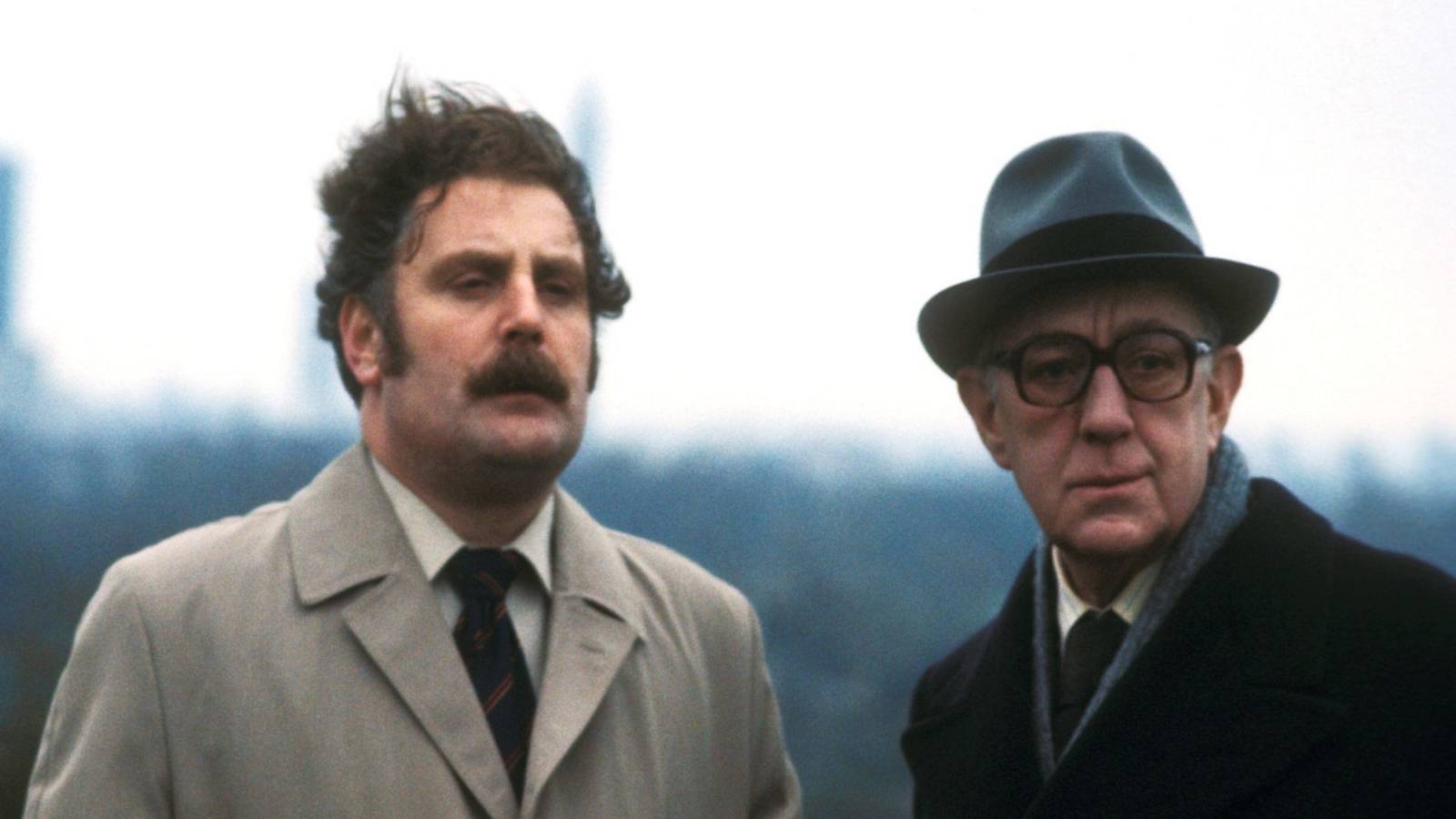
Image via MovieStillsDB Published Nov 13, 2026, 7:00 AM EST Adrienne Tyler is a movies & TV features writer, with a focus on horror. She has written for Netflix, FanSided, & more. She was a regular guest on the Netfreaks podcast and was a YouTuber at some point. Guillermo del Toro said “hi” to her once. Sign in to your ScreenRant account Every decade has had great miniseries, and in the 1970s, there were notable miniseries that still hold up, being better than any modern TV show. The list of the best TV shows of all time includes shows from different decades, including some from the 1970s. That decade left a cultural stamp across different areas, and on TV, it brought now-classics like M*A*S*H, Columbo, Happy Days, and All in the Family. Most of the best TV shows from the 1970s have various seasons, but this decade also produced some of the most notable miniseries of all time. Miniseries are especially appealing as they tell a complete story in a limited number of episodes, which also makes them a lot easier to watch (and, in the current streaming era, they are easy to binge-watch). A lot can be said about an era through the most notable miniseries released in every decade, and those from the 1970s are no exception. The best miniseries from the 1970s reflect historical trauma, changes in traditional domestic life, explore corruption and decay, and question morals and traditions of the time that had been carried for years. Many of them made TV history thanks to their themes, production value, and stories, and even more impressive is that they have aged so well that they are better than any modern show. I, Claudius (1976) 12 Episodes Based on Robert Graves’ novels I, Claudius and Claudius the God, I, Claudius is an epic drama produced by BBC Television and aired in 1976. I, Claudius takes the audience all the way back to the early Roman Empire to explore the rise and fall of Roman Emperor Claudius (Derek Jacobi), from the reign of Augustus (Brian Blessed), the first Emperor of Rome, to the many betrayals that lead to his downfall and the ascent of his stepson, Nero (Christopher Biggins). Also part of the cast of I, Claudius are John Hurt, Patricia Quinn, John Rhys-Davies, and Patrick Stewart. Although I, Claudius initially got a negative reception, it went on to become a huge success, earning different awards and now being regarded as one of the best British TV shows of all time. I, Claudius has been endlessly praised for its writing, performances (particularly that of Jacobi), and blend of political and family drama, with many critics citing it as the tonal blueprint for shows like The Sopranos and House of Cards. Surely, some elements, like its makeup and some costumes, have been pointed out as not aging well, but that becomes a minor “problem” compared to the greatness of the rest of the show. Scenes from a Marriage (1973) Six Episodes Scenes from a Marriage (original title: Scener ur ett äktenskap) is a Swedish drama miniseries written and directed by Ingmar Bergman. Scenes from a Marriage focuses on divorce lawyer Marianne (Liv Ullmann) and a reader in psychology, Johan (Erland Josephson), a married couple who have renewed their marriage contract after their 10th anniversary. Marianne and Johan seem like an ideal couple and family with their two daughters, but, in reality, their marriage is crumbling. Kicking off with an interview for a magazine on love, Scenes from a Marriage explores the disintegration of Marianne and Johan’s relationship over the course of a decade, all this in just six episodes. Scenes from a Marriage is one of the most influential TV shows of all time, with its biggest strengths being its dialogue, structure, performances, direction, realism, and depiction of human emotion and depth. All episodes of Scenes from a Marriage were condensed into a theatrical version that became an international hit. However, Scenes from a Marriage wasn’t safe from controversy, being blamed for a rise in divorce rates in Europe. Still, Scenes from a Marriage became the blueprint for modern dramas, and in 2021, it got an English-language remake starring Oscar Isaac and Jessica Chastain. Tinker Tailor Soldier Spy (1979) Seven Episodes MovieStillsDB Based on John le Carré’s 1974 novel of the same name, Tinker Tailor Soldier Spy is a spy drama TV series produced by the BBC and aired in 1979. Tinker Tailor Soldier Spy introduces the audience to George Smiley (Alec Guinness), deputy to the head of the British Secret Intelligence Service, known as the “Circus”, who is forced into retirement after a failed spy mission in Czechoslovakia. Smiley’s boss and head of the Circus, Control (Alexander Knox), believes there’s a mole among them, but no one believes him. When the new leadership takes over, Smiley is brought out of retirement to investigate and find the mole. Tinker Tailor Soldier Spy was a huge hit, being nominated for different awards and praised for its performances (especially that of Guinness), adaptation of Le Carré’s work, tone, pace, and overall production value, with every episode being a delightful event. Tinker Tailor Soldier Spy redefined spies on TV by portraying them as more cerebral and calculating instead of relying on gadgets and action sequences. Tinker Tailor Soldier Spy got a sequel in 1982, titled Smiley’s People, once again starring Guinness as Smiley, but it didn’t match the success and impact of the first show. Holocaust: The Story of the Family Weiss (1978) Four Episodes Created by Gerald Green, Holocaust: The Story of the Family Weiss aired on NBC in 1978, and it’s told in four parts. Holocaust tells the story of the (fictional) Jewish family of Dr. Josef Weiss (Fritz Weaver), his wife Berta (Rosemary Harris), their children Karl (James Woods), Rudi (Joseph Bottoms), and Anna (Blanche Baker), along with Karl’s wife, Inga (Meryl Streep), who is a Christian, and Erik Dorf (Michael Moriarty), a lawyer who becomes a Nazi and war criminal. The first part, “The Gathering Darkness”, covers the beginning of Dorf’s work with the SS, Kristallnacht, Dr. Weiss’ deportation to Poland, and Berta and the children hiding with Inga’s family, who are Nazi supporters. Part 2, “The Road to Babi Yar”, sees Berta being taken to the Warsaw Ghetto, the Babi Yar massacre, and the planning of the “Final Solution”, which is also the title of part 3, covering the construction of the death camps. Part 4, “The Saving Remnant”, shows the fate of the Weiss family, Inga, and Dorf, as some are sent to Auschwitz and Dorf is tried for war crimes. Holocaust isn’t an easy watch, but it stands out for its performances and its more human and emotional approach to this difficult topic rather than focusing on statistics. However, Holocaust was also heavily criticized for its historical inaccuracy and one-dimensional characters, but its impact and legacy are undeniable. Roots (1977) Eight Episodes Based on Alex Haley’s 1976 novel Roots: The Saga of an American Family, Roots is a drama miniseries that explores the era of enslavement in the United States and its aftermath. For that, Roots tells the story of a family through generations, starting in the mid-1700s, with 15-year-old Kunta Kinte being captured by slave traders in West Africa and taken to America, and following his descendants all the way to after the Civil War. Roots is widely regarded as one of the best miniseries of all time, and its finale broke records, becoming the third-most-watched series finale in American TV history. Roots stood out for its narrative structure, cast, approach to complex and serious topics like slavery and racism, and overall production value. Few TV shows have had the impact that Roots had, and after all these years, it still stands as one of the best TV shows of all time. Release Date 1977 - 1977-00-00 Network ABC Showrunner David L. Wolper Directors Marvin J. Chomsky, John Erman, David Greene, Gilbert Moses Writers Alex Haley, James Lee
5 Miniseries From The 1970s Better Than Any Modern Show
Full Article
Original Source
Read the full article at Screenrant →KhanList aggregates and links to publicly available news content. We do not host full articles from third-party sources. Always verify important information with original sources.