
The Nov. 10 finale of “VisionQuest” will bring a five-year television experiment, which kicked off with 2021’s “WandaVision,” to a close. In those years, Marvel has churned out more content than most fans could name, releasing an inconsistent string of streaming shows that often eschewed the conventional wisdom of what television is — at times to the detriment of those shows. But does “VisionQuest” indicate that Marvel Television is learning its lesson? “Chasing the movies is tough, I’ve learned,” a Marvel Television insider told TheWrap. “A movie is like a two-hour statement, and a television show is like a call-and-response conversation with the audience. It takes more people, more writers. It’s just more give and take.” Following “VisionQuest” and the third season of “Daredevil: Born Again” — recently announced to be its final season — Marvel’s live-action television offerings will go on hiatus until after the release of “Avengers: Secret Wars,” effectively giving the franchise a chance to reset. Like the ABC and Netflix eras before it, the first stretch of Marvel TV on Disney+ (spanning from 2021’s “WandaVision” to 2027’s aforementioned “Born Again” finale) was marked by some pretty sharp highs and lows. Perhaps more than anything was the inconsistency: scattered viewership, infrequent renewals, repeated backtracking. While the Infinity Saga felt like a well-oiled machine building to a record-breaking finale, the follow-up Multiverse Saga (both on TV and in film) has felt to many fans more like the Mark I Iron Man suit — not without its inspiration, but clunkier, more lumbering. Marvel Studios president Kevin Feige, creative mastermind of the films, took over control of Marvel TV from Jeph Loeb and set out to make TV shows as grand and interconnected as the movies. The expansion — part of a mandate from Disney to churn out content for its new streaming service — began with a bang but quickly faltered. “It was halfway successful at what it intended to do, which was interweaving the shows and the films,” Dave Gonzales, co-author of the book “MCU: The Reign of Marvel Studios,” said of the Disney+ era. “Where it was unsuccessful was the flexibility that you have in post-production of a film to narratively make it tie into something else is very different from the way a television show runs. I don’t think they embraced making TV for TV’s sake until far too late in the process.” (Credit: Marvel Television) As the MCU sets its sights on the X-Men and Ghost Rider in film, Marvel Television used New York Comic-Con to announce its first live-action series to release after “Secret Wars” — a spy thriller called “Zodiac.” This show marks the beginning of yet another new era, one where Marvel TV — now overseen by Brad Winderbaum and less connected to the films — can right the ship and hopefully capture new audiences. “If I’m a real hardcore Marvel fan, maybe I’ll watch them all. But if I’m more of a casual fan, if I feel like to really appreciate this I’m going to have to go back and watch all this stuff I didn’t see yet, I think that is enough to create some friction,” Jon Giegengack, founder of Hub Entertainment Research, told TheWrap. “People, if they learned nothing else from the streaming era, it’s that they don’t have to settle for any friction.” Like in the comics, “Secret Wars” will give Marvel the chance to catch its breath and hit the reset button with a slate of all-new, all-different series. So what lessons can Winderbaum and the team learn from Marvel’s Disney+ Mark I? 1. Let TV be TV It took a few years for Marvel Television to pivot to showrunners. In the beginning of Disney+, the MCU attempted to make its television series from the same mold as its movies, eschewing the traditional use of showrunners to instead hire head writers, who would craft the series before the shoots, and directors, who would oversee them once shooting began. This fragmented the process, keeping a single showrunner from having a hand on the wheel from beginning to end. “They tried to just buck how TV was made, and TV’s made that way for a reason,” Gonzales said. “The more they embrace that, they could do things like ‘Lanterns,’ because they have such a diverse IP.” The result of this experiment, essentially treating the cinematic and television arms of the MCU as one and the same, resulted in a string of series many Marvel fans described as “movies cut into parts.” It also wasn’t always clear who was “in charge” of given series during the pre-showrunner days while Feige’s attention was understandably divided, leaving some game-time decisions to be made in post-production. Oscar Isaac in “Moon Knight” (Credit: Marvel Television) And when there was a creative dispute, the director took precedence — Jeremy Slater exited “Moon Knight” after clashing with director Mohamed Diab. It wasn’t until 2023, with shows like “Daredevil: Born Again” and “Agatha All Along” in the hopper, that the franchise shifted to more traditional models of television. “They would do well to invest in showrunners who are passionate about a very particular character,” Gonzales told TheWrap. “Whether you do what ‘Lanterns’ did — you take some TV people and put them with a comics person and together they make magic — I think the TV person should be integral to the beginning of the project instead of a hired hand, which is how Marvel sort of did its first bout of TV.” When you see the slate of live-action MCU series that did have showrunners, you can see that the strategy has worked so far. Shows like “Agatha All Along,” “Wonder Man” (which received an Emmy nomination for Outstanding Lead Actor in a Comedy Series for Yahya Abdul-Mateen II) and “VisionQuest” were all met with critical acclaim, earning back some goodwill after a string of lackluster receptions. These series also helped overcome a crucial error made early in the MCU’s television run: Unlike those first shows, they didn’t feel overly beholden to Marvel’s cinematic canon. While early shows like “WandaVision” and “Loki” were generally well-received, they were designed to be connected to the events of the movies in a big way (the events of “WandaVision” were directly continued in “Doctor Strange in the Multiverse of Madness,” while “Loki” introduced Jonathan Majors’ Kang, the antagonist of “Ant-Man and the Wasp: Quantumania” and once the main villain of the fifth “Avengers” film). “Now people are always asking, ‘When is Moon Knight going to be in a movie?’ I don’t think they ever intended for that to happen,” Gonzales said. “That was just, ‘We did a fun project.’” Wyatt Russell in “The Falcon and the Winter Soldier” (Credit: Marvel Television) This model also caused a problem in the other direction. When characters introduced on Disney+ started making their way into MCU films (like Iman Vellani’s Ms. Marvel in “The Marvels” and Wyatt Russell’s U.S. Agent in “Thunderbolts*”), those movies were repeatedly met with weaker-than-normal box office hauls. Just as the series were beholden to the movies (sometimes concluding in a way necessary to set up the next film), the movies now relied on stories established in Disney+ shows — which fewer and fewer people were watching. 2. Experiment with genre In 2022, the Marvel Cinematic Universe introduced a new kind of project to its pipeline: the Special Presentation. The concept started with “Werewolf by Night,” a 53-minute special that served as the MCU’s first full-blown horror installment (directed by longtime Marvel composer Michael Giacchino). Two more special presentations followed from there, each of their own flavor — a “Guardians of the Galaxy” holiday special and an R-rated, Punisher-led, hyper-violent drama. “They can experiment on screen with characters that they wouldn’t necessarily put in a film,” said MCU influencer and cosplayer Jess Parker of the special presentations. “I don’t know if they’d ever put Werewolf by Night in a Marvel movie, but that gave them the experimental space to jump into that.” Parker, who boasts 140,000 followers on Instagram and YouTube each, said that projects like “Werewolf by Night” allowed the MCU to pull in different genres and flavors without the risk of making a big-budget film. That nimbleness was clearer in the early MCU shows — “The Falcon and the Winter Soldier” was a political thriller series, “She-Hulk” was a legal comedy and “Hawkeye” was set at Christmas. By embracing different genres that are perhaps too risky to tackle in its feature films, Marvel can cast a wider net. “‘WandaVision’ itself was a very different type of media that they hadn’t really made at all compared to other Marvel projects. They were doing a different sitcom episode every week, basically, while still tying it to the greater MCU,” Parker said. Elizabeth Olsen in “WandaVision” (Credit: Marvel Television) 3. Follow through on Season 2 “Wonder Man” was set to be only the third live-action show from Marvel Television to receive a second season, but the show was soon canceled, with no public explanation given by the studio. Marvel’s almost exclusive commitment to miniseries could be hurting the company as fans look for assurance that they’ll be rewarded for sticking around, a problem that has also plagued Netflix in recent years as it developed a reputation for canceling shows too quickly. The only MCU live-action shows that continued past their first seasons were “Loki” and “Daredevil: Born Again,” both of which received strong critical receptions for their respective second seasons. Though “VisionQuest” isn’t exactly the third season of a show, it effectively functions as such, marking the conclusion of Marvel’s “WandaVision” trilogy that started in 2021 and continued through “Agatha All Along.” Parker noted that this has allowed fans to get more connected to these characters over the years in a way they haven’t been able to for other shows. Tom Hiddleston in “Loki” Season 2 (Credit: Marvel Television) One of the primary problems here was the courting of A-list, blockbuster talent for these series, with above-the-line costs ballooning budgets to the point that follow-up seasons weren’t financially feasible. A TV show starring Oscar Isaac and Ethan Hawke isn’t exactly cheap. “Zodiac,” in contrast, will be made with a more modest budget, with room for known characters and actors to appear in a supporting capacity. This cheaper budget will hopefully set the show up for the possibility of further seasons. “VisionQuest,” meanwhile, is currently seen as a success at the studio, and there is talk of seeing how some of these characters could continue in the MCU. 4. Bring in new fans The Marvel brand still carries some serious weight (just look at the $2.5 billion box office haul of “Spider-Man: Brand New Day”). According to Hub Entertainment Research, out of 13 major franchises tested, Marvel ranks as the franchise most likely to bring in viewers to new a series based on brand name alone, with 64% of U.S. audiences saying they’d be more likely to tune into a show that carries the Marvel name. That’s all well and good. But the cancellation of such series as “Daredevil: Born Again” and “Wonder Man” proves that the MCU needs to court new viewers to keep these shows afloat. “The Marvel brand is still a huge draw,” Giegengack said. “Now they need to make that IP more accessible to people who haven’t watched all the associated Marvel content that came before.” A stronger approach could be returning to a model employed in such shows as “Agents of S.H.I.E.L.D.” and Netflix’s “Daredevil” — two series that referenced the Marvel universe, yet never felt overly beholden to its lore. “To be adjacent is where you want to be. It’s like reading comics: If you read an issue of ‘Daredevil,’ you kind of know the Avengers are out there,” a Marvel Television insider said. “It’s nice to know that they’re living and breathing in the same world.” In a sea of seemingly endless content, Giegengack noted that brand recognition allows viewers to cut through the noise and land on shows that look familiar. However, the opposite effect may occur when it comes to new Marvel fans looking at MCU series, fearing that they are too far behind on decades of lore to engage. This is perhaps an element that hurt “Daredevil: Born Again,” a sequel to three seasons of Netflix’s “Daredevil” and one season of “The Defenders” that also pulled in characters from “Jessica Jones,” “The Punisher” and more. Things get even more complicated for aforementioned shows like “WandaVision” and “The Falcon and the Winter Soldier” that directly tie into films. Alaqua Cox in “Echo” (Credit: Marvel Television) It’s a problem Marvel is aware exists, and the company tried to rectify it by launching a label called “Marvel Spotlight” with 2024 series “Echo,” which was intended to tell viewers they didn’t need to know anything about the MCU to enjoy the show. It failed to catch on — the “Punisher” special is the only other show to get the “Spotlight” moniker so far. “They’re marketed as being part of the Marvel universe, and I think that is appealing to people — especially big Marvel fans — but the idea that I’m not going to be able to enjoy this show if I’m not up on all the other stuff that’s happened until now … turns off some people,” Giegengack said. This doesn’t mean the characters have to all be brand new. Though Parker noted that shows like “VisionQuest” do a good job bringing in fans of Scarlet Witch, Vision and their side of the Marvel Universe, she pointed to “Wonder Man” as a show that features established characters while also being entirely accessible to new viewers. This show clearly didn’t meet Marvel’s internal benchmarks for renewal (despite attracting Emmy voters in a way no show since “WandaVision” had), but its approach could be a key step in earning back audience trust in the television endeavor’s accessibility. “It’s a new story with a new character that we haven’t seen before, while still incorporating it into the MCU, but not in a way that isolates fans who haven’t seen that before,” Parker said. “That was partially what made that show so well received: You didn’t have to be a Marvel fan to enjoy that.” A Marvel TV insider said they believe that “Zodiac” will provide a similar jumping-on point for new fans — again with the hope that the show can continue past Season 1. “There might be some rewards for people who know the lore, but if you don’t know the lore, you’ll get a really satisfying story that maybe entices you to go back and watch some stories from the past as well,” they said. 5. Less is more In just 2021 (the year that the MCU’s Disney+ era began), Marvel released four films and five series across live-action and animation. While the prospect of Marvel Television was at first thrilling, it quickly became overwhelming, then mind-numbing. “They got a lot of oversaturation kickback,” Gonzales said. Marvel’s Disney+ slate was big and hard to steer. By the time audiences started becoming overwhelmed by the constant presence of MCU content on Disney+, too many shows were already lined up for them to dial back immediately. “They gave people maybe more than they physically could consume, and put out so much that it might have reduced the sense of urgency about seeing each one when it comes out,” Giegengack added. The problem still persists in 2026, when Marvel released three live-action series (“Wonder Man,” “Born Again” Season 2 and “VisionQuest”) on top of its cinematic and animated offerings. Compare that to the DC universe, which seems to be sticking to one live-action series a year — perhaps helping boost “Lanterns” to its high viewership. Yahya Adbul-Mateen II in “Wonder Man” (Credit: Disney+/Marvel Television) According to Giegengack’s data, the percentage of viewers under the age of 25 who were “much more likely” to watch a show with Marvel branding than a show without dropped 20% from one year to the next — something he attributed to these shows feeling less special than they once did. “That sense of urgency is a huge thing to maintaining viewership these days,” Giegengack said. “Nobody needs more stuff to watch.” This concept also applies to Marvel’s release strategy. While some shows like “Wonder Man” subscribed to the streaming binge model, Giegengack noted that this shrinks down the runway for conversation compared to a weekly release, as employed by series like “Born Again” and “VisionQuest.” “Especially for really expensive shows like the Marvel ones tend to be, I think it’s really important to get as much mileage out of those as you can.”
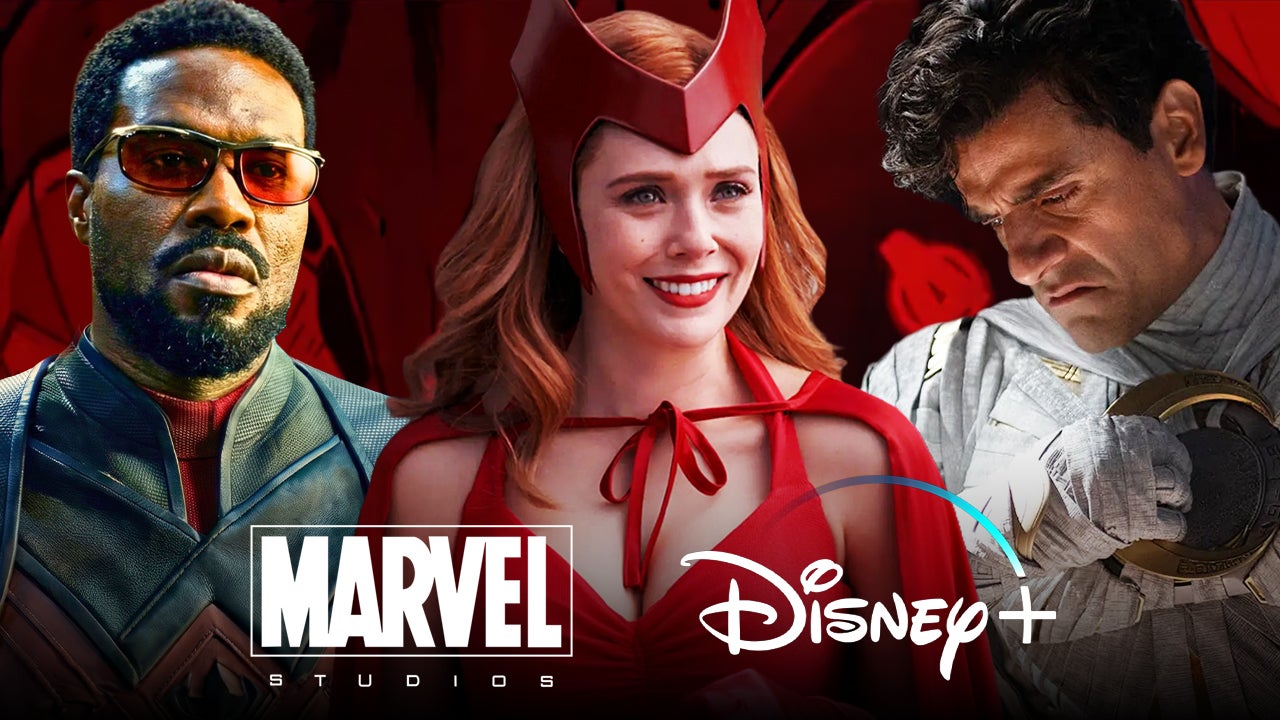
5 Lessons Marvel Television Should Learn for the Next Phase of Disney+ | Analysis
Full Article
Original Source
Read the full article at Thewrap →KhanList aggregates and links to publicly available news content. We do not host full articles from third-party sources. Always verify important information with original sources.