
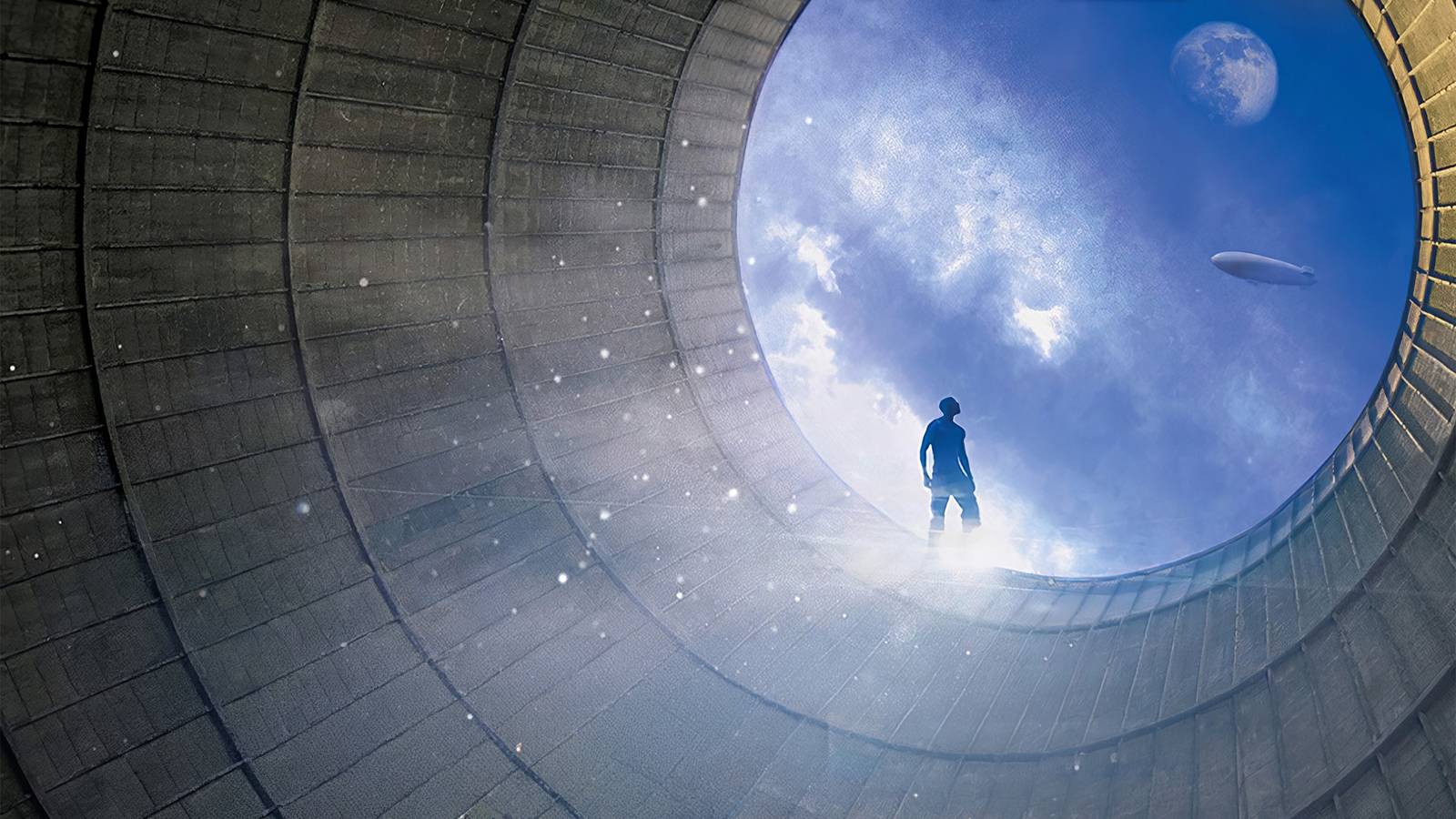
Image via Orbit Books Published Sep 22, 2026, 5:47 PM EDT Linda Chavers is a writer, cultural critic, and longtime consumer of stories in just about every form they come in. Her essays have appeared in The Boston Globe Magazine, The LA Times, The Independent, Elle, and (the now sadly defunct) Gawker Media. Linda can turn almost anything—from a novel to a reality TV reunion—into an argument. That's because she's opinionated about anything she gets to stay in pajamas for. It's also because she holds a Ph.D. in African and African American Studies from Harvard University, where she specialized in modern literature. She has taught at Harvard University and Temple University. Her tastes are wide-ranging. She loves literary fiction, popular culture, reality television, and Law and Order marathons. When she's not writing, or avoiding writing by thinking very seriously about writing, Linda is usually reading a novel or trying to remember which show she watched on which streaming app she's still subscribed to. Sign in to your Collider account Traditional climate fiction allowed us to imagine the worst of things as being far away in an unknown future: one where oceans rise, cities burn, and civilization collapses. Fast-forward to the current decade with every summer hotter than the last and, now, the best focuses less on the scientific details of environmental collapse. Today's climate fiction wants to know what it looks like when it's already happened. Bank accounts, policy, infrastructure (just who is in charge of the grid?!), identity, family, trust. These five books each approach this question differently, from Octavia E. Butler's terrifyingly familiar 2024 to what happens when you send a passive-aggressive text right before your world ends. 5 'Parable of the Sower' (1993) Image via The Broken Binding Octavia E. Butler's Parable of the Sower begins on July 20, 2024, Lauren Olamina's 15th birthday. Lauren has to break free from her walled-in Southern California community in order to survive both physically and psychologically as fires, chaos, and violence threaten her existence. Early for its time, there’s no single moment that sets the apocalyptic tone in the novel. Rather, we meet Lauren and her folks in the very midst of what would appear to be a slow-to-rapid burn of socio-economic collapse. Lauren understands better than anyone else that the old version of normal isn't coming back, so she builds her own belief system, Earthseed, around the idea that change is inevitable. That might seem like the novel's most speculative element when it's really one of its most practical. Thirty years later, it’s not fully accurate to call Butler prophetic. Prophecy lets the rest of us off the hook and, what Butler does is more powerful than prophesy. She didn't just make up scenes of inequality, environmental destruction, privatization, or social abandonment. Butler — a queer Black woman — took stock of the Reagan-era trickle-down economics of the time along with ominous water shortage reports coming out of Southern California and wondered what it would look like if things simply continued as they are. Looking at it that way, Butler's less prescient than she is a logical scientist affirming a strong hypothesis about our society. 4 'Leave the World Behind' (2020) Image via Netfilx It might be helpful to approach Rumaan Alam's Leave the World Behind with a very open mind, and if you prefer clean and tidy endings, then this might not be the read for you. In this book we are just as ignorant as its characters — two families are forced together in the Hamptons when everything inexplicably falls apart. Think of what happens if a self-driving car's preprogrammed to crash, and other disasters Sandra Bullock warned us about thirty-one years ago in The Net. Still, in The Net we got to see the bad guys behind the chaos. In Alam's catastrophe, the chaos isn't really the point. Amanda and Clay take their kids on a typical upper-class family vacation, renting a cottage in the Hamptons when two folks, G.H. and Ruth, a lovely older Black couple, ring the doorbell. And then, disaster strikes, sort of. But, first, how do you know if you should believe that people are who they say they are? Especially when no one can get any cell service, and the internet is just gone. (The tween children are …delightful.) Teslas are crashing into each other, there’s a giant boat on the beach, along with evidence of multiple plane crashes, and absolutely no one knows what’s going on nor do they know how to find out, and they never will. Neither will the reader. Rumaan Alam doesn't allow for any gratification nor absolution of what's behind this crisis. There's no satisfying "ahhh, there it is" explanation readers would expect from disaster stories. In this setting, these ordinary characters' comfortable lives quickly appear quite fragile. Take away Google, electricity, news feeds, and the ability to drive anywhere else, and how much do these people actually know what to do? Not nearly enough. Leave the World Behind grapples with the question of who gets to be trusted in a crisis and what that means about who deserves help and who can be left behind. Sam Esmail's 2023 Netflix adaptation gives the larger catastrophe more definition, but the novel's refusal to explain itself is meaner and more effective. 3 'The Deluge' (2023) Image via Simon & Schuster This nearly one thousand page novel contains some of the most beautiful writing about the heartbreak of loss I have ever read. Stephen Markley's The Deluge is certainly a bona fide work of climate fiction. It is also deeply moving in its portrayal of the urgency of human connection, weaving dozens of individual storylines into the larger century's tale of environmental ruin. Years after reading this book, I can still quickly imagine some of the more dramatic scenes, like a father waving a final goodbye to his son as the rescue helicopter can only take one of them out of a massive hurricane. No one is confused or unaware or even in denial in Markley's world. Everybody knows climate change is happening. Markley places us in the infuriating distance between knowing a catastrophe is coming and assembling enough political will to do something about it — a distance filled by the usual suspects: money, lobbying, elections, misinformation, radicalization, and, of course, human error. I can't say I got through each chapter with the same amount of enthusiasm, but the overall tone of this book — that something big is coming, and it's really the smaller things such as human relationships that stay with us the most — remained with me longer than I expected. Part of why it took Markley so long to complete The Deluge is that any time he'd do research for his own fictitious events, he'd find that it had already happened in real life, thereby forcing him to create even more dramatic scenarios. That's what makes The Deluge so unnerving. The apocalypse doesn't arrive all of a sudden. It accumulates, and somewhere along the way everyone began treating it as normal. 2 'The Ministry for the Future' (2020) Image via Orbit Books The Ministry for the Future opens with an extreme heat wave in India that kills on a horrifying scale, and Kim Stanley Robinson does not make this an easy read. It is a particularly brutal, detailed, graphic, and tragic scene where hundreds of townsfolk seeking cooling off in the lake are slowly boiled alive. Similar to Vincent Yu's Seek Immediate Shelter, we are met with violence and tragedy at the very beginning, which hints that true heartbreak is yet to come. The Ministry imagines what it takes for entire nations to work together and invest in future generations of the human race. Anyone who's been to the DMV knows there's nothing glamorous or miraculous about this. Instead of individual narratives, Robinson drags central banks, geoengineering, carbon removal, grassroots activism, and eco-terrorism into the conversation. And, just like the folks left to re-examine their relationships after Seek's false alarm, there is one lone survivor of the tragedy in India, Frank May, and the story continues following his PTSD. But Frank, along with others, is our entry point to global actions and systems. Which is also what makes this a tough read. When it gets into the new global coin based on carbon currency, I had a hard time keeping up. The gut punch of its opening scene doesn't really remain for the last third of the book. Like The Deluge, Ministry for the Future is a massive book at 576 pages. Only where The Deluge zooms into the human condition, Ministry wants to keep the focus on geopolitics. Indeed, there's less focus on the science behind climate change and much more focus on the socio-political failures that leave us vulnerable in the first place. I'd say a good quarter of the book could probably be cut to get the same point across. But, then again, that, too, is the point. Navigating climate change is not only a problem of belief but a problem of infrastructure and there's no easy or short way around that. Image via Flatiron Books There's no slow creep of climate change in this debut novel. Disaster announces itself casually via text. In Vincent Yu's Seek Immediate Shelter, the residents of Beckitt, Massachusetts, receive a message that instantly divides a life into before and after: BALLISTIC MISSILE THREAT INBOUND. SEEK IMMEDIATE SHELTER. THIS IS NOT A DRILL. People hide, confessions are made, relationships are strengthened or destroyed. Then, 18 minutes later: no missile, false alarm, all is well. So what now? That's the question Yu is interested in. The missile never comes, but everyone must live with what they did when they were so sure it would. I love what Yu does in this book playing with just what gets to be considered a "disaster" in the first place. The novel starts with the alarm and even though it turns out to be false, everything else that happens is genuinely disastrous. Because what starts as a false alarm (based on the very real events in Hawaii in 2018) ends up triggering very real fallout for everyone. There's a whammy of a text from a mother to her daughter where I actually gasped aloud as if there'd actually been a missile. Which is the point and the impact of Yu's novel — that humans can be just as violent to each other as we are to the earth. Technically, Seek Immediate Shelter isn't climate fiction in the strictest sense, but the existential fallout that occurs in every connected story is absolutely catastrophic, which is why it belongs here. Collider Exclusive · Universe Personality Quiz Which Iconic Universe Do You Belong in the Most? Star Wars · Lord of the Rings · Harry Potter · Game of Thrones · Star Trek Five legendary universes. Five completely different visions of what the world could be — or already was. One of them is the world your instincts, your values, and your particular way of existing were built for. Eight questions will tell you which one. 🚀Star Wars 💍Lord of the Rings 🧙Harry Potter 👑Game of Thrones 🖖Star Trek FIND YOUR UNIVERSE → 01 What gives your life its deepest sense of meaning? Every universe is built around a different answer to this question. ABeing part of something larger than myself — a cause, a rebellion, a fight for freedom that outlasts me. BThe journey itself — the places I'll go, the companions beside me, the world I'll discover on the way. CLearning — unlocking what I'm capable of, understanding the world's hidden mechanics, growing into something more. DLegacy — the name I leave behind, the power I build, the mark I make before the world moves on without me. EUnderstanding — exploring what exists beyond the horizon and asking what it means to be alive in a universe this vast. NEXT QUESTION → 02 Which kind of world do you most want to inhabit? The environment shapes who you become. Choose carefully. AA galaxy of planets, each with its own culture — connected by conflict, trade, and the Force. BAncient lands of breathtaking beauty, deep history, and a creeping darkness at the edges. CA world hidden inside our own — full of wonder, community, and magic waiting to be learned. DA brutal, beautiful continent where power is everything and every alliance is a calculation. EA future where humanity has reached the stars — and must decide what kind of species it wants to be. NEXT QUESTION → 03 How do you prefer your conflicts resolved? The shape of a world's conflicts tells you everything about its soul. AThrough sacrifice and courage — someone has to make the impossible choice so others don't have to. BThrough fellowship — the impossible becomes possible when the right people walk the same road. CThrough growth — confronting what you fear, understanding what you lack, and becoming equal to the challenge. DThrough strategy — outthinking, outmaneuvering, positioning yourself so the outcome was never in doubt. EThrough dialogue — finding the third option, the peaceful resolution, the answer that doesn't require a body count. NEXT QUESTION → 04 Who do you want beside you when things get difficult? Your ideal companions reveal the world you were made for. AA small crew — a pilot, a rogue, a warrior — each broken in their own way, unbeatable together. BA fellowship of different kinds of people, bound by purpose and deepened by the long road. CFriends who grew up alongside me — who knew me before I knew myself, and stayed anyway. DAllies whose loyalty I've earned — and tested — and whose ambitions align with mine, for now. EA crew of brilliant, curious, principled people from every corner of known space. NEXT QUESTION → 05 What is your relationship with power? How you seek, wield, or resist power is the map of who you are. AI want to use it to protect — and I'm terrified of what I might become if I'm not careful. BI distrust it. The most important power in this story is the courage to give it up. CI want to earn it — through knowledge, through effort, through becoming someone worthy of it. DI want to wield it. Preferably before someone else decides to wield it against me. EI want to understand it — its structures, its limits, its ethical dimensions. Power without accountability is the real threat. NEXT QUESTION → 06 How does your universe treat good and evil? A world's moral architecture tells you more about it than any map. AThere is a dark side and a light side — and the choice between them is always present, always personal. BEvil is real and ancient and patient — and goodness, however small, is the only thing that can undo it. CGood and evil are real, but they live inside people — and people are complicated, always capable of both. DGood and evil are mostly a matter of perspective and proximity. Power is the only honest currency. EEvil is usually the result of ignorance, fear, or broken systems — and understanding it is the first step to solving it. NEXT QUESTION → 07 What role would you naturally fall into? Every universe has archetypes. Which one fits you without trying? AThe reluctant hero — ordinary origins, extraordinary moment, changed forever by the choice to act. BThe unlikely carrier — the one nobody expected to matter most, quietly bearing the weight of everything. CThe student — not yet who I'll become, learning through every mistake, growing into something the world needs. DThe player — sharp enough to see the game for what it is, ambitious enough to try to win it. EThe explorer — drawn to the unknown, driven by curiosity, most alive when standing somewhere no one has stood before. NEXT QUESTION → 08 What do you ultimately believe about the future? The answer to this is the clearest window into which universe already lives inside you. AThat hope is real — that even in the darkest galaxy, a new hope is always possible. CThat even the smallest person can change the course of the future, if they have the courage to try. CThat love and friendship and doing what's right will matter in the end, even when everything says otherwise. DThat the wheel keeps turning — that power shifts, winters end, and what endures is those willing to fight for it. EThat humanity — or whatever we become — is capable of extraordinary things, if we choose to be. REVEAL MY UNIVERSE → Your Universe Has Been Chosen You Belong In…Your answers point to the iconic universe your values, your instincts, and your particular way of seeing the world were built for. This is where you would find your people — and your purpose. Star WarsYou believe in the cause — in the idea that freedom is worth fighting for even when the odds are impossible and the empire is vast. You are drawn to the moral clarity of a universe where hope itself is a form of resistance. You'd find your people in the Rebellion — a ragtag coalition of true believers held together by conviction more than resources. Star Wars is fundamentally a story about ordinary people choosing to matter in an extraordinary conflict — and that is exactly your kind of story. The Force may or may not be with you. But the will to use it for something larger than yourself certainly is. Lord of the RingsYou understand, in the deepest part of yourself, that the journey matters as much as the destination — and that the world's beauty is worth protecting even at great cost. Middle-earth is a world of ancient wonder, deep friendship, and a darkness that only retreats when enough small acts of courage accumulate. You would thrive here because you value the fellowship more than the glory — the road more than the arrival. Tolkien's universe rewards patience, loyalty, and the willingness to carry something heavy across a very long distance. Those are not burdens to you. They are simply how you move through the world. Harry PotterYou believe that love, loyalty, and doing what's right are not naive sentiments — they are the most powerful forces in any world, magical or otherwise. The Wizarding World is a place of wonder hidden in plain sight, where learning is transformative and the bonds you form at school follow you into every battle. You would flourish here because you take both the magic and the friendships seriously — and you understand that one without the other is incomplete. Harry Potter's universe ultimately rewards those who choose to stand for something even when standing is terrifying. That choice — made quietly, without guarantee — is something you understand completely. Game of ThronesYou see the world clearly — its power structures, its hypocrisies, its brutal arithmetic — and you are not paralysed by that clarity. You use it. Westeros is a world that rewards intelligence, adaptability, and the willingness to understand that every alliance is also a negotiation. You would survive here — possibly thrive here — because you don't confuse the world as it is with the world as you'd like it to be. Game of Thrones is a story about what happens when the idealists and the realists collide. You are sharp enough to know which one lasts longer. Winter always comes. You are already prepared. Star TrekYou believe the future is worth building — that curiosity, cooperation, and the expansion of understanding are not just ideals but the most practical path forward for any civilisation. Star Trek is a universe where the questions matter as much as the answers, and where encountering something utterly alien is cause for wonder rather than fear. You would belong here because you are fundamentally optimistic about what intelligence and decency can achieve — while being honest about how hard that achievement is. The Federation is the universe's most ambitious thought experiment: what if we actually got better? You don't just hope that's possible. You think it's the only thing worth working toward. ↻ RETAKE THE QUIZ
5 Essential Climate Fiction Books (One Already Has a Netflix Adaptation)
Full Article
Original Source
Read the full article at Collider →KhanList aggregates and links to publicly available news content. We do not host full articles from third-party sources. Always verify important information with original sources.