
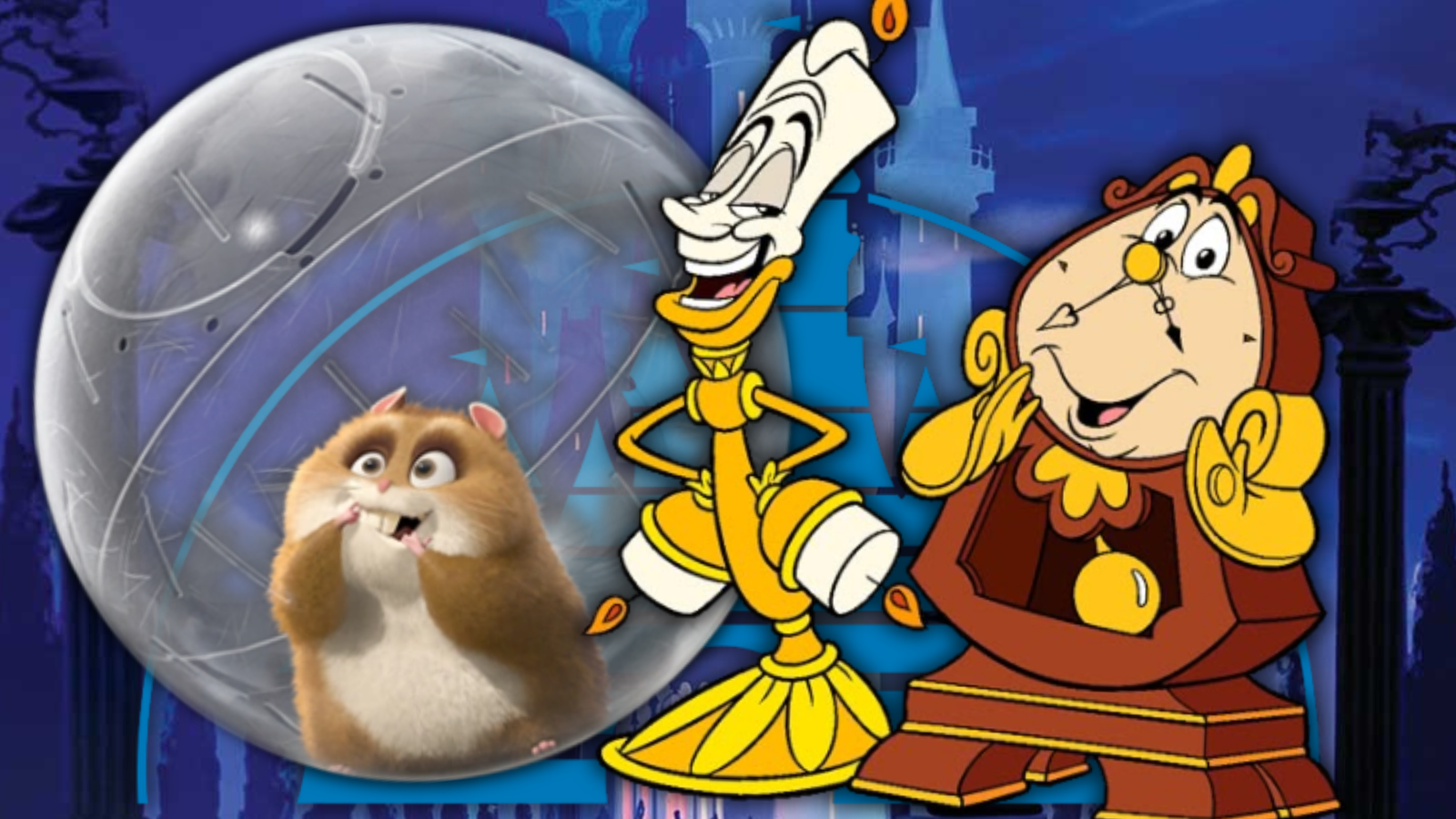
Custom Image by Hannah Diffey Published Sep 7, 2026, 6:00 PM EDT Hannah is a senior writer and self-publisher at ScreenRant. There, she focuses on writing news, features, and list-style articles about all things comics, books, anime, and manga. She works as a freelance writer in the entertainment industry, focusing on video games, anime, and literature. Her published works can be found on Screen Rant, FinanceBuzz, She Reads, and She Writes. Sign in to your ScreenRant account Disney sidekicks have always had a difficult job. They need to make audiences laugh without completely stealing the spotlight from the hero, provide emotional support without becoming overly sentimental, and occasionally save the day without making the protagonist look useless. When the formula works, these characters become every bit as memorable as the heroes they accompany. When it does not work, however, a sidekick can become the part of a beloved movie that viewers would rather skip. Some Disney companions have aged remarkably well because their personalities, jokes, and contributions to the story remain entertaining decades later. Others feel increasingly irritating with every rewatch. Here are five Disney sidekicks who still work beautifully, followed by five who have become particularly difficult to tolerate. Aged Well: Genie from Aladdin Aladdin gave Disney one of its most spectacular sidekicks in the Genie, a character voiced by Robin Williams whose enormous personality could have easily overwhelmed the movie. Instead, the Genie fits naturally into Aladdin's story because his comedy is tied directly to his situation. He has phenomenal magical powers, yet he has spent 10,000 years trapped inside a lamp and is ultimately desperate for something remarkably simple: freedom. That makes the Genie more than a collection of impressions and pop-culture jokes. His relationship with Aladdin gradually becomes a genuine friendship, especially because Aladdin eventually decides to free him rather than use his final wish for himself. The character's three-wish limitation also gives his magic a useful structure, while his inability to kill, force someone to fall in love, or resurrect the dead prevents him from solving every problem instantly. Williams' improvisational energy is legendary, but the emotional foundation underneath the performance is why the Genie remains so effective. Aged Well: Timon and Pumbaa from The Lion King The Lion King has plenty of heavyweight dramatic material, from Mufasa's death to Simba's eventual confrontation with Scar. Timon and Pumbaa provide the necessary tonal release without making Simba's trauma feel meaningless. After Simba runs away from the Pride Lands, the meerkat and warthog give him somewhere to belong, introduce him to their carefree "Hakuna Matata" philosophy, and effectively become his surrogate family. What makes the duo age particularly well is that their personalities complement each other. Timon is fast-talking, selfish and opportunistic, while Pumbaa is gentle, trusting and considerably more empathetic. Yet Pumbaa's apparent foolishness frequently disguises genuine courage, and Timon's jokes never completely erase his loyalty. When Simba finally decides to return home, both friends follow him. Their story also continued well beyond the 1994 movie through sequels, television, and other Disney appearances. Aged Well: Lumiere and Cogsworth from Beauty and the Beast Beauty and the Beast benefits enormously from the contrast between Lumiere and Cogsworth. The enchanted candlestick is theatrical, romantic and willing to bend the rules, while the enchanted mantle clock is anxious, formal and obsessed with maintaining order. Their disagreements create comedy without requiring either character to become obnoxious, and their arguments also make the Beast's castle feel inhabited before Belle truly becomes part of it. Their importance becomes clearer when considering the curse. These characters are not random comic relief; they are servants who have been transformed along with their master and desperately want the enchantment broken. Lumiere encourages the Beast to treat Belle with greater warmth, while Cogsworth repeatedly attempts to keep everyone under control. Disney itself has described them as a particularly effective comedic duo, and their chemistry remains impressive even though Jerry Orbach and David Ogden Stiers recorded their dialogue separately. Aged Well: Archimedes from The Sword in the Stone The Sword in the Stone is one of Disney's stranger classics, and Archimedes is a major reason its eccentric humor still works. Merlin's owl companion is educated, irritable and perpetually exasperated by the wizard's chaotic behavior. Unlike many Disney animal sidekicks, Archimedes is not designed to be adorable at all times. He is essentially the exhausted adult in the room, which makes his reactions to Merlin and Wart especially funny. Archimedes also has an important practical role in Wart's education. Merlin transforms the future King Arthur into different animals to teach him lessons about life, while Archimedes frequently acts as the skeptical observer. His personality is particularly memorable during Merlin's confrontation with Madam Mim, where his impatience and intelligence help make the magical world feel less predictable. Disney identifies him as Merlin's "wise owl friend," while the character's distinctive laugh became one of animator Ollie Johnston's favorite pieces of animation in the movie. Aged Well: Mushu from Mulan Mulan gives its heroine an unusual companion in Mushu, a tiny dragon who desperately wants to regain his former status as a guardian of the Fa family. Eddie Murphy's performance makes Mushu relentlessly energetic, but the character works because his selfishness is balanced by genuine affection for Mulan. He is not simply her magical protector; he is a deeply insecure character trying to prove that he matters. Mushu also has a surprisingly important role in the plot. He helps Mulan maintain her disguise, encourages her through increasingly dangerous situations, and eventually contributes to the defeat of Shan Yu. His tiny size becomes part of the joke, especially because Mushu is constantly eager to emphasize that he is a dragon rather than a lizard. Interestingly, the character originally developed from an idea involving two reptilian companions before the filmmakers settled on the single dragon voiced by Murphy. Unbearable: Heihei from Moana Moana takes the idea of a useless sidekick and pushes it almost as far as possible with Heihei. The rooster has virtually no discernible intelligence, communicates through clucks and squawks, and frequently seems incapable of understanding the obvious danger surrounding him. Alan Tudyk, who voiced the character, openly described Heihei as essentially the dumbest rooster imaginable, and that description is hardly an exaggeration. From Steamboat Willie to Encanto · Eight Questions How Well Do You Know Disney Movies? “When you wish upon a star…” 🐭Steamboat EraBlack-and-white Mickey 👑The PrincessesSnow White onward 🦁90s RenaissanceLion King & Aladdin 💡Pixar LampToy Story onward ❄️Modern EraFrozen & beyond UNLOCK THE VAULT → 01 On November 18, 1928, Walt Disney premiered a seven-minute black-and-white short at the Colony Theatre in New York — the first Mickey Mouse cartoon released to the public, and one of the earliest sound cartoons ever made. Whistling Mickey at the helm of a riverboat became the studio’s first iconic image. Name the short. APlane Crazy BSteamboat Willie CThe Karnival Kid DThe Gallopin’ Gaucho ✓ Correct! Steamboat Willie. Mickey actually finished production first on the silent short Plane Crazy earlier that year, but Walt and his brother Roy bet the studio’s entire future on retooling Steamboat Willie with synchronised sound — a brand-new technology that had only just appeared with The Jazz Singer (1927). The gamble worked: Steamboat Willie’s November 1928 release made Mickey an instant national icon and put Disney on the map. The short entered the public domain in January 2024, exactly 95 years after release. ✗ Wrong. The answer is Steamboat Willie. Plane Crazy was actually animated first (May 1928, silent) but didn’t find a distributor. The Gallopin’ Gaucho was the second Mickey short, also originally silent. The Karnival Kid (1929) is where Mickey first speaks. The breakthrough — the first publicly released, sound-synchronised Mickey short — is Steamboat Willie. NEXT → 02 Walt Disney sank the studio’s entire balance sheet, plus a heavy mortgage on his home, into a project Hollywood derisively called “Disney’s Folly” — the first full-length cel-animated feature film ever made in English. It premiered December 21, 1937 at the Carthay Circle Theatre in Los Angeles to a standing ovation. Name the film. APinocchio BBambi CSnow White and the Seven Dwarfs DFantasia ✓ Correct! Snow White and the Seven Dwarfs (1937). The 83-minute film cost $1.49 million — an enormous gamble at the height of the Depression — and grossed $8 million on its initial release, the highest-grossing sound film made up to that point. Walt won an honorary Oscar (one large statuette and seven small ones, presented by Shirley Temple). The film’s success funded the construction of Disney’s Burbank studio and effectively created the feature-animation industry. ✗ Wrong. The answer is Snow White and the Seven Dwarfs. Pinocchio (1940) is the second Disney feature. Fantasia (1940) is the third. Bambi (1942) is the fifth. Snow White was the bet-the-studio first — ridiculed in production as “Disney’s Folly” before becoming the highest-grossing sound film ever made up to 1937. NEXT → 03 Walt Disney’s vision of a film-quality theme park opened to a chaotic, oversold “Black Sunday” debut — counterfeit tickets, a gas leak, and asphalt soft enough to swallow women’s heels. The Anaheim park was built on 160 acres of orange groves in just 12 months. In which year did Disneyland open? A1948 B1955 C1962 D1971 ✓ Correct! July 17, 1955 — press preview day, dubbed “Black Sunday” in Disney company lore. ABC broadcast a live two-hour TV special featuring Ronald Reagan, Bob Cummings and Art Linkletter (collectively winging the script as things went wrong). Disneyland was built on Anaheim orange groves Walt mortgaged his home to fund. Walt Disney World opened in 1971 in Orlando, six years after Walt’s death — that’s the date many people confuse with Disneyland’s opening. ✗ Wrong. The answer is 1955 — specifically July 17. 1948 is when Walt first sketched the concept. 1962 doesn’t mark a major Disney park milestone. 1971 is when Walt Disney World opened in Florida (six years after Walt’s death) — that’s the date most often confused with Disneyland’s. The original Anaheim park opened in 1955. NEXT → 04 The Lion King (1994) was pitched internally as “Bambi meets…” a particular Shakespeare play — and the parallels are unmissable: a young prince’s father is murdered by his uncle, who usurps the throne; the prince later returns to avenge him. Which Shakespeare tragedy provided the bones of the story? AMacbeth BOthello CHamlet DKing Lear ✓ Correct! Hamlet. The internal pitch was famously “Bambi meets Hamlet” (or, in some retellings, “Hamlet with lions”): Mufasa is the murdered king-father (Hamlet Sr.), Scar is the usurping uncle (Claudius), Simba is the exiled prince (Hamlet), and even the ghost-on-a-cliff appearance plays out beat-for-beat. The Lion King grossed $968 million worldwide and remained the highest-grossing animated film for 16 years until Toy Story 3 broke the record in 2010. ✗ Wrong. The answer is Hamlet. Macbeth is the “ambitious wife pushes husband to murder the king” story (the closer Disney parallel there is the Frollo/Esmeralda dynamic in Hunchback). Othello is the jealousy tragedy. King Lear is the divided-kingdom tragedy. The Lion King’s bones are unambiguously Hamlet’s — ghost, uncle-murderer, exiled-prince and all. NEXT → 05 Frozen (2013) became the highest-grossing animated film at the time and won two Oscars including Best Animated Feature. Its standout song — performed by Idina Menzel as Elsa, written by Robert Lopez and Kristen Anderson-Lopez — won the Oscar for Best Original Song and dominated radio playlists for an entire year. Name the song. ALet It Go BDo You Want to Build a Snowman? CFor the First Time in Forever DLove Is an Open Door ✓ Correct! “Let It Go” — the Oscar-winning power ballad that fundamentally rewrote the film’s plot in production: Robert Lopez and Kristen Anderson-Lopez wrote the song so persuasively that the directors threw out the existing script and rewrote Elsa from villain to misunderstood protagonist. The song spent over 30 weeks on the Billboard Hot 100, was translated into 41 languages for international releases, and its Idina Menzel single sold 10.9 million copies. Frozen grossed $1.28 billion and held the highest-grossing-animated-film record until its own 2019 sequel. ✗ Wrong. The answer is “Let It Go.” The other three options are also Frozen songs by the same Lopez/Anderson-Lopez writing team. “Do You Want to Build a Snowman?” is the early childhood-montage number. “For the First Time in Forever” is Anna’s coronation-day song. “Love Is an Open Door” is the Hans/Anna duet. The Oscar-winning monster hit is “Let It Go.” NEXT → 06 In November 1995, Pixar — then a small Disney distribution partner founded by Ed Catmull, John Lasseter and Steve Jobs — released the world’s first fully computer-animated feature film. It became the highest-grossing film of 1995 in North America and won a Special Achievement Oscar for John Lasseter. Name the movie. AA Bug’s Life BToy Story CMonsters, Inc. DFinding Nemo ✓ Correct! Toy Story (November 22, 1995). Made for $30 million, it grossed $373 million worldwide and immediately rewrote what was possible in animation. Steve Jobs — who’d bought Pixar from Lucasfilm in 1986 for $5 million — took the company public a week after the film’s release at $22 a share, instantly making him a billionaire. Disney bought Pixar outright in 2006 for $7.4 billion in stock, making Jobs Disney’s largest individual shareholder. A Bug’s Life (1998) was the second Pixar feature; Monsters, Inc. (2001) the fourth. ✗ Wrong. The answer is Toy Story (1995). A Bug’s Life (1998), Monsters, Inc. (2001) and Finding Nemo (2003) are all later Pixar features. Toy Story was the studio’s first — and the first fully computer-animated theatrical feature in cinema history. Its release a week before Steve Jobs took Pixar public effectively turned him from struggling NeXT-era founder into a billionaire. NEXT → 07 In a roughly seven-year span, Disney made a sequence of franchise acquisitions that transformed it from an animation studio into a global IP empire. Pixar (2006, $7.4B), Lucasfilm (2012, $4.05B) and 21st Century Fox (2019, $71.3B) bracket the era. The remaining major brand — bought in 2009 for $4 billion — brought Iron Man, Spider-Man and the Avengers under Disney’s roof. Name it. ADC Entertainment BImage Comics CMarvel Entertainment DDark Horse Comics ✓ Correct! Marvel Entertainment, acquired August 2009 for $4 billion. The deal followed Marvel Studios’ first independent production (Iron Man, 2008) and gave Disney rights to over 5,000 characters — though crucially not Spider-Man (still under a Sony deal) or the X-Men/Fantastic Four (under Fox until the 2019 acquisition reunited them). Disney’s combined Marvel-Lucasfilm-Pixar-Fox portfolio is now the largest IP holding in entertainment history. ✗ Wrong. The answer is Marvel Entertainment. DC Entertainment is owned by Warner Bros. Discovery (since the 1969 Kinney/National acquisition). Image Comics and Dark Horse remain independent. Disney bought Marvel in August 2009 for $4 billion, two years after Marvel Studios’ first self-financed film (Iron Man, 2008). NEXT → 08 Disney Animation’s Moana (2016) features Hawaiian newcomer Auli’i Cravalho as the title role and Dwayne Johnson as the demigod Maui. Its musical numbers — including “How Far I’ll Go” and “You’re Welcome” — were co-written by a Pulitzer- and Tony-winning Broadway composer who’d become a household name with Hamilton the previous year. Name him. AStephen Sondheim BAndrew Lloyd Webber CLin-Manuel Miranda DAlan Menken ✓ Correct! Lin-Manuel Miranda — co-writing with Te Vaka frontman Opetaia Foa’i and composer Mark Mancina. Miranda’s Hamilton had opened on Broadway the year before (August 2015) and turned him into the rare Disney songwriter with crossover Broadway-rap credibility. Miranda has since become a Disney mainstay, returning for Encanto (2021), where his songs “Surface Pressure” and “We Don’t Talk About Bruno” topped the Billboard Hot 100. ✗ Wrong. The answer is Lin-Manuel Miranda. Stephen Sondheim wrote Sweeney Todd, Into the Woods and West Side Story’s lyrics — but never a Disney animated feature. Andrew Lloyd Webber wrote Cats, Phantom and Evita — also never a Disney film. Alan Menken is the great Disney Renaissance composer (Little Mermaid, Beauty and the Beast, Aladdin) but didn’t write Moana’s songs. Moana is Miranda’s, with Foa’i and Mancina. REVEAL MY RATING → The Castle Has Spoken · Final Tally Your Magic Kingdom Standing 👑 / 8 True Disney royalty — or just a tourist with churros? ⤴ ANOTHER WISH The problem is that Heihei's comedy relies almost entirely on repetition. He wanders into trouble, behaves foolishly, and somehow survives, without having the emotional depth given to more successful Disney animal companions. Heihei's accidental presence on Moana's canoe becomes useful to the plot, but that does not necessarily make every gag involving him more entertaining. In a movie already packed with memorable characters, songs, and spectacular ocean imagery, his brand of slapstick sometimes feels like an interruption rather than an enhancement. Unbearable: Ray from The Princess and the Frog Ray from The Princess and the Frog is difficult to call a bad character in any conventional sense. He is brave, romantic and deeply loyal to Tiana and Naveen, and his sacrifice against Dr. Facilier's shadow creatures is among the film's more heartbreaking moments. Disney itself highlights Ray's willingness to put his friends before himself, making him considerably more heroic than the average comic-relief sidekick. The issue is more about how Ray's personality fits into the movie. His thick Cajun characterization and exaggerated romantic obsession with Evangeline, which he believes is a star, occasionally push him toward a very broad comedic character. In a film already balancing Tiana's ambitions, Naveen's transformation, Facilier's supernatural bargain, and the realities of New Orleans, Ray can feel like another layer competing for attention. His ending gives him emotional significance, but getting there requires tolerating some extremely sugary behavior. Unbearable: Hugo, Victor, and Laverne from The Hunchback of Notre Dame The gargoyles in The Hunchback of Notre Dame are an especially complicated case. Hugo, Victor, and Laverne are Quasimodo's friends and provide companionship during his years of isolation inside Notre Dame. The problem is that the movie surrounding them is extraordinarily dark, dealing with persecution, religious hypocrisy, obsession, violence, and Frollo's horrifying fixation on Esmeralda. Their broad comic routines sometimes feel as though they belong in an entirely different film. That tonal clash becomes more noticeable with age. Victor's fussiness, Hugo's crude humor and Laverne's grandmotherly attitude are not inherently terrible, but their scenes frequently interrupt the atmosphere created by the rest of the movie. The gargoyles are also considerably more important emotionally to Quasimodo than they initially appear, so removing them entirely would leave a hole in his story. Still, their constant attempts to lighten an exceptionally grim narrative sometimes make them feel less like organic characters and more like mandatory Disney comic relief characters. The film, released June 21, 1996, was based on Victor Hugo's 1831 novel. Unbearable: Terk from Tarzan Tarzan introduces Terk as Tarzan's best friend, a gorilla voiced by Rosie O'Donnell. There is plenty to like about the character, particularly her loyalty to Tarzan and her willingness to help him navigate a world in which he does not completely fit. She provides energy and humor while also helping Tarzan understand the social dynamics of the gorilla family. Yet Terk's loud, confrontational personality has not aged quite as gracefully as some other Disney companions. Her constant teasing, impulsiveness and tendency to charge into situations can become exhausting, especially when the movie is trying to establish Tarzan's isolation and his struggle to understand his identity. She is entertaining in short bursts, but extended exposure to Terk's personality makes some scenes feel noisier than they need to be. Even D23's basic character description describes the relationship as Terk is Tarzan's gorilla best friend. Unbearable: Rhino from Bolt Bolt has a potentially great joke at the center of Rhino. He is a hamster who watches television constantly and becomes convinced that Bolt is a genuine super-powered dog. That premise fits the movie's larger discussion of entertainment, celebrity, and the difference between staged heroism and genuine bravery. Rhino's complete belief in Bolt's supposed abilities initially makes him an amusing contrast to the reality of their situation. The trouble comes from how aggressively Rhino performs that joke. He is intensely enthusiastic, frequently shouts, and treats virtually every situation as though it were the climax of an action movie. That energy works during individual gags, but it becomes tiring during repeated encounters. Rhino is not malicious, and his loyalty to Bolt is actually one of his better qualities, but his relentless excitement makes him one of those Disney sidekicks whose presence becomes more difficult to appreciate the longer he remains on screen.
5 Disney Sidekicks Who Aged Well, And 5 Who Are Unbearable
Full Article
Original Source
Read the full article at Screenrant →KhanList aggregates and links to publicly available news content. We do not host full articles from third-party sources. Always verify important information with original sources.