
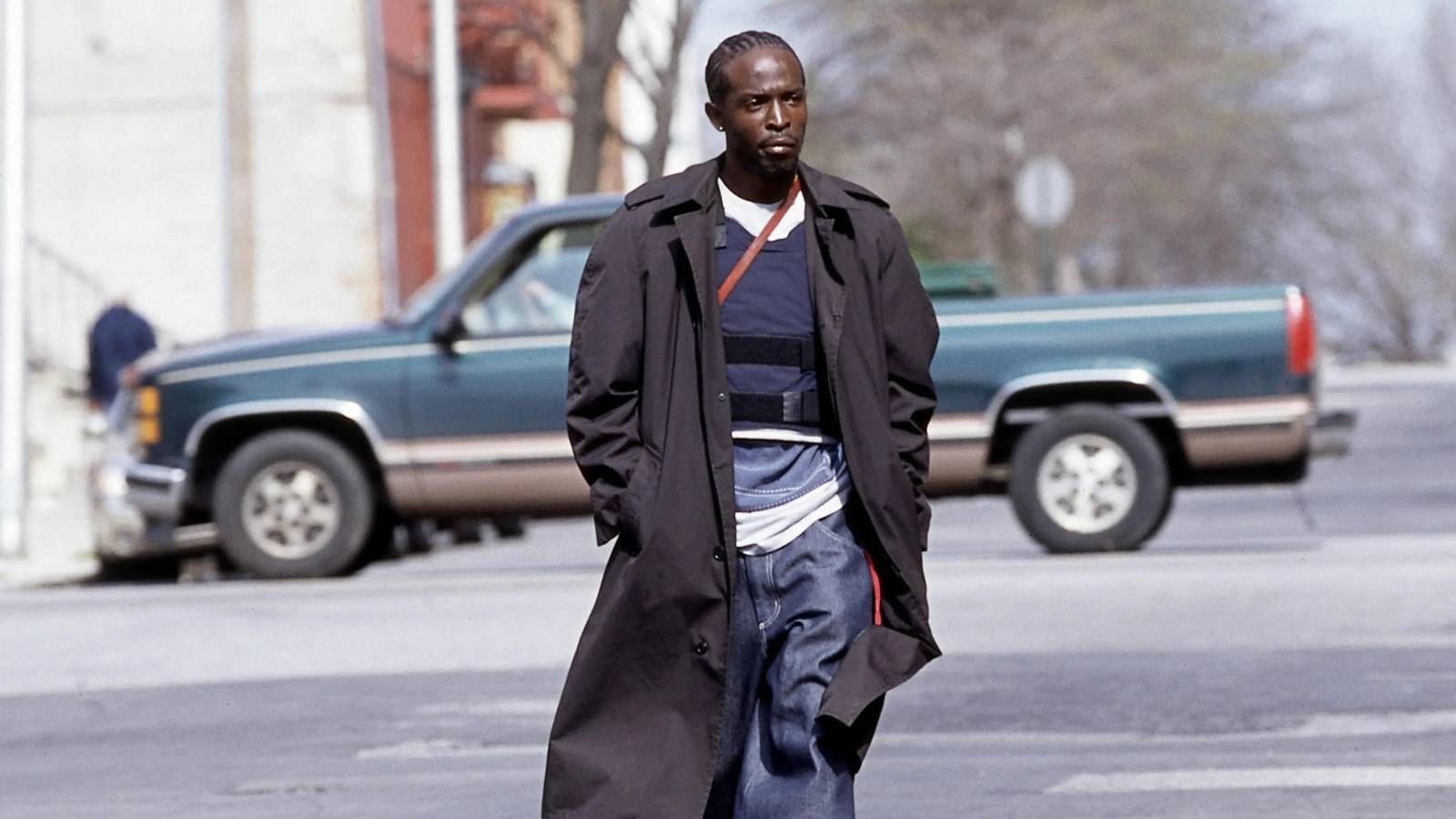
Published Oct 2, 2026, 2:08 PM EDT Liam Gaughan is a film and TV writer at Collider. He has been writing film reviews and news coverage for ten years. Between relentlessly adding new titles to his watchlist and attending as many screenings as he can, Liam is always watching new movies and television shows. In addition to reviewing, writing, and commentating on both new and old releases, Liam has interviewed talent such as Mark Wahlberg, Jesse Plemons, Sam Mendes, Billy Eichner, Dylan O'Brien, Luke Wilson, and B.J. Novak. Liam aims to get his spec scripts produced and currently writes short films and stage plays. He lives in Allentown, PA. Suspense and surprise are essential elements within any great drama series, as it tends to not be very exciting when a story is completely straightforward. It might work better if its a miniseries or show with a finite number of episodes, but any show that runs for multiple seasons is going to require some spontaneity in order to keep its viewers engaged. It’s due to these demands that the best shows of their time tend to be the ones that completely transform over their runs, ensuring that the ending fulfills a different void than what was seen in the beginning. At the same time, a crime show in particular has to also feel like it is completing the premise that the show had been initiated with; it’s not like a procedural or comedy show, in which an audience doesn’t have to watch every episode in order to understand what comes next. Television has become host to amazing characters, which makes sense considering that it's become a medium in which A-list actors have become more engaged. It used to be that there was a strict distinction between stars that worked on the small screen and those with the clout to be part of cinematic productions, but the line between the two has become more fungible in the streaming era; many big shows have per-episode budgets that vastly surpass that of an independent film, and it’s not uncommon to see Academy Award-nominated actors doing a show for HBO or Netflix. The revitalization of the “New Hollywood” era of the ‘70s didn’t come back to cinemas, but rather to the small screen in the form of prestige shows that personified a new renaissance. Crime shows need great characters more than nearly anything else, and the best tend to be those where the line between hero and villain is obscured. 5 'Better Call Saul' (2022–2025) Image via AMC Better Call Saul is the greatest prequel show ever made, one of the best spinoffs of all time, and a completely thrilling crime drama that became far more involved than anyone would have expected from a Breaking Bad prequel focused on the shady lawyer Saul Goodman (Bob Odenkirk). Although Breaking Bad had captured a Shakespearean tragic arc with Bryan Cranston’s Walter White turning into the villainous Heisenberg over the course of five seasons (each of which corresponded to the act of one of “The Bard’s” plays), Better Call Saul ensured that Jimmy McGill (who would take on the name “Saul”) was a reprehensible character from the beginning who managed to keep dragging people into his circle. The genius of Better Call Saul is that Jimmy is able to keep convincing the audience that he is capable of evolving, even though they know what he will become in Breaking Bad. The chaos factor was the addition of Rhea Seehorn as Kim Wexler, one of the best characters that Vince Gilligan has ever created. Better Call Saul offered an appropriate type of fan service because it brought in characters from Breaking Bad in a logical way that made sense for the story, especially when it expanded further into the timeline to show previously seen events from Jimmy’s perspective. The series also helped complicate the presence of some of Breaking Bad’s most memorable villains, with Giancarlo Esposito bringing in a particularly memorable role as Gus Fring. It’s essential viewing that shows that everyone in the Breaking Bad universe has blood on their hands in one way or another. 4 'The Wire' (2002–2008) Image via HBO The Wire is among the most important and influential shows ever made because of the precision with which it mirrored real life and became an actual point of societal change. David Simon had served as a journalist reporting on the crime beat in Baltimore for over a decade before he created The Wire, and the show drew on his experiences learning about the city’s civic infrastructure to craft a damning exploration of the failures in the war on drugs. Everyone is a suspect in The Wire because the series has a massive ensemble that ensures that each season and episode feels different. The Wire is particularly memorable for the way that it increased its complexity by showing a different system in each season; although Season 1 was solely focused on the drug trade, Season 2 examined the city's trading ports, Season 3 introduced local politics and elections, Season 4 looked at the impact on public education, and Season 5 reframed the entire series through the eyes of journalists. The Wire has a significant amount of empathy for all that it portrays, and rarely points to anyone being completely ill-willed or virtuous. Simon has expanded the work he did on The Wire into other shows about crime and politics, but it remains his masterpiece. 3 'Mindhunter' (2017–2019) Image via Netflix Mindhunter is a brilliant exploration of serial killers from David Fincher, a director who knows more about the topic than anyone else, given that he made Se7en, Zodiac, and Gone Girl. Mindhunter is loosely inspired by the experiences of the FBI Agent John Douglas, who served as the inspiration for the character of Will Graham in Red Dragon and The Silence of the Lambs. Douglas had started an initiative within the FBI to explore psychopathy among connected criminals, and he is represented in the series with the protagonist Holden Ford (Jonathan Groff), who travels the country with his partner Bill Tench (Holt McCallany) in order to assist cops with baffling cases and interview some of the most infamous criminals in history. Mindhunter is a harrowing thriller because it questions the limits of what empathy can do, given that attempting to understand the behavior of deeply disturbed men cannot in any way reckon with the violence that they committed. The series draws from history in recreating notorious cases that shaped the 20th century, offering a touch of wisdom without being able to reflect all of the consequences. Collider Exclusive · Villain Personality Quiz Which Criminal Mastermind Would Be Your Nemesis? Lecter · Joker · Moriarty · Chigurh Four of the finest criminal minds ever put on screen. One of them would look at you and see something worth their time. Eight questions decide which one comes for you, why they picked you, and what they would want when they arrived. 🍷Lecter 🃏Joker ♟️Moriarty 🪙Chigurh MEET YOUR NEMESIS → 01 What would a criminal mastermind notice about you first? Great villains choose their opponents carefully. Something about you got their attention. AMy manners, and everything I am careful not to say. BThat I still believe people are basically decent. CThat I am clever, and quietly enjoy proving it. DThat I handle things myself, and always have. NEXT QUESTION → 02 How do they make first contact? The introduction tells you everything about what is coming next. AA polite letter. Beautiful handwriting. Quietly wrong. BSomething on fire, with a message left beside it. CA puzzle, left where only I would look. DNo contact. Just the aftermath, and a coin. NEXT QUESTION → 03 What do you actually believe about right and wrong? Every nemesis is really an argument about the thing you believe most. AThere are lines. Mine are private and absolute. BRules are the only thing keeping us from being animals. CMorality is a system, and systems can be solved. DThings happen. Most of it was never up to me. NEXT QUESTION → 04 What finally gets under your skin? Everybody has a pressure point. Finding yours is the whole plan. ABeing seen clearly by somebody I cannot read. BWatching good people do something ugly. CLosing to someone who was simply better prepared. DHaving no move left that changes anything. NEXT QUESTION → 05 They have made their move. How do you fight back? This is the part of the film where the audience finds out who you are. ACarefully, and never where they expect to be touched. BLoudly. I would rather lose than play their game. CWith a better plan. I can out-think this. DDirectly, once, with whatever is closest to hand. NEXT QUESTION → 06 What would they use against you? A good villain never brings a weapon you have not already handed them. AMy privacy. I have kept far too much to myself. BMy conscience. I will not cross the line they want. CMy ego. I cannot resist a worthy opponent. DMy certainty that I can handle it alone. NEXT QUESTION → 07 What do they actually want from you? The money is never the point. Something else always is. ATo understand me better than anyone ever has. BTo prove I am no better than they are. CTo finally be beaten by someone worth the trouble. DNothing at all. I stepped into the wrong path. NEXT QUESTION → 08 How does it end between the two of you? Eight questions in, this is the one that decides who comes for you. AA conversation I will be replaying for years. BA choice forced on me that has no clean answer. COne final move, and the better mind wins. DA coin in the air, and nothing I can say. REVEAL MY NEMESIS → The Case File Is Complete Your Nemesis Is…Four criminal masterminds. One of them was always going to be yours. Here is who comes for you, why they picked you out of everyone available, and what they want from the encounter. Hannibal LecterYour nemesis does not want to beat you. He wants to know you completely, and he is patient enough to wait for it. The frightening part is how good the conversation is. Lecter is the most dangerous kind of opponent: the one who finds you interesting. He never raises his voice, because he has never needed to. You keep a great deal to yourself and you are careful about what you show. That reserve is exactly the door he would knock on. The films understood something other thrillers missed. The horror is not the violence. It is being perfectly understood by the wrong person. He would be unfailingly polite about all of it. That is the worst part. The JokerYour nemesis is not after money, territory or revenge. He is after a demonstration, and you are the person he has chosen to prove his point on. The Joker only picks opponents who believe in something. Your decency is not a defence against him. It is the entire reason he showed up. He has no plan you can predict and nothing you can take away, which removes every tool you would normally reach for. His whole argument is that you are one bad day away from being him, and you would spend the rest of your life proving him wrong. He would call it a magic trick. You would call it the worst night of your life. MoriartyYour nemesis respects you, which sounds flattering until you work out what it means. He chose you because nobody else was worth his time. Moriarty is the original criminal mastermind, the template every later one borrows from: a mind the equal of the hero's, pointed the wrong way. You enjoy being the cleverest person in the room. He is counting on exactly that, and he has already built the room. This is the rare nemesis who would be genuinely disappointed if you lost badly. He needs the game to be worth playing. It ends the way these things always end. Two people, one problem, and only one way down. Anton ChigurhYour nemesis has no personal interest in you whatsoever, and that is precisely what makes him unsurvivable. You are not a rival. You are a stop on the way. Chigurh does not negotiate, gloat or explain. He arrives, he asks one question, and the answer was decided long before you opened your mouth. You trust yourself to handle things. He is the one problem in the world that has no interest in how capable you are. No Country for Old Men rewrote the screen villain by removing the thing audiences quietly rely on: the sense that talking might work. Call it. He will wait. ↻ RETAKE THE QUIZ 2 'Presumed Innocent' (2024–Present) Image via Apple TV Presumed Innocent is the rare case of a second adaptation working as well as the original, despite the differences in medium. The 1990 classic from brilliant political thriller director Alan J. Pakula was fascinating because it featured Harrison Ford in an uncharacteristically dark role as a lawyer falsely accused of murdering his mistress, and the 2024 reimagining does more than just change the ending in a shocking way. It’s a response to the significant changes within the legal system over the past 25 years, showing just how malleable the court of public opinion can be in a case in which there are wild theories about what might be involved. Watching the show is to participate in its commentary, as the detailed analysis that fans conducted on a week-to-week basis mirrored what was going on within the show’s version of kangaroo court. Presumed Innocent features one of the strongest ensembles of any Apple TV show, which is no small feat when considering the consistently A-list stars who have appeared within programs for the underrated streaming service. Jake Gyllenhaal gets another chance to prove that he is among the best actors working today with a completely unpredictable performance that ranges between being detestable and sympathetic; the fact that the show keeps the viewer so ambiguous regarding his relative ethics is a major accomplishment. David E. Kelly doesn’t always get enough credit for being one of the most consistent and inventive showrunners in the history of modern television, and Presumed Innocent sees him replicating the success he had on broadcast for the streaming era. Although the first season was a sustained success, Apple TV has announced its intentions to transform it into an anthology show. 1 'Defending Jacob' (2020) Image via Apple TV Defending Jacob is an early show from Apple TV that showed the dramatic capabilities that the network is capable of, and deserves more attention now that the streaming service has started to pick up steam with its critically acclaimed showrunning. It’s not often that an adaptation can improve upon the source material, but Defending Jacob adds far more ambiguity to its central mystery and motivation than what had been present in the original novel. The series has a perfect hook that provokes all sorts of philosophical and ethical questions; a hotshot lawyer (Chris Evans) finds that his teenage son (Jaeden Martell) has been accused of murdering his classmate and is called upon to offer a defense, despite not actually wanting to know the truth. Defending Jacob examines the cost of a legal system where strategic brilliance is valued over objectivity, exploring the role of a parent as it applies to both personal responsibility and a desire for justice. Evans is able to shed his inherently charismatic persona to give a grounded and vulnerable performance, adding depth to a character who makes both justifiable and regrettable decisions. The true star, however, is Martell in a role that is unlike anything he has done before, and proves that he is one of the most promising stars of his generation.
5 Crime Shows That Make Every Suspect Look Guilty
Full Article
Original Source
Read the full article at Collider →KhanList aggregates and links to publicly available news content. We do not host full articles from third-party sources. Always verify important information with original sources.