
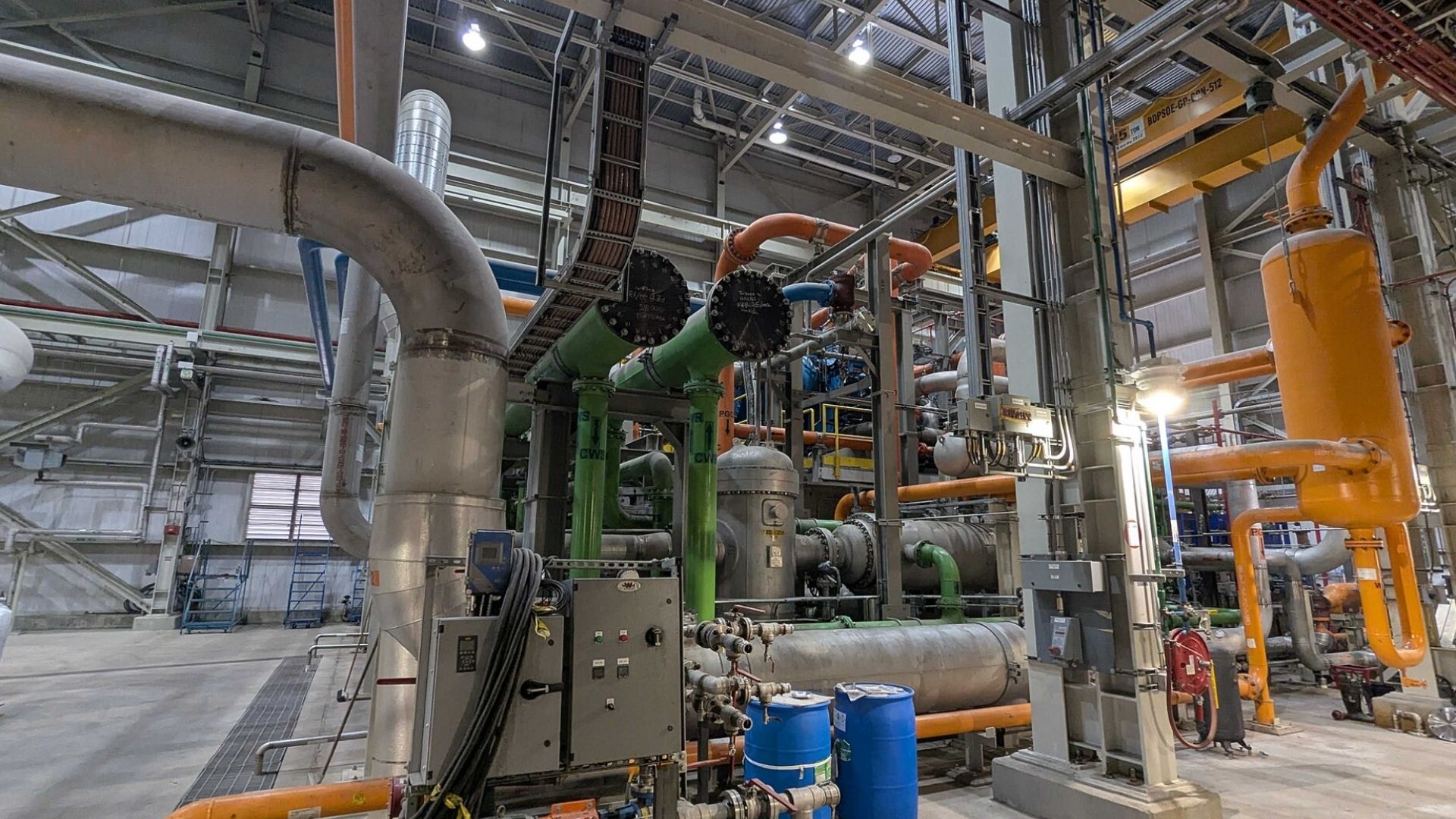
A new direct air capture facility in New Jersey has begun operations, with the capacity to remove 450 tons of carbon dioxide from the atmosphere each year while producing about 475,000 gallons of clean water. Developed by Avnos with funding from the U.S. Office of Naval Research, Project Brighton is located in Bridgewater and will support testing to use captured CO2 to produce sustainable aviation fuel, while also generating operational data for larger commercial deployments. Capturing carbon and producing water together Brighton is Avnos’ largest operating deployment to date and is located alongside the company’s Technology Development Center on Milltown Road. The site combines research, testing and product development on one campus, allowing Avnos to validate its Hybrid Direct Air Capture, or HDAC, technology under real-world operating conditions as it prepares to scale the system. Unlike some direct air capture technologies that require significant external heat or water inputs, Avnos says its HDAC process captures atmospheric CO2 while simultaneously producing clean water, without relying on external heat. That combination is intended to make the technology suitable for applications ranging from data centers and geologic carbon storage to low-carbon fuel production. “Brighton is our largest operating deployment to date and demonstrates our ability to deliver infrastructure at increasing scale,” said Will Kain, Founder and CEO of Avnos. “It also provides the operational experience and real-world performance data that will help accelerate future commercial deployments, while helping customers address interconnected energy, water and emissions challenges,” he added. Captured CO2 could support aviation fuel production One of Brighton’s key roles will be supporting Avnos’ work on converting carbon dioxide captured directly from the atmosphere into feedstock for sustainable aviation fuel. Direct air capture removes CO2 already present in the atmosphere, after which the captured gas can either be permanently stored or used as an input for products such as synthetic fuels. For the aviation sector, captured carbon could be combined with other inputs to produce fuels designed to reduce dependence on conventional fossil-based jet fuel. Brighton’s development with funding from the Office of Naval Research also gives Avnos a larger operating platform for gathering performance data as it works toward commercial-scale deployments. “Project Brighton reflects the kind of investment Somerset County, and New Jersey more broadly, works hard to attract – technology companies building real infrastructure at scale,” said Chris Edwards, President and CEO of Somerset County Business Partnership. “Avnos has been part of our business community for several years now, and it’s great to see this project reach operational status,” he added. Larger carbon capture project already in development With Brighton operational, Avnos is also advancing Project Cedar, another HDAC deployment supported by up to $17 million in project financing. Cedar is expected to use four HDAC modules designed around faster construction, greater scalability and more repeatable deployment, giving the company another step toward building direct air capture infrastructure at larger scales. The company has also received backing from the U.S. Department of Energy and the U.S. Department of Defense as it develops HDAC systems for carbon removal, water production and other commercial applications.Get the latest in engineering, tech, space & science - delivered daily to your inbox.Atharva is a full-time content writer with a post-graduate degree in media & amp; entertainment and a graduate degree in electronics & telecommunications. He has written in the sports and technology domains respectively. In his leisure time, Atharva loves learning about digital marketing and watching soccer matches. His main goal behind joining Interesting Engineering is to learn more about how the recent technological advancements are helping human beings on both societal and individual levels in their daily lives.
475,000 gallons of water: New US facility to capture 450 tons of CO2 for clean fuel
Full Article
Original Source
Read the full article at Interestingengineering →KhanList aggregates and links to publicly available news content. We do not host full articles from third-party sources. Always verify important information with original sources.