
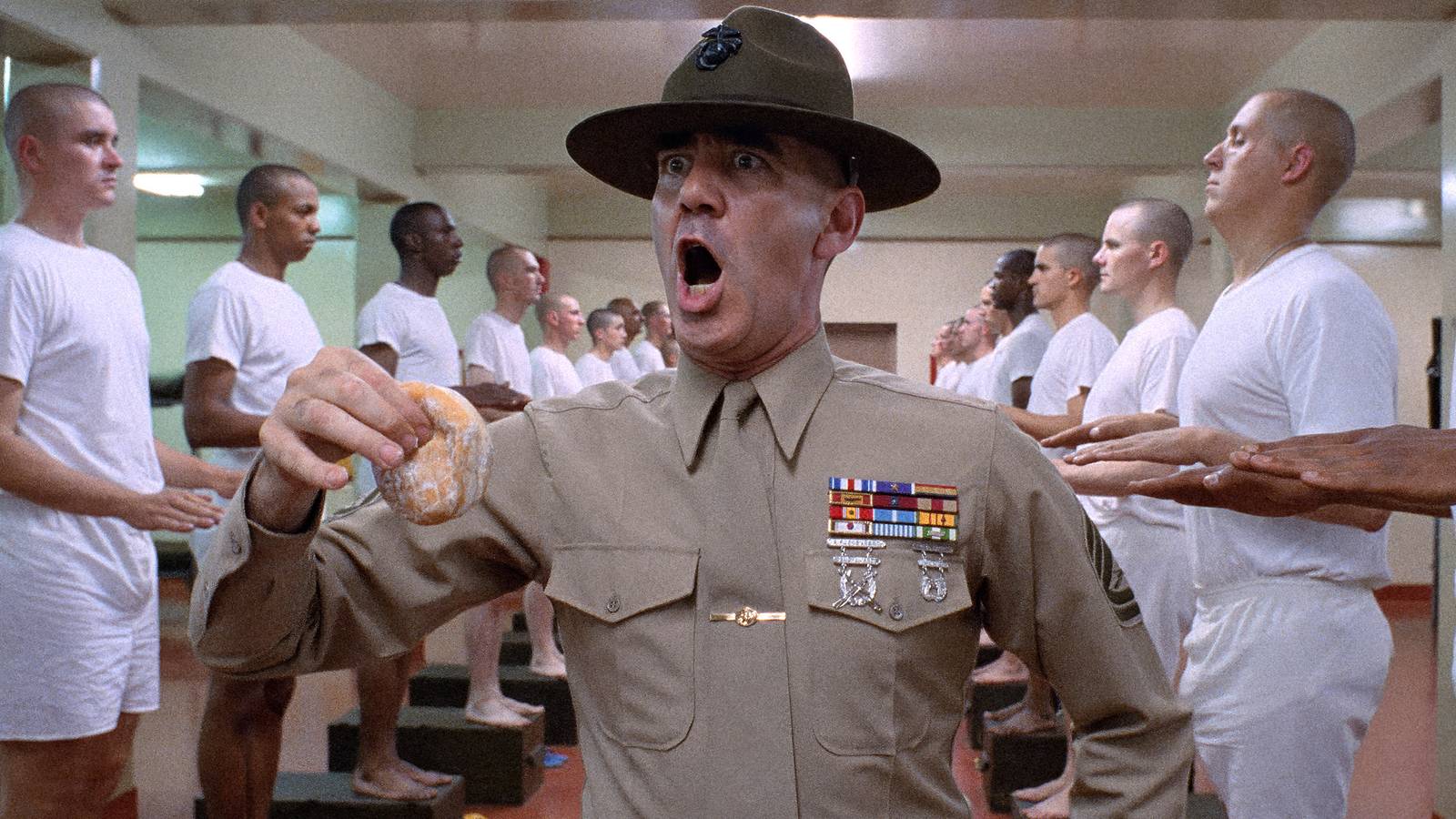
Published Oct 10, 2026, 12:08 AM EDT Many great directors have given their own views of the triumphs and tragedies of war – Steven Spielberg recreated the D-Day landings for Saving Private Ryan; Christopher Nolan took audiences to Dunkirk; and Francis Ford Coppola went deep into the jungle for Apocalypse Now. Few filmmakers, however, have looked at the toll of conflict through the same lens as Stanley Kubrick. 1987’s Full Metal Jacket showed the experience of the Vietnam War through the eyes of a soldier, in a way that showcased both the futility of war and the system that prepares young men for it. Nearly three decades later, the work is one of the great director’s most haunted and darkly comic works. Image via Warner Bros. Kubrick’s story has two main locations – US Marine Corps training on Parris Island, South Carolina, and Da Nang during the Vietnam War's largest military campaign. The first part sees recruits subjected to brutal humiliation-based training by sadistic instructor Gunnery Sergeant L. Hartman (R. Lee Ermey). Largely witnessed through the eyes of James T. Davis aka "Joker" (Matthew Modine), Hartman’s methods lead to the mental breakdown of the group’s most vulnerable member, Private Leonard Lawrence, nicknamed “Gomer Pyle” (Vincent D’Onofrio). Following his experiences at training, Joker finds himself serving as a military journalist in the middle of the Vietnam War, and is witness to the infamous 1968 Tet Offensive, where the Viet Cong launched a surprise attack on South Vietnamese forces and their U.S. allies. Joker witnesses the brutality and moral ambiguity of war, as he encounters people from all sides of the conflict whose judgments have been warped by what they have endured. Vincent D’Onofrio Gives One of Cinema’s Most Heartbreaking Performances Image via Warner Bros. Pictures Just four years into his acting career, D’Onofrio had undergone rigorous preparation for the role that would launch him into the limelight. After sending many audition tapes to Kubrick, the young actor gained 70 lbs to play the clumsy Pyle, who is ill-equipped for military life and consistently abused by Hartman. He becomes the film’s symbol, even saying the movie’s title in the unforgettable moment when Pyle finally suffers a mental collapse and has his revenge on his tormentor, an act witnessed by the horrified Joker. One of the finest proponents of the “Kubrick Stare” – an unsettling, sinister glare where the eyes glower from under a tilted forehead – it made the actor into the star he is today. Pyle’s transformation becomes Kubrick’s commentary on the military system, portrayed as unnecessarily cruel and designed to break soldiers rather than arm them for battle. By contrast, D’Onofrio has nothing but good memories of working with Kubrick, stating in a recent interview for the filmmaker’s official YouTube channel: “His treatment of me was spectacular. He knew exactly how to deal with this young actor who had the chops, but no experience.” Stanley Kubrick Uses Dark Humor to Underline the Terror of Conflict Full Metal Jacket is not generally viewed as a comedy, but it is a film that uses humor to point out the absurdity of what its characters are going through. Hartman’s abuse is over-the-top and cartoonish at times, and many of the soldiers Joker encounters make nihilistic jokes about the pointless nature of their mission, or the chaos that surrounds them. These moments are humorous in their ridiculousness, but they serve the wider context of how dark Joker’s experience has become. It does, in many ways, appear to typify Stanley Kubrick’s view on war — a cruel joke played out by men who understand the punchline all too well by the film’s closing. Kubrick has on occasion been accused of being a ‘cold’ filmmaker, both as a compliment and a criticism, depending on your viewpoint. In this case, the cynicism feels right at home in a story that follows one of the darker chapters of American history, where chaos reigns and the lines between good and evil become blurred beyond recognition. Stanley Kubrick would only make one more film before his death in 1999, the psychological mystery Eyes Wide Shut. This would make Full Metal Jacket his final, and perhaps definitive, portrayal of war. 30 years after drawing public ire for the anti-military drama Paths of Glory, and 13 years after he dropped an Atomic Bomb in Dr. Strangelove, the film shows his opinions remain unmoved, and even more hard-hitting. It’s a classic that sums up the filmmaker’s legacy – confrontational, complex, and utterly brilliant. Release Date July 10, 1987 Runtime 116 minutes Director Stanley Kubrick A pragmatic U.S. Marine observes the dehumanizing effects the Vietnam War has on his fellow recruits from their brutal boot camp training to the bloody street fighting in Hue.
39 Years Later, HBO Max's Legendary War Movie Is Still One of the Best Ever Made
Full Article
Original Source
Read the full article at Collider →KhanList aggregates and links to publicly available news content. We do not host full articles from third-party sources. Always verify important information with original sources.