
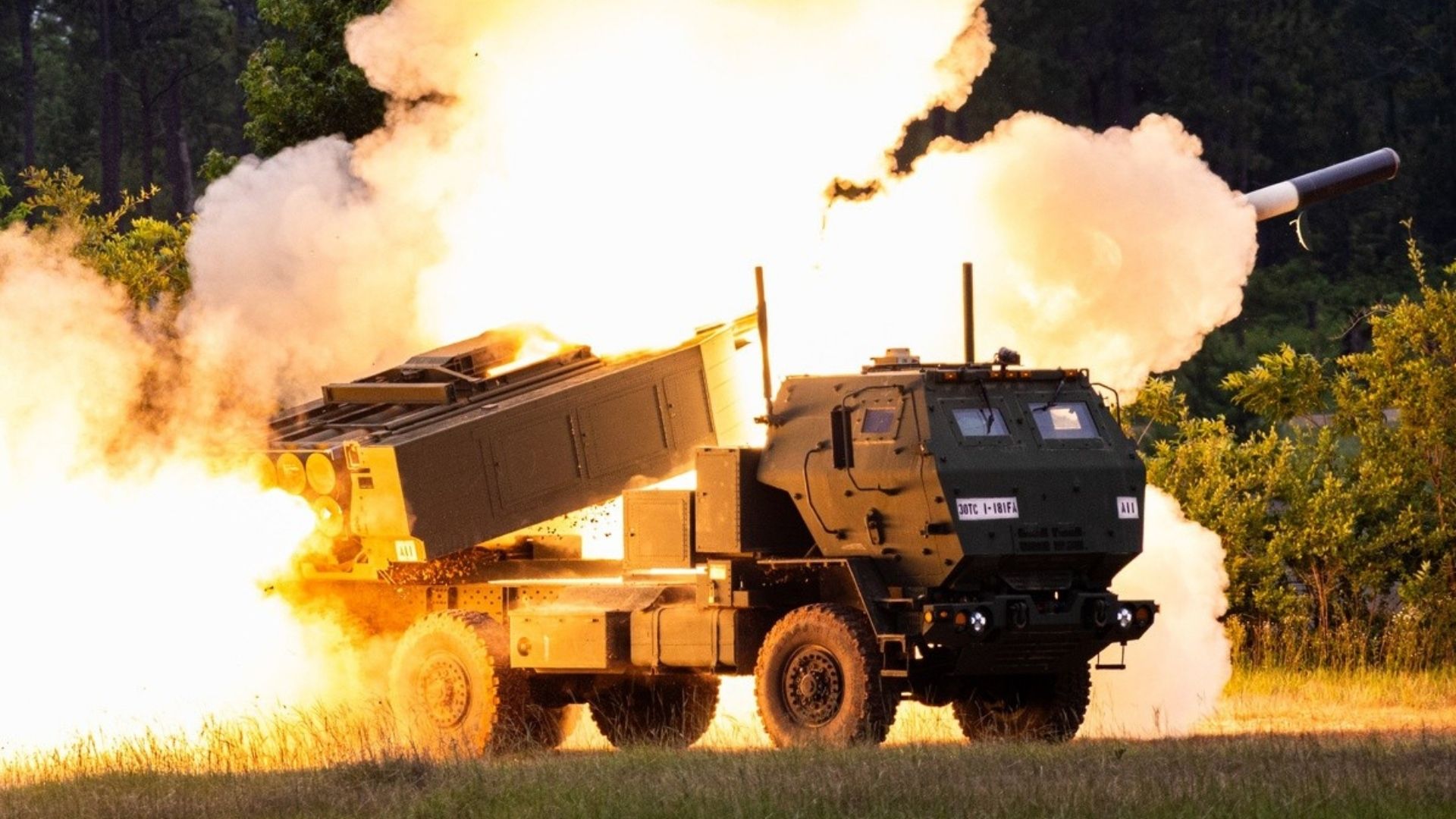
The U.S. Army has started prototype development of a new autonomous launcher that could give commanders more flexible firepower across the battlefield. The service awarded a $33.4 million Other Transaction Agreement to the Georgia Tech Research Institute (GTRI), which will integrate the system’s major components. The effort centers on the Common Autonomous Multi-Domain Launcher (CAML), part of the Army’s broader Fires modernization push. GTRI will spend roughly 36 months developing and integrating the prototype before the Army begins Increment Zero demonstrations. Modular launcher takes shape CAML will use a modular architecture instead of relying on one complete launcher design. The Army plans to pair an autonomous mobility platform with interchangeable munitions pallets, allowing engineers to test different combinations. That separation could make the launcher easier to adapt as the Army evaluates new technologies. Engineers can develop mobility and weapons components independently, then connect them through common interfaces during the integration process. The approach also allows multiple technical partners to contribute specialized systems. The Army can therefore evaluate individual technologies without requiring one contractor to develop every part of the launcher. GTRI will serve as the link between those independently developed components. Its responsibilities include systems engineering, interface integration, modeling and simulation, along with integrated testing of the prototype. GTRI integration role Getting separate components to operate as one system will become a central engineering challenge for CAML. GTRI will need to verify that the launcher’s mobility, mission systems and munitions interfaces work together under realistic operating conditions. The institute will also develop the integrated acceptance test plan and lead physical testing. Those tests should reveal how well the modular architecture performs once individual components operate as part of a complete launcher. The Army expects another major award to follow, covering the Autonomous Mobility Platform. Additional prototype awards could support other CAML components as the competitive development effort continues. That structure gives the Army several opportunities to compare competing technologies during development. It also creates the possibility of replacing individual components without forcing engineers to redesign the entire launcher. Soldiers to test prototypes The Army plans to use several forms of experimentation before deciding whether CAML should move beyond the prototype stage. Live-fire demonstrations, virtual simulations and direct Soldier testing will generate data for future decisions. Those results could influence the launcher’s requirements, software integration and eventual production configuration. Soldier feedback will also give engineers a clearer picture of how the system performs outside laboratory and simulation environments. Lt. Gen. Frank Lozano, the Army’s Portfolio Acquisition Executive for Fires, said CAML will help the service experiment with different launcher concepts. He described the effort as a way to learn quickly while pursuing more adaptable and survivable Fires capabilities. CAML does not represent a production decision at this stage. The Army instead wants to use the prototype effort to determine which autonomous and modular technologies can deliver useful capabilities on the multi-domain battlefield.Get the latest in engineering, tech, space & science - delivered daily to your inbox.Aamir is a seasoned tech journalist with experience at Exhibit Magazine, Republic World, and PR Newswire. With a deep love for all things tech and science, he has spent years decoding the latest innovations and exploring how they shape industries, lifestyles, and the future of humanity.
$33.4M autonomous launcher prototype adds swappable pods for modular field power
Full Article
Original Source
Read the full article at Interestingengineering →KhanList aggregates and links to publicly available news content. We do not host full articles from third-party sources. Always verify important information with original sources.