
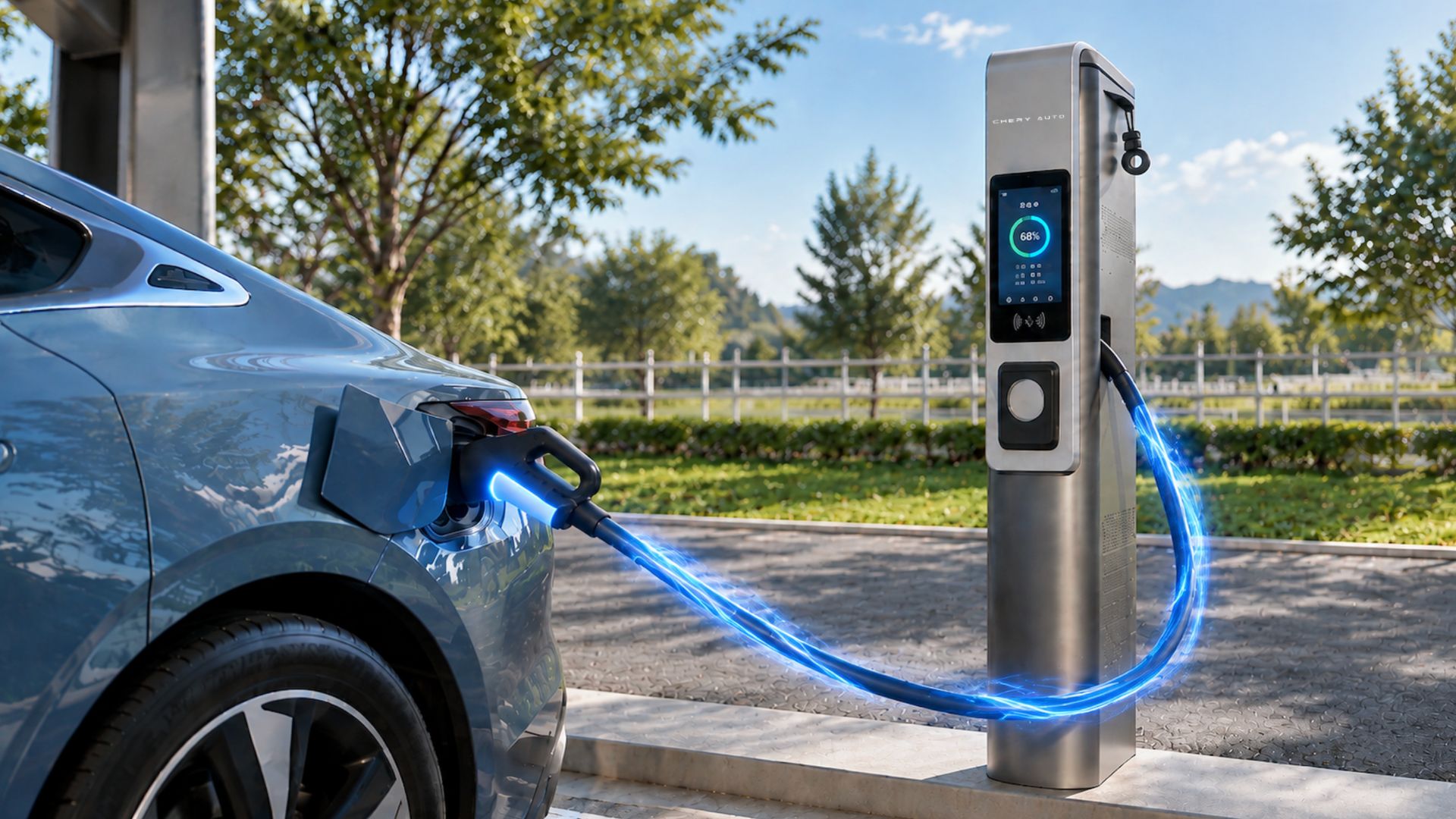
Five minutes plugged into a charger could add 311 miles of driving range, according to Chery, which has announced a 1.44-megawatt system as competition intensifies across China’s electric vehicle industry. The automaker’s Volt-Dragon technology can also charge a battery from 10 percent to 97 percent in six minutes and 50 seconds. The announcement comes as Chery showcases its integrated energy technologies at the 2026 International User Summit, held October 19–23 in Wuhu, Anhui. More than 2,000 international guests and users are attending the event to explore how the company connects electricity generation, storage, and consumption. Adding range in minutes The claimed output puts Chery among the Chinese manufacturers developing megawatt-class charging technologies. However, peak power alone doesn’t show how quickly every compatible vehicle will charge. Chery’s result places it 23 seconds behind CATL’s reported six-minute, 27-second benchmark for reaching 97 percent charge. Under what Chery described as conservative scenarios, delivering the same range would take eight minutes. The company did not disclose specific results for very cold or very hot conditions during the announcement. Its CheryMind system adjusts power in response to temperature changes within the battery. Chery presents this AI-powered control as a way to support charging speed while protecting battery health. These performance figures remain company claims. The supplied announcement does not specify the vehicle, battery capacity, or range-testing standard used. Connecting vehicles to the grid Chery’s smart energy center combines solar generation, battery storage, and charging infrastructure into a local microgrid. The company describes it as China’s first large-scale AC vehicle-to-grid demonstration station. The installation also powers a renewable-energy rest area where visitors can stop to charge their vehicles. Its island mode maintains charging during grid disruptions, according to Chery. Bidirectional vehicle-to-grid technology allows compatible EVs to draw electricity during lower-priced, off-peak periods and return it during peak demand. This two-way flow can help manage energy costs, balance grid loads, and improve the use of renewable electricity. Where supported, vehicles can also supply homes and communities during outages, extending their role beyond transportation. For residential users, Chery offers its Energy Cube system, which integrates rooftop solar, batteries, and bidirectional charging to increase the use of self-generated electricity. Expanding beyond passenger vehicles Chery has implemented a similar microgrid at an electric heavy-duty truck park in Spain, pairing renewable generation with storage and high-power charging for freight operations. The company expects this overseas deployment to provide a model that can be replicated to meet local industrial needs. However, the supplied material does not quantify the installation’s operating savings or emissions benefits. Its broader energy portfolio includes long-cycle-life Rhino batteries and research into solid-state technology. Laboratory samples have shown high stress tolerance, supporting further safety testing for automotive and residential applications. Meanwhile, Chery’s public charging network is still taking shape. The company says an initial 100 chargers across 10 Chinese cities will open soon, followed by a planned expansion to 20,000 stations worldwide by 2029.Get the latest in engineering, tech, space & science - delivered daily to your inbox.Atharva is a full-time content writer with a post-graduate degree in media & amp; entertainment and a graduate degree in electronics & telecommunications. He has written in the sports and technology domains respectively. In his leisure time, Atharva loves learning about digital marketing and watching soccer matches. His main goal behind joining Interesting Engineering is to learn more about how the recent technological advancements are helping human beings on both societal and individual levels in their daily lives.
311 miles in five minutes: China’s 1.44 MW EV charger promises to slash wait times
Full Article
Original Source
Read the full article at Interestingengineering →KhanList aggregates and links to publicly available news content. We do not host full articles from third-party sources. Always verify important information with original sources.