
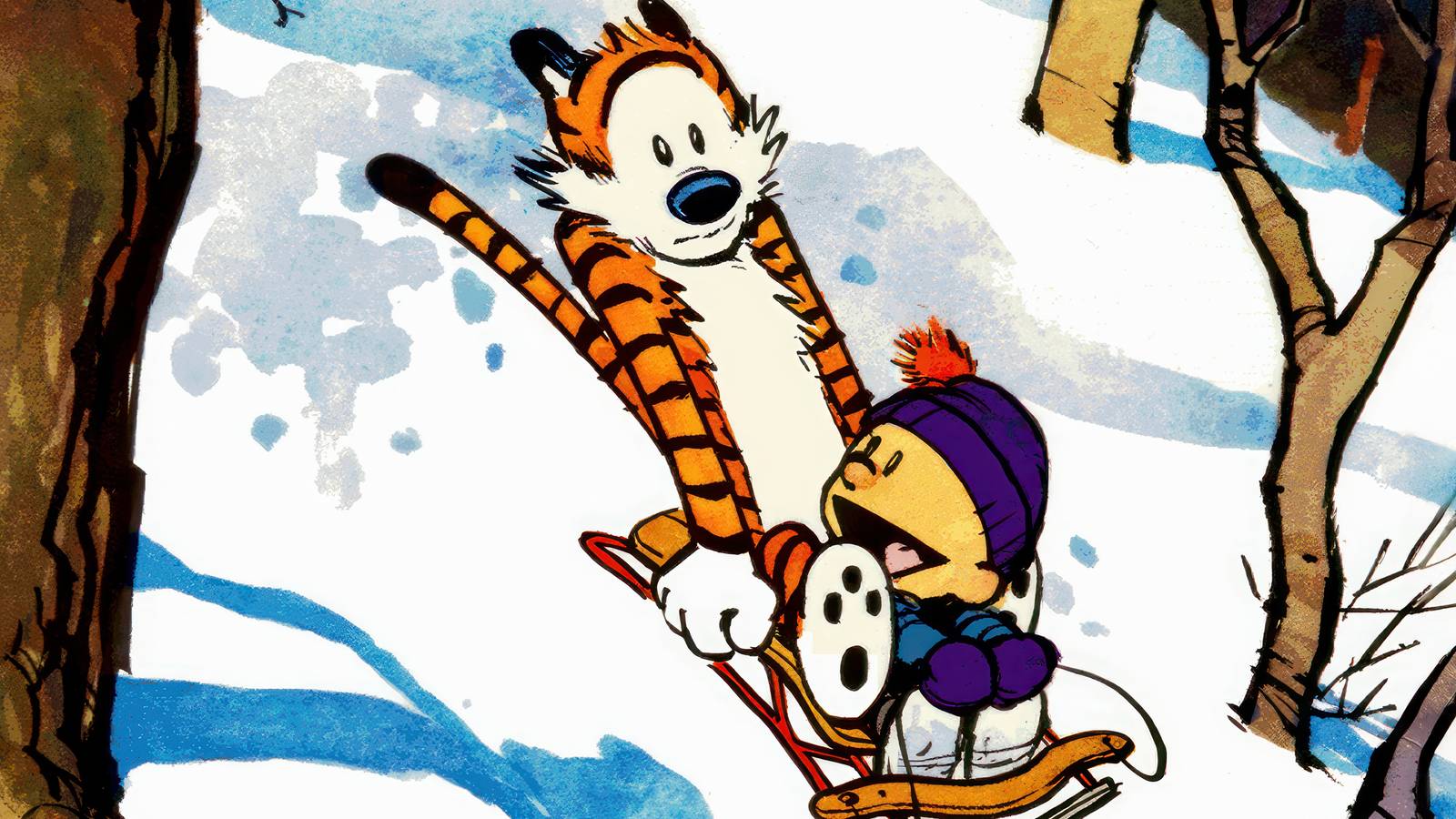
Published Aug 31, 2026, 9:38 PM EDT Shawn Van Horn is a Senior Author for Collider. He's watched way too many slasher movies over the decades, which makes him an aficionado on all things Halloween and Friday the 13th. Don't ask him to choose between Michael Myers and Jason Voorhees because he can't do it. He grew up in the 90s, when Seinfeld, Everybody Loves Raymond, and TGIF were his life, and still watches them religiously to this day. Larry David is his spirit animal. His love for entertainment spreads to the written word as well. He has written two novels and is neck deep in the querying trenches. He is also a short story maker upper and poet with a dozen publishing credits to his name. He lives in small town Ohio, where he likes to watch professional wrestling and movies. If you're of a certain age, like this writer, you might have vivid memories of a childhood after-school routine that involved the newspaper. Parents would flip through the news and sports pages, but kids, after being released from hours of mind-numbing boredom, went straight to the comics. There, in a few short panels, we'd witness the latest adventures from our favorite comic strips, like Peanuts, Garfield, The Far Side, and so many more. And then, in a league of its own, was Bill Waterson's Calvin and Hobbes. From 1985 to 1995, the tales of six-year-old Calvin and his stuffed toy tiger Hobbes did more than just entertain; they helped kids invest in their imaginations. Nearly 31 years after the final Calvin and Hobbes strip ran on December 31,1995, no newspaper comic has done it better. 'Calvin and Hobbes' Is All About the Wonders of Imagination What immediately sets Calvin and Hobbes apart from other comics strips was its style and premise. Without even reading the dialogue, the reader's eye is drawn to it, as it looked like nothing else on the newspaper page. Bill Watterson, who both wrote and drew the comic, had an evolving style. The very early days of the comic are not as refined as what was to come, but over time, the amateurish look became less restrained. Lines were better defined, with more experimentation and pop, going slightly over-the-top without losing the realism still needed to tell a human story. Whereas other comics looked as thin and flat as the pages they were printed on, Calvin and Hobbes had life to its artwork, especially on those longer, color Sunday editions. When the black and white disappeared, Watterson's comics felt like paintings. You weren't finding that in Garfield. The vastly detailed, off-kilter design of Calvin and Hobbes was essential, because it's a comic all about the power of imagination. At its heart is six-year-old Calvin, an only child whose parents love him very much, but who doesn't have friends. Without it ever being explicitly stated, we can see that Calvin is a lonely child. He's not a sad one, though. Calvin gives himself over fully to his imagination through his stuffed tiger, Hobbes. Adults only see a lifeless toy, but Calvin sees his best friend, who comes to life and goes on adventures with him. Those adventures are the crux of Calvin and Hobbes. Some take place in reality, with the pair getting in trouble with adults or picking on little Susie, who Calvin has a crush on (although he'll never admit it). Calvin and Hobbes build morbid snowmen in the winter and play their invented game Calvinball in the summer. Every season is bursting with possibilities. Much of the comic also takes place within Calvin's imagination, where anything is possible — like when Calvin is bored at school, and daydreams about traveling to other planets as Spaceman Spiff. Calvin and Hobbes is a deeply personal comic strip for fans. Calvin is us; he's who we once were, and who we wish we could be again. But it's also a comic with a message: By showing how exciting using your imagination can be, Bill Watterson taught kids to treasure their own. It's a message that mattered decades ago, and is even more important for today's readers now discovering Calvin and Hobbes for the first time. Calvin and Hobbes' Is Smarter Than Other Comics Image via Bill Watterson Calvin and Hobbes is no simple comic strip. No offense to the easy humor of newspaper comics like Beetle Bailey or Hi and Lois, where the goal is a simple laugh, but they can't compete with Watterson's aspirations. Calvin and Hobbes contains the wisdom of Charles M. Schultz's Peanuts, while reaching even higher. After all, Watterson didn't name his characters after philosophers John Calvin and Thomas Hobbes by accident. Young Calvin's imagination isn't just an escape — it's how he understands a world that's confusing and at times scary. And he doesn't just use it for exploring other planets. He's also examining death, the strange ways adults act, and existentialism. Calvin often gets in trouble, with Hobbes acting as his voice of reason, the angel to his devil. This is Calvin's self-awareness; he knows he messes up, and can sometimes act badly and drive his parents, teachers, and Susie crazy. But he's not irredeemable because Calvin never experiences life from just one angle. He's disgusted by consumerism, while also needing his favorite cartoon. He's a grump when he doesn't get his way, yet he also thrives when he's outside in nature. It's life seen through the eyes of an innocent boy, written by a man who has a lot on his mind. Calvin and Hobbes is a comic strip about growing up. For now, Calvin is a child, but his mind is already well ahead of his peers. He knows the value of living fully as a boy because adulthood is going to take something away from him. Hobbes is his way through it all. And for readers, it's a strip that carries us through life. When we're children around Calvin's age, we can get lost in the fun stories and bright colors. As we get older, however, the meaning changes and the deeper themes present themselves, without ever being preachy. Whether you're six or 46, Calvin and Hobbes still awes. Bill Watterson pulled a J.D. Salinger, disappearing completely from the limelight in 1995 after ending the comic at its peak. He chose to go away, but what he created never will. Calvin and Hobbes is timeless.
31 Years Later, This Masterpiece Remains the Greatest Comic of All Time
Full Article
Original Source
Read the full article at Collider →KhanList aggregates and links to publicly available news content. We do not host full articles from third-party sources. Always verify important information with original sources.