
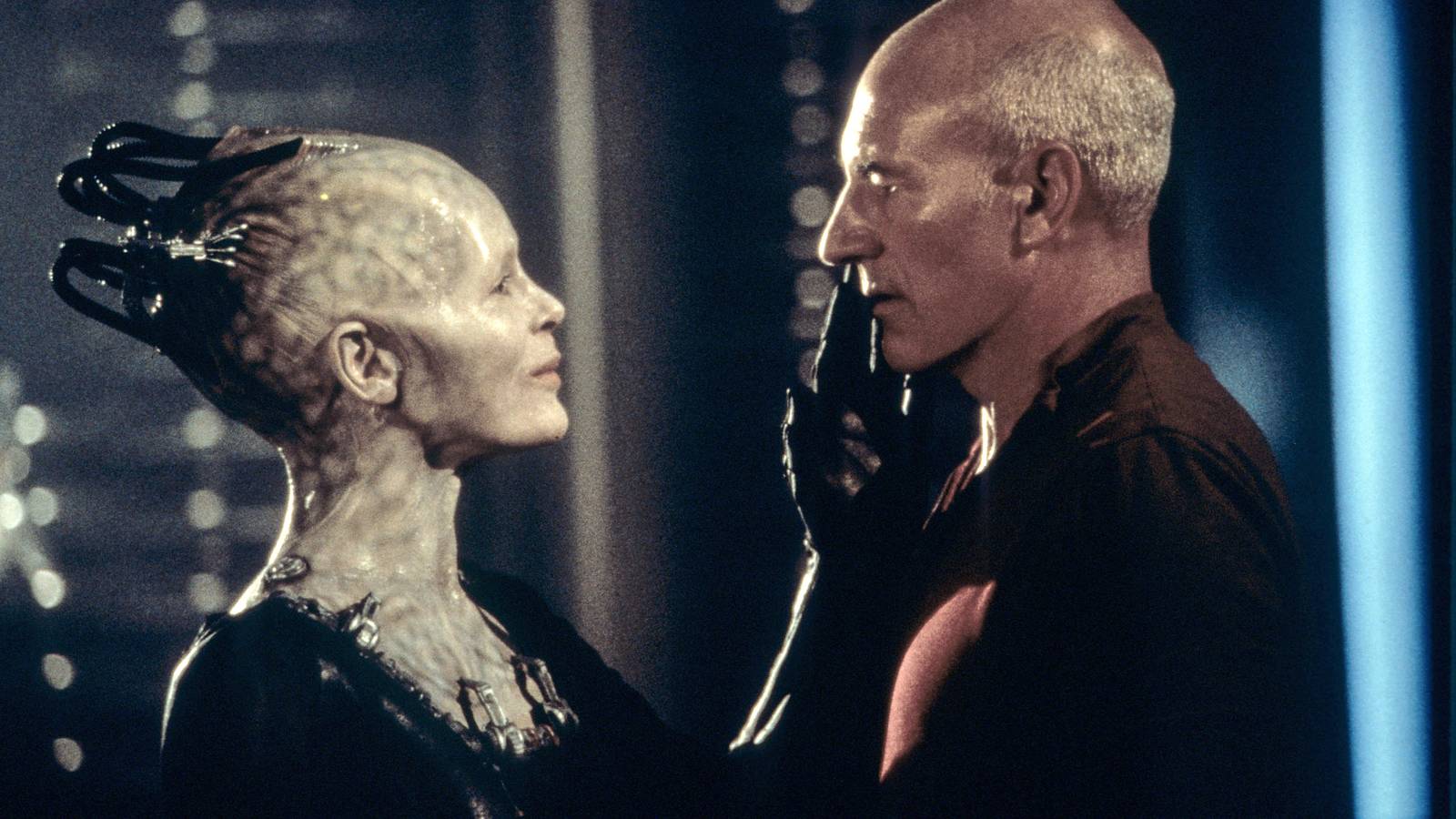
Published Nov 28, 2026, 5:00 AM EST Star Trek: First Contact blends action, humor, and heart in a Borg adventure that brings out the best and worst in Picard. Star Trek's best Next Generation movie just turned 30, and it's still in a league of its own Star Trek: First Contact blends action, humor, and heart in a Borg adventure that brings out the best and worst in Picard. Image: Paramount/Everett Collection Turning a successful television series into a movie isn't as easy as just giving the cast a bigger budget and adding in more explosions. What works on the small screen doesn't always translate to theaters, especially when filmmakers lose sight of what made audiences fall in love with the characters in the first place. Fortunately, Star Trek: First Contact understood that bigger could be better, provided the spectacle didn't come at the expense of the characters. Released on Nov. 22, 1996, the second film featuring the Star Trek: The Next Generation cast follows Captain Jean-Luc Picard (Patrick Stewart) and the Enterprise crew as they travel back to 2063 to stop the Borg from preventing humanity's first contact with an alien civilization. With history hanging in the balance, the crew must protect Zefram Cochrane (James Cromwell), the inventor responsible for humanity's first warp-speed flight, while battling the Borg aboard the Enterprise. Now streaming free on Pluto TV, First Contact celebrates its 30th anniversary this year. Having recently revisited it, I'm convinced it remains the best Next Generation movie, largely because it remembers that great Star Trek is about more than saving the galaxy. The Borg bring out the worst in Captain Picard Few villains have left a greater mark on Star Trek than the Borg, particularly after assimilating Captain Picard in the classic Next Generation two-parter, "The Best of Both Worlds." That experience continues to haunt him in First Contact, where his normally measured approach to command gives way to an increasingly personal obsession with destroying his former captors. Things get especially heated when Worf (Michael Dorn) challenges Picard's refusal to abandon the Enterprise as the Borg take control of the ship. Picard snaps, "You are a coward," a particularly vicious insult to a Klingon who values honor above almost everything else. Worf's response is equally memorable: "If you were any other man, I would kill you where you stand." It's an uncomfortable exchange because we rarely see Picard treat his officers this way, especially someone who has served alongside him for so many years. Fortunately, Lily Sloane (Alfre Woodard), a woman from the 21st century caught aboard the Enterprise, isn't about to let a Starfleet captain intimidate her. Woodard is terrific as Lily, who recognizes that Picard's determination to defeat the Borg has become an obsession. She compares him to Captain Ahab, the vengeance-obsessed character from Moby-Dick, forcing Picard to confront how far he's strayed from the man he believes himself to be. It's one of the film's best scenes, with Stewart delivering an explosive performance before realizing Lily is right. Picard may be fighting the Borg, but his greatest battle is with himself. Meeting your heroes isn't always what you expect Paramount While Picard battles the Borg, Commander William Riker (Jonathan Frakes) and his team have a different problem on Earth: getting Zefram Cochrane to make history. For the Enterprise crew, Cochrane is practically a mythical figure, the man whose invention changed humanity forever by discovering warp speed travel. Unfortunately, the real Cochrane is a hard-drinking, rock-loving inventor who isn't particularly interested in becoming a historical icon. His motivations are considerably less noble than the history books suggest, and he's understandably overwhelmed when he learns what's expected of him. It's a wonderful twist on the familiar idea of meeting your heroes and discovering they're not quite who you imagined. Cochrane isn't the visionary the crew expects, but that doesn't make his eventual achievement any less remarkable. The storyline also provides some of the movie's funniest moments, particularly when Counselor Deanna Troi (Marina Sirtis) gets drunk while trying to establish a rapport with Cochrane. Watching the usually composed ship's counselor struggle to maintain her professional dignity is a delight. What makes these scenes work, though, is that the humor never comes at Cochrane's expense. The crew accepts him for who he is, flaws and all. History may have turned him into a legend, but First Contact reminds us that even extraordinary accomplishments can come from ordinary people. Jonathan Frakes proves he knows how to make a Star Trek movie Paramount Perhaps the most impressive thing about First Contact is how well it balances three distinct storylines. Credit goes to screenwriters Ronald D. Moore and Brannon Braga, but also to Frakes, who made his feature-film directorial debut after directing several episodes of The Next Generation. While Picard confronts his demons and Riker attempts to keep history on track, Data (Brent Spiner) faces a very different challenge. The film introduces the Borg Queen (Alice Krige), who offers Data something he's spent his entire existence pursuing: the chance to become more human. Rather than simply trying to overpower him, the Queen tempts Data with human skin, physical sensations, and the possibility of experiencing desires he's never fully understood. It's a fascinating psychological battle, made even more compelling by Krige's unsettling performance. Frakes moves between these stories without losing momentum, shifting from the horror of the Borg's assimilation of the Enterprise to the humor of Cochrane's reluctant heroism. That he manages to make a movie about time travel, revenge, and a seductive cyborg feel like a natural extension of The Next Generation is no small accomplishment. Three decades years later, First Contact remains the best Next Generation movie, and it's not even close.
30 Years Later, Star Trek's Greatest 'Next Generation' Movie Is Officially Free to Stream
Full Article
Original Source
Read the full article at Polygon →KhanList aggregates and links to publicly available news content. We do not host full articles from third-party sources. Always verify important information with original sources.