
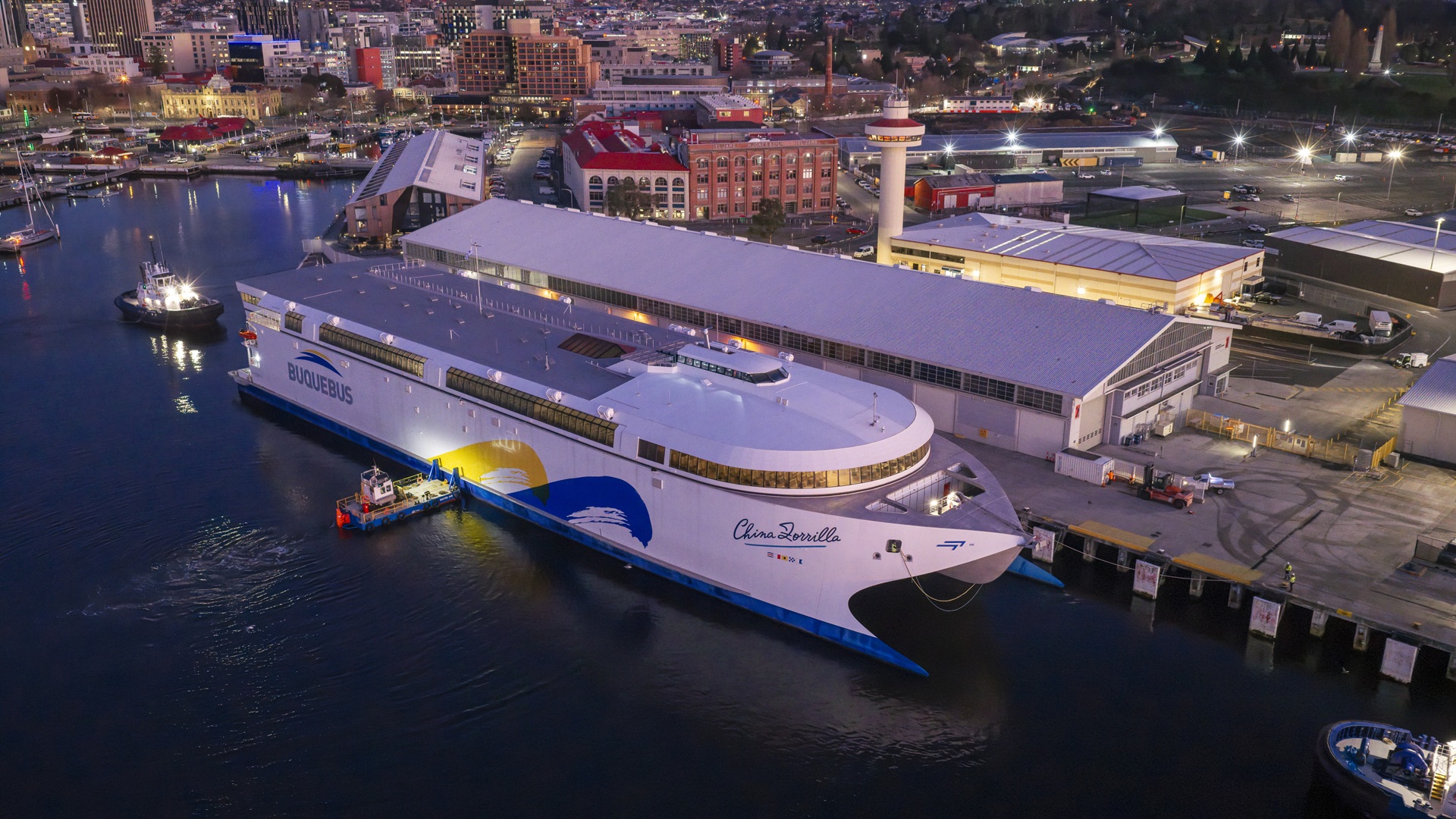
The Hull 096 arrived in South America.Incat The largest electric ship in the world, the Hull 096, which is powered by more than 5,000 batteries, has finally arrived at its new home in South America, after sailing thousands of miles from Tasmania. The 426-foot (130-meter) vessel was built by Hobart-based Australian shipbuilder Incat for South American ferry operator Buquebus. It reached Uruguay on Friday, September 11, aboard the heavy-lift transport ship MV Black Marlin. The vessel was welcomed in the city of Nueva Palmira before being floated off the transport vessel over the weekend. From there, it will be towed to Colonia del Sacramento, where it will undergo commissioning and testing before entering service. “Touchdown in Uruguay,” Incat officials stated in a video post shared on LinkedIn. “A special moment as Hull 096 floats free from the Black Marlin at Nueva Palmira and touches South American waters for the first time.” Extensive battery system The ferry relies on more than 5,000 batteries, which allow it to operate for roughly 90 minutes. It boasts a capacity of 40 megawatt-hours (MWh). It will now operate under the name China Zorrilla, in honor of the legendary late Uruguayan film and theater actress, who passed away in 2014. Its capacity is four times that of any maritime vessel built before it. Moreover, it is fitted with eight electric waterjets. Its propulsion, handling, control systems, and maneuverability were tested during earlier harbor trials in Tasmania. Hull 096 was welcomed in Nueva Palmira, Uruguay.Credit: Incat Measuring 426 feet (130 meters) long, the aluminum vessel can accommodate up to 2,100 passengers and 225 vehicles simultaneously. The aluminum reduces its weight and improve the battery-electric propulsion system’s efficiency. “After a journey of thousands of kilometers from Hobart, the world’s largest battery-electric ship is finally afloat in Uruguay,” Incat continued. The ferry was originally commissioned by Buquebus in 2019. However, production was paused during the COVID-19 pandemic, and the vessel was redesigned from diesel propulsion to fully electric. It was launched into Tasmania’s River Derwent in May 2025 before undergoing a series of testing and commissioning milestones. Cross-border ferry service China Zorrilla will eventually operate across the Rio de la Plata between Colonia del Sacramento in Uruguay and Buenos Aires, Argentina. The route stretches 30 nautical miles and takes about one hour to complete. The vessel is expected to make three crossings per day. Each journey will fit within its roughly 90-minute battery endurance. “I want to sincerely thank every person who has contributed to this extraordinary achievement,” Robert Clifford, Incat Chairman, said in a press release. “Thousands of people have played a part in bringing this remarkable vessel to life, and they should all be incredibly proud of what has been accomplished.” Hull 096 left Tasmania in early August after being loaded onto MV Black Marlin on Hobart’s River Derwent. The transport vessel carried it past the northern tip of New Zealand, across the Pacific Ocean, and around Cape Horn before reaching Uruguay. Buquebus is now set to complete the final commissioning before placing China Zorrilla into passenger service. At the same time, Incat is already building three additional electric ferries for Danish operator Molslinjen, which are expected to become Europe’s largest electric ferries.Get the latest in engineering, tech, space & science - delivered daily to your inbox.Based in Skopje, North Macedonia. Her work has appeared in Daily Mail, Mirror, Daily Star, Yahoo, NationalWorld, Newsweek, Press Gazette and others. She covers stories on batteries, wind energy, sustainable shipping and new discoveries. When she's not chasing the next big science story, she's traveling, exploring new cultures, or enjoying good food with even better wine.
260 tons: World’s largest electric ferry with 40 MWh battery reaches new home
Full Article
Original Source
Read the full article at Interestingengineering →KhanList aggregates and links to publicly available news content. We do not host full articles from third-party sources. Always verify important information with original sources.