
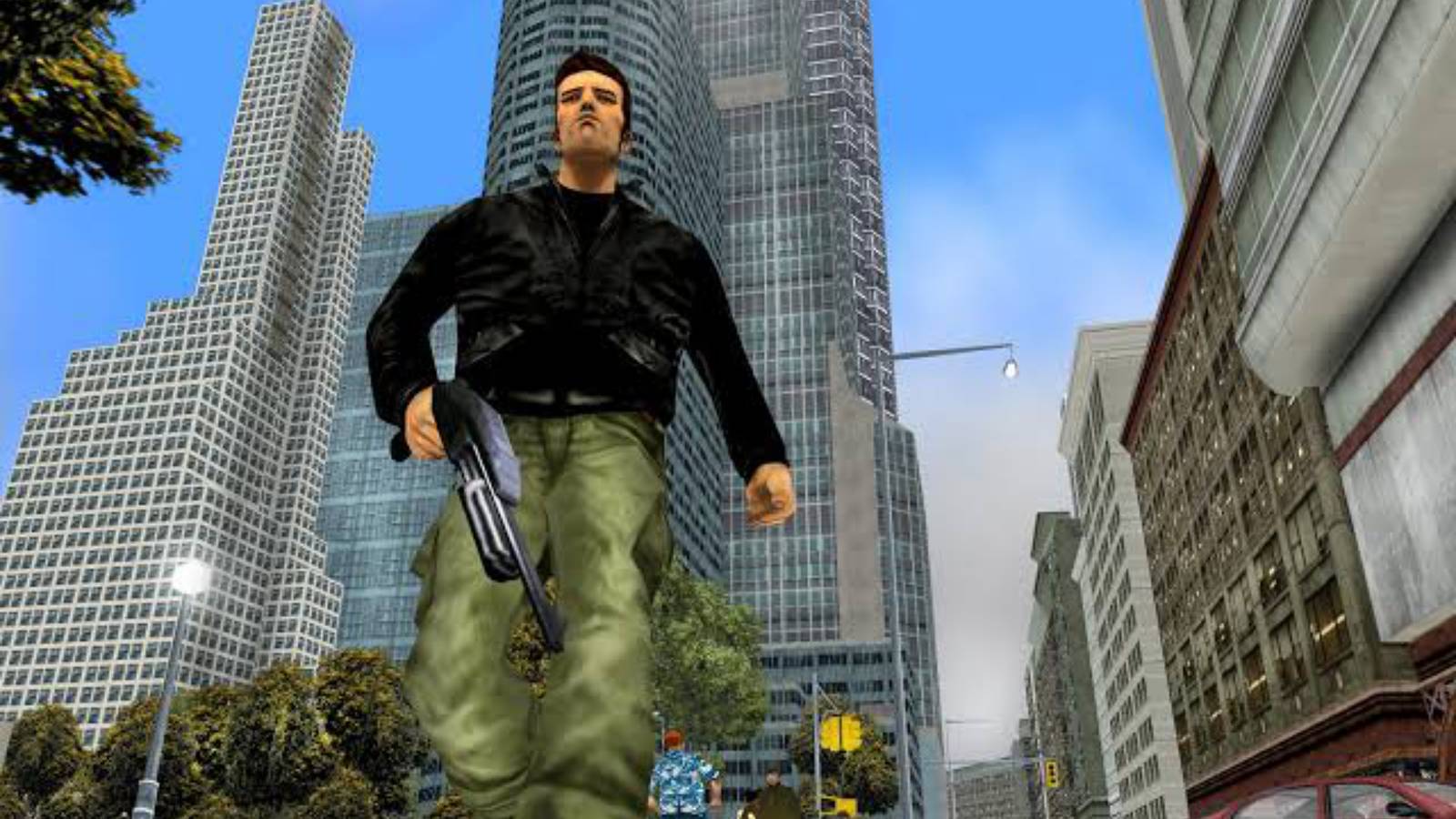
Published Nov 23, 2026, 7:35 PM EST Ryan Epps is a contributing writer for Polygon. His writing spans both the entertainment and tech verticals, with bylines covering everything from Dark Souls to TVs at sites like Tom’s Guide, IGN, Digital Trends, TheGamer, Tech Times, and more. Give me liberty, or give me death Image: Rockstar Sign in to your Polygon.com account It’s October 2001, and you’re standing in a dimly lit game store, where rows upon rows of boxes sit in anticipation as you glance across their titles, unsure exactly which among them you'll end up taking home. Unfortunately, you can only pick one. Your eyes are already darting between Devil May Cry, Silent Hill 2, and Ico, which all feel eerily attuned to those pre-Halloween vibes. Noticing your indecisiveness (and the look of impatience on your mother’s face), the store clerk strides over with an assist, placing in your hands a game you had never heard of until that very moment. The artwork’s nothing to write home about, just a collage of pictures in red, blue, and green hues, featuring obscure faces, a police chopper, and a car up in flames. Your instinct is to just go with your gut; Silent Hill 2 is what you came here for, after all. But something’s telling you otherwise. Maybe it’s the store clerk going on about its open-world premise, or the name itself that strikes a chord within you. Whatever reason incites it, you make the ultimate decision. Little did you know, you’d be walking home with one of the greatest achievements in video game history. Grand Theft Auto 3 was a jolt of raw adrenaline. It was a paradigm shift that made the possibilities of 3D open-world design feel almost limitless. The game thrust players into what Rockstar co-founder Dan Houser described as “an old, post-industrial American city,” a mash-up of Chicago, Pittsburgh, Detroit, Philly, and mostly New York teeming with grim alleyways, pedestrian-filled streets, and sky-slicing buildings that eclipsed many of the incredible worlds that came before it, from The Legend of Zelda: Ocarina of Time to Driver. It was called Liberty City. No game had molded such immense verticality into a 3D world that felt like a living ecosystem where the inhabitants and environments reacted to you directly. It was a feat many at the time considered impossible on existing hardware — and Rockstar did it with virtually no load times to boot. Image: Rockstar Like nearly every title the studio would develop for the system, GTA 3 pushed the PlayStation 2 to its absolute limits. Developers DMA Design (now known as Rockstar North) had to cleverly stream around 130MB of data, including 3D animations, textures, models, and audio, through the PS2’s 32MB of system RAM. For perspective, just one Liberty City island amounted to roughly 50MB of static geometry. To make it all work, the team engineered a dynamic streaming system that fetched sectors of the map ahead of the player, while purging the city behind them. It’s why you’d often see the city pop in and populate right in front of you if you were driving at top speeds and quickly looked behind the character. When code couldn't bridge the gap, Rockstar cleverly designed curved roads to slow down sports cars, added subtle aerodynamic drag to prevent vehicles from outrunning the laser reader, and capped active traffic to eight models. What technical leads Adam Fowler, Obbe Vermeij, and their colleagues accomplished with GTA 3 was nothing short of magic. Image: Rockstar Technical limitations weren’t the only roadblocks for Rockstar. Following the release of GTA 2, which he felt suffered from a lack of narrative thrust due to its non-linear design, Houser set out to give GTA 3 a far more complex story. With the help of co-writer James Worrall, they devised localized character "hubs" that served as contacts for missions, like Joey Leone, Toni Cipriani, and Salvatore Leone. Rather than treating open-world freedom and story progression as opposing forces, Houser used these dynamic webs to bridge the gap, tying mission arcs directly to specific territories and turf wars. That allowed GTA 3’s story to organically teach players the city's layouts and mechanics, moving through the industrial side of Portland with Toni Cipriani, navigating the Leone family's criminal empire with Salvatore, and eventually venturing into Staunton Island's political corruption and corporate underbelly. Each new contact pulled Claude deeper into Liberty City's criminal ecosystem, gradually opening up new territories while revealing another layer of the city's interconnected underworld. Coupled with the decision to keep Claude a silent protagonist, the hub structure allowed players to chart their own path without sacrificing the momentum of a cohesive crime saga. PolygonInteractive Stats Screen Gaming•Quizzes•Grand Theft Auto Save FileFive Ways To Spend It 100% completeCompletionist 0 missionsCruiser 0 ticketsRoleplayer Credits reachedStory 412 hoursCrew Polygon QuizWhat Kind of GTAPlayer Are You?8 Questions • 5 TypesTwo people can put two hundred hours into the same game and have played completely different things. One of them finished the story in a weekend. One of them has never started a mission and could not be happier. Eight questions about your habits will say which of the five you are.The Five Types The Completionist The Cruiser The Roleplayer The Story Player The Crew Player Check My Save Checkpoint 01 of 080% Logged Question 01HOUR ONE 01Fresh save, first hour. What are you doing with it?Everybody's first hour looks completely different. AFinding the collectibles menu and working out how many there are.BDriving. That is the whole hour. I am just driving.CSetting the camera, the controls and the radio exactly how I want them.DStarting the story and not stopping until something makes me.EWaiting for my friends to get on, because it is not the same alone. ← BackPick one, then Next Next Question Checkpoint 02 of 0812% Logged Question 02THE WAYPOINT 02There is a waypoint on your map. How long until you reach it?The honest answer, not the one on the screen. AAfter I have cleared everything else between here and there.BI may never reach it. I am enjoying the drive too much.CNormal time. I am using the roads the way you are supposed to.DStraight there. That is where the game is.EWhenever the group stops arguing about who is driving. ← BackPick one, then Next Next Question Checkpoint 03 of 0825% Logged Question 03RED LIGHT 03Red light, empty junction, nobody around.This question has never once failed to separate people. AStop. I am going to the thing I marked anyway.BStop. I am in no hurry whatsoever.CStop, indicate, and go when it changes. Obviously.DGo. It is a loading screen with cars in it.EGo, while somebody in the car shouts about it. ← BackPick one, then Next Next Question Checkpoint 04 of 0838% Logged Question 04A CAR YOU LIKE 04You find a car you like. What happens to it?There is a correct answer and nobody agrees what it is. AInto the garage with the others. All of them, eventually.BIt is my car now. I drive it everywhere and I know where I parked it.CI park it properly, between the lines, and I come back for it later.DI leave it wherever the next mission starts.ESomebody else takes it and drives it into the sea. ← BackPick one, then Next Next Question Checkpoint 05 of 0850% Logged Question 05A ROUND OF GOLF 05The game offers you a full round of golf. Yes or no?Nine holes. Real time. Your call. AYes, and I will be doing every other one of these too.BYes. This is precisely the sort of thing I am here for.CYes, and I will be taking it seriously.DNo. I am in the middle of something.EYes, with four of us, and it falls apart inside two holes. ← BackPick one, then Next Next Question Checkpoint 06 of 0862% Logged Question 06IT GOES WRONG 06A mission goes wrong right at the end.Two seconds to decide what kind of player you are. AReplay it until it is clean. There is a rating and I am going for it.BShrug and drive off. I was not that invested.CReload, because that is not how it would have gone.DRetry straight away. I want to know what happens next.ELaugh about it for ten minutes, then retry. ← BackPick one, then Next Next Question Checkpoint 07 of 0875% Logged Question 07THE CREDITS 07The credits roll. What happens after that?For some people this is the end and for some people it is nothing. AI am at 68 percent. There is work to do.BI keep driving around. The credits did not change anything.CI keep playing him. He lives there now.DThat is it. Done. On to the next game.EOnline, with everybody else, for the next two years. ← BackPick one, then Next Next Question Checkpoint 08 of 0888% Logged Question 08THE HOURS 08Where did your hours really go?This is the one that decides it. ACollectibles, side activities and a completion percentage.BDriving, mostly, with the radio on.CWalking around in character and parking neatly.DThe story, start to finish, and almost nothing else.EMessing about with friends. I could not tell you what we did. ← BackPick one, then Next Read My Save Save LoadedYou Are Nobody is playing it wrong. These are five honest ways to spend the hours, and your answers keep landing on one of them. 100% completeThe CompletionistCollectibles / Side activities / A numberThere is a number, and it is not at 100 yet. You cannot leave a map with things still on it. The percentage is the real game, the story is one more item on the list, and you will clear everything between here and the waypoint first.Why That Is You The completion percentage is the only tally GTA keeps, and for you it is the whole reason the hours are worth counting. Your first hour goes on the collectibles menu, working out the size of the job before you start it. A mission that goes wrong gets replayed until it is clean, because there is a rating attached and you are going for it. You were still at 68 percent when the credits rolled, and the credits did not feel like an ending. 100%Clears The MapWants The Rating 0 missions, 8,431 milesThe CruiserRadio on / No waypoint / Just drivingYou never started the mission, and that was the point. Radio on, no waypoint, nowhere to be. The city is the game for you, and the story is an interruption you have been politely declining for about forty hours.Why That Is You GTA spends more effort on the feel of a car at night than on almost anything else, and you are the player that work was for. There is a waypoint on your map and you may never reach it, because the drive is better than the arrival. You have one car, you drive it everywhere, and you know exactly where you parked it. The credits rolled and nothing changed. You are still out there with the radio on. Radio OnNo WaypointJust Driving 0 tickets, parked neatlyThe RoleplayerIn character / Indicates / ReloadsYou indicate at junctions and you mean it. You are not playing a game, you are living somewhere. You stop at lights, you park between the lines, and when something happens that would not have happened, you reload.Why That Is You Stopping at a red light in an empty city is a choice nobody asks you to make, which is exactly why you make it. Your first hour goes on the camera, the controls and the radio, set precisely how you want them before anything begins. You reload after a mission goes wrong, not for the rating, but because that is not how it would have gone. After the credits you keep playing him, because as far as you are concerned he lives there now. In CharacterParks NeatlyReloads Credits reached, 34 hoursThe Story PlayerStraight through / Credits / Next gameYou came for the story and left when it ended. Straight down the line, no detours, finished in a handful of long sittings. You are not missing anything. You came for the thing the game was built to tell you, and you got it.Why That Is You You start the story in hour one and you do not stop until something outside the game makes you, which is how these games are written to be played. Offered a full round of golf, you say no, because you are in the middle of something. A car you like gets left wherever the next mission starts. It was transport, not a relationship. Credits roll, that is it, done, on to the next game, and you have no regrets about any of it. Straight ThroughNo DetoursNext Game 412 hours, four of youThe Crew PlayerFriends / No plan / Two years inNone of it counts unless the others are on. You are not really playing a game, you are hanging out, and the game is where it happens. You could not tell anybody what you did for the last four hundred hours and you had a great time.Why That Is You This is the player the series quietly became about, and it is the reason people are still in these cities a decade later. Your first hour is spent waiting for everyone to get on, because alone it is a different game entirely. You found a car you liked and somebody else drove it into the sea, and that was the best thing that happened all evening. You could not tell anyone where the hours went, and that is not a complaint. Four Of YouNo PlanStill Online Closest Matches 1• • •0% 2• • •0% 3• • •0% RetuneCopied A Polygon InteractivePolygonMore quizzes at polygon.com The radio stations of GTA 3 also gave it that extra level of immersion, but before Rockstar could throw cash at some of the biggest names in the industry, the developers had to improvise with completely original music. Led by audio directors Craig Conner and Stuart Ross, the team wrote and recorded genre-specific tracks under aliases, like “Lucy,” “The Mudds,” “Marydances,” “Da Shootaz,” and more. Ross and Conner were also responsible for the GTA 3 Main Theme, a moody, “dark jazz” track inspired by The Sopranos and Goodfellas, which is still one of the best in the series. Combining underground hip-hop, drum & bass, and licensed classics from Giorgio Moroder’s Scarface score, the team was able to capture a gritty realism in the sounds of Liberty City. It’s a testament to Rockstar’s sonic ingenuity, one that finds a kind of spiritual successor in GTA 6, which features original scoring by French electronic duo Justice. The tools have changed, but the underlying idea remains the same: original music can give a fictional city an identity all its own. What elevated these stations even further was GTA’s name-brand comedy, still in its infancy but just as hilarious, brought to life in Chatterbox FM. Scripted by Houser and hosted by Lazlow Jones, the talk-radio station's absurd caller rants and SNL-like commercial parodies gave Liberty City a lived-in texture long before you ever stepped out of your (likely stolen) vehicle. An especially on-the-nose example is a first-time-caller mother who rants about parenting in the age of video games: “I let my kid play video games, and now he runs around the house looking for gold coins. This is teaching our children to go chase money!” One of my personal favorites involves a suitably redneck-sounding character raving about how “guns don’t kill people, death kills people.” They go on to add: “You can’t die from a bullet, you can die from a cardiac arrest or organ failure or major hemorrhage. Small piece of metal ain’t the problem.” It’s no wonder Chatterbox is still widely considered some of the funniest and most satirical writing in the entire GTA series, though GTA 6 is shaping up to give GTA 3 a run for its comedy gold. Free sign-up Get Polygon’s Wishlister newsletter A weekly cheat sheet to what you’ll eventually love to play. No buying, no commitment — just saving for later. Sign up free Free. Unsubscribe anytime. On the heels of 9/11, released just 41 days after those fatal terrorist attacks, GTA 3 also remains a strange time capsule. Rockstar delayed the game by a few weeks to surgically scrub dialogue and a mission referencing terrorism, and changed the city’s squad cars from blue-and-white NYPD knockoffs to generic black-and-whites. Even the original box art was scrapped in North America, giving birth to the now-iconic grid layout that emblazons the cover of every series follow-up. Yet beyond those surface-level tweaks, the game took on a surreal weight in the wake of the tragedy. Having grown up just across the river in New Jersey, the attacks were an inextricable part of my life, even if much of the chaos of that era remains a blur. But I’ll never forget the long nights spent driving through Liberty City in the shadow of such devastation. Steering through those dark and rainy streets felt hauntingly poignant; a digital New York pulsing with life at a moment when the real world had suddenly ground to a painful halt. GTA 3 was a baseball bat to the face of the gaming industry at a time when it was flourishing. It landed in the same year as Ico, Silent Hill 2, Halo: Combat Evolved, Final Fantasy 10, and Metal Gear Solid 2. Even in the face of such greatness, Grand Theft Auto 3 is unparalleled in its scope, bridging some of the most sophisticated world design ever attempted with a bespoke narrative engine that forever changed gaming. No one said it better than Sam Houser, who told IGN in 2001: “It has its own personality in a way I've never seen before in a game, to the point where it actually becomes part of the gameplay experience.” Personality. That's what has always made Grand Theft Auto one of the most compelling entertainment properties on the planet, and GTA 3 was where that personality truly came into its own. 25 years later, with Rockstar's dominant open-world adventure being the latest example, Liberty City remains a testament to how ambition and clever design can fundamentally reshape an entire medium.
25 Years Later, GTA 3 Is Still the Most Fascinating Open-World Experiment
Full Article
Original Source
Read the full article at Polygon →KhanList aggregates and links to publicly available news content. We do not host full articles from third-party sources. Always verify important information with original sources.