
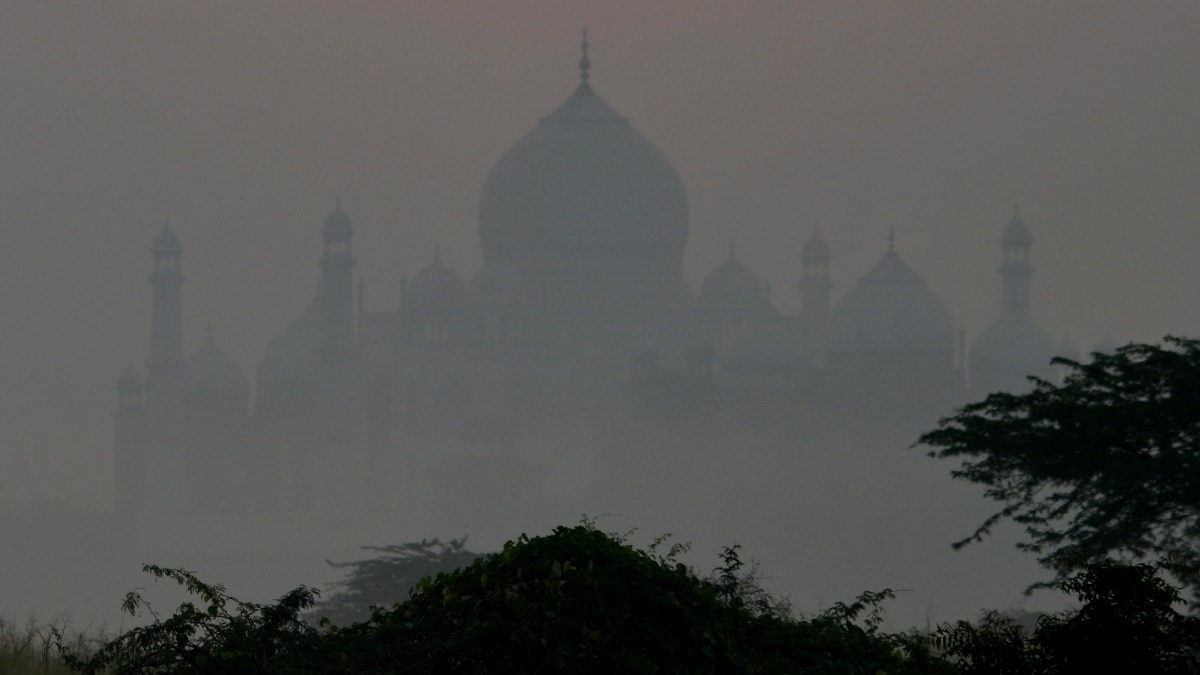
24 Indian cities recorded air quality index (AQI) readings above 300 on Wednesday morning at 11:09 am, with all of them featuring in the world's 25 most polluted cities in an AQI.in ranking.The readings illustrate the growing pollution burden across northern India as the country moves deeper into its annual winter pollution season. Commuters walk past amid low visibility due to a thick layer of smog, in Gurugram, Haryana. (Photo: PTI) Agra in Uttar Pradesh topped the global ranking with an AQI of 363, followed by Sri Ganganagar in Rajasthan at 362 and Firozabad in Uttar Pradesh at 360.Delhi's AQI of 338 placed it 12th in the ranking, reflecting the wider pollution problem affecting the National Capital Region and neighbouring states. Gurgaon in Haryana recorded an AQI of 357, while Delhi stood at 338, ranking 12th. The only city outside India in the top 25 was Sampit in Indonesia, which recorded an AQI of 360. All 25 cities had readings above 300, with the lowest being Begusarai in Bihar at 308.But what does an AQI above 300 actually mean for the air people breathe? (Source: AQI.in) WHAT DOES AQI OVER 300 MEAN?The AQI converts measurements of different air pollutants into a single number, making it easier to understand how polluted the air is and what its potential health effects could be.On India's official Central Pollution Control Board (CPCB) scale, readings between 301 and 400 fall under the 'Very Poor' category, while anything between 401 and 500 is classified as 'Severe'.AQI.in uses different category labels, deeming this level itself as 'Severe'. A layer of smog envelops Kartavya Path amid poor air quality, in New Delhi. (Photo: PTI) According to the CPCB, prolonged exposure to such polluted air can cause respiratory illness, with the effects being more pronounced in people with existing lung or heart conditions.WHY IS POLLUTION RISING?The deterioration of the air we breathe comes after the monsoon ended and as winter begins its gradual approach.Monsoon often works to counteract pollution as the rain can wash some pollutants out of the air, while stronger winds help disperse them.When rainfall declines and winds weaken, pollution from vehicles, industries, construction dust and waste burning can accumulate closer to the ground. Farmers gather paddy straw for use in Ghaziabad. (Photo: PTI) As temperatures fall, atmospheric conditions can also make it harder for pollutants to disperse. Adding to the problem is crop-residue burning across northern India that can add to the seasonal pollution burden, although its contribution varies.Rain and stronger winds can bring temporary relief, but they do not eliminate pollution at its source.With winter approaching, sustained reductions in emissions will be crucial to prevent the air from deteriorating further.- Ends
24 of world's 25 most polluted cities are in India today with AQI above 300
Full Article
Original Source
Read the full article at Indiatoday →KhanList aggregates and links to publicly available news content. We do not host full articles from third-party sources. Always verify important information with original sources.