
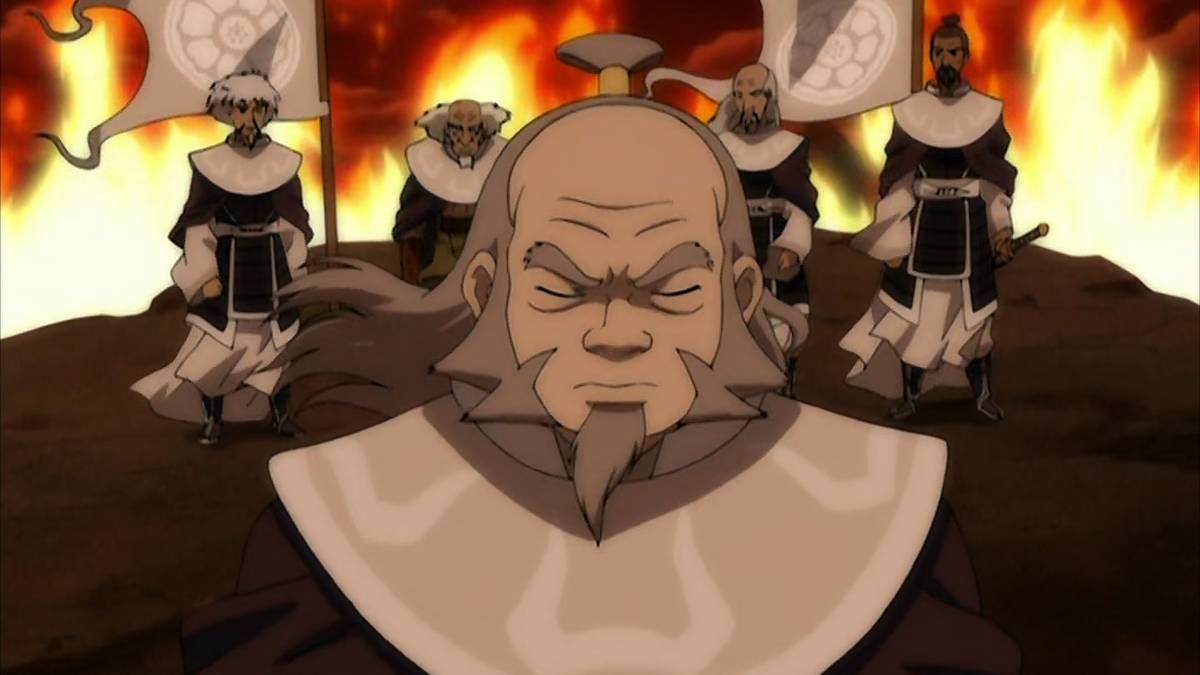
Published Nov 3, 2026, 12:00 AM EST Uncle Iroh’s confrontation with Zuko under Lake Laogai still hits home Avatar: The Last Airbender taught us its most important lesson through Uncle Iroh Image: Nickelodeon Animation Studio Avatar: The Last Airbender has more than its fair share of heartfelt moments and poignant lines. Whether it’s Aang reassuring a downtrodden Toph in the vast loneliness of the desert, or Ursa’s parting words to her son Zuko before disappearing in the middle of the night, the series can be surprisingly deep for what some might (incorrectly) consider a mere children’s show. No character embodies that richness and depth more than Uncle Iroh, who begins as Zuko's wise mentor and becomes so much more. Time and again, Iroh sits at the center of The Last Airbender's most moving moments, offering quiet wisdom just when it's needed most. A great example comes in the 17th episode of Book Two: Earth, called “Lake Laogai.” Zuko and Iroh have traded the weight of their royal titles for the quiet grind of daily life in Ba Sing Se, passing themselves off as Lee and Mushi. For the first time in his life, Zuko is free of his father’s purview and unburdened by the Fire Nation regime, and is presented with a genuine chance to build a normal existence. However, after learning of Appa’s imprisonment somewhere in the walled city, he slips back into his Blue Spirit alter ego, intent on capturing the Avatar’s beloved sky bison himself and reclaiming his family’s honor. In the midst of the secret water-dripping caverns under the lake, just as Zuko stumbles upon Appa’s cell, his uncle pops up out of nowhere to confront him. Known mostly for his easygoing attitude and love of tea, Iroh doesn’t often show any anger (if ever), but in this small scene, his frustration shines through. He berates Zuko's impulsive nature, likening the moment to when Zuko captured the Avatar at the North Pole only to nearly freeze to death in the process. Turning his back on his uncle, Zuko claims he has no other choice; it’s his destiny, after all. But his uncle doesn’t see it that way. “I’m begging you, Prince Zuko! It’s time for you to look inward and begin asking yourself the big questions,” Iroh says. “Who are you, and what do you want?” The collision of identity and expectation Image: Paramount Up to this point in the story, Zuko has defined his entire existence through external expectations and inherited trauma. His father, Fire Lord Ozai (the ruler of the Fire Nation) scarred his face, stripped him of his title, and banished him with the impossible task of capturing the Avatar or living in exile. Desperate to reclaim his lost birthright, Zuko spends years masquerading as a ruthless prince and a masked vigilante, confusing obedience for honor. But in Ba Sing Se, far from the war and his father's suffocating reach, that illusion is finally starting to crack. Rather than hunting out of logic or strategy, he's acting on pure muscle memory, terrified of letting go of the resentment that has fueled him for so many years. With a single line, Iroh forces a collision between Zuko's conditioned obligation and his true sense of self. Iroh’s "Who are you?" demands Zuko strip away the masks, titles, and toxic expectations assigned by his father. "What do you want?" challenges Zuko to separate his obsession with revenge from his desires for peace and connection. Iroh is offering a lifeline. He sees the good in Zuko that Ozai tried to burn away, forcing his nephew to realize that true honor isn't something granted by a tyrant or some label — it’s earned. Image: Paramount Moments later, after releasing Appa from his cell, Zuko drops his Blue Spirit mask into the dark waters beneath Lake Laogai on Iroh's advice, surrendering his obsession with the Avatar. In the very next episode, he breaks into a severe fever, his body physically fighting off the lasting remnants of his father’s lingering influence. The fever is the price of his awakening, showing just how deeply Iroh’s words struck at his core. In dropping the mask, Zuko finally stops running from himself and begins the agonizing process of answering the two questions that will eventually save him. Who are you, and what do you want? The scene is one of Avatar’s most brilliant, packing rich emotion into a simple line. It’s elevated even further by the fact that it was among the last episodes recorded by legendary voice actor Mako Iwamatsu before his untimely passing in July 2006. Iwamatsu was an acclaimed actor of stage and screen, earning an Academy Award nomination for The Sand Pebbles and voicing iconic animated figures like the menacing Demon King Aku in Genndy Tartakovsky's Samurai Jack. Following his death, Greg Baldwin stepped in to carry the torch for Iroh starting in Book 3 and into the Legend of Korra, and the creators of the latter show even named the skilled firebender Mako after the original voice actor. Hearing Iwamatsu deliver the line in "Lake Laogai," shouting with a fierce love for his nephew rather than any genuine anger, remains one of his finest moments across a storied career. Image: Paramount Two decades later, Iroh’s words haven't lost an ounce of their force. Before the Avatar universe imagined sanctuaries like the Seven Havens as refuges from a world at war, Iroh offered a different kind of shelter by reminding us that peace must first come from within. Zuko couldn't find his true destiny until he stopped pretending to be someone he wasn't, a timeless lesson for anyone still searching for purpose and a sense of self.
20 Years Later, Uncle Iroh's Wisest 'Avatar: The Last Airbender Quote' Is Still Undefeated
Full Article
Original Source
Read the full article at Polygon →KhanList aggregates and links to publicly available news content. We do not host full articles from third-party sources. Always verify important information with original sources.