
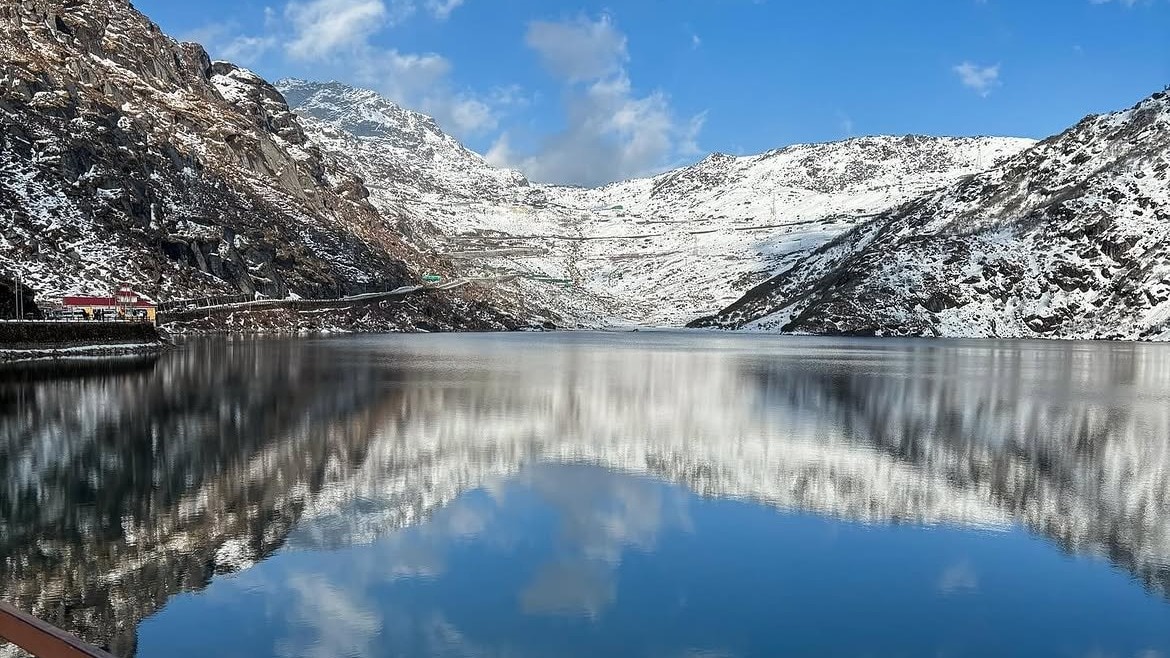
Sikkim has identified 40 glacial lakes that could pose a high flood risk, with 16 of them placed in the highest-risk category as the Himalayan state steps up efforts to prevent potentially devastating Glacial Lake Outburst Floods (GLOFs).The assessment comes at a time when the risks from a rapidly changing Himalayan landscape are drawing greater attention.On August 26, a glacial collapse near the Nepal-Tibet border triggered a deadly flash flood in Nepal that killed hundreds of people and left scores missing. A boy stands on a mound of mud and debris in front of damaged buildings in Nepal. (Photo: PTI) The Nepal disaster was not a GLOF, but it highlighted a wider concern across the Himalayas. As glaciers shrink, new lakes can form and existing ones can grow, increasing the amount of water that could potentially be released downstream.Glacial lakes form when melting ice collects in depressions around glaciers. If the natural barrier holding the water gives way, because of rising water levels, an earthquake or any other trigger, the lake can suddenly release a huge volume of water.The resulting flood can travel rapidly downstream, damaging homes, roads, bridges and other infrastructure. A drone view of a damaged building along the swollen Trishuli River in Nepal. (Photo: PTI) 16 LAKH PEOPLE AT HIGH RISK IN SIKKIMOf Sikkim's 40 high-hazard lakes, 16 are in Category A, the highest-risk group.Furthermore, two are in Category B, nine in Category C, while 13 remain unclassified.Sikkim has already experienced the destructive power of such floods.A GLOF in October 2023 killed at least 60 people, damaged infrastructure across Mangan, Gangtok, Pakyong and Namchi districts, and destroyed the Chungthang dam, a key part of a major hydropower project.At a media workshop on GLOF risk mitigation on Thursday, Principal Secretary Sandeep Tambe said the state was using satellite images and remote sensing to track changes in glacial lakes.Newly surfaced video showing the massive landslide that occurred just a few hours after the main glacier collapse, resulting in the formation of a barrier lake that dammed the Lhende Khola River along the Nepal–Tibet border. pic.twitter.com/7IbdBnu4e9— Nahel Belgherze (@WxNB_) August 29, 2026The state has also designated its Department of Science and Technology as the nodal department for assessing and reducing GLOF risks.It is working on what could become India's first dedicated GLOF Risk Mitigation Protocol, which could eventually provide a standard approach for other Himalayan regions as well. DIFFERENT LAKES, DIFFERENT SOLUTIONSOfficials said the same solution cannot be used for every lake.Separate plans have therefore been prepared for the Lhonak Complex, Shako Chho Lake and Gurudongmar Complex.Shako Chho has been identified as Sikkim's most vulnerable lake. Its Detailed Project Report has been submitted to the National Disaster Management Authority, while a preliminary project report has been sent to the Jal Shakti Ministry. A view of Shako Chho lake in Sikkim. (Photo: PTI) For the Lhonak Complex, the Central Water Commission and Sikkim government are preparing a plan for a flood-retention structure at Dolma Sampa near Muguthang.At Gurudongmar, officials have proposed a wall at the lake outlet to help control the risk, while also considering the site's cultural and religious importance.Scientists are studying water levels, water flow, lake depth, flood paths and the surrounding terrain.Possible ways to reduce lake levels include siphoning, pumping, improving or creating drainage channels, carefully cutting through moraine barriers and constructing tunnels. An aerial view of Tsomgo Lake, located in the state of Sikkim. (Photo: X) Sikkim is now pursuing a government-wide approach, including stronger early-warning systems, better technical expertise and funding. Additional warning sensors have also been proposed across the state.Union Home Secretary Govind Mohan reviewed GLOF and avalanche preparedness in Himalayan states and Union Territories on Thursday.Meanwhile, other officials from Sikkim, Uttarakhand, Himachal Pradesh, Arunachal Pradesh and Jammu and Kashmir, along with central disaster, water, weather and scientific agencies, also attended the meeting.- EndsPublished On: Sep 4, 2026 14:36 IST
16 out of 40 glacial lakes in Sikkim at high risk of catastrophic outburst
Full Article
Original Source
Read the full article at Indiatoday →KhanList aggregates and links to publicly available news content. We do not host full articles from third-party sources. Always verify important information with original sources.