
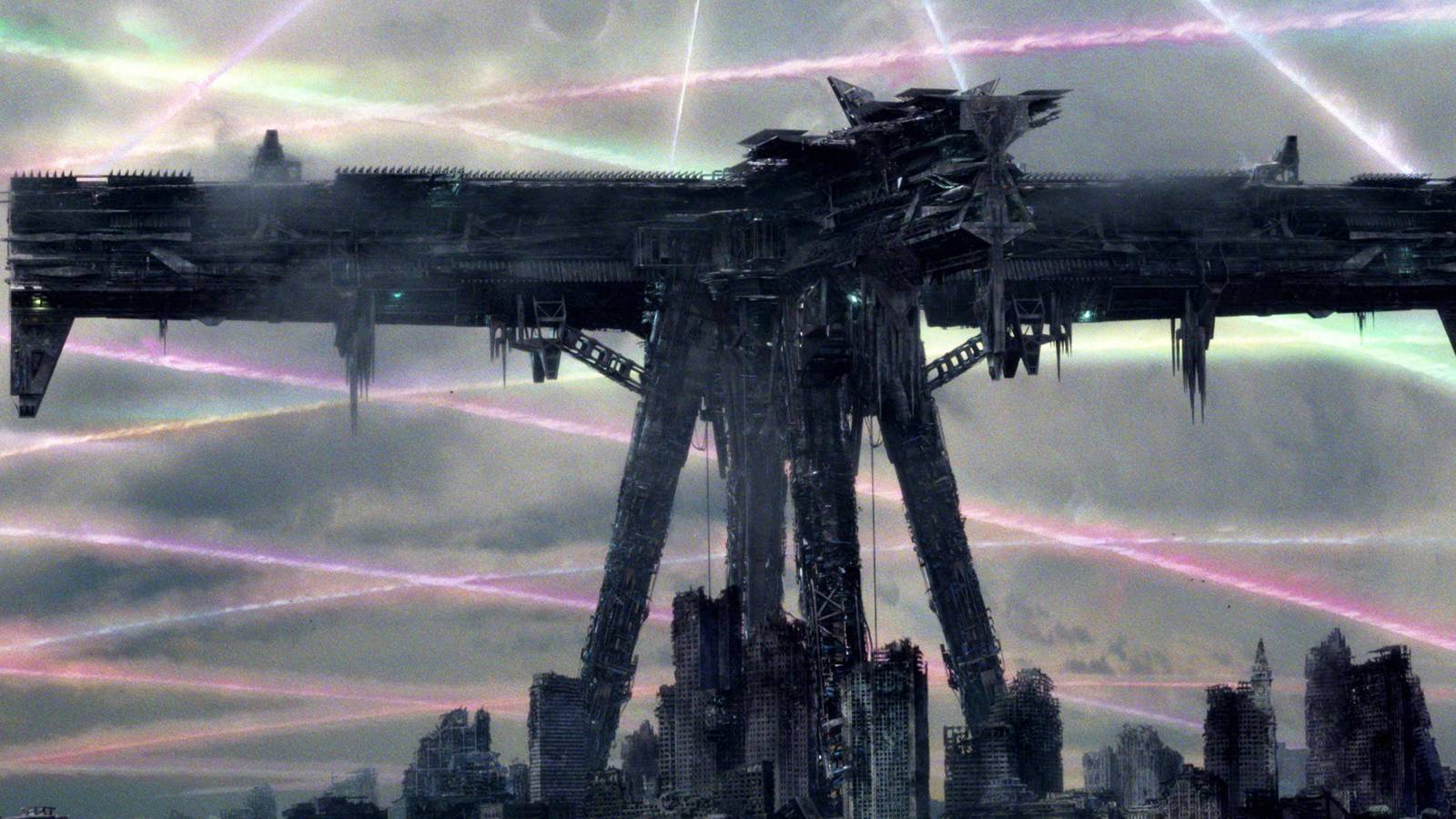
Image via TNT; Everett Collection Published Sep 20, 2026, 11:32 PM EDT Collier Jennings is an entertainment journalist with extensive experience. Collier, or "CJ" to his friends and family, is a dedicated fan of genre films - particularly science fiction, fantasy, and comic book adaptations, not to mention all forms of animation. This stems from a close bond with his father, who introduced him to these genres via copies of X-Men comics and reruns of the original Ultraman series. With his near-encyclopedic knowledge and bottomless love of genre, he's tackled a wide variety of articles. Sign in to your Collider account Most alien invasion stories follow a similar formula: a massive force from beyond the stars arrives on Earth, intending to conquer or destroy it — writer's choice. Humanity is usually outnumbered at first due to the invaders' superior technology and firepower, but eventually manages to turn the tide by uncovering the aliens' weaknesses. The one filmmaker who seems to have a gift for aliens descending upon Earth is Steven Spielberg, whether it's his gritty take on H.G. Wells's War of the Worlds or his sci-fi thriller Disclosure Day. But 15 years after it premiered, one of Spielberg's best alien invasion stories remains his 52-episode sci-fi epic, Falling Skies. Falling Skies, created by Robert Rodat and produced by Spielberg under his Amblin Television banner, starts out like a typical alien-invasion story. The alien race known as the Espheni invaded the world, neutralizing our technology and killing 90% of Earth's population...and six months later, humanity is still fighting, particularly the "2nd Mass" militia whose membership includes history professor turned soldier Tom Mason (Noah Wyle). Most alien invasion stories don't spend this much time showing what happens after humanity loses the first battle, but that's just one of the elements that makes Falling Skies a standout in the sci-fi landscape. 'Falling Skies' Shows How Humanity Lives After the Apocalypse Unlike other Amblin Television series, Steven Spielberg was heavily involved in the production of Falling Skies. Not only did he help Robert Rodat shape the concept, but he also came up with the show's title and its focus on survival, especially since humanity was outnumbered and outgunned: "I've always been interested in how we survive and how resourceful we are as Americans. How would the survivors feed the children? How do they resupply themselves militarily in order to defend and even take back what they have lost?" True to Spielberg's words, Falling Skies works best when it places the focus on how humanity survives and grows during its battle with the Espheni. Tom manages to utilize his knowledge of history to predict the Espheni's attacks while also taking care of his sons Hal (Drew Roy), Ben (Connor Jessup), and Matt (Maxim Knight). Tom even finds love during the Espheni war as he connects with doctor Anne Glass (Moon Bloodgood), eventually marrying her and having a child with her. Other characters see their beliefs changing or unwavering, like Anne's assistant Lourdes (Seychelle Gabriel), who refuses to lose faith in God despite the state of the world. Collider Exclusive · Sci-Fi Survival Quiz Which Sci-Fi World Would You Survive? The Matrix · Mad Max · Blade Runner · Dune · Star Wars Five universes. Five completely different ways the future went wrong — or sideways, or up in flames. Only one of them is the world your instincts were built for. Eight questions will figure out which dystopia, galaxy, or desert wasteland you'd actually make it out of alive. 💊The Matrix 🔥Mad Max 🌧️Blade Runner 🏜️Dune 🚀Star Wars TEST YOUR SURVIVAL → 01 You sense something is deeply wrong with the world around you. What do you do? The first instinct is often the truest one. APull on every thread until I understand the system — then figure out how to break it. BStop asking questions and start stockpiling — food, fuel, weapons. Questions don't keep you alive. CKeep my head down, observe carefully, and trust no one until I know who's pulling the strings. DStudy the patterns. Every system has a rhythm — learn it, and you learn how to survive it. EFind the people fighting back and join them. You can't fix a broken galaxy alone. NEXT QUESTION → 02 In a world of scarcity, what resource do you guard most fiercely? What we protect reveals what we believe survival actually requires. AKnowledge. If you understand the system, you don't need resources — you can generate them. BFuel. Everything else — movement, power, escape — runs on it. CTrust. In a world of fakes and informants, a truly reliable ally is rarer than any commodity. DWater. And after water, information — the two things empires are truly built on. EShips and credits. The galaxy is big — you survive it by being able to move through it freely. NEXT QUESTION → 03 What kind of threat keeps you up at night? Fear is useful data — if you're honest about what you're actually afraid of. AThat reality itself is a lie — that everything I experience has been constructed to keep me compliant. BA raid. No warning, no mercy — just the roar of engines and then nothing left. CBeing identified. Once someone with power decides you're a problem, you're already out of time. DBeing outmanoeuvred — losing a political game I didn't even know I was playing. EThe Empire tightening its grip until there's nowhere left to run. NEXT QUESTION → 04 How do you deal with authority you don't trust? Every dystopia has a power structure. Your approach to it determines everything. ASubvert it from the inside — learn its rules well enough to weaponise them against it. BIgnore it and stay out of its reach. The further from any power structure, the better. CAppear to comply while doing exactly what I need to do. Visibility is the enemy. DManoeuvre within it carefully. You can't beat a system you refuse to understand. EResist openly when I have to. Some things are worth the risk of being seen. NEXT QUESTION → 05 Which environment could you actually endure long-term? Survival isn't just tactical — it's physical, psychological, and very much about where you are. AUnderground bunkers and server rooms — cramped, artificial, but with access to everything that matters. BOpen wasteland — brutal sun, no shelter, constant movement. At least the threat is honest. CA dense, rain-soaked city where you can disappear into the crowd and nobody asks questions. DMerciless desert — extreme heat, no water, and something enormous living beneath the sand. EThe fringe — backwater planets and busy spaceports where the Empire's attention rarely reaches. NEXT QUESTION → 06 Who do you want in your corner when things fall apart? The company you keep is the clearest signal of who you actually are. AA tight crew of believers who've seen behind the curtain and have nothing left to lose. BOne or two people I'd trust with my life. Any more than that and someone talks. CNobody, ideally. Alliances are liabilities. I work alone unless I have no choice. DA community bound by shared hardship and mutual survival — people who need each other to last. EA ragtag team with wildly different skills and total commitment when it counts. NEXT QUESTION → 07 Where do you draw the line — if you draw one at all? Every survivor eventually faces a moment that tests what they're actually made of. AI won't harm the innocent — even the ones who'd report me without hesitation. BI do what I have to to protect the people I've chosen. Everything else is negotiable. CThe line shifts depending on who's asking and what's at stake. DI draw a long-term line — nothing that compromises my people's future, even if it'd help now. ESome lines, once crossed, can't be uncrossed. I know which ones they are. NEXT QUESTION → 08 What would actually make survival worth it? Staying alive is one thing. Having a reason to is another. AWaking others up — dismantling the illusion so no one else has to live inside it. BFinding somewhere — or someone — worth protecting. A reason to keep moving. CAnswers. Understanding what I am, what any of this means, before time runs out. DLegacy — shaping the future in a way that outlasts me by generations. EFreedom — for myself, for others, for every world still living under someone else's boot. REVEAL MY WORLD → Your Fate Has Been Calculated You'd Survive In…Your answers point to the world your instincts were built for. This is the universe your temperament, your survival instincts, and your particular brand of stubbornness were made for. The MatrixYou took the red pill a long time ago — probably before anyone offered it to you. You're a systems thinker who can't help but notice the seams in things. You're drawn to understanding how the system works before figuring out how to break it. You'd find the Resistance, or it would find you — your instinct for spotting constructed realities is the machines' worst nightmare. You function best when you have access to information and the freedom to act on it. The Matrix built an airtight prison. You'd be the one probing the walls for the door. Mad MaxThe wasteland doesn't reward the clever or the well-connected — it rewards those who are hard to kill and harder to break. That's you. You don't need comfort, community, or a cause larger than the next horizon. You need a vehicle, a clear threat, and enough fuel to outrun it — and you're good at all three. You are unsentimental enough to survive that world, and decent enough — just barely — to be something more than another raider. In the wasteland, that distinction is everything. Blade RunnerYou'd survive here because you know how to exist in moral grey areas without losing yourself completely. You read people accurately, keep your circle small, and ask the questions others prefer not to answer. In a city where humanity is a legal designation rather than a feeling, you hold onto something that keeps you functional. You're not a hero. But you're not lost, either. In Blade Runner's world, that distinction is everything. DuneArrakis is the most hostile environment in the known universe — and you are precisely the kind of person it rewards. Patience, discipline, and political awareness are your core strengths — and on Arrakis, they're survival tools. You understand that the long game matters more than any single victory. Others come to Dune and are consumed by it. You'd learn its logic and earn its respect. In time, you wouldn't just survive Arrakis — you'd begin to reshape it. Star WarsThe galaxy far, far away is vast, loud, and in a constant state of violent political upheaval — and you wouldn't have it any other way. You find meaning in being part of something larger than yourself — a cause, a crew, a rebellion. You'd gravitate toward the Rebellion, or the fringes, or whatever pocket of the galaxy still believes the Empire's grip can be broken. You fight — not because you have to, but because standing aside isn't something you're capable of. In Star Wars, that willingness is what makes all the difference. ↻ RETAKE THE QUIZ In addition to its incredible character work, Falling Skies boasts intense, frenetic fight scenes that thrust its audience right into the middle of the action. These fight scenes could best be described as "Saving Private Ryan, but the soldiers fight giant robots and aliens instead of Nazis," which is rather fitting given that Robert Rodat and Steven Spielberg worked together to bring that particular war epic to life. These battles, and the aliens who appear in the series, also manage to make Falling Skies feel like a bona fide blockbuster despite its television origins. 'Falling Skies' Is Still One of Steven Spielberg's Best Sci-Fi Series Falling Skies ended up being a massive success during its run, as it didn't just receive rave reviews but also set records. Its premiere was one of the highest series launches in cable history, and it quickly became one of TNT's most watched dramas. The series ultimately lasted five seasons and 52 episodes, a run that looks even more impressive alongside other Amblin Television sci-fi shows that never found the same longevity. Under the Dome started strong but petered out by its third season. Terra Nova was never quite sure what show it wanted to be, and Extant couldn't attract viewers despite shifting gears from sci-fi mystery to sci-fi action. Fifteen years after its premiere, Falling Skies holds up because its alien invasion was never really the entire point. The action is big, the creatures are memorable, and Spielberg's fingerprints are everywhere, but the series is ultimately interested in what people build after almost everything has already been taken from them. For anyone looking for a completed sci-fi binge with enough story to actually settle into, 52 episodes of humanity fighting back still makes for one hell of an invasion story. Release Date 2011 - 2015-00-00 Network TNT Showrunner Mark Verheiden Directors Olatunde Osunsanmi, Jonathan Frakes, Sergio Mimica-Gezzan, Adam Kane, Fred Toye, Holly Dale, Anthony Hemingway, Bill Eagles, Carl Franklin, David Solomon, John Dahl, Matt Earl Beesley, Michael Katleman, Miguel Sapochnik, Mikael Salomon, Nathaniel Goodman, Peter Leto, Rob Lieberman Writers Bradley Thompson, David Weddle, Mark Verheiden, Melinda Hsu Taylor, Bryan Oh, Carol Barbee, Jack Kenny, Josh Pate, M. Raven Metzner, Heather V. Regnier, Joe Weisberg, Ryan Mottesheard, Bruce Marshall Romans, Fred Golan, Jonathan Glassner, Marc Dube, Robert Rodat, Melissa Glenn Cast Noah Wyle, Moon Bloodgood, Will Patton, Drew Roy, Connor Jessup, Maxim Knight, Colin Cunningham, Sarah Carter, Mpho Koaho, Blair Brown, Christopher Heyerdahl, Martin Roach, Peter Shinkoda, Robert Sean Leonard, Ryan Robbins, Steven Weber, Billy Wickman, Brandon Jay McLaren, Brendan Meyer, Connor Christopher Levins, Niamh Wilson, Hector Bucio, Scarlett Hefner, Dylan Schmid, Evan Bird, Laci J. Mailey, Laine MacNeil, Desiree Ross, Taylor Russell Creator(s) Robert Rodat
15 Years Later, Steven Spielberg’s 52-Episode Sci-Fi Is Still Worth Revisiting
Full Article
Original Source
Read the full article at Collider →KhanList aggregates and links to publicly available news content. We do not host full articles from third-party sources. Always verify important information with original sources.