
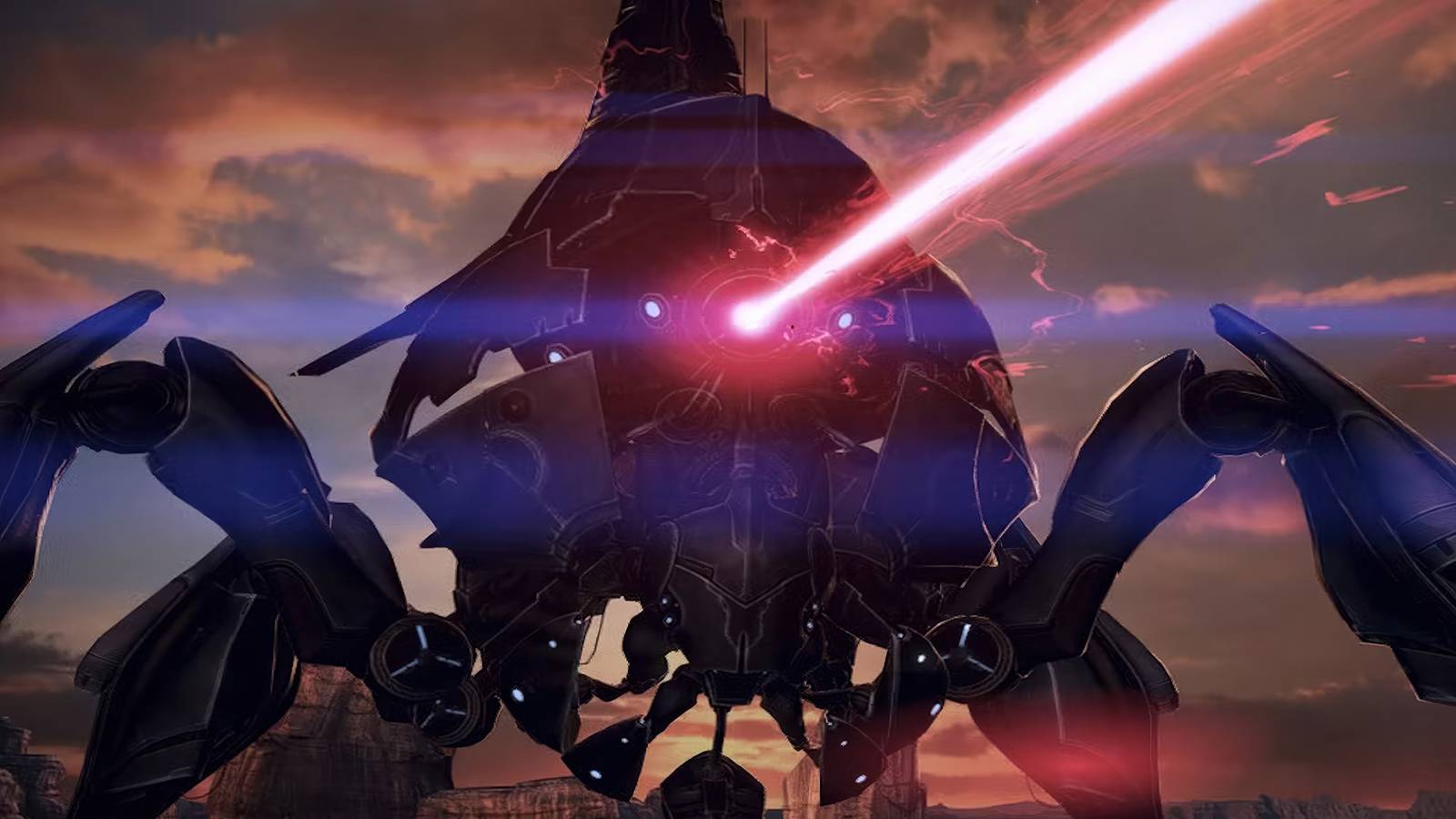
Image via BioWare Published Oct 1, 2026, 12:05 AM EDT David is a Senior Editor at Collider focused primarily on Lists. His professional journey began in the mid-2010s as a Marketing specialist before embarking on his writing career in the 2020s. At Collider, David started as a Senior Writer in late 2022 and has been a Senior Editor since mid-2023. He is in charge of ideating compelling and engaging List articles by working closely with writers, both Senior and Junior, as well as other editors. Occasionally, David also reviews movies and TV shows and writes episode recaps. Currently, David is also writing his second novel, a psychological horror satire that will, hopefully, be picked up for publication sometime next year. Sign in to your Collider account Video games as a medium seldom get the recognition they deserve in the writing department. When we think of gaming, we usually focus on technical aspects, performance, visuals, gameplay, character design, and the like. However, the narrative is crucial to the success of any game, especially those in the science fiction genre. The best games have stellar, compelling, and thought-provoking narratives, and the absolute best further complement that with stellar dialogue. Indeed, many games have spawned memorable and instantly quotable lines that have earned a place in pop culture. Still, often the most powerful quotes are the ones that make an immediate impact, whether by being somber, biting, or outright cold. Such is the case for the most memorable line in the seminal sci-fi Mass Effect 3, a piercing and ruthless statement delivered by one of the game's most celebrated characters. Considering the universe-ending scales of the game, the line makes sense, but it's also a powerful sentiment that leaves players with much to think about. What Is 'Mass Effect 3' About? Image via BioWare Mass Effect 3 is set about six months after the events of the masterpiece that is Mass Effect 2. Commander Shepard (Mark Meer/Jennifer Hale) is back on Earth but is forced to evacuate as the Reapers attack and quickly overwhelm the planet. Shepard travels to Mars, where he discovers plans for a Protean superweapon that can defeat the Reapers. Dubbed "the Crucible" by the Alliance, the weapon requires materials from across the Milky Way, as well as the hard work of countless species. Thus, Shepard and his crew travel the galaxy aboard a new Normandy to recruit support from multiple species, crossing paths with new and old allies and solving long-standing conflicts, all while trying to figure out the plans of the mysterious Illusive Man (Martin Sheen). Mass Effect 3 received universal acclaim for its cathartic and ambitious narrative, focused on personal choices that can greatly affect the overall progression. The dialogue was also praised, and with good reason. The Mass Effect franchise is notable for its intelligent and emotional writing, achieving a perfect balance that comes through in its dialogue. Nowhere is this strength better showcased than in the character of Javik (Ike Amadi), the endling of the ancient Prothean race whose stasis pod is recovered by Shepard during a mission. Awakening 50,000 years after the fall of his race, Javik agrees to help Shepard, both out of a desire to defeat the Reapers and to set the record straight regarding the Protheans. Javik is one of Mass Effect's best characters. Cold, detached, and pragmatic, Javik put a galactic sledgehammer through the idealized version of the Protheans the franchise had upheld for the first two games in the series. Through Javik, we could see them as they were: a brutal, ambitious, and ruthless empire that met its end at the hands of the Reapers. As a character, Javik is incredible: he's insightful, sharp, and concise, with humor so dry it could thrive on the planet Edolus. He's also frank and unafraid to express the most callous things others might choose to keep quiet, which leads him to say the coldest and most memorable line in the entire franchise. What Does Javik Say in 'Mass Effect 3'? During an argument with Shepard, Javik puts into question everything the Commander believes in—indeed, what they hold dear. Javik sees everything in a black-or-white scheme: in his words, "those who share my purpose become allies; those who do not, become casualties." When Shepard challenges his notion, Javik retorts by stating that war cannot be fought with notions of honor: "Stand in the ashes of a trillion dead souls and ask the ghosts if honor matters. The silence is your answer." This one line packs a huge punch. For starters, it unpacks a brutal and ugly reality: war is hell; it corrupts everything and everyone, and expecting to leave it unscathed is a fool's errand. Indeed, enough harrowing war movies exist to confirm Javik's sentiment, and when we consider the conflict in Mass Effect is on a galactic scale, well, the chances of leaving with one's moral compass pointing North are slim to none. Even if your Shepard goes out of their way to be a Paragon, the very act of killing can be considered a stain on their honor, especially because Shepard kills a lot. However, Javik's line also presents another dilemma. He isn't necessarily telling Shepard to lose his honor or even denying its existence, to paraphrase a certain wise man who always pays his debts. Instead, Javik is challenging the Commander to realize some things will be more important than honor, especially in war. It's often said that war is won through sacrifice, and Shepard understands it perfectly. By the end, the Commander sacrifices too much, from close allies to even entire civilizations (depending on the player's choices) to, eventually, themselves. Honor plays a part in all those choices, for and against, but it also coexists with countless other things: ambition, fear, love, victory, dread... they all factor in as Shepard makes their final choice at the Citadel's pinnacle. Collider Exclusive · Sci-Fi Personality Quiz Which Sci-Fi Hero Are You Most Like? Paul Atreides · Captain Kirk · Princess Leia · Ellen Ripley · Max Rockatansky Five iconic heroes. Five completely different ways of facing an impossible universe. One of them shares your instincts, your values, and your particular way of refusing to back down. Eight questions will tell you which one. 🏜️Paul Atreides 🖖Capt. Kirk ✊Princess Leia 🔦Ellen Ripley 🔥Max Rockatansky FIND YOUR HERO → 01 How do you lead when the stakes couldn't be higher? The way you lead under pressure is the most honest thing about you. AI absorb everything — every variable, every pattern — and move only when I know the path forward. BI read the room, make the call, and own the consequences. Hesitation costs more than mistakes. CI rally people. A cause needs a voice, and I refuse to let fear be louder than conviction. DI assess the threat, establish what needs doing, and get it done without waiting for permission. EI don't lead. I act. Others can follow or not — I'm already moving. NEXT QUESTION → 02 What is your greatest strength in a crisis? The quality that keeps you alive when everything else fails. APrescience — the ability to see further ahead than anyone else and plan accordingly. BImprovisation — I'm at my best when the plan falls apart and I have to invent a new one. CConviction — I know what I'm fighting for, and that certainty doesn't waver under fire. DComposure — I stay functional when everyone around me is falling apart. Panic is a luxury. EEndurance — I outlast things. I take the hit and keep moving long after others have stopped. NEXT QUESTION → 03 What is the thing you'd sacrifice everything else for? Your deepest motivation is your truest compass. AThe survival and dignity of my people — even if I have to become something frightening to ensure it. BThe safety of my crew — every single one of them. No one gets left behind. CFreedom — for my people, for every world still crushed under the weight of an empire. DThe truth — what actually happened, what's actually out there, whether anyone believes me or not. EThe one person — or the one memory — that still makes any of this worth surviving for. NEXT QUESTION → 04 How do you relate to the people around you? Who you are to others under pressure is who you really are. AWith intensity and distance — I care deeply, but the weight I carry makes closeness complicated. BWith warmth and irreverence — I take the mission seriously, not myself. CWith directness and trust — I say what I mean, and I expect the people I work with to rise to it. DWith professional care but clear limits — I'll protect you, but I won't pretend we're family. EWith wariness that slowly becomes loyalty — I don't trust easily, but when I do, it holds. NEXT QUESTION → 05 You're facing a threat that no one else believes is real. What do you do? How you respond when you're the only one who sees it defines everything. APrepare in silence. If they won't listen, I'll be ready when they finally have to. BKeep pushing until someone listens — and if no one does, handle it myself. CBuild the case, find the allies, and make the threat impossible to ignore. DDocument everything. The truth matters even if no one believes it yet. EStop trying to convince anyone. Survive it. That's the only argument that counts. NEXT QUESTION → 06 What has your heroism cost you personally? Every hero pays. The question is what — and whether they'd pay it again. AMy innocence — I've seen what I'm capable of, and I can't unsee it. BPeople I loved — the command chair has a view, but it's a lonely one. CA normal life — I gave up everything ordinary the moment I chose the cause. DMy sense of safety — I know exactly what's out there now, and I can't pretend otherwise. EAlmost everything — and I'm still not sure what I'm carrying it all for. But I keep going. NEXT QUESTION → 07 How do you feel about the rules of the world you're in? Every hero has a relationship with the system. What's yours? AI understand them deeply — and I know exactly which ones must be broken, and why. BI respect the spirit of them and bend the letter when the situation demands it. CThe system is the problem. I'm not here to work within it — I'm here to dismantle it. DI follow protocol until protocol stops being useful. Then I make the call myself. EThe rules collapsed a long time ago. What's left is instinct, and mine are reliable. NEXT QUESTION → 08 When everything is on the line, what keeps you going? The answer is the most honest thing about you. ADestiny — or something that feels so much like it that the difference no longer matters. BThe people on my ship — their faces, their trust, the fact that they're counting on me. CThe belief that what we're fighting for is worth every sacrifice, including this one. DSheer refusal to let it win — whatever it is. I don't stop. That's just who I am. EI'm not sure anymore. But the road is still there, and I'm still on it. REVEAL MY HERO → Your Hero Has Been Identified Your Sci-Fi Hero Is…Your answers point to the iconic sci-fi hero who shares your instincts, your values, and your particular way of facing the impossible. Paul AtreidesYou carry a weight most people would crumble under — the knowledge of what you're capable of, and the burden of what you might have to become. You see further ahead than others and you plan accordingly, even when the vision frightens you. You are driven by loyalty to your people and a sense of destiny you didn't ask for but can't escape. Paul Atreides is not simply a hero — he is someone who understands the cost of power and chooses to bear it anyway. That gravity, that willingness to carry what others won't, is exactly you. Captain KirkYou lead with instinct, warmth, and an absolute refusal to accept a no-win scenario — because you've always believed there's a third option nobody else has thought of yet. You take the mission seriously without ever taking yourself too seriously. Your crew would follow you anywhere, not because you demand it, but because you've earned it. Kirk's genius isn't tactical — it's human. He reads people, bends rules with purpose, and wills outcomes into existence through sheer conviction. That combination of warmth, audacity, and relentless optimism is unmistakably yours. Princess LeiaYou are the kind of person who holds the line when everyone else is losing faith — not because you're fearless, but because giving up simply isn't something you're capable of. You lead through conviction. Your voice carries because your belief is unshakeable. You gave up everything ordinary the moment you chose the cause, and you've never looked back. Leia is not a supporting character in her own story — she is the moral centre of the entire rebellion. That same fierce, principled, unbreakable core is what defines you. Ellen RipleyYou are not reckless, not grandiose, and not particularly interested in being anyone's hero — you just refuse to stop when it matters. You see threats clearly, you document the truth even when no one listens, and when the time comes you handle it yourself. Ripley's heroism is earned, not performed. She doesn't have a speech — she has a flamethrower and a plan. You share her composure under the worst possible pressure, and her refusal to pretend the monster isn't there. When it counts, you don't flinch. That's everything. Max RockatanskyYou have been through fire that would break most people — and what came out the other side is something the world underestimates at its peril. You don't ask for help, don't need validation, and don't wait for anyone to tell you the rules no longer apply. Your loyalty, when it finally arrives, is absolute — but it's earned in silence and tested in action, not in words. Max is not a nihilist. He is someone who lost everything and found, against his will, that he still has something worth protecting. That bruised, stubborn, ultimately human core is exactly yours. ↻ RETAKE THE QUIZ Javik's Line Still Packs a Punch All These Years Later Image via BioWare Javik's powerful line lives on in gaming immortality as one of the biggest testaments to the Mass Effect trilogy's undeniable quality. It's not only a great reminder of just how incredible these games' writing was—a fact made all the more noticeable considering Mass Effect: Andromeda's decent but vastly inferior narrative—but also a testament to the power of video games as a storytelling medium. After all, most of us can conclude that war is evil, futile, and corrosive to our very humanity, and we don't need a video game to tell us. However, the realization that war is far more insidious than we could imagine might not be as easily understood. Javik's line illustrates just how easy it is for war to truly corrupt our humanity without us realizing it. It's not as simple as having honor or not; rather, it's about understanding that honor will not always be the be-all-and-end-all of the fight; in fact, most often, it won't be. That such an eye-opening and somber realization comes from a sci-fi video game is nothing short of impressive, revelatory even. Mass Effect 3 is widely considered a masterpiece of the genre, and the fact that we can make entire articles about its numerous powerful lines is all the proof you could ever need.
14 Years Later, the Coldest Quote in Sci-Fi Gaming Still Hits Hard
Full Article
Original Source
Read the full article at Collider →KhanList aggregates and links to publicly available news content. We do not host full articles from third-party sources. Always verify important information with original sources.