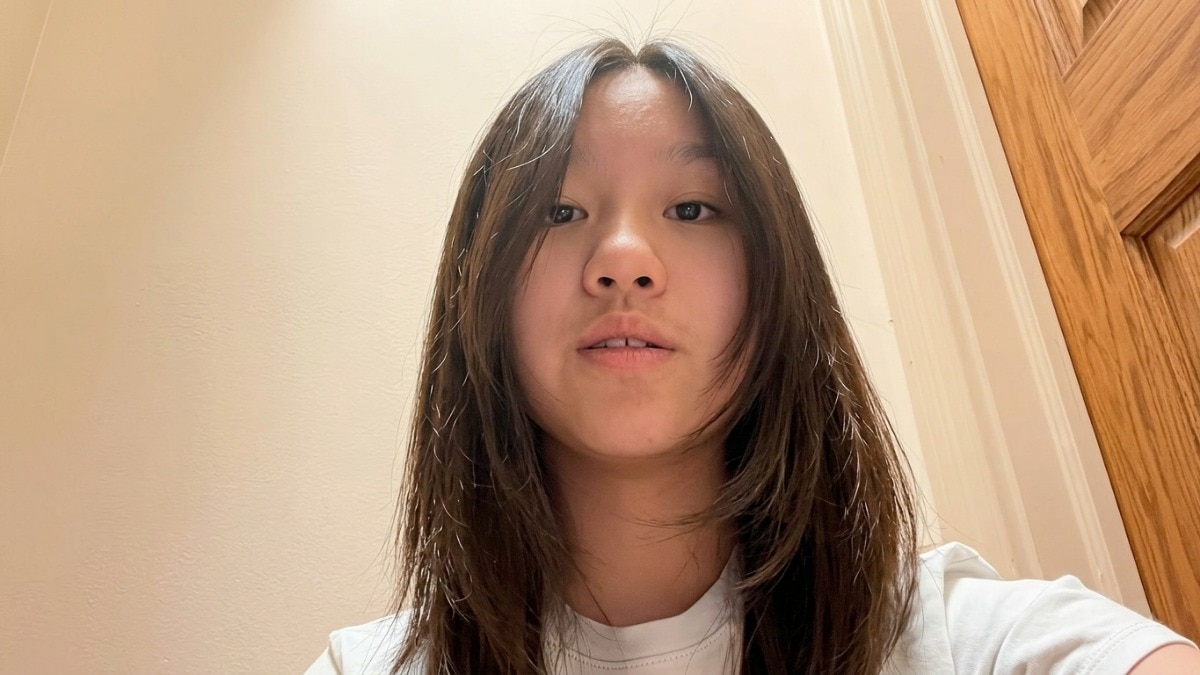
A 14-year-old in the United States is combining machine learning and CRISPR to tackle one of biofuel's biggest challenges. Her project could help increase algae oil production without slowing down the growth of the organisms.14-year-old Millie Pradawong uses machine learning and CRISPR to improve microalgae biofuel (Photo: YouTube/Young Scientist Challenge)At 14, Millie Pradawong is already working on a problem that scientists and energy researchers have been trying to solve for years: how to produce more biofuel without compromising the growth of the organisms that make it.The teenager from the United States has developed a computational tool that combines machine learning with CRISPR gene editing to explore how microalgae could be engineered to produce more oil while continuing to grow healthily.Her project, called MACRO, Machine Learning-Augmented CRISPR Reprogramming Optimisation, has earned her a place among the 10 finalists in this year's 3M Young Scientist Challenge.The idea may sound highly technical, but the problem Millie is trying to solve is fairly simple. Microalgae can grow quickly, absorb carbon dioxide and naturally produce oils that can be converted into fuel. That makes them an attractive potential source of cleaner energy. The difficulty begins when scientists try to increase the amount of oil the algae produce. Often, producing more oil comes at the cost of slower growth. Millie's project focuses on finding a way around that trade-off.THE BIOFUEL PROBLEM HIDING IN TINY ALGAEMicroalgae are tiny organisms, but they have attracted significant attention as a possible source of renewable fuel. They grow quickly, absorb carbon dioxide and can produce oils that can be processed into biofuel. For Millie, that combination made microalgae particularly interesting.But as she researched the subject, she realised that simply saying “use algae” was not enough to create a practical biofuel system.“I kept thinking about microalgae biofuel because it sounds so promising. Algae can grow quickly, absorb carbon dioxide, and produce oils that can be used as fuel. But then I learned that making a biofuel system actually work is much harder than just saying ‘use algae,’” she said in a video shared on YouTube.That difficulty became the part she wanted to investigate.“I wanted to focus on the hard part which is how to increase oil production without hurting growth,” she said. She also wanted to see whether she could explain the idea clearly enough to people who may not already understand microalgae or CRISPR.WHEN AI MEETS CRISPRThat is where MACRO comes in.CRISPR-Cas9 is a gene-editing technology that allows scientists to make targeted changes to DNA. Traditionally, researchers may need to test different genetic changes experimentally to understand which ones could produce a desired result.Millie's computational tool takes a different approach.MACRO uses machine learning to predict how different gene edits could affect the way microalgae use energy. The aim is to identify genetic changes that could increase oil production while allowing the algae to maintain healthy growth.Instead of testing every possibility in the laboratory, the tool could help researchers narrow down the most promising options first. For Millie, learning about CRISPR changed the way she thought about DNA.She once saw DNA simply as information. CRISPR helped her understand that DNA could also be edited with precision.She describes CRISPR as her favourite invention of the past 100 years because of how it has changed the way scientists can work with DNA.What interests her just as much is where the technology came from.CRISPR was discovered through research into bacteria rather than being invented from scratch. For Millie, that is an important reminder that useful scientific ideas may already exist in nature.“It shows how many useful ideas might already exist in nature, but we have to notice them first,” she said.A SCIENCE IDEA THAT STARTED IN HER HEADMillie did not enter the competition simply because she wanted to build a complicated scientific project. She said she had been thinking about the idea for some time and wanted to turn it into something more concrete.“I entered the competition because I wanted to take an idea stuck in my head and turn it into something more serious,” she told Young Scientists Lab.That curiosity eventually led her from the potential of microalgae to the more complicated question of how their biology could be changed without damaging their growth.Her project now puts her among the 10 finalists in the 3M Young Scientist Challenge, giving a 14-year-old the opportunity to present an idea at the intersection of artificial intelligence, biotechnology and cleaner energy.SHE WANTS TO BE A DOCTOR AND A SCIENTISTThe project also offers a glimpse into where Millie sees herself in the future. She hopes to become a physician scientist, combining medical practice with scientific research.“In 15 years, I hope to be a physician scientist. I want to work with patients as a doctor, but I also want to keep asking research questions because I like the part of science where the answer is not obvious yet,” she said.She wants her future work to sit at the intersection of medicine, biotechnology and real human needs.“I hope I am working on problems where medicine, biotechnology, and real human needs meet,” she said. She also hopes to remain someone who gets excited by an unusual question and follows it further than originally planned.That mindset may already explain how she arrived at MACRO in the first place.For Millie, scientific discovery is not just about knowing the answer. It begins with recognising that there is a problem worth asking questions about.“A good invention starts when something promising still has a problem nobody has solved well enough,” she said. At 14, she is already trying to find a way to solve one. - EndsPublished By: Princy ShuklaPublished On: Aug 11, 2026 17:53 IST
14-year-old combines machine learning and CRISPR to make cleaner biofuel
Full Article
Original Source
Read the full article at Indiatoday →KhanList aggregates and links to publicly available news content. We do not host full articles from third-party sources. Always verify important information with original sources.