
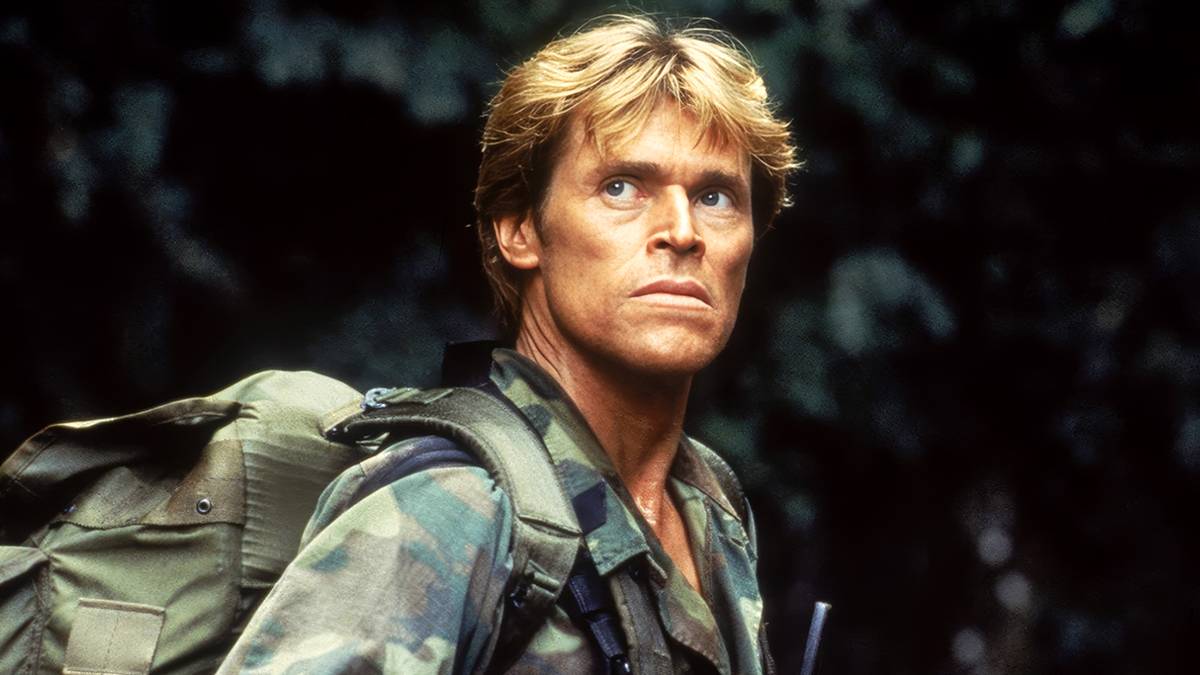
Image via Orion Pictures Published Sep 6, 2026, 11:41 PM EDT Samuel is Collider's List Flex Editor (previously Lead List Editor), which means he's pretty much always hovering around Collider's List department. A writing and editing automaton based in Nashville, Tennessee, and sometimes Los Angeles, Samuel has been working in entertainment journalism for over 10 years. Samuel is the guy who talked to Betty White about vodka and hot dogs. Chaz Ebert once pinched Samuel's cheeks after a screening of Beyond the Valley of the Dolls, when Samuel told her that Roger was and forever is his hero. William Friedkin once jokingly called Samuel "dad" at a screening of Samuel's favorite movie, The Babadook. Forbes once called Samuel a "sneering critic" because he disliked Don't Look Up. Two major brands have trusted Samuel with curating their respective lists of the 100 Best Movies of All Time. Samuel wrote one of these lists in its entirety. Other career highlights include appearing on KCRW and meeting Joe Morgenstern, and also spending 50 minutes talking to Tommy Wiseau on a landline (which was awesome). Samuel loves his job and is rarely actively not doing it. Sign in to your Collider account War is hell, and it's simply a reality of the world we live in. From the earliest days of cinema, filmmakers have explored violent conflict from all kinds of angles with different intentions. On screen, depictions of war can serve as cautionary tales, tributes to those who served, pure spectacle—or some combination of all of these. The best of these films remain relevant, studied, rewatched, and sometimes controversial. Even lesser war movies can serve as a respectable entertainment, even as history lessons, but the following intends to single out and praise exceptional motion pictures that explore history and humanity to unforgettable effect. These are all among the greatest war movies ever made, each pretty much perfect from beginning to end. 13 'Zero Dark Thirty' (2012) Directed by Kathryn Bigelow Image via Sony Pictures Releasing Mired in controversy even before it was released, and artistically resplendent all-around, director Kathryn Bigelow and writer Mark Boal's follow-up to Best Picture winner The Hurt Locker (also one of the greatest of all war films), Zero Dark Thirty is a gripping, lengthy and intensely personal examination of the manhunt for Osama bin Laden. In the role that garnered her first Academy Award nod, Jessica Chastain plays CIA analyst Maya, a composite character based on multiple women who were largely responsible for tracking down the leader of Al-Qaeda. Over two hours of absorbing procedural leads up to a breathless, muscular, intensely realistic reenactment of the successful Navy SEAL mission that took out the most wanted man in the world in May 2011. It's important to note Zero Dark Thirty has always been highly controversial for its depiction of torture. It's also been widely acclaimed and even favorably compared to Bigelow's much-lauded Hurt Locker; which pair to form an uncommonly psychological double bill of the war genre. 12 'Come and See' (1985) Directed by Elem Klimov Image via Sovexportfilm From its poetic early stretches to a finale that's perhaps the most notoriously intense and disturbing in all of film, Elem Klimov's Come and See sees the Nazi occupation of Belarus through the eyes of teen Florya (Aleksey Kravchenko, in world film's most effective loss-of-innocence performance). This darkest of all coming-of-age movies follows the boy as he recesses from a naïve, wide-eyed patriot who dreams of the resistance to a shell of a young man, all within a matter of hours. In the final scenes of Come and See, the Nazis burn a packed, locked church to the ground. It isn't seen so much as heard. It's a scene that probably should be accompanied by a surgeon general's warning. That's not to in any way not recommend the movie; it's a European cinema landmark that every cinephile should watch once, if only once. Sometimes it's the movies that remind us of what evil looks like and is capable of. Come and See becomes the rarest of things: an exploration of the ugliest parts of humanity that is breathtakingly beautiful in its artistry. 11 'The Best Years of Our Lives' (1946) Directed by William Wyler Image via RKO Radio Pictures An ensemble cast including Dana Andrews, Fredric March, Myrna Loy, Teresa Wright, Virginia Mayo and perhaps most notably non-actor and real-life vet Harold Russell, former U.S. Army operative William Wyler's critically revered box-office hit (this was the most-attended film in North America post-Gone With the Wind) explores the lives of three U.S. servicemen of varying ranks returning to their homes of varying social stature. This is an essential American drama, and one of the first movies about the social aftermath of the Second Great War. The ironic title The Best Years of Our Lives is frankly about as captivating as the film itself. This is a picture that explored the intergenerational cost of war in a way that was ahead of its time; it's still a highly potent work enlivened by terrific performances. Along with the more escapist and purely entertaining Casablanca, this represents the greatest of the Greatest Generation. 10 'Black Hawk Down' (2001) Directed by Ridley Scott Image via Sony Pictures Releasing Ridley Scott is a visual stylist without peer, one of the most purely talented compositors of moving images to ever live; it's also not really a hot take to say he's often only as good as the script he's working with. In his follow-up to Best Picture winner Gladiator, he's working with a propulsively dramatic and focused script by Ken Nolan, about military catastrophe, namely the 1993 Battle of Mogadishu, which stranded dozens of U.S. soldiers in hostile Somali desert. Black Hawk Down is a high-wire act that successfully balances action that's both fittingly harrowing and pulse-pounding, all while juggling many characters in a way that only strengthens the punch to the gut, the statement about the cost of war. Black Hawk Down was nominated for four Oscars including Best Director, and Roger Ebert named it the best film of Scott's career, ahead of classics like Blade Runner, Alien and Thelma & Louise. Collider Exclusive · James Bond Personality Quiz Which James Bond Actor Are You Most Like? Connery · Moore · Dalton · Brosnan · Lazenby · Craig Six actors. Six completely different visions of the same man — dangerous, charming, complicated, and almost certainly wearing a very good suit. Only one of them shares your particular way of moving through the world. Eight questions will figure out which Bond you really are. 🏴Connery 😄Moore 🎭Dalton ✨Brosnan 🤵Lazenby 💠Craig FIND YOUR BOND → 01 How do you carry yourself when you walk into a room? Bond is always the most interesting person in the room. The question is how he makes you feel it. AWith absolute authority — I don't announce myself. I simply make everyone aware that I've arrived. BWith a raised eyebrow and a ready quip — I'd rather disarm a room than dominate it. CWith focused intensity — I'm taking everything in, and people can tell. DWith polish and ease — I look like I belong everywhere, because I've decided I do. EWith quiet confidence — I'm still figuring out my place, but I carry myself as if I already know it. FWith guarded stillness — I notice everything and give nothing away until I choose to. NEXT QUESTION → 02 How do you handle a dangerous situation? Every Bond faces it differently. What does your version look like? AWith dangerous calm — I've been here before, and the threat already knows it's made a mistake. BWith improvisation and a degree of theatrical flair — tension should never be wasted. CHead-on and without hesitation — I don't need gadgets. I have training, and I use it. DWith the right tool for the job — I came prepared, and preparation is its own form of confidence. EInstinctively — I react faster than I think, and it usually works out. FWith controlled brutality — I don't enjoy it, but I don't flinch from what the moment requires. NEXT QUESTION → 03 How do you charm someone you need on your side? Bond always gets what he needs. The method varies considerably. AI make them feel like the most interesting person in the room — for exactly as long as I need them to be. BI make them laugh — a shared laugh is the fastest way to make someone trust you. CI'm direct and honest — I tell them what I need and why. Manipulation wastes time. DWith surface perfection — the right words, the right smile, deployed with enough precision to look effortless. EBy being present and genuine — I'm still developing my technique, but sincerity covers a lot of ground. FReluctantly and sparingly — I'd rather earn trust through actions than manufacture it through charm. NEXT QUESTION → 04 How do you handle your emotions on the job? Every Bond deals with this differently. Most of them not particularly well. AI suppress them completely — detachment is a professional requirement, not a personal failing. BI deflect with humour — a well-timed joke is the best defence against genuine feeling. CI let them show — I'm not ashamed of feeling things, and I think pretending not to is its own kind of weakness. DI compartmentalise with precision — everything in its place, nothing bleeding into the mission. EWith difficulty — I haven't quite worked out the system yet, and sometimes it shows. FBy burying them — deeply, imperfectly, in ways that eventually cost me something important. NEXT QUESTION → 05 How would your colleagues describe your working style? MI6 has opinions about all of its 00s. What are theirs about you? AEffective and uncompromising — results-focused to the point where the methods occasionally become a concern. BReliably brilliant in the field, occasionally exasperating in the briefing room. CPrincipled to a fault — they'd rather do it right than do it fast, and they'll tell you so. DPolished, capable, and slightly too good at making it look easy. ERaw potential — still developing, but there's something there that's hard to teach. FA weapon. Pointed at problems, usually effective, occasionally unpredictable. NEXT QUESTION → 06 How do you feel about operating within the rules? The licence to kill comes with terms and conditions. Not everyone reads them. ARules are for people who haven't earned the judgement to know when to break them. BI follow them in spirit and bend them in practice — the important thing is the outcome. CI take them seriously — there are things I won't do regardless of what the mission requires. DI work within them effectively and creatively — the system has its uses if you know how to navigate it. EI'm still working out where my lines are — the job has a way of moving them on you. FI follow orders until I decide the order is wrong. Then I act on my own judgement and accept the consequences. NEXT QUESTION → 07 What is your relationship with love? Every Bond has a different answer. None of them have found it easy. AA liability I've learned to manage — I don't let it interfere with the work, and I try not to examine why. BA pleasure I take seriously in the moment, lightly in the long term, and honestly in between. CSomething I want genuinely — and struggle to reconcile with the life I've chosen. DPart of the performance — I'm charming, and I enjoy it, but I keep the door to anything deeper firmly closed. ESomething that surprised me — I found it when I wasn't looking and it changed everything, briefly. FA wound I carry — something happened, and I haven't fully processed what it means for everything since. NEXT QUESTION → 08 When the mission is over, how do you want to be remembered? The name is Bond. The rest is entirely up to the man behind it. AAs the original — the one who defined what this could be before anyone else knew what it was. BAs someone who made it enjoyable — who understood that entertainment is its own kind of excellence. CAs someone who took it seriously — who refused to coast and pushed harder than the role required. DAs the complete package — who had the looks, the timing, and the ability to make it all seem inevitable. EAs an underrated chapter — one that deserved more time and more credit than it received. FAs the one who made it human — who found the cost beneath the cool and didn't look away from it. REVEAL MY BOND → The Name Has Been Determined Your Bond Is…Six actors. One role. Your answers point to the Bond who shares your presence, your method, and your particular way of carrying the weight of being the most dangerous person in the room. Sean ConneryYou are the original — and you carry that fact without needing to announce it. There is an authority in the way you occupy a room that others spend careers trying to replicate. You don't explain yourself, justify yourself, or soften yourself for anyone's comfort. The confidence is structural, not performed. Connery's Bond established everything — the tone, the danger, the cool — because Connery himself had the innate presence to make something that had never existed feel inevitable. You share that quality: the sense that you were always going to end up exactly here, doing exactly this. The name is Bond. In your case, it always was. Roger MooreYou understand something that more serious people miss: that wit is its own form of intelligence, and that making people laugh is not a retreat from danger but a way of mastering it. Moore's Bond is underrated precisely because the effortlessness looks easy — and effortlessness is the hardest thing to manufacture. You have the same quality: a lightness that disarms people before they realise how sharp you actually are. The raised eyebrow, the perfectly timed quip, the refusal to be rattled — these are not affectations. They are a philosophy about how to move through a world that would like to take itself too seriously. You have never let it. Timothy DaltonYou took the role seriously when everyone wanted you to coast — and that refusal to take the easy version of anything is the most defining thing about you. Dalton's Bond has genuine moral weight: he feels the cost of what he does, he has lines he won't cross, and he is not interested in the version of himself that pretends otherwise. You share that intensity. You push harder than the situation technically requires, because you have a standard and you hold yourself to it. He was ahead of his time — the Bond the franchise wasn't quite ready for yet, arriving exactly when he was meant to. You know what that feels like. Pierce BrosnanYou are the complete package — and you know it, which is part of what makes you so effective and occasionally so infuriating to the people around you. Brosnan arrived at the role looking exactly like Bond was supposed to look, and he delivered on that expectation with a professionalism that made it seem effortless. You have the same quality: a smooth competence, a charm that operates like a precision instrument, and the ability to make even difficult things look like they weren't. His era was the most commercially successful in the franchise's history. There is a reason for that. The reason is that some people simply fit their moment perfectly. You are one of those people. George LazenbyYou stepped into something enormous with less preparation than anyone around you thought was sufficient — and you delivered something genuine anyway, which is the more impressive achievement. Lazenby's single outing is, by many measures, one of the finest Bond films ever made — and he is not a small part of why. You share his quality of raw authenticity: less polished than the alternatives, more honest for it, capable of something real that technique alone can't produce. He was underestimated, and then he wasn't, and then history caught up with him. You are the kind of person history catches up with. Give it time. Daniel CraigYou stripped everything back and found what was underneath — and what was underneath was harder, more honest, and more human than anyone expected. Craig's Bond is the franchise's most psychologically complete: a man doing a brutal job, carrying its costs imperfectly, capable of love and loss in ways that can't be dismissed. You share that depth. You don't hide behind the role or the charm or the suit — you let the work show what it actually costs. He was controversial from the moment he was announced and definitive by the time he was finished. The sceptics became the believers. That arc — of being underestimated and then undeniable — is one you know intimately. ↻ RETAKE THE QUIZ 9 'Platoon' (1986) Directed by Oliver Stone Image via Orion Pictures Oliver Stone has directed numerous American movies that are varying levels of controversial, many that are great with some notable misfires. The Oscar-winning, boldly confrontational Vietnam War drama Platoon stands as perhaps his magnum opus. Charlie Sheen stars as an idealistic university student whose idealism and psyche take a hit upon enlisting in 1967. Tom Berenger and Willem Dafoe also star. In addition to directing the picture, and its immersive, groundbreaking action scenes, former Vietnam infantryman Stone wrote the script, notable for its compelling characters who fundamentally spar along the lines of morality and the futility of the war. This is the first Hollywood movie about the Vietnam War written and directed by a veteran, and out of eight nominations, Platoon won four Academy Awards, including Best Picture and Best Director. This is the first of three Vietnam War pictures from Stone, followed by similarly acclaimed Born on the Fourth of July and the tepidly received Heaven & Earth. 8 'Hacksaw Ridge' (2016) Directed by Mel Gibson Image via Lionsgate Films Bombastic, graphically violent, and sentimental in the extreme in a way that borders on schmaltz without ever crossing that line, Mel Gibson's Hacksaw Ridge tells the story of Desmond Doss (Andrew Garfield), Congressional Medal of Honor recipent who never lifted a weapon in battle. It's a story that almost feels too sensational to be real, but the basic facts that drive the film (Doss rescued 75 men, and ultimately became the first conscientious objector to receive the U.S. Armed Forces' highest military decoration) simply play out, if in remarkably dramatic fashion. Garfield received his first Academy Award nod, for a nimble, something like balletic performance that's still a career-best. Supporting turns from Vince Vaughn, Hugo Weaving, Luke Bracey and the ever-underrated Teresa Palmer are also of great value to the film. This is a picture whose resounding emotional power is hard to overstate. 7 'Three Kings' (1999) Directed by David O. Russell Image via Warner Bros. Pictures At this point in time, David O. Russell's professional reputation is—well, let's just say it could be better. Still, it's impossible to ignore the fact that he's made some of the finest, critically acclaimed and audience-approved American films of the past quarter-century: from Siliver Linings Playbook to American Hustle to The Fighter. Some would even contend his best movie is this dark comedy set in the aftermath of the Persian Gulf War. George Clooney, Mark Wahlberg and Ice Cube star in the genre-bending thriller with elements of classic American caper in its DNA, but with a modern and even prophetic cynicism. It's about U.S. soldiers who attempt to steal gold from Saddam Hussein's troves, when a kidnapping and chaos ensues. The production was infamous (succinctly, Russell was reportedly overbearing on set and even fought with Clooney), but the end result is stunning to this day. In a rave four-star review, Roger Ebert called Three Kings "a weird masterpiece, a screw-loose war picture that sends action and humor crashing head-on into each other and spinning off into political anger." Directed by Stanley Kubrick Image via Warner Bros. There's a case to be made for Dr. Strangelove or: How I Learned to Stop Worrying and Love the Bomb being Stanley Kubrick's best war movie (or perhaps its Paths of Glory), but the perfectionist auteur's penultimate movie absolutely feels like his definitive statement in the genre. Based on Gustav Hasford's autobiographical book The Short-Timers (Hasford co-wrote the script along with Kubrick and Michael Herr) Vietnam war pic Full Metal Jacket plays out in two distinct halves: the first playing out in a South Carolina boot camp under the tutelage of an abusive drill seargeant (R. Lee Ermey), then the screen time is dedicated to deployment and all-out warfare. Though Full Metal Jacket released to critical acclaim and is widely regarded as a remarkably intense (if exceptionally cynical and perhaps even nihilistic) war classic today, it's worth noting Roger Ebert had a famous dissenting opinion, giving a thumbs down on his TV show, saying in print he felt the movie was "unsure of where to go." Ebert also famously never embraced Kubrick's iconic and disturbing sci-fi adaptation A Clockwork Orange. 5 'Saving Private Ryan' (1998) Directed by Steven Spielberg Image via DreamWorks Pictures Saving Private Ryan is absolutely not Steven Spielberg's only war film, but as was the case with Kubrick and Full Metal Jacket, this arguably feels like an iconic director's definitive contribution to the genre. As was the case with 1930's All Quiet on the Western Front, this is a watershed moment in terms of how combat is depicted on-screen, most famously in its hyper-realistic depiction of D-Day. Spielberg's epic drama centers on a group of soldiers (spearheaded by Tom Hanks' Captain John Miller), tasked with the mission of safely delivering the titular officer (Matt Damon) home after his three brothers die in combat. As sentimental as Full Metal Jacket is cynical (each so very fitting within their respective directors' filmographies), Saving Private Ryan is specifically an American enterprise, bookended with haunting scenes filmed on-location in the Normandy American Cemetery. For over a quarter-century, Saving Private Ryan has been a uniquely emotional experience for veterans and their families. 4 'Casablanca' (1942) Directed by Michael Curtiz Image via Warner Bros. The best WWII film made during wartime remains, quite possibly, the most enduringly beloved winner of the Academy Award for Best Picture. Humphrey Bogart played many iconic, much-quoted roles in the Golden Age of Hollywood, smooth-talking club owner Rick Blaine is the part he's best remembered for, and one of the best screen heroes of all time. In Casablanca, expatriate Blaine is gobsmacked when former flame Ilsa Lund (Ingrid Bergman) walks into his gin joint (of all the gin joints), only now she's partnered with noble freedom fighter Victor Laszlo (Paul Henreid). There are only two letters of transit out of Casblanca, you see, and this is where the drama kicks off. It's as absorbing and affecting as screen drama has ever been, and the best thing about Casablanca is how proud we are of everyone in the end; all of the heroes make the difficult, but right choices. This is the best of us.
13 War Movies That Are Perfect From Start to Finish
Full Article
Original Source
Read the full article at Collider →KhanList aggregates and links to publicly available news content. We do not host full articles from third-party sources. Always verify important information with original sources.