
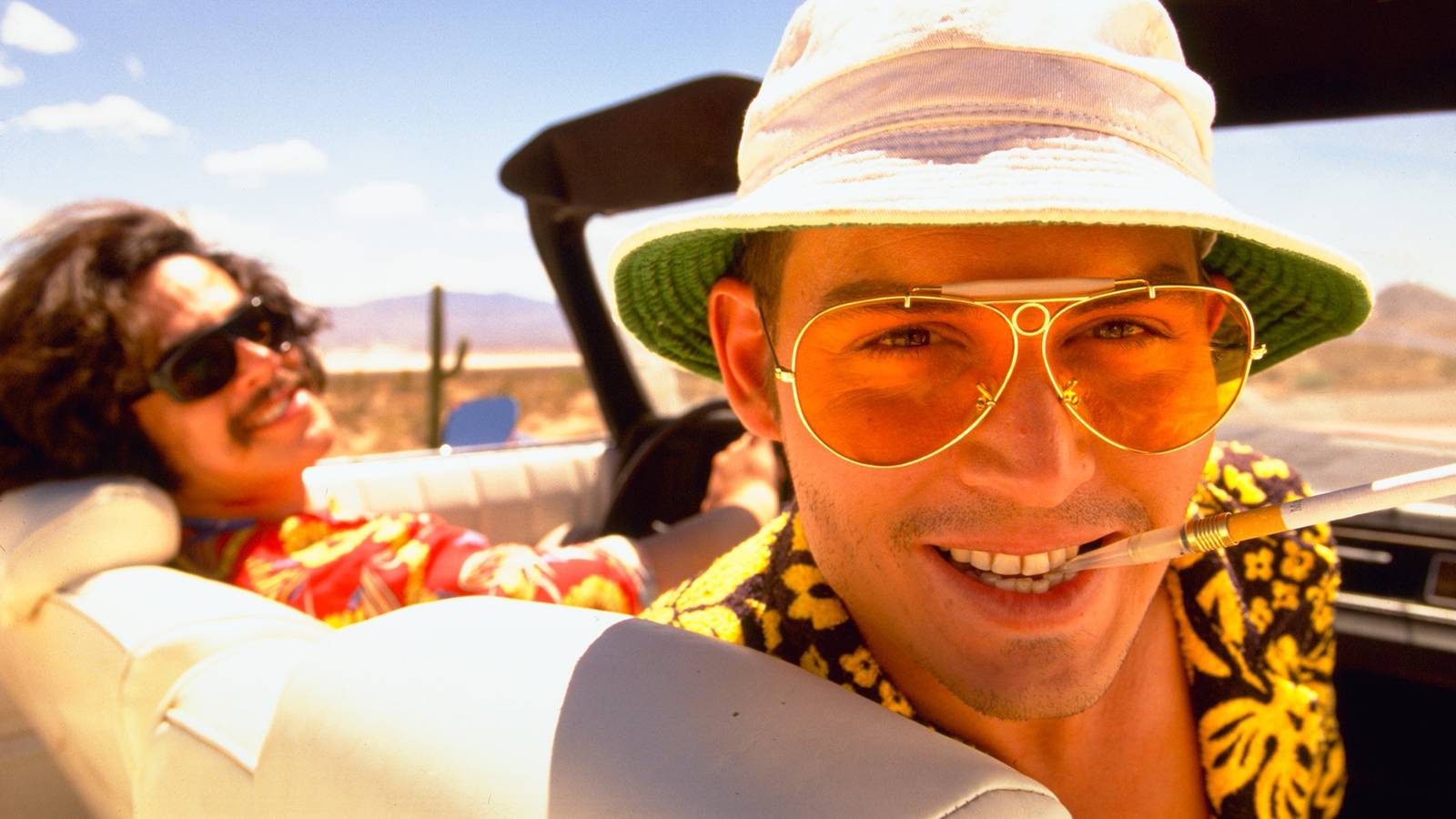
Published Oct 22, 2026, 5:00 PM EDT Richard Craig is a Senior Author at Screen Rant covering film and TV. Richard has also written extensively about horror and film soundtracks, contributing a chapter to the first major academic collection on the folk horror genre, The Routledge Companion to Folk Horror. Richard is also a performing musician and holds an MA in Music and Sound Art. A movie's opening line has a difficult job. It needs to grab the audience's attention, establish a tone, introduce a character, or make viewers curious enough to stick around. The best examples manage several of these at once, delivering a few carefully chosen words that shape an entire viewing experience. A brilliant opening line can establish a character's personality, hint at a story's biggest mysteries, or promise absolute chaos without giving away the goods. Meanwhile, the right performance can turn an ordinary sentence into something audiences quote for decades. What sounds innocent at first might take on a sinister meaning later, while a seemingly throwaway remark can capture the entire spirit of a movie. The greatest examples linger in an audience’s mind throughout the movie, lodge themselves in pop culture, and make people want to watch the whole thing all over again. Of course, plenty of famous movies begin with dialogue that is easy to overlook because a more celebrated line follows shortly afterward. Goodfellas' iconic “I always wanted to be a gangster speech” is often cited as an opening line, as in American Beauty's "My name is Lester Burnham." Yet both actually appears after brief conversations featuring the main cast. This ranking focuses strictly on the first spoken dialogue or opening narration. 12 "Who Am I? You Sure You Wanna Know?" Spider-Man Sam Raimi's Spider-Man opens with Tobey Maguire's Peter Parker narrating his own story over the opening credits. Peter begins by warning viewers that his story isn't a cheerful tale about an ordinary teenager. It's an invitation to look beyond the familiar superhero mythology and discover the awkward kid, personal tragedies, and difficult choices behind the mask. The opening line recalls the narrated style of Spider-Man comics and animated series, while also establishing a much more serious tone. The narration promises hardship before the film even begins explaining his powers. Spider-Man's origin is about discovering who he is when grief, responsibility, and temptation complicate everything. The opening makes Peter's humanity the hook, ensuring that the person behind the mask matters just as much as the hero. 11 Stand By Me (1986) “I Was 12 Going On 13 The First Time I Saw A Dead Human Being.” Stand by Me begins with adult Gordie Lachance, played by Richard Dreyfuss, remembering a formative experience from his childhood. His narration takes viewers back to the summer of 1959, when Gordie and his friends set out to find the body of a missing boy. The story is framed as a memory that has stayed with Gordie for decades, giving the adventure a reflective tone from the beginning. The line combines the everyday language of childhood with the shock of confronting mortality. Gordie begins with an experience that changed his understanding of the world. That directness establishes the film's emotional honesty. The missing boy gives the group a destination, but the opening suggests that the journey will be about something more personal. 10 “The World Is Changed. Much That Once Was Is Lost, For None Now Live Who Remember It.” The Lord Of The Rings: The Fellowship Of The Ring (2001) Peter Jackson's Lord of the Rings opens with Galadriel narrating the history of Middle-earth, introducing the Rings of Power and the conflict that threatens to engulf the world. Cate Blanchett's measured voice accompanies images of ancient battles and the rise of Sauron, establishing a mythology that stretches far beyond the immediate journey of Frodo Baggins. The narration gives The Fellowship of the Ring the weight of a legend passed down through generations. It establishes the trilogy's central tension: that the past continues to shape the present, but the people who inherit its consequences may struggle to understand it. It's an evocative beginning for a story about preserving hope in a world haunted by history. 9 “There Was Me, That Is Alex, And My Three Droogs, That Is Pete, Georgie, And Dim, And We Sat In The Korova Milkbar Trying To Make Up Our Rassoodocks What To Do With The Evening.” A Clockwork Orange (1971) Stanley Kubrick’s A Clockwork Orange introduces Alex DeLarge and his gang of droogs as the young men drink drug-laced milk and contemplate their next bout of violence. Malcolm McDowell's narration immediately establishes Alex as the story's guide, while the bizarre furniture, exaggerated makeup, and futuristic interiors make the setting feel both stylish and deeply unsettling. The line is an ingenious introduction to Alex's world because it makes his disturbing behavior sound almost conversational. His explanation of the gang's names and activities is casual, even friendly, despite the menace lurking beneath the surface. Anthony Burgess's invented slang also forces viewers to adapt to Alex's perspective rather than comfortably observing him from the outside. 8 “Choose Life. Choose A Job. Choose A Career.” Trainspotting (1996) Danny Boyle's black comedy Trainspotting begins with Mark Renton and his friends running through Edinburgh as Renton's voice-over recites a sarcastic version of the familiar advice to pursue a respectable life. The narration lists the comforts of conventional adulthood while the visuals show the group fleeing from trouble. Ewan McGregor's energetic delivery establishes Renton's irreverent attitude almost immediately. Trainspotting’s opening line has deceptively straightforward phrasing. "Choose Life" sounds like an earnest motivational slogan, but Renton's increasingly caustic narration turns the promise of a stable existence into something suffocating and absurd. The sequence captures the film's generational frustration without pretending that rejecting conventional expectations automatically offers a better alternative. 7 “We Were Somewhere Around Barstow On The Edge Of The Desert When The Drugs Began To Take Hold.” Fear And Loathing In Las Vegas (1998) Fear and Loathing in Las Vegas begins with journalist Johnny Depp's Raoul Duke and his attorney, Dr. Gonzo, traveling through the Nevada desert toward Las Vegas. Depp's narration accompanies the journey as the pair's drug-fueled adventure begins to spiral beyond conventional reality. The vast landscape initially looks empty and peaceful, creating an amusing contrast with the chaos that follows. The line is memorable because it plunges viewers into the story without wasting time on explanations. The phrase "began to take hold" sounds almost clinical, as if Duke is describing an ordinary change in the weather rather than the start of a profoundly unreliable experience. Terry Gilliam's surreal imagery subsequently blurs the boundary between observation and hallucination, but the narration remains an anchor in Duke's distorted consciousness. 6 “I Believe In America.” The Godfather (1972) Francis Ford Coppola opens his crime epic The Godfather with Amerigo Bonasera, an undertaker who approaches Don Vito Corleone during his daughter's wedding celebrations. Bonasera explains that he trusted the American justice system to punish the men who assaulted her, only to find that the outcome failed to deliver the justice he expected. The Godfather’s opening line is powerful because its apparent simplicity conceals profound disillusionment. Bonasera begins by declaring his faith in America, but the story he tells immediately complicates that belief. His appeal exposes the gap between the country's promise of equal justice and the realities of money, influence, and social standing. Before The Godfather’s violence, it introduces a moral universe in which the American Dream is already under scrutiny. 5 “People Are Always Asking Me If I Know Tyler Durden.” Fight Club (1999) David Fincher begins his adaptation of Chuck Palahniuk's novel Fight Club with the Narrator in an extraordinarily dangerous situation, a gun pressed against his mouth as the story begins to unravel. Edward Norton's voice-over introduces Tyler Durden, immediately suggesting that this mysterious figure is central to the events that brought the Narrator to this moment. Fight Club then moves through the circumstances leading up to the confrontation. The opening line makes Tyler sound like someone whose reputation precedes him, while offering no immediate explanation of who he is or why he matters. The casual phrasing contrasts sharply with the danger of the opening image, while perfectly establishing the narrative’s misdirect. 4 “Now I Want You To Remember That No Bastard Ever Won A War By Dying For His Country. He Won It By Making The Other Poor Dumb Bastard Die For His Country.” Patton (1970) Patton opens with the eponymous US military general delivering a monologue in front of a US flag. The general stands in full uniform, speaking directly to his troops about combat and victory. The stark composition, military dress, and commanding performance make the speech feel like a declaration of intent rather than a conventional biographical introduction. Patton's words immediately establish his distinctive approach to warfare. He rejects sentimental ideas of sacrifice in favor of a brutal, practical assessment of what winning actually requires. It undermines the typical depiction of military heroism as uncomplicated glory while neatly conveying everything the audience needs to know about the protagonist. It’s a thrillingly stark contrast to usual war movie speeches. 3 “Today Is A Good Day To Die.” Flatliners (1990) Joel Schumacher's Flatliners introduces medical student Nelson Wright, played by Kiefer Sutherland, whose fascination with death leads him to propose a dangerous experiment. Nelson and his fellow students plan to stop his heart temporarily and then revive him, hoping to discover what lies beyond consciousness. Nelson’s provocative declaration establishes Flatliner's central obsession before the experiment begins to expose its consequences. The opening is particularly chilling because Nelson delivers it with the confidence of someone treating death as an intellectual challenge. Schumacher builds the premise around the collision between scientific ambition and the limits of human understanding. The opening words establish Nelson's recklessness and the larger question about whether some experiences should remain beyond reach.
12 Greatest Opening Lines In Movie History, Ranked
Full Article
Original Source
Read the full article at Screenrant →KhanList aggregates and links to publicly available news content. We do not host full articles from third-party sources. Always verify important information with original sources.