
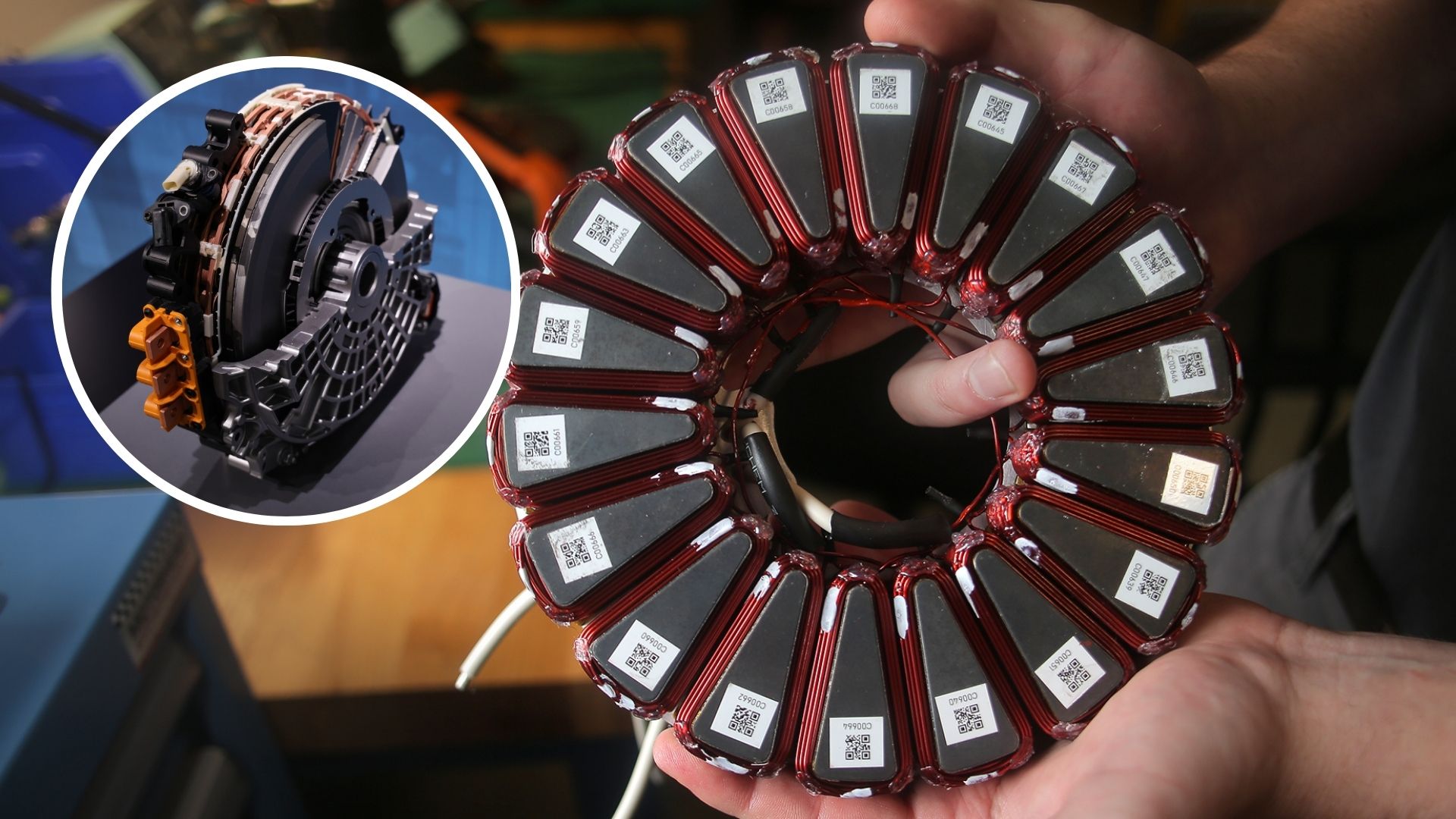
A British company is set to develop a new generation of fully rare-earth-free and heavy-rare-earth-free axial flux electric motors. YASA has secured UK government’s funding to develop these motors.These technologies are will power future electric and hybrid vehicles.YASA also revealed that as part of the programme, the company will lead Project Resilience in investigating two complementary technology pathways designed to reduce reliance on rare-earth magnet materials while preserving the power density, efficiency and compact packaging required by future electrified vehicles. Powerful and compact electric motors “Rare-earth materials have played an important role in the development of powerful and compact electric motors, but the automotive industry must now prepare for a future in which availability, environmental impact and security of supply are increasingly important considerations,” said Tom Hillman, Head of Motor Simulation, YASA.“Project Resilience is about creating credible alternatives without losing sight of what vehicle manufacturers need from an electric motor. Different applications require different balances of performance, efficiency, packaging, cost and production volume, which is why we are developing two complementary technology routes rather than pursuing a single universal solution.” Heavy-rare-earth-free permanent-magnet motor designs At its core, Project Resilience will develop two complementary technology pathways designed to give vehicle manufacturers greater flexibility in selecting the most appropriate electric motor architecture for different applications. For high-performance battery-electric and hybrid vehicles, YASA will investigate heavy-rare-earth-free permanent-magnet motor designs intended to maintain high levels of power density without increasing motor mass or package size, according to a press release.“Our axial flux architecture provides an exciting platform from which to explore these next-generation technologies. The aim is to help build a more sustainable and secure future for electric propulsion, while continuing to deliver the exceptional power density that defines YASA technology,” added Hillman.The company also revealed that rare-earth permanent magnets are widely used in high-performance electric motors, but their supply chains are highly concentrated geographically. This growing dependency can expose automotive manufacturers and suppliers to geopolitical uncertainty, export restrictions, price volatility and potential disruption as global demand for electric motors continues to increase.YASA also pointed out that heavy rare earths are commonly used to help permanent magnets withstand the high temperatures and demanding operating conditions experienced within powerful electric motors. However, these materials can be particularly difficult and carbon-intensive to extract and process.“The projects announced today demonstrate the depth of innovation and engineering excellence that exists across the UK automotive sector. Through DRIVE35, we are supporting businesses to move promising technologies to commercial deployment and manufacturing at scale,” said Ian Constance, Chief Executive at the Advanced Propulsion Centre UK.“This investment is about far more than individual projects. It is about strengthening the UK’s capability to design, develop and build the technologies that will define the vehicles of the future. By bringing together industry, government and academia, DRIVE35 is helping create the conditions for long-term growth, increasing investor confidence and reinforcing the UK’s position as one of the world’s leading destinations for automotive innovation.”
100% rare-earth-free axial flux electric motors set to be developed, offer high power
Full Article
Original Source
Read the full article at Interestingengineering →KhanList aggregates and links to publicly available news content. We do not host full articles from third-party sources. Always verify important information with original sources.