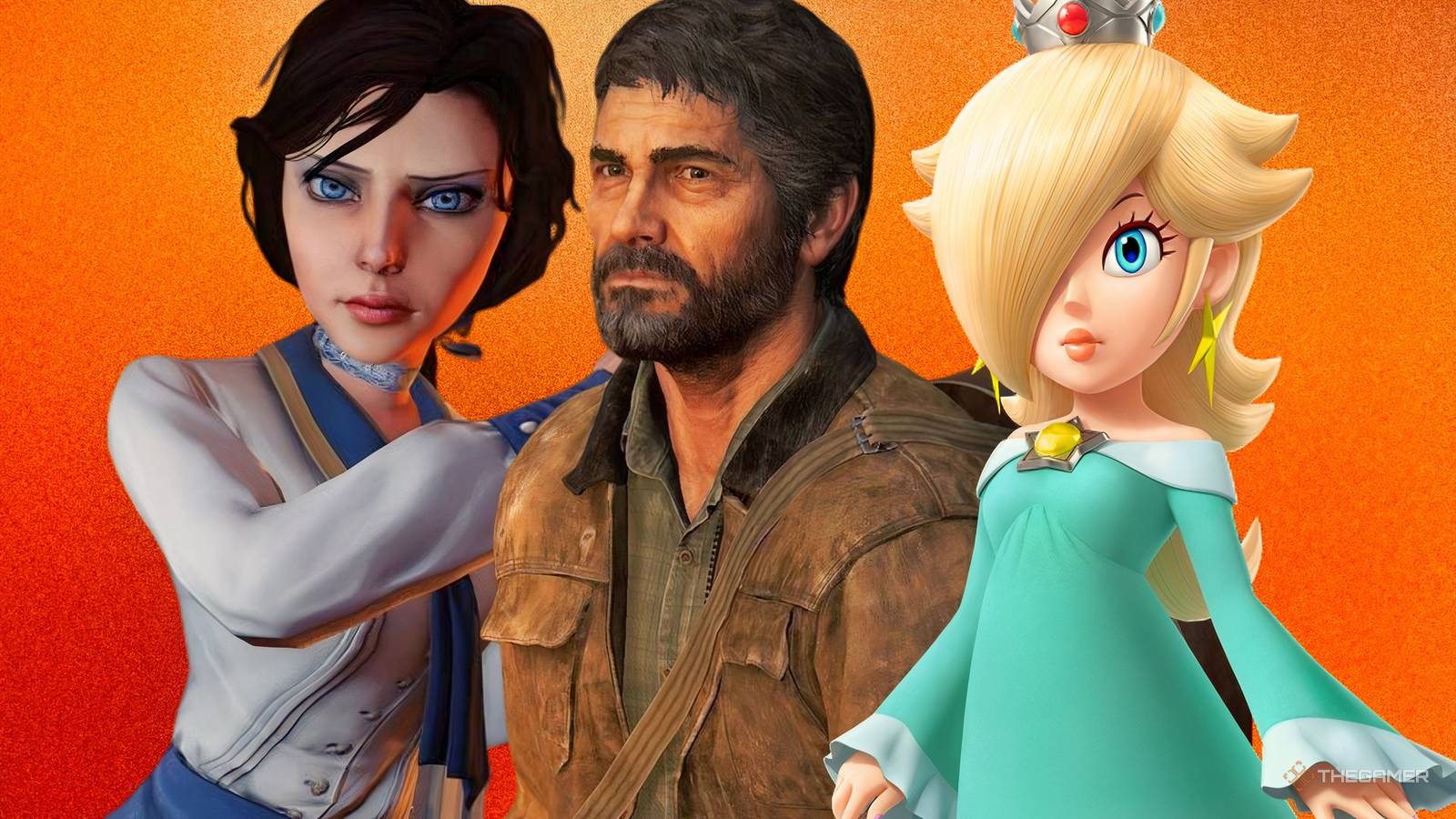
Published Aug 15, 2026, 9:03 PM EDT Allyson Cochran is an Editor at TheGamer who has worked as a journalist since 2020 and in games journalism since 2022. She holds a bachelor’s degree in journalism and focuses primarily on guides, previews, and developer interviews, with particular expertise in cozy indie games and live-service FPS titles. She has interviewed numerous game directors, including those of games like Overwatch and Dead by Daylight. Allyson has written and edited thousands of guides, and she genuinely loves every minute of it. Video game characters don't always emerge from development looking like the icons we know today. Sometimes a hero gets a new name, a questionable haircut, a wholly different personality, or an entire identity change before launch. Game development is messy like that! Early concepts can change dramatically as developers figure out what works for the story and gameplay. Some characters get tiny tweaks, while others barely resemble their original versions by the time players meet them. From names to designs, these characters prove that even gaming's biggest stars needed a few trips to the drawing board before they were ready for their close-up. Lara Croft Was Originally Laura Cruz It's difficult to imagine Tomb Raider without Lara Croft, but even Lara's name went through a change. Early in development, the heroine was called Laura Cruz, a name chosen by designer Guy Miller. Eventually, 'Laura' was changed to 'Lara', reportedly because the developers were concerned that American players might struggle to pronounce it correctly. The surname also received a makeover. 'Cruz' was replaced with the decidedly more British-sounding Croft, which was reportedly selected from a phone book. Somewhere out there, an unsuspecting Croft family may have accidentally contributed to gaming history. So before she was the iconic dual-wielding explorer, she was Laura Cruz, a name that sounds like she should be solving mysteries in a completely different franchise. Bowser Was Originally An Ox Before Super Mario's Bowser became the spiky-shelled terror of the Mushroom Kingdom, Nintendo's most famous turtle villain was apparently going to be an ox. Shigeru Miyamoto initially envisioned Bowser as an ox, drawing inspiration from King Gruesome, an ox-like character from Toei Animation's Alakazam the Great. There was just one tiny problem: the design didn't really look like an ox. Nintendo designer Takashi Tezuka pointed out that the character looked much more like a turtle. That observation sent Miyamoto and Tezuka back to the drawing board, where they redesigned the character around the turtle-like Koopa Troopas. The result eventually became the enormous, fire-breathing Bowser we know today. Joel Was Younger And Less Emotional Joel Miller eventually became one of gaming's most emotionally complicated characters, but he didn't start development that way. When writing Joel for The Last of Us, Neil Druckmann initially drew inspiration from Josh Brolin's performance as Llewelyn Moss in No Country for Old Men. That version of Joel was envisioned as someone very quiet and cool under pressure. Troy Baker's performance helped push the character in another direction. Baker interpreted Joel as a more emotional person, and that performance influenced how the character developed throughout the story. Joel's arc consequently became much more focused on the increasingly extreme lengths he would go to protect Ellie. Joel also went through several different versions of his age, with some early concepts making him considerably younger, potentially putting him in his early 30s. Sombra Was Originally A Japanese Woman Named Omniblade Sombra's path to becoming an Overwatch hacker was considerably more complicated than simply designing a cool woman with glowing fingers. Early in development, lead artist Arnold Tsang created a character called Omniblade, intended to be part of the game's original roster. Omniblade was designed as a Japanese woman with a love of street fashion who fought using throwing daggers. Those daggers could produce different effects, including revealing enemy locations. The problem was that the kit didn't fit particularly well alongside the other heroes being developed, so the character was shelved. Some of her abilities eventually found new homes with heroes such as Hanzo and Genji. The concept later returned, but its identity changed dramatically. One version reimagined the character as Mexican, drawing inspiration from Aztec culture and giving her a headdress and glowing green spikes. That still wasn't the final form. Eventually, she became the computer hacker Sombra, complete with energy tendrils and a stealth-focused outfit. Rosalina Had Microbangs Nintendo/Illumination Rosalina may now be one of Nintendo's most recognizable princesses, but early concept art for the Super Mario Galaxy character looks surprisingly different from the Rosalina players eventually met. Most notably, she originally had short bangs that revealed both of her eyes. That is a pretty significant departure from her final look, which is defined by those long, sweeping bangs covering one eye. Interestingly, writer Yoshiaki Koizumi worked on the story secretly because storytelling in a Mario game wasn't always encouraged. So Rosalina didn't just get a new hairstyle during development. Her entire identity evolved over time. Kratos Originally Wore A Mask Santa Monica When developing the protagonist of God of War, creator and director David Jaffe wanted Kratos to look brutal and distinct from the traditional image of a Greek hero. That meant avoiding the expected armor and giving him a more individualistic appearance. One early concept involved Kratos wearing an eye mask. The idea was eventually abandoned because the masked design felt too 'soulless' and didn't give the character enough personality. Considering how much Kratos' rage and general scowling are associated with him, hiding his face probably wasn't doing the guy any favors. Other early models got strange in their own ways. Some had Kratos carrying an infant on his back, while others gave him long hair and an excessive amount of flowing detail. Eventually, the team settled on the bald, scarred, intensely angry Spartan we know today. Nemesis Was Originally Made Of Slime via Capcom Nemesis is one of Resident Evil's most recognizable monsters, largely because there's something very unpleasant about being relentlessly pursued by a giant humanoid monstrosity that refuses to respect personal space. But the original concept was much, much gooier. For Resident Evil 3: Nemesis, producer Shinji Mikami and director Kazuhiro Aoyama wanted to introduce a stalker enemy that would constantly pursue the player and create a persistent sense of paranoia. Inspired partly by the T-1000 from Terminator 2, the initial idea was for the creature to be made of slime. The concept was practical in a terrifying way. A liquid Nemesis could bypass obstacles by melting through doors or liquefying itself to get past barriers. Unfortunately, that flexibility created another problem: the creature lacked a recognizable physical identity. The concept was therefore abandoned in favor of the much more cohesive Nemesis design that eventually appeared in the game. I have to admit, though, being chased by a puddle would have been hilarious right up until the puddle started sprinting. GLaDOS Was Originally A Floating Brain GLaDOS eventually became one of everyone's most memorable villains, but her iconic robotic body wasn't the first idea Valve had for her. During the development of Portal, GLaDOS went through several bizarre visual concepts, including a floating brain, a spider-like form, and even an upside-down version inspired by Botticelli's The Birth of Venus. Eventually, Valve settled on the robotic figure hanging upside down. The design was intended to communicate both mechanical power and femininity. Her large disk and personality cores also went through their own changes, with the team eventually giving her a larger body beneath the disk. The final design helped make GLaDOS feel like more than a voice floating around a laboratory. Her physical presence became an important part of the game's atmosphere, even while she remained suspended in place. So yes, the murderous AI could have been a brain in a jar. Somehow, the robot was less weird. Elizabeth Was Originally Mute Elizabeth is one of BioShock Infinite's most important characters, and her ability to constantly interact with Booker is a huge part of what makes their relationship work. But early versions of Elizabeth were mute, which would have made their partnership considerably quieter. Both she and Booker were originally planned to be silent. That meant their conversations and relationship-building simply wouldn't have existed in the same way. The idea was eventually changed because the developers wanted Elizabeth to have more freedom and personality. Giving her a voice also meant she could remain present even when she wasn't physically on-screen. It was a pretty important change. Elizabeth's personality is one of the defining elements of BioShock Infinite, and her relationship with Booker drives much of the game's emotional weight. Pyramid Head Didn't Have A Pyramid Head Konami The most famous thing about Pyramid Head is, naturally, the enormous pyramid on his head. But that wasn't actually the original plan for Silent Hill 2's terrifying butcher. Designer Masahiro Ito initially wanted to create a monster with a concealed face, but his first attempts looked too much like ordinary humans wearing masks. That wasn't creepy enough. Ito rejected the initial concept and eventually drew the now-iconic pyramid-shaped helmet. The shape wasn't chosen randomly, either. Ito wanted the creature's sharp angles to suggest the possibility of pain, which gives the design an uncomfortable, almost physically threatening quality.
10 Video Games That Changed Their Protagonists Before Final Release
Full Article
Original Source
Read the full article at Thegamer →KhanList aggregates and links to publicly available news content. We do not host full articles from third-party sources. Always verify important information with original sources.