
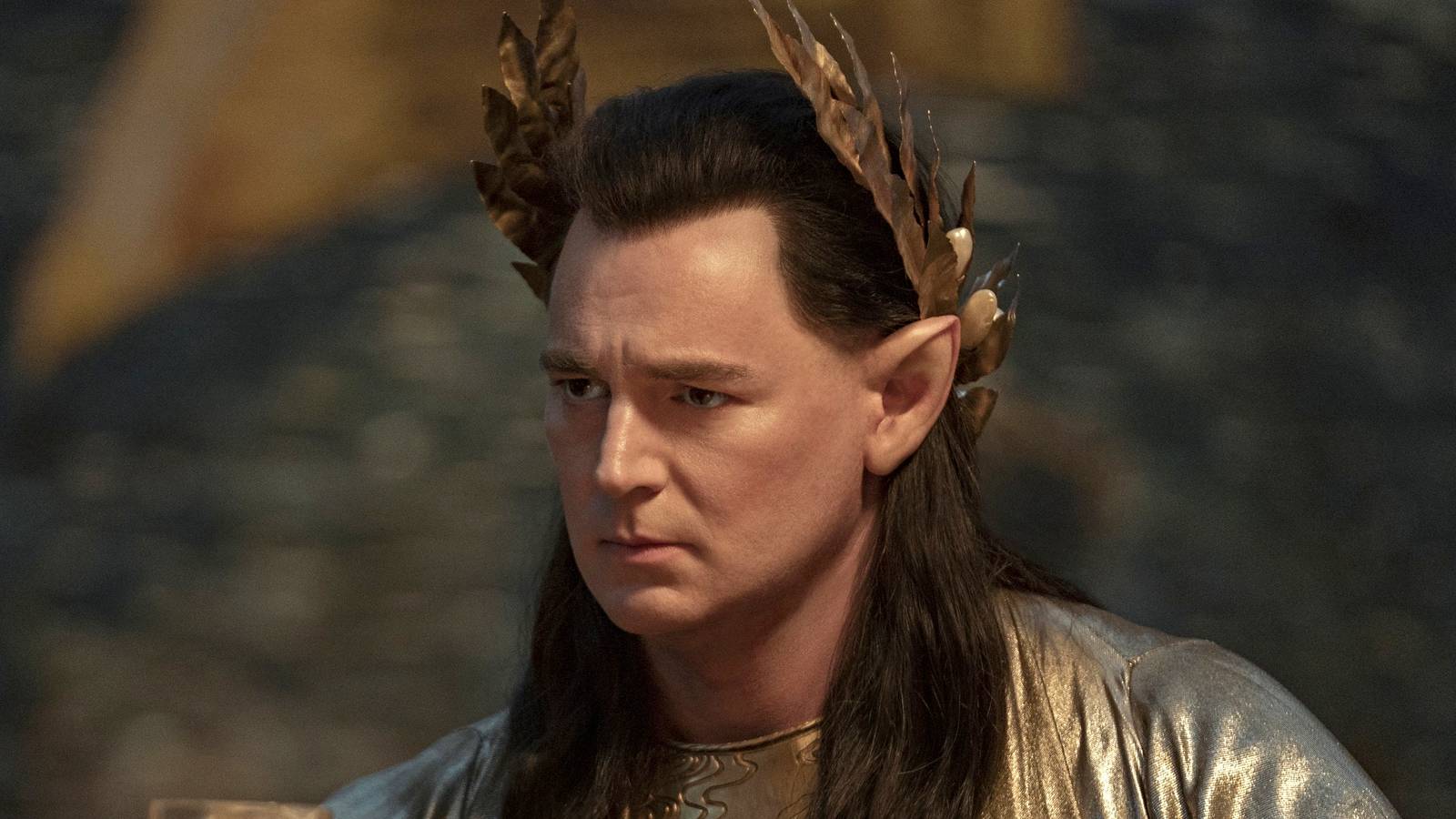
Image via Prime Video Published Aug 23, 2026, 7:09 AM EDT Kareem is a veteran editor and writer with over 15 years of experience covering all forms of entertainment, from music to movies. He serves as a High Trending List Writer for Collider, covering all things TV. His work has been seen in numerous online publications such as FanSided, AXS, Examiner, Narcity, HuffPost, and ScreenRant. He first began his professional writing career in 2011 writing political columns for HubPages, gradualaly building his portfolio until he was rewarded with his first paid writing position with News Headquarters in 2013. Since then, Kareem has covered everything imaginable, from writing political news columns for Examiner, reviewing the latest albums for AXS.com, and giving a unique take on sports, food, and the entertainment industry for Fansided.com. He had another online stop at Narcity, covering travel and things to do in his native Florida, before finally bringing his uniquely immense writing talent and voice to Valnet in 2020, first as a List Writer for ScreenRant before taking his talents to Collider in 2021. During his time at Collider, Kareem has showcased his talented writing style on a number of beats, trailer previews (DOTA: Dragon's Blood) to season premiers (Abbott Elementary), to Lists ranking everything from 80s Sitcoms (which holds a special place in his heart), to classic Disney Channel shows. When he's not working, you can catch him bing-watching classic horror movies (he's a huge fan of Friday the 13th), hitting bike trails, and playing UNO (and losing) during game nights with friends. He calls Orlando, FL home. Sign in to your Collider account In a perfect world, both audiences and critics would be in love with a particular TV show. However, we sadly don't live in a perfect world, and the television landscape is littered with numerous shows that are either loved by professional critics but hated by audiences, or loathed by the critics, but are beloved by viewers. Then, there's a third angle: TV shows are lauded by critics, but, upon watching them, are actually kind of bad. So, we're going to take a look at the TV shows that were darlings of the critics, but were actually kind of bad. It's not that I absolutely hated these shows. I tried to give all of them a chance (and may do so again in the future), but I just simply couldn't get into these shows. 'Quantico' (2015–2018) Image via ABC We talk a lot about thrillers on this site, but I think one sub-genre that we don't talk enough about is terrorism thrillers. These are shows in which the storyline is centered on a terrorist plot in which a law enforcement officer must prevent. 24 was probably the standard-bearer of the sub-genre, and it was a huge hit for Fox. So, in 2015, ABC, which was desperate for dramatic hits at the time, decided to create their own 24-inspired terrorism thriller, Quantico; and, to put it nicely, it was spectacularly mid. Starring Priyanka Chopra, Quantico follows an FBI rookie who, all of a sudden, becomes the prime suspect in a terrorist attack on New York City's Grand Central Terminal, and, according to the terrorism thriller textbook, our protagonist must clear her name. Critics loved Chopra's performance, and the incredibly diverse cast, but the dual timelines made the show hard to follow for the average viewer. After three seasons, Quantico faded into the television purgatory. 'FBI' (2018–Present) Image via CBS Dick Wolf is no stranger to the crime procedural sub-genre, and he has created some absolute gems, from the genre-transforming Law & Order universe to the criminally underrated New York Undercover. I love Dick Wolf's work, which pains me to write that FBI, the police procedural that premiered on CBS in 2018, is not among his best despite critical acclaim. If you've watched a Dick Wolf series, you pretty much know how FBI works. Set in its New York City field office, the series follows a unit of FBI special agents as they work to protect the citizens of the city from bad guys. While I agree with the critics that the performances are great, I can't help that FBI feels eerily like a knock-off version of Law & Order. Everything, from the episode structure to how the characters interact with each other, just seems like Law & Order-like. I wanted FBI to be different, to take more risks, and it just sticks to the tried-and-true, which isn’t bad, but if you want that, just go watch Law & Order. 'Supergirl' (2015–2021) Image via The CW This is a CW show, so I’m going to be grading this show on a steep curve. Everyone knows that CW superhero shows are hit-or-miss, and for a time, Supergirl seemed like a hit, until it wasn't. Supergirl follows the cousin of Superman, Kara Zor-El/ Kara Danvers (Melissa Benoist), as she defends National City (what an interesting name for a city) from the bad guys who want to do harm to it. The first three seasons of Supergirl were pretty good (for a CW show, anyway), and I got into the plot. But afterward, it was all downhill from there. The storyline began to make no sense, and the characters became pretty bland. It's a shame, because Supergirl could have been among the great superhero shows on the small screen. Instead, it's another in a line of examples as to why superheroes belong on the big screen, not on TV. 'Homeland' (2011–2020) Image via Showtime There's always one show in every list I write that brings me chest pain for criticizing it, mainly because I enjoyed said show during its initial run, but, rewatching it, I can see the flaws more clearly. Here, it's Homeland, the Showtime espionage thriller that had me in a chokehold in the 2010s, but I can now understand why it's not seen in such a great light today. Each season of Homeland is different, but the main plot centers around Carrie Mathison (Claire Danes), a CIA operations agent who embarked on an unauthorized operation in Iraq and, as punishment (I guess), was re-assigned to the agency's Counterterrorism Center. It's here where most of the action of the series takes place, and the series has received numerous industry awards and nominations. But, where I have a problem with Homeland is how it constantly misrepresents Muslims. Yes, this was a time in which the War on Terror was at its peak, but it still wasn't a fair portrayal of the faith, and the criticisms that this show got for its portrayal of Muslims are warranted. Collider Exclusive · Sci-Fi Survival Quiz Which Sci-Fi World Would You Survive? The Matrix · Mad Max · Blade Runner · Dune · Star Wars Five universes. Five completely different ways the future went wrong — or sideways, or up in flames. Only one of them is the world your instincts were built for. Eight questions will figure out which dystopia, galaxy, or desert wasteland you'd actually make it out of alive. 💊The Matrix 🔥Mad Max 🌧️Blade Runner 🏜️Dune 🚀Star Wars TEST YOUR SURVIVAL → 01 You sense something is deeply wrong with the world around you. What do you do? The first instinct is often the truest one. APull on every thread until I understand the system — then figure out how to break it. BStop asking questions and start stockpiling — food, fuel, weapons. Questions don't keep you alive. CKeep my head down, observe carefully, and trust no one until I know who's pulling the strings. DStudy the patterns. Every system has a rhythm — learn it, and you learn how to survive it. EFind the people fighting back and join them. You can't fix a broken galaxy alone. NEXT QUESTION → 02 In a world of scarcity, what resource do you guard most fiercely? What we protect reveals what we believe survival actually requires. AKnowledge. If you understand the system, you don't need resources — you can generate them. BFuel. Everything else — movement, power, escape — runs on it. CTrust. In a world of fakes and informants, a truly reliable ally is rarer than any commodity. DWater. And after water, information — the two things empires are truly built on. EShips and credits. The galaxy is big — you survive it by being able to move through it freely. NEXT QUESTION → 03 What kind of threat keeps you up at night? Fear is useful data — if you're honest about what you're actually afraid of. AThat reality itself is a lie — that everything I experience has been constructed to keep me compliant. BA raid. No warning, no mercy — just the roar of engines and then nothing left. CBeing identified. Once someone with power decides you're a problem, you're already out of time. DBeing outmanoeuvred — losing a political game I didn't even know I was playing. EThe Empire tightening its grip until there's nowhere left to run. NEXT QUESTION → 04 How do you deal with authority you don't trust? Every dystopia has a power structure. Your approach to it determines everything. ASubvert it from the inside — learn its rules well enough to weaponise them against it. BIgnore it and stay out of its reach. The further from any power structure, the better. CAppear to comply while doing exactly what I need to do. Visibility is the enemy. DManoeuvre within it carefully. You can't beat a system you refuse to understand. EResist openly when I have to. Some things are worth the risk of being seen. NEXT QUESTION → 05 Which environment could you actually endure long-term? Survival isn't just tactical — it's physical, psychological, and very much about where you are. AUnderground bunkers and server rooms — cramped, artificial, but with access to everything that matters. BOpen wasteland — brutal sun, no shelter, constant movement. At least the threat is honest. CA dense, rain-soaked city where you can disappear into the crowd and nobody asks questions. DMerciless desert — extreme heat, no water, and something enormous living beneath the sand. EThe fringe — backwater planets and busy spaceports where the Empire's attention rarely reaches. NEXT QUESTION → 06 Who do you want in your corner when things fall apart? The company you keep is the clearest signal of who you actually are. AA tight crew of believers who've seen behind the curtain and have nothing left to lose. BOne or two people I'd trust with my life. Any more than that and someone talks. CNobody, ideally. Alliances are liabilities. I work alone unless I have no choice. DA community bound by shared hardship and mutual survival — people who need each other to last. EA ragtag team with wildly different skills and total commitment when it counts. NEXT QUESTION → 07 Where do you draw the line — if you draw one at all? Every survivor eventually faces a moment that tests what they're actually made of. AI won't harm the innocent — even the ones who'd report me without hesitation. BI do what I have to to protect the people I've chosen. Everything else is negotiable. CThe line shifts depending on who's asking and what's at stake. DI draw a long-term line — nothing that compromises my people's future, even if it'd help now. ESome lines, once crossed, can't be uncrossed. I know which ones they are. NEXT QUESTION → 08 What would actually make survival worth it? Staying alive is one thing. Having a reason to is another. AWaking others up — dismantling the illusion so no one else has to live inside it. BFinding somewhere — or someone — worth protecting. A reason to keep moving. CAnswers. Understanding what I am, what any of this means, before time runs out. DLegacy — shaping the future in a way that outlasts me by generations. EFreedom — for myself, for others, for every world still living under someone else's boot. REVEAL MY WORLD → Your Fate Has Been Calculated You'd Survive In…Your answers point to the world your instincts were built for. This is the universe your temperament, your survival instincts, and your particular brand of stubbornness were made for. The MatrixYou took the red pill a long time ago — probably before anyone offered it to you. You're a systems thinker who can't help but notice the seams in things. You're drawn to understanding how the system works before figuring out how to break it. You'd find the Resistance, or it would find you — your instinct for spotting constructed realities is the machines' worst nightmare. You function best when you have access to information and the freedom to act on it. The Matrix built an airtight prison. You'd be the one probing the walls for the door. Mad MaxThe wasteland doesn't reward the clever or the well-connected — it rewards those who are hard to kill and harder to break. That's you. You don't need comfort, community, or a cause larger than the next horizon. You need a vehicle, a clear threat, and enough fuel to outrun it — and you're good at all three. You are unsentimental enough to survive that world, and decent enough — just barely — to be something more than another raider. In the wasteland, that distinction is everything. Blade RunnerYou'd survive here because you know how to exist in moral grey areas without losing yourself completely. You read people accurately, keep your circle small, and ask the questions others prefer not to answer. In a city where humanity is a legal designation rather than a feeling, you hold onto something that keeps you functional. You're not a hero. But you're not lost, either. In Blade Runner's world, that distinction is everything. DuneArrakis is the most hostile environment in the known universe — and you are precisely the kind of person it rewards. Patience, discipline, and political awareness are your core strengths — and on Arrakis, they're survival tools. You understand that the long game matters more than any single victory. Others come to Dune and are consumed by it. You'd learn its logic and earn its respect. In time, you wouldn't just survive Arrakis — you'd begin to reshape it. Star WarsThe galaxy far, far away is vast, loud, and in a constant state of violent political upheaval — and you wouldn't have it any other way. You find meaning in being part of something larger than yourself — a cause, a crew, a rebellion. You'd gravitate toward the Rebellion, or the fringes, or whatever pocket of the galaxy still believes the Empire's grip can be broken. You fight — not because you have to, but because standing aside isn't something you're capable of. In Star Wars, that willingness is what makes all the difference. ↻ RETAKE THE QUIZ 'Ten Percent' (2022) Image via Prime Video We normally don't accommodate comedies with miniseries. While there are a few examples of comedic exploits turning into miniseries (Beef is a great example of this), comedies normally get multiple seasons to pull in an audience. So, it was weird when Ten Percent, a British comedy streamed on Prime Video, only got one season on the series. Then, I rewatched it, and I could see why. While the series was filmed in Britain, the show is actually based on a French series, Dix pour Cent, which is set in a talent agency in London that is thrown into turmoil when the agency's founder dies unexpectedly. While critics did like the fact that it was pleasant, I had the pleasure of watching the original French show, and once you watch that one, you'll quickly see that this is a carbon copy of that series. The British version of Ten Percent did little to differentiate itself from its French counterpart, which is jarring because the British are pioneers when it comes to comedy, and it's usually other countries copying them, not the other way around. Why would they do this? No wonder it was done after just eight episodes. 'Star Wars Resistance' (2018–2020) Image via Lucasfilm I'm going to preface this by saying that Star Wars rarely works as a comedy. Especially after the genius grittiness of Andor, Star Wars is at its best when it stays in its space opera roots. So, when I decided to re-watch Star Wars Resistance, I was completely taken aback by the comedic scale of this series, and it just didn't work for me. It's shocking for me to write this because, back during its original run, I liked Star Wars Resistance. I totally get why it has a 92% critical rating on Rotten Tomatoes, as the story of Star Wars Resistance did set the stage for bigger adventures that were more kid-friendly. But, this is where it also lost me. I don't want kid-friendly Star Wars. I want gritty Star Wars, and Resistance just doesn't do it for me anymore. 'The Morning Show' (2019–Present) I feel like TV morning shows have a cutthroat nature behind those scenes that would be ripped for exploration into a television series. That's what Jay Carson thought as well when he adapted Brian Stelter's 2013 novel, Top of the Morning, into The Morning Show, for Apple TV. Starring Jennifer Aniston and Reese Witherspoon, The Morning Show looks at the sad nature of what it's like behind the scenes of a morning show. The Morning Show is a textbook example of a "critical darling" series. It was beloved by critics, and was nominated for a number of awards, and most of them rightfully so. The performances of Aniston and Witherspoon were dynamite, and this series accurately hit on a number of topics that many viewers could relate to. Having said that, The Morning Show had one major flaw: it is really boring. It doesn't matter how good the writing is or how great the performances are, if a show works best as sleep-inducing background noise, it doesn't work as an entertaining program. The Morning Show could have been among my favorites, but you can't cook a steak without seasoning and expect it to taste great. 'The Lord of the Rings: The Rings of Power' (2022–Present) Image via Prime Video Oh, I'm pretty sure I'm going to get some hate in the comments for including this show, but let me explain why it should be here, and I'll let you form your own opinions. The Lord of the Rings: The Rings of Power was critically loved, but it's incredibly overrated, and I didn't think the storyline was really well fleshed out, especially in the mess that was the second season. The Rings of Power was a good idea that had a ton of potential to be one of the best high fantasy shows on television, but its overwrought performances, thin plotline, and questionable accuracy to the J. R. R. Tolkien novels are what weighs this series down. There is a reason why the second season had a lower viewership than the first; fans saw through the smokescreen and saw the series for what it was: an underwhelming fantasy series that was over-hyped by critics. 'NCIS: Sydney' (2023–Present) Image via Paramount+ As much as I'm a huge fan of the Law & Order universe, I am equally a fan of the NCIS franchise. The original NCIS will never be touched, but I have a soft spot in my heart for the spin-offs. They're not as good in quality as the OG NCIS, but they hold their own and have managed to differentiate themselves from the original as so, they stand on their own two-feet and don't need assistance from the parent series, except one: NCIS: Sydney. If you've watched NCIS, you don't need me to explain the plot. It's the same flavor, except the NCIS agents are now in Instagram-scenic Sydney, Australia catching bad guys this time around. Unlike its siblings, NCIS: Sydney doesn't offer anything different or exciting than the other spin-offs offered. It doesn't have enough flavor to justify its existence, and while the action is just as good, you're better off watching NCIS's better spin-offs. 'Halo' (2022–2024) Image via Paramount+ This one is personal. As a fan of the Halo games, I wanted so long to see what a TV series based off of the video game series would be like. I have been on board ever since I learned it was in development in 2013. I waited like a kid on Christmas Eve for this series to drop. So, when it finally did in 2022, I grabbed my popcorn, my Gatorade, and settled in for a night of binge-watching. To say I was disappointed with the finishing product is a tremendous understatement. I was crushed. Halo, the TV series, had tremendous promise, and, to be fair, I wasn't expecting it to be perfect. Having written that, when you're sourcing from a beloved video game franchise, you need to give that source material the justice it deserves, and Halo, the TV series, didn't do that at all. It's very derivative, the writing is uninspiring, and it's too plot-driven for a franchise that's centered on its characters. While the critics gave it hope, I gave up midway through Season 1. Halo, the TV series, is a bad show, and its first impression left a very bad taste in my mouth. Halo Release Date 2022 - 2024-00-00 Network Paramount+ Cast Master Chief, Spartan-117 / John-117 Showrunner Kyle Killen Directors Jonathan Liebesman, Craig Zisk, Dennie Gordon, Roel Reiné, Debs Paterson Writers Justine Juel Gillmer Franchise(s) Halo Seasons 2 Creator(s) Kyle Killen, Steven Kane Where To Watch Paramount Plus Main Genre Sci-Fi Producers Charlotte Keating, Sheila Hockin, Michael Armbruster, Natascha McElhone, Pablo Schreiber, Nick Iannelli, Sarah McCarron Executive Producer(s) Steven Spielberg, Darryl Frank, Justin Falvey, Otto Bathurst, Kiki Wolfkill, Toby Leslie, Bonnie Ross, Frank O'Connor, Steven Kane, Scott Pennington, Kyle Killen, Gian Paolo Varani, David Wiener
10 TV Shows Critics Obsess Over That Are Actually Pretty Bad
Full Article
Original Source
Read the full article at Collider →KhanList aggregates and links to publicly available news content. We do not host full articles from third-party sources. Always verify important information with original sources.