
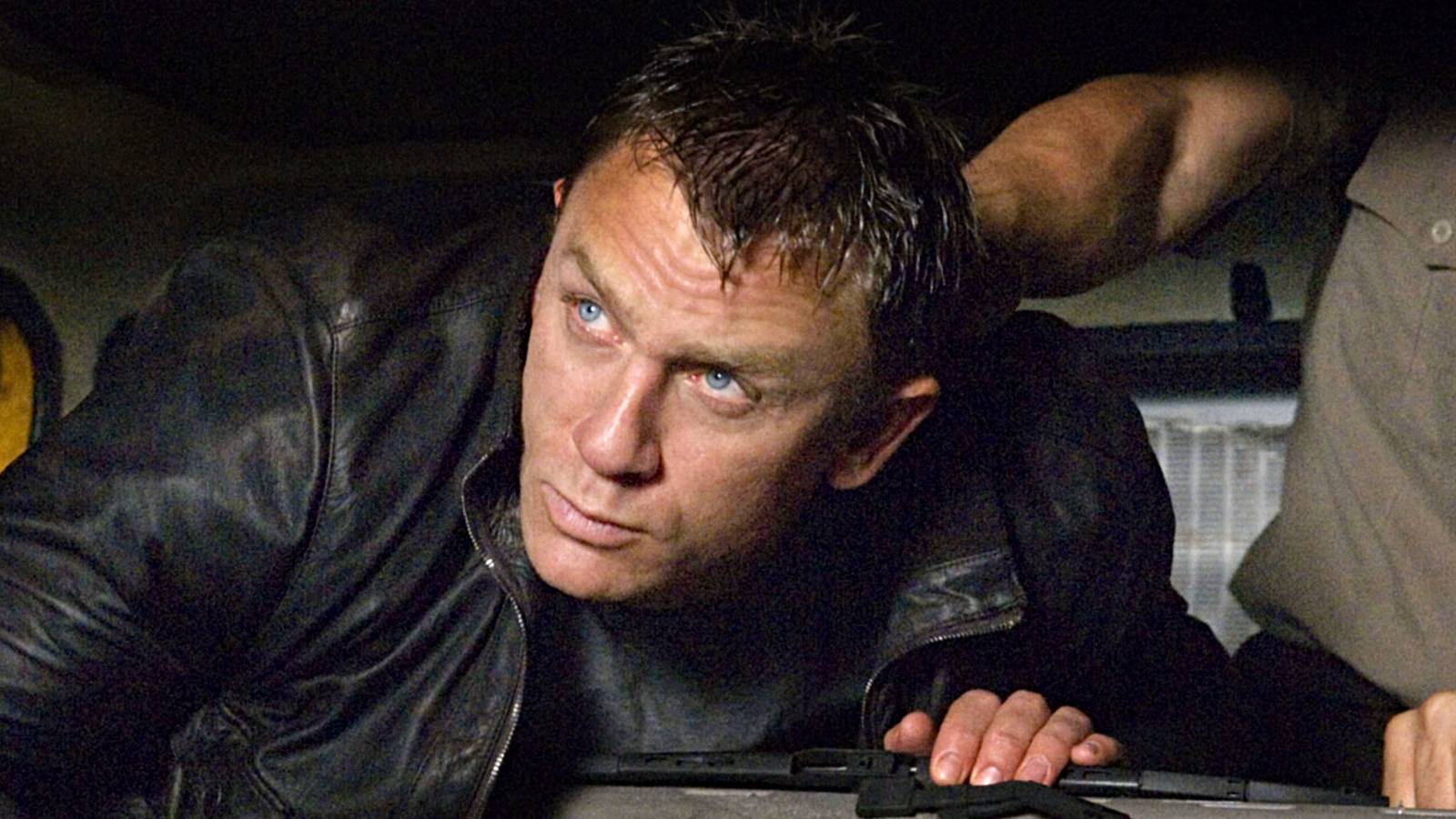
Image via Sony Pictures Releasing Published Oct 29, 2026, 7:04 AM EDT Ryan Heffernan is a Senior Writer at Collider. Storytelling has been one of his interests since an early age, with his appreciation for film and television becoming a particular interest of his during his teenage years. This passion saw Ryan graduate from the University of Canberra in 2020 with an Honours Degree in Film Production. In the years since, he has found freelance work as a videographer and editor in the Canberra region while also becoming entrenched in the city's film-making community. In addition to cinema and writing, Ryan's other major interest is sport, with him having a particular love for Australian Rules football, Formula 1, and cricket. He also has casual interests in reading, gaming, and history. Sign in to your Collider account Is there anything in cinema quite like a great thriller? An agonizing, high-octane treat of dread-filled excitement that ensnares you in the clutches of a morbid and malevolent story while extracting heart-stopping suspense from every sequence. It is truly one of the greatest experiences cinema can deliver, which the medium has been producing as far back as the 1930s. I am pleased to say movies from those early days right through to modern masterpieces fill this list. However, as someone who was born in the late ‘90s, I haven’t had the privilege of watching many of these movies with completely fresh eyes. An air of greatness hung over many of these films when I first watched them, and the mastery of their opening minutes assured me of their reputations rather than opening my eyes entirely. Still, I would emphasize that the introductions to these movies engulfed me quite entirely, and they are instrumental in making these pictures some of the best of all time from any genre. 'Seven' (1995) Image via New Line Cinema I find there is a sickly, physical tension to Seven that imposes itself from the outset to make it not only a masterpiece of cinematic suspense, but one of the most squeamish and disconcerting movies of all time as well. Many things help achieve this hypnotic revulsion in the opening minutes, from the early murder scene to Detective Somerset’s (Morgan Freeman) gentle apathy, the suffocating urban cityscape, and even the grimy greens of the color palette, but I think the most impactful part of Seven’s opening minutes is the credits sequence. Designed by Kyle Cooper, the credits are a haunting prelude. With a remix version of Nine Inch Nails’ “Closer” playing over the fractured, unsettling soundscape, the sequence operates as a window into the killer’s mind, a tactile assembly of disturbing scrapbooks and morbid obsessions that is the epitome of unhinged evil. Followed closely by the infamous “Gluttony” crime scene, Seven opens with bold conviction that proves the film that follows will not be for the faint of heart. True to David Fincher’s fine balance of distress and desire, it almost dares you to keep going, taunting you to see how you handle the horrors that follow. 'Drive' (2011) Image via FilmDistrict As someone who adores cinema for its storytelling, I find myself typically favoring substance over style — but there are exceptions. This isn’t to say that Drive doesn’t have a compelling story, but as far as its absorbing opening 10 minutes go, it is the crime thriller’s aesthetic, editing, sparse sound design, and shot selection that really caught my attention. The sequence is simple: Ryan Gosling’s unnamed protagonist helps two thieves evade police as their getaway driver. What could easily have been a high-intensity car chase is instead presented as a heart-stopping slow-burn of timing and navigation as the driver listens to his police radio to avoid suspicion and flees when officers are on to him. Interestingly, the camera perspective never leaves the inside of the vehicle, creating an intimate tension that is fiendishly engrossing. That unrelenting suspense then bleeds into what is one of the best opening credits sequences of all time, with Kavinsky's synth-infused "Nightcall" embedding viewers in neo-noir richness. 'Double Indemnity' (1944) Image via Paramount Pictures I think it would be disingenuous to discuss great thriller cinema without acknowledging the power and influence of classic film noir. The genre is renowned for its slow-burn tension, meaning many of its most defining movies start softly and gradually build into their suspense. There are exceptions, though. Sunset Boulevard springs to mind, as do neo-noir gems like Chinatown, but I view Double Indemnity as having the greatest opening in film noir history. It homes in on the genre’s penchant for fatalism, introducing viewers to a gun-shot Walter Neff (Fred MacMurray) as he struggles into his office and begins recording a confession of his involvement in an insurance fraud case involving conspiracy, desire, and murder. It then bleeds into Neff’s first meeting with Phyllis Dietrichson (Barbara Stanwyck), who entices Neff to aid her in killing her husband and cashing in the claim. I was struck by the way its non-linear structure evokes a sense of wicked intrigue, hooking you in with a fiery start and only growing more twisted and tumultuous as it unfurls. 'The Dark Knight' (2008) Image via Warner Bros. Pictures I don’t know if there is a certain favoritism that comes from being lucky enough to watch a director’s filmography in real time— as opposed to watching the films of the legends of yesteryear in obsessive clumps. Even if that is a factor, I still feel as though Christopher Nolan is one of cinema’s all-time greats. I’ve always been amazed at his ability to open movies, but his magnum opus in this regard is undoubtedly The Dark Knight. The superhero sequel famously starts with the bank heist, following several masked armed robbers as they progress through a bank’s security systems while getting rid of each other. It imposes a sense of callous criminality in Gotham City post-Batman’s (Christian Bale) emergence, spearheaded by the calculated chaos of the Joker (Heath Ledger). The Dark Knight instills a sense of dread and danger with its opening scene. It was an almighty task for the movie to live up to that opening, but Nolan executes it magnificently, making for one of cinema’s best, most energizing action-thrillers. 'Children of Men' (2006) Image via Universal Pictures Children of Men is one of the few films on this list I was fortunate enough to see without much sense of its acclaim or distinction. Set in a hopeless dystopian London where humanity has lost the ability to procreate, its opening scene is an exemplary spectacle of worldbuilding and filmmaking. Director Alfonso Cuarón immerses viewers in a crumbling civilization with a newsreader speaking to a lengthy border blockade, the government's draconian deportation policy, and the shocking news that the youngest person in the world has been killed at 18. That’s when the first shot appears: a crowd of despondent people standing idly before a café television in numb disbelief. The one long shot continues to see an unaffected Theo (Clive Owen) purchase his coffee and leave only moments before the café is bombed. It is a jolting opening sequence that takes just two minutes to make a fierce impression on the audience. The grueling and lived-in worldbuilding, the cold dystopian hostility of the setting, the introduction of Theo as an apathetic standout from society, and even the bold one-take approach—which becomes a defining feature of the film—immediately hooked me. 'Jaws' (1975) Image via Universal Pictures To be fair, Jaws may err more on the side of horror than thriller if we’re to be pedantic, but I’ll never pass up an opportunity to write about Steven Spielberg’s groundbreaking blockbuster triumph. While describing the movie as "fun" might be a step too far, I’ve often found that Jaws does epitomize monster movie mayhem at its most entertaining. It achieves this success through sharp plotting, a really smart midpoint, and deeply relatable lead characters working to achieve a clear goal (kill the shark). Like many horror/thriller movies, the opening sequence depicts the first kill with a teenage girl charging into the ocean where she is attacked by the shark, with John Williams’ iconic score and invasive POV shots inspiring a primal fear in viewers. After that visceral fright, the movie dives into Chief Brody’s (Roy Scheider) daily life as a police officer in the quiet holiday town of Amity Island. The juxtaposition of the shark’s natural brutality and Brody’s quirky community charm establishes the stakes of the entire movie in five minutes. 'Casino Royale' (2006) Image via Sony Pictures Releasing I am quite a big admirer of the James Bond franchise. Had you told me that would be the case when I was introduced to the spy saga with 2002’s Die Another Day, a much younger me probably would have questioned your sanity (or mine in the future). Casino Royale was my second Bond movie, and it is safe to say it made an impression on me from the get-go. While I wasn’t old enough to appreciate how revolutionary it was on first viewing, I felt the action grit of the black-and-white opening sequence quite viscerally, and the ensuing parkour chase through the streets of Madagascar still enthralls me today as it did when I was a kid. My appreciation for Daniel Craig's 007 debut has only grown over time. While I used to watch and eagerly anticipate the action sequences, I now have much respect for its sharp plotting, character dynamics, and how it reshaped what Bond could be. This refined appreciation particularly extends to its opening sequence, which is incredibly brave to strip Bond of much of the excessive, winking bravado that defined past depictions in favor of a depth and complexity that make Craig's portrayal equal in brilliance to Sean Connery's. Collider Exclusive · James Bond Personality Quiz Which James Bond Actor Are You Most Like? Connery · Moore · Dalton · Brosnan · Lazenby · Craig Six actors. Six completely different visions of the same man — dangerous, charming, complicated, and almost certainly wearing a very good suit. Only one of them shares your particular way of moving through the world. Eight questions will figure out which Bond you really are. 🏴Connery 😄Moore 🎭Dalton ✨Brosnan 🤵Lazenby 💠Craig FIND YOUR BOND → 01 How do you carry yourself when you walk into a room? Bond is always the most interesting person in the room. The question is how he makes you feel it. AWith absolute authority — I don't announce myself. I simply make everyone aware that I've arrived. BWith a raised eyebrow and a ready quip — I'd rather disarm a room than dominate it. CWith focused intensity — I'm taking everything in, and people can tell. DWith polish and ease — I look like I belong everywhere, because I've decided I do. EWith quiet confidence — I'm still figuring out my place, but I carry myself as if I already know it. FWith guarded stillness — I notice everything and give nothing away until I choose to. NEXT QUESTION → 02 How do you handle a dangerous situation? Every Bond faces it differently. What does your version look like? AWith dangerous calm — I've been here before, and the threat already knows it's made a mistake. BWith improvisation and a degree of theatrical flair — tension should never be wasted. CHead-on and without hesitation — I don't need gadgets. I have training, and I use it. DWith the right tool for the job — I came prepared, and preparation is its own form of confidence. EInstinctively — I react faster than I think, and it usually works out. FWith controlled brutality — I don't enjoy it, but I don't flinch from what the moment requires. NEXT QUESTION → 03 How do you charm someone you need on your side? Bond always gets what he needs. The method varies considerably. AI make them feel like the most interesting person in the room — for exactly as long as I need them to be. BI make them laugh — a shared laugh is the fastest way to make someone trust you. CI'm direct and honest — I tell them what I need and why. Manipulation wastes time. DWith surface perfection — the right words, the right smile, deployed with enough precision to look effortless. EBy being present and genuine — I'm still developing my technique, but sincerity covers a lot of ground. FReluctantly and sparingly — I'd rather earn trust through actions than manufacture it through charm. NEXT QUESTION → 04 How do you handle your emotions on the job? Every Bond deals with this differently. Most of them not particularly well. AI suppress them completely — detachment is a professional requirement, not a personal failing. BI deflect with humour — a well-timed joke is the best defence against genuine feeling. CI let them show — I'm not ashamed of feeling things, and I think pretending not to is its own kind of weakness. DI compartmentalise with precision — everything in its place, nothing bleeding into the mission. EWith difficulty — I haven't quite worked out the system yet, and sometimes it shows. FBy burying them — deeply, imperfectly, in ways that eventually cost me something important. NEXT QUESTION → 05 How would your colleagues describe your working style? MI6 has opinions about all of its 00s. What are theirs about you? AEffective and uncompromising — results-focused to the point where the methods occasionally become a concern. BReliably brilliant in the field, occasionally exasperating in the briefing room. CPrincipled to a fault — they'd rather do it right than do it fast, and they'll tell you so. DPolished, capable, and slightly too good at making it look easy. ERaw potential — still developing, but there's something there that's hard to teach. FA weapon. Pointed at problems, usually effective, occasionally unpredictable. NEXT QUESTION → 06 How do you feel about operating within the rules? The licence to kill comes with terms and conditions. Not everyone reads them. ARules are for people who haven't earned the judgement to know when to break them. BI follow them in spirit and bend them in practice — the important thing is the outcome. CI take them seriously — there are things I won't do regardless of what the mission requires. DI work within them effectively and creatively — the system has its uses if you know how to navigate it. EI'm still working out where my lines are — the job has a way of moving them on you. FI follow orders until I decide the order is wrong. Then I act on my own judgement and accept the consequences. NEXT QUESTION → 07 What is your relationship with love? Every Bond has a different answer. None of them have found it easy. AA liability I've learned to manage — I don't let it interfere with the work, and I try not to examine why. BA pleasure I take seriously in the moment, lightly in the long term, and honestly in between. CSomething I want genuinely — and struggle to reconcile with the life I've chosen. DPart of the performance — I'm charming, and I enjoy it, but I keep the door to anything deeper firmly closed. ESomething that surprised me — I found it when I wasn't looking and it changed everything, briefly. FA wound I carry — something happened, and I haven't fully processed what it means for everything since. NEXT QUESTION → 08 When the mission is over, how do you want to be remembered? The name is Bond. The rest is entirely up to the man behind it. AAs the original — the one who defined what this could be before anyone else knew what it was. BAs someone who made it enjoyable — who understood that entertainment is its own kind of excellence. CAs someone who took it seriously — who refused to coast and pushed harder than the role required. DAs the complete package — who had the looks, the timing, and the ability to make it all seem inevitable. EAs an underrated chapter — one that deserved more time and more credit than it received. FAs the one who made it human — who found the cost beneath the cool and didn't look away from it. REVEAL MY BOND → The Name Has Been Determined Your Bond Is…Six actors. One role. Your answers point to the Bond who shares your presence, your method, and your particular way of carrying the weight of being the most dangerous person in the room. Sean ConneryYou are the original — and you carry that fact without needing to announce it. There is an authority in the way you occupy a room that others spend careers trying to replicate. You don't explain yourself, justify yourself, or soften yourself for anyone's comfort. The confidence is structural, not performed. Connery's Bond established everything — the tone, the danger, the cool — because Connery himself had the innate presence to make something that had never existed feel inevitable. You share that quality: the sense that you were always going to end up exactly here, doing exactly this. The name is Bond. In your case, it always was. Roger MooreYou understand something that more serious people miss: that wit is its own form of intelligence, and that making people laugh is not a retreat from danger but a way of mastering it. Moore's Bond is underrated precisely because the effortlessness looks easy — and effortlessness is the hardest thing to manufacture. You have the same quality: a lightness that disarms people before they realise how sharp you actually are. The raised eyebrow, the perfectly timed quip, the refusal to be rattled — these are not affectations. They are a philosophy about how to move through a world that would like to take itself too seriously. You have never let it. Timothy DaltonYou took the role seriously when everyone wanted you to coast — and that refusal to take the easy version of anything is the most defining thing about you. Dalton's Bond has genuine moral weight: he feels the cost of what he does, he has lines he won't cross, and he is not interested in the version of himself that pretends otherwise. You share that intensity. You push harder than the situation technically requires, because you have a standard and you hold yourself to it. He was ahead of his time — the Bond the franchise wasn't quite ready for yet, arriving exactly when he was meant to. You know what that feels like. Pierce BrosnanYou are the complete package — and you know it, which is part of what makes you so effective and occasionally so infuriating to the people around you. Brosnan arrived at the role looking exactly like Bond was supposed to look, and he delivered on that expectation with a professionalism that made it seem effortless. You have the same quality: a smooth competence, a charm that operates like a precision instrument, and the ability to make even difficult things look like they weren't. His era was the most commercially successful in the franchise's history. There is a reason for that. The reason is that some people simply fit their moment perfectly. You are one of those people. George LazenbyYou stepped into something enormous with less preparation than anyone around you thought was sufficient — and you delivered something genuine anyway, which is the more impressive achievement. Lazenby's single outing is, by many measures, one of the finest Bond films ever made — and he is not a small part of why. You share his quality of raw authenticity: less polished than the alternatives, more honest for it, capable of something real that technique alone can't produce. He was underestimated, and then he wasn't, and then history caught up with him. You are the kind of person history catches up with. Give it time. Daniel CraigYou stripped everything back and found what was underneath — and what was underneath was harder, more honest, and more human than anyone expected. Craig's Bond is the franchise's most psychologically complete: a man doing a brutal job, carrying its costs imperfectly, capable of love and loss in ways that can't be dismissed. You share that depth. You don't hide behind the role or the charm or the suit — you let the work show what it actually costs. He was controversial from the moment he was announced and definitive by the time he was finished. The sceptics became the believers. That arc — of being underestimated and then undeniable — is one you know intimately. ↻ RETAKE THE QUIZ 'Memories of Murder' (2003) Image via CJ Entertainment I have found that South Korean cinema has a beautiful ability to combine completely contradictory tones and not only make it work, but make it feel as though every shift is working towards the same end goal. Bong Joon Ho is the master of this, in my opinion, and Memories of Murder showcases his ability to juggle contrasting ideas, tones, and styles from the opening minutes, which serve as an eerie and hypnotic immersion into the serial killer thriller. The opening sequence alone is enough to hook viewers in, with kids playing innocently and soft music chiming as Detective Park Doo-Man (Song Kang-Ho) investigates a scene in a remote farming province where a young woman’s body has been found. It then transitions to the police station, with Bong using comedy to illustrate the inefficiency of the department and Doo-man’s aggressive interrogation techniques. As someone attuned to Western storytelling, the mix of black comedy and slapstick with dread-filled tension, character depth, and mystery intrigue was invigorating. 'M' (1931) Image via Vereinigte Star-Film GmbH Despite its legacy and reputation, I went into M with no more information than the blurb on the streaming service provided when I first watched it. Sure, I knew it was an acclaimed Fritz Lang classic, featured a noteworthy performance from Peter Lorre, and revolved around a city pushed to desperate lengths by an at-large child murderer. However, I didn’t truly know what to expect from a crime thriller that was released as far back as 1931. My curiosity immediately turned to awe with the movie’s opening, which effectively sees the killer, Lorre’s Hans Beckert, swipe another victim from directly under our noses. The vibe of happy children playing in the streets is shattered by an ominous, predatory shadow. A mother's unanswered call, a rolling ball, and a balloon caught in overhead wiring are enough to signal, with piercing implication, that the killer has struck again. What I most admire about M is how it festers in the imagination, a quality it impresses upon the viewer from the beginning, and a quality that has made it an enduring, arduous masterpiece of the genre. 'No Country for Old Men' (2007) Image via Miramax Films Given the only Coen Brothers film I had seen prior was Burn After Reading, it is safe to say I went into No Country for Old Men with very little idea of what I was getting myself into. Just 10 minutes in, I had some idea, and to say I was impressed would be an understatement. The thing I love so much about the opening is that, from the second Tommy Lee Jones' narration begins over shots of rural Texas' beautiful yet hostile scenery, you immediately grasp the tension the movie is going to exude. It's a bleak and bruising thriller, but full of philosophy and thematic resonance. The other thing No Country for Old Men establishes from the outset is that it is going to be as fast-paced as it is brutal. Within 10 minutes, Anton Chigurh (Javier Bardem) has been introduced as a menacing, methodical psychopath, and Llewellyn Moss (Josh Brolin) has stumbled upon the aftermath of a cartel shootout. I love how both characters are defined by their actions, with the movie being perhaps cinema's greatest ever masterclass in show-don't-tell screenwriting.
10 Thrillers That I Knew Would Be Masterpieces From the First 10 Minutes
Full Article
Original Source
Read the full article at Collider →KhanList aggregates and links to publicly available news content. We do not host full articles from third-party sources. Always verify important information with original sources.