
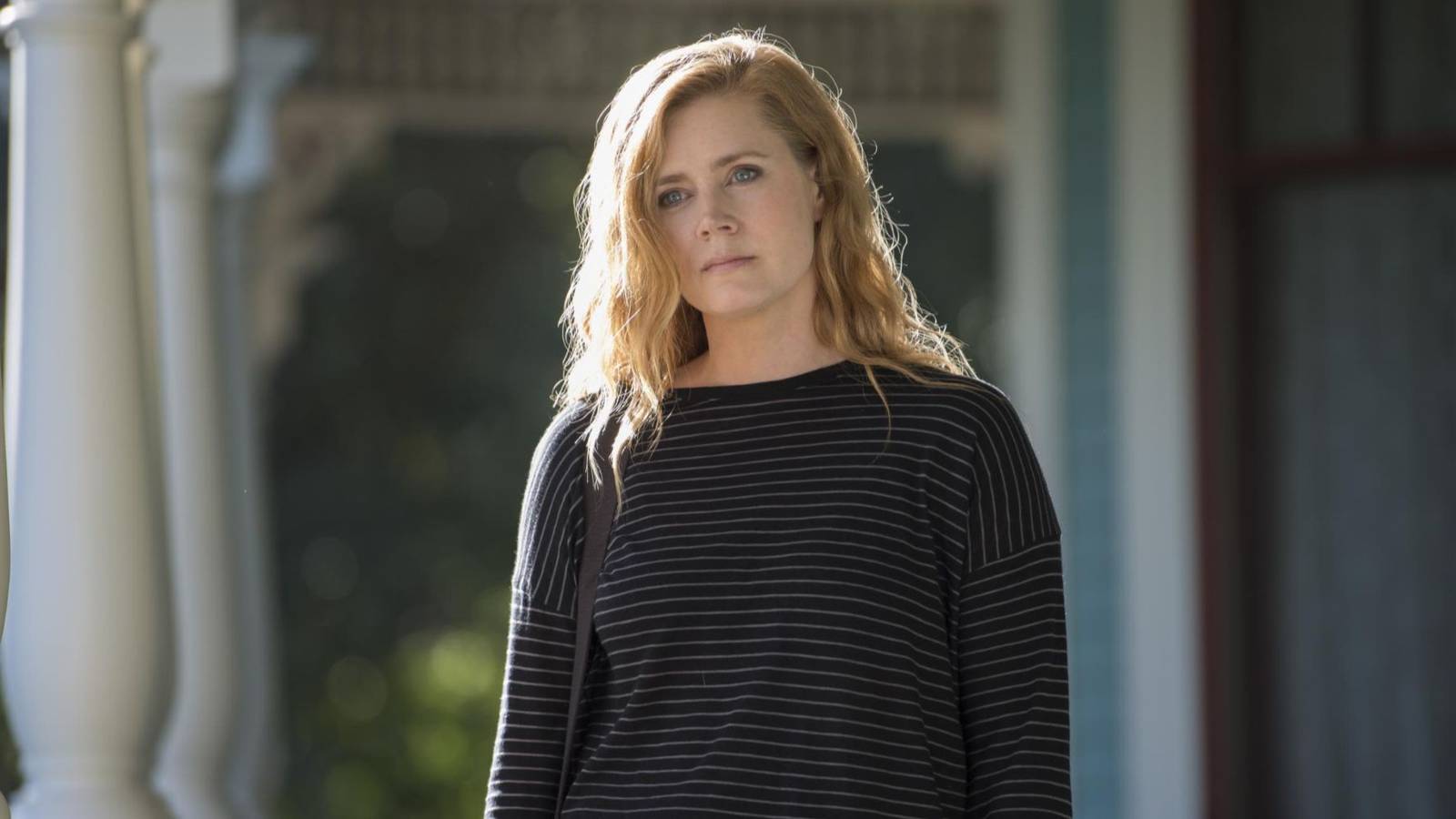
Image via HBO Published Aug 28, 2026, 3:08 PM EDT Ryan Heffernan is a Senior Writer at Collider. Storytelling has been one of his interests since an early age, with his appreciation for film and television becoming a particular interest of his during his teenage years. This passion saw Ryan graduate from the University of Canberra in 2020 with an Honours Degree in Film Production. In the years since, he has found freelance work as a videographer and editor in the Canberra region while also becoming entrenched in the city's film-making community. In addition to cinema and writing, Ryan's other major interest is sport, with him having a particular love for Australian Rules football, Formula 1, and cricket. He also has casual interests in reading, gaming, and history. Sign in to your Collider account Producing a faultless finale is no easy feat. It needs to deliver an emotionally rewarding and powerful payoff that honors central themes and gives major characters appropriate resolutions while still offering something in the way of a surprise. This feat is arguably even more difficult for thriller series, with the innate nature of the genre—to raise questions and steer the story in smart and unpredictable directions—having to subside as narrative threads are closed, mysteries are explained, and engrossing, enigmatic character arcs are concluded. While it is difficult to do well, the thriller series that have perfected their finales have delivered not only rewarding conclusions to universally adored shows, but some of the greatest ever stand-alone episodes of all time as well. From mystery miniseries that perfect the balance between shocking twists and dramatic finality, to long-running titles that bring about the perfect ending to their characters’ journeys, these thriller series finales are among the greatest television has seen. 10 'Devs' (2021) Image via FX Created by Alex Garland, Devs is one of the more underrated miniseries of the decade so far, with its rich marriage of slow-burn mystery suspense, icy dystopian sci-fi ideas, and simmering suspense making for an enthralling gem of small-screen thrills. Unfurling over the course of eight episodes, it follows software engineer Lily Chan (Sonoya Mizuno) as she begins investigating the company she works for when her boyfriend and colleague kills himself on the first day of his promotion to the “Devs” team. The series navigates enigmatic and meticulous mystery with aplomb, but arguably its greatest triumph is its finale. Balancing subversive storytelling decisions with poignant character drama and resonant thematic ideas revolving around fatalism and humanity’s relationship with technology, Devs ends on a note that is, above all else, fiercely compelling. While the think-piece miniseries has endured as an underappreciated gem, the way it repurposes techno-thriller coldness as a profound examination of grief, philosophy, and mortality is only growing more relevant with each passing year. 9 'Ozark' (2017–2022) Image via Netflix From its very first episode, Ozark delivers a frenetic descent into the ultra-violent and volatile world of international drug crime that ties much of its suspense to the relatable humanity and desperation of the Byrde family. The four-season Netflix original series follows financial advisor Marty (Jason Bateman) and his family as they are forced to relocate to the Missouri Ozarks to oversee a money laundering operation for a Mexican drug cartel. Despite their best efforts to remain detached, the Byrde family is gradually pulled deeper into the cartel’s structure. By the time Season 4 begins, the Byrdes are entangled in the very fabric of the crime operation while fending off probes from American law enforcement officials. The finale executes a phenomenal balancing act of survival, compromise, corruption, and acceptance. The Byrde family remains intact, but their hopes of one day outlasting their criminal servitude are proven to be futile. Fierce betrayals, shocking deaths, and a damning final scene see Ozark’s finale land as a powerful and poignant testament to the adage that crime doesn’t pay. 8 'Orphan Black' (2013–2017) Image via BBC America While it had a noteworthy cult following at the time, Orphan Black has mysteriously faded from public consciousness in the years since its finale despite the fact that it ends in sensational fashion. The high-concept sci-fi thriller unfolds as con artist Sarah Manning (Tatiana Maslany) assumes the identity of her doppelgänger following her suicide, only to unearth a life-altering truth that she is but one of many clones and that she and her “sisters” are being hunted down. The series as a whole is defined by its smart writing and Maslany’s exceptional performance as several distinct and different characters. Both of these factors come to the fore in the series finale, which adopts a warmer and more gentle tone as it operates as an epilogue of sorts that depicts the fates Sarah and her fellow clones embark on. The finale beautifully anchors Orphan Black’s cerebral story in grounded ideas of nature vs. nurture, found family, and personal freedom to stand as one of the most rewarding TV conclusions of the 2010s. 7 'The Penguin' (2024) Image via HBO Released as a spin-off from 2022’s The Batman, The Penguin strikes an engrossing marriage between the gothic superhero allure of Gotham City’s darkest corners and the moral ferocity of crime drama. Set in the aftermath of the former kingpin’s death and the flooding of the city, it follows the rise to power of Oswald Cobb (Colin Farrell), a ruthless and amoral gangster who sees an opportunity to become the head of Gotham’s criminal infrastructure. While all eight episodes of the miniseries are astonishing, the finale makes itself distinct through its uncompromising villainy. Cobb is bereft of anti-hero sympathies as he makes vile and irredeemable decisions to further his own ambition. “A Great or Little Thing” is a procession of stark betrayals, vicious self-interest, and terrifying triumphs that sees The Penguin end on a bitter though brilliant note of pure evil that, through razor-sharp writing and Farrell’s performance, refuses to soften Cobb’s depraved nature. 6 'Mr. Robot' (2015–2019) Image via USA Network It is difficult to think of a series of any genre that has been as bold with its final episodes as Mr. Robot. The ceaselessly brilliant high-concept techno-thriller spends four seasons following Elliot Alderson (Rami Malek), a cybersecurity expert and talented hacker with debilitating social anxiety, as he is recruited by fsociety, a hacktivist movement intent on attacking E Corp to encrypt all consumer debt and level the economic playing field between rich and poor. Throughout the entire series, the unreliable nature of Elliot’s psyche is a constant source of tension, and it delivers the greatest twist of all in the two-part finale, which reconfigures the show as a whole from being a thrilling dystopian epic into a piercing meditation on trauma, dissociation, and the fragility of the mind. What could so easily have been a series-ruining twist is instead a stunning narrative shift that reorientates the stakes by pivoting the focus from society at large to Elliot himself with profound intimacy and impact. Collider Exclusive · Sci-Fi Survival Quiz Which Sci-Fi World Would You Survive? The Matrix · Mad Max · Blade Runner · Dune · Star Wars Five universes. Five completely different ways the future went wrong — or sideways, or up in flames. Only one of them is the world your instincts were built for. Eight questions will figure out which dystopia, galaxy, or desert wasteland you'd actually make it out of alive. 💊The Matrix 🔥Mad Max 🌧️Blade Runner 🏜️Dune 🚀Star Wars TEST YOUR SURVIVAL → 01 You sense something is deeply wrong with the world around you. What do you do? The first instinct is often the truest one. APull on every thread until I understand the system — then figure out how to break it. BStop asking questions and start stockpiling — food, fuel, weapons. Questions don't keep you alive. CKeep my head down, observe carefully, and trust no one until I know who's pulling the strings. DStudy the patterns. Every system has a rhythm — learn it, and you learn how to survive it. EFind the people fighting back and join them. You can't fix a broken galaxy alone. NEXT QUESTION → 02 In a world of scarcity, what resource do you guard most fiercely? What we protect reveals what we believe survival actually requires. AKnowledge. If you understand the system, you don't need resources — you can generate them. BFuel. Everything else — movement, power, escape — runs on it. CTrust. In a world of fakes and informants, a truly reliable ally is rarer than any commodity. DWater. And after water, information — the two things empires are truly built on. EShips and credits. The galaxy is big — you survive it by being able to move through it freely. NEXT QUESTION → 03 What kind of threat keeps you up at night? Fear is useful data — if you're honest about what you're actually afraid of. AThat reality itself is a lie — that everything I experience has been constructed to keep me compliant. BA raid. No warning, no mercy — just the roar of engines and then nothing left. CBeing identified. Once someone with power decides you're a problem, you're already out of time. DBeing outmanoeuvred — losing a political game I didn't even know I was playing. EThe Empire tightening its grip until there's nowhere left to run. NEXT QUESTION → 04 How do you deal with authority you don't trust? Every dystopia has a power structure. Your approach to it determines everything. ASubvert it from the inside — learn its rules well enough to weaponise them against it. BIgnore it and stay out of its reach. The further from any power structure, the better. CAppear to comply while doing exactly what I need to do. Visibility is the enemy. DManoeuvre within it carefully. You can't beat a system you refuse to understand. EResist openly when I have to. Some things are worth the risk of being seen. NEXT QUESTION → 05 Which environment could you actually endure long-term? Survival isn't just tactical — it's physical, psychological, and very much about where you are. AUnderground bunkers and server rooms — cramped, artificial, but with access to everything that matters. BOpen wasteland — brutal sun, no shelter, constant movement. At least the threat is honest. CA dense, rain-soaked city where you can disappear into the crowd and nobody asks questions. DMerciless desert — extreme heat, no water, and something enormous living beneath the sand. EThe fringe — backwater planets and busy spaceports where the Empire's attention rarely reaches. NEXT QUESTION → 06 Who do you want in your corner when things fall apart? The company you keep is the clearest signal of who you actually are. AA tight crew of believers who've seen behind the curtain and have nothing left to lose. BOne or two people I'd trust with my life. Any more than that and someone talks. CNobody, ideally. Alliances are liabilities. I work alone unless I have no choice. DA community bound by shared hardship and mutual survival — people who need each other to last. EA ragtag team with wildly different skills and total commitment when it counts. NEXT QUESTION → 07 Where do you draw the line — if you draw one at all? Every survivor eventually faces a moment that tests what they're actually made of. AI won't harm the innocent — even the ones who'd report me without hesitation. BI do what I have to to protect the people I've chosen. Everything else is negotiable. CThe line shifts depending on who's asking and what's at stake. DI draw a long-term line — nothing that compromises my people's future, even if it'd help now. ESome lines, once crossed, can't be uncrossed. I know which ones they are. NEXT QUESTION → 08 What would actually make survival worth it? Staying alive is one thing. Having a reason to is another. AWaking others up — dismantling the illusion so no one else has to live inside it. BFinding somewhere — or someone — worth protecting. A reason to keep moving. CAnswers. Understanding what I am, what any of this means, before time runs out. DLegacy — shaping the future in a way that outlasts me by generations. EFreedom — for myself, for others, for every world still living under someone else's boot. REVEAL MY WORLD → Your Fate Has Been Calculated You'd Survive In…Your answers point to the world your instincts were built for. This is the universe your temperament, your survival instincts, and your particular brand of stubbornness were made for. The MatrixYou took the red pill a long time ago — probably before anyone offered it to you. You're a systems thinker who can't help but notice the seams in things. You're drawn to understanding how the system works before figuring out how to break it. You'd find the Resistance, or it would find you — your instinct for spotting constructed realities is the machines' worst nightmare. You function best when you have access to information and the freedom to act on it. The Matrix built an airtight prison. You'd be the one probing the walls for the door. Mad MaxThe wasteland doesn't reward the clever or the well-connected — it rewards those who are hard to kill and harder to break. That's you. You don't need comfort, community, or a cause larger than the next horizon. You need a vehicle, a clear threat, and enough fuel to outrun it — and you're good at all three. You are unsentimental enough to survive that world, and decent enough — just barely — to be something more than another raider. In the wasteland, that distinction is everything. Blade RunnerYou'd survive here because you know how to exist in moral grey areas without losing yourself completely. You read people accurately, keep your circle small, and ask the questions others prefer not to answer. In a city where humanity is a legal designation rather than a feeling, you hold onto something that keeps you functional. You're not a hero. But you're not lost, either. In Blade Runner's world, that distinction is everything. DuneArrakis is the most hostile environment in the known universe — and you are precisely the kind of person it rewards. Patience, discipline, and political awareness are your core strengths — and on Arrakis, they're survival tools. You understand that the long game matters more than any single victory. Others come to Dune and are consumed by it. You'd learn its logic and earn its respect. In time, you wouldn't just survive Arrakis — you'd begin to reshape it. Star WarsThe galaxy far, far away is vast, loud, and in a constant state of violent political upheaval — and you wouldn't have it any other way. You find meaning in being part of something larger than yourself — a cause, a crew, a rebellion. You'd gravitate toward the Rebellion, or the fringes, or whatever pocket of the galaxy still believes the Empire's grip can be broken. You fight — not because you have to, but because standing aside isn't something you're capable of. In Star Wars, that willingness is what makes all the difference. ↻ RETAKE THE QUIZ 5 'Sharp Objects' (2018) Image via HBO Adapted from Gillian Flynn’s debut novel, Sharp Objects dazzles as an atmospherically ensnaring marriage of methodical crime mystery tension and viscerally eerie Southern Gothic allure. Amy Adams stars as Camille Preaker, a St. Louis crime reporter who returns to her hometown after a stint in a psychiatric ward to investigate the murder of two young girls. In addition to trying to solve the horrific crime, Camille must also navigate the re-emerging demons of a complex past of abuse and trauma. All eight episodes of the miniseries prove themselves to be adept at delivering a shocking twist, but the finale elevates the unpredictable turns and psychological tension to a new level. Just when audiences think they are safe, the series delivers one of the most disturbing plot reveals in television history. Accompanied by its mastery of tone and the chilling glimpses of violence that interrupt the credits, Sharp Objects uses its finale to carve scars into viewers’ psyches without ever sacrificing its investment in issues of generational trauma and family dysfunction. 4 'The Shield' (2002–2008) Image via FX The 2000s mark an era of excellence for crime drama television, one that saw FX’s seven-part masterpiece The Shield fly under the radar as something of an underrated gem. Laced with an appetite for gritty, high-octane tension, it always flaunts a sense of thrilling edge as it follows the Strike Team, a corrupt police unit operating in an L.A. district plagued by gang violence. It is a series of confronting morality, raw characters, and shocking twists, and all those storytelling qualities are defining reasons why its finale is so brilliant. Titled “Family Meeting,” The Shield’s swan song caps off what is an outstanding final season of consequences and conclusions, with every character facing a sense of poetic justice for their unethical decisions. Notions of loyalty, honor, and strength are shattered as characters resort to desperate lengths to evade punishment, be it the betrayal of their colleagues or tragic outbursts of devastating violence. 3 'Dark' (2017–2020) Image via Netflix A German-language Netflix original series that became a landmark international success, Dark is a notable highlight of ambitious, genre-blending storytelling in the medium. It opens as the German town of Winden sees a sudden series of missing children’s cases, but it soon evolves into a manic time-travel thriller that sees the story unfold in multiple different timelines while a looming apocalyptic event draws ever nearer and, by season three, has come to fruition. Despite having such an expansive story in terms of both sheer narrative scale and an abundance of characters, Dark brings its story to a stunning close with immaculate screenwriting that ties the time-travel puzzle with closure and clarity while still finding the time to deliver emotionally gratifying and philosophically intriguing resolutions. It captures the scope and gravitas of cosmic sci-fi while reveling in the poignant intimacy of tragic romance, and yet it finds hope and catharsis with striking elegance. It is a masterclass in how to conclude an elaborate, high-concept thriller as well as one of the greatest series finales of all time. 2 'The Americans' (2013–2018) Image via FX Following Elisabeth (Keri Russell) and Philip Jennings (Matthew Rhys) as they pose as an ordinary family in 1980s Washington D.C. while carrying out assignments for the KGB, The Americans is the greatest spy thriller television has ever seen. Across its five seasons of relentless suspense, it finds a perfect balance between the innate tension of spycraft and a poignant, meditative drama as it explores the intricacies and unique nature of the Jennings’ marriage, and their struggle to raise their unsuspecting children in American society. The final few episodes present an engulfing culmination of the Jennings’ years of espionage. As the Cold War draws to an end, the Russian agents try to find a way to return to their homeland without alerting American authorities, but their endeavor exacts a heavy toll as their double life collapses and the family discovers they each want different things. In emphasizing the emotional beats, The Americans’ finale is one of devastating, perfectly written bittersweetness that revels in a melancholic air of sacrifice and survival. 1 'Breaking Bad' (2008–2013) Image via AMC Considered by many to be the greatest series of all time, Breaking Bad exudes perfection across every episode of its five-season run. Its ability to continuously escalate tension through Walter White’s (Bryan Cranston) steep moral decline as he goes from a suburban schoolteacher to an influential figure in the drug trade is paramount to this, especially as the criminal villain justifies his wickedness by attributing all his wrongdoing to helping his family. The finale, “Felina,” cuts through this. Transpiring months after Walter’s downfall, as he lives in squalor to evade the police while battling the return of his cancer, it sees him make a final round of goodbyes before rescuing Jesse (Aaron Paul) from captivity and sacrificing himself in the process. From his confession to Skylar (Anne Gunn) to his planning of the M60 in the trunk, and even to its unforgettable final moments bolstered by Badfinger's "Baby Blue," Breaking Bad’s conclusion is a masterclass in resolving a long-running series with purpose and meaning. Breaking Bad Release Date 2008 - 2013-00-00 Network AMC Showrunner Vince Gilligan
10 Thriller TV Shows With Perfect Finales, Ranked
Full Article
Original Source
Read the full article at Collider →KhanList aggregates and links to publicly available news content. We do not host full articles from third-party sources. Always verify important information with original sources.