
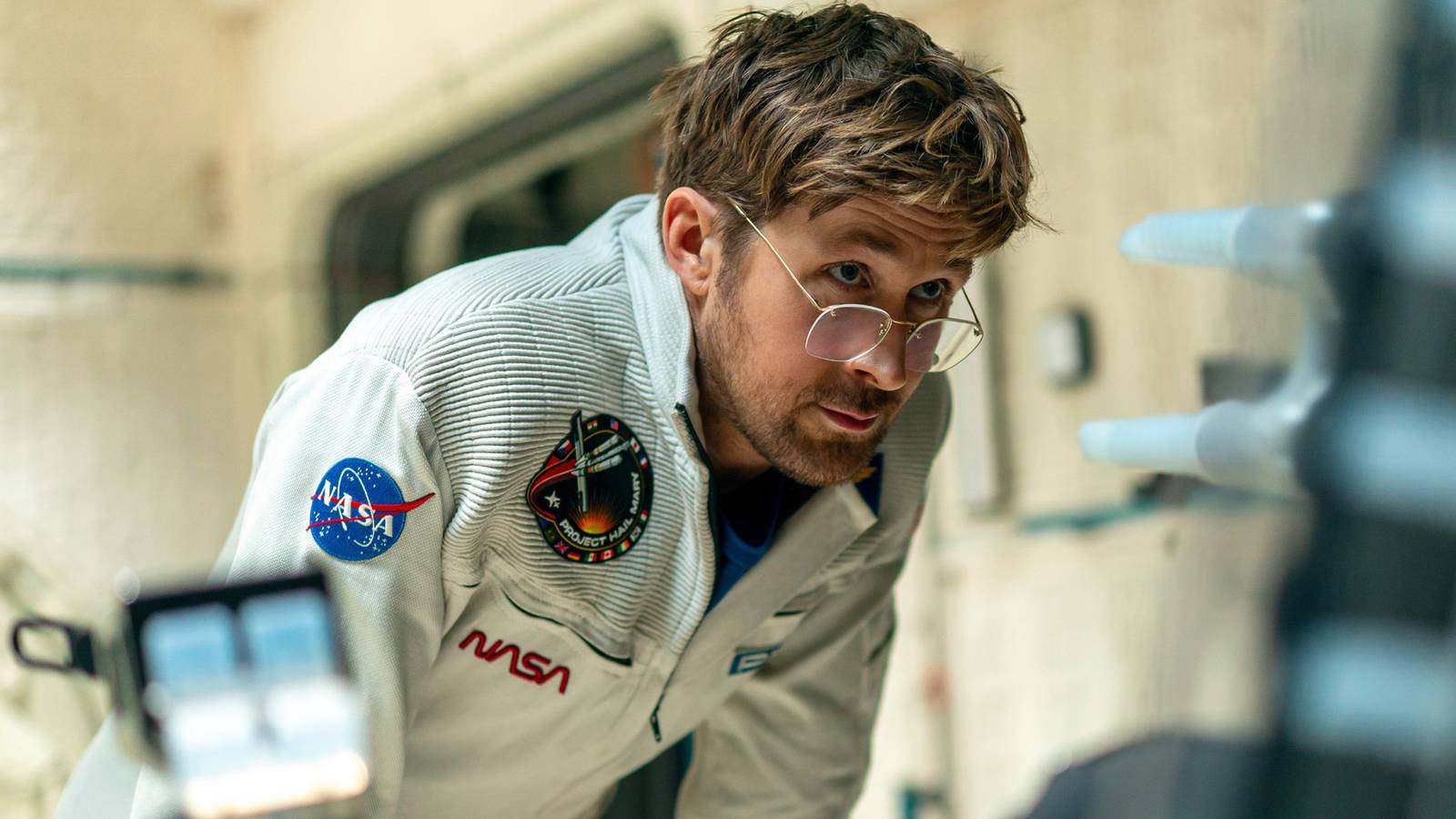
Image via Amazon MGM Studios Published Oct 8, 2026, 7:44 AM EDT Ryan Heffernan is a Senior Writer at Collider. Storytelling has been one of his interests since an early age, with his appreciation for film and television becoming a particular interest of his during his teenage years. This passion saw Ryan graduate from the University of Canberra in 2020 with an Honours Degree in Film Production. In the years since, he has found freelance work as a videographer and editor in the Canberra region while also becoming entrenched in the city's film-making community. In addition to cinema and writing, Ryan's other major interest is sport, with him having a particular love for Australian Rules football, Formula 1, and cricket. He also has casual interests in reading, gaming, and history. Sign in to your Collider account It’s hard to beat a great crowd-pleasing ending. Despite the genre’s reputation for bleak dystopian worlds and morbid stories of human ambition at its worst, science fiction cinema is rife with finales that exude a sense of fist-pumping glory. However, it is important to note that a movie’s conclusion doesn’t need to be a victory march of triumphant heroes and vanquished evil to be a crowd-pleaser, but it can inspire widespread applause through emotional depth and thematic richness as well. From the chest-beating bravura of action sci-fi spectacles that end on cathartic high notes to quieter, more restrained resolutions that speak to the gentle beauty of the human condition, the endings of these sci-fi sensations epitomize sci-fi at its evocative, crowd-pleasing best. The vast range of the genre is covered, with everything from family animation to bombastic blockbusters, cerebral thrillers, and even devastating dramas being represented. 'Edge of Tomorrow' (2014) Image via Warner Bros. A bombastic action blockbuster with brains to boot, Edge of Tomorrow still stands as an underrated gem of 2010s sci-fi. Tom Cruise is delightful in an against-type performance as Maj. Cage, a military public affairs officer sent against his will to the front lines to cover humanity’s offensive push on the “Mimics.” When he finds himself restarting the day of the assault every time he dies, he uses his unique ability to learn more about the enemy to land a truly devastating blow while being helped by the war hero Rita Vrataski (Emily Blunt). Brilliantly crafted, cleverly executed, and buoyed by outstanding large-scale action sequences and entertaining performances, Edge of Tomorrow is a beacon of crowd-pleasing purity, and it saves its best for last. Awakening to find that his attack on the Mimic hivemind leader has successfully eliminated the entire race, Cage travels to reunite with Rita, who, not being privy to the endless time-loop, has no idea who he is. Cage’s chuckle as the movie ends is a joyful resolution to what is one of the more buoyant and invigorating action flicks audiences have seen this century. 'Big Hero 6' (2014) Image via Walt Disney Studios Motion Pictures Children’s movies have a unique ability to tug on the heartstrings as they combine the endearing warmth of their animated beauty with important lessons of sacrifice and loss. Joyfully, Big Hero 6 says “important lessons of sacrifice and loss be damned,” in its final act, at least, as it instead delivers a winning triumph of heroism and friendship that rewards viewers for becoming emotionally invested in Hiro’s (Ryan Potter) bond with Baymax (Scott Adsit), an inflatable medical assistant robot. Following Hiro, Baymax, and their friends as they use their advanced knowledge of robotics to form a superhero team and bring an evil tech guru and corporate CEO to justice, the movie comes to an emotionally draining ending as Baymax sacrifices so that Hiro may live. With Hiro still reeling from his brother’s death, the loss of his friend is utterly devastating, but the movie wisely ends on a happy note as Hiro discovers Baymax’s healthcare chip, allowing him to rebuild his robot medic. Some may view it as a cop-out, but most of us simply smile as Hiro hugs his inflatable friend again moments before the credits roll. 'Everything Everywhere All at Once' (2022) Image via A24 A frenzied, frenetic adventure of multiversal mayhem, action carnage, and poignant family drama, Everything Everywhere All at Once tends to make viewers feel everything from inspired awe to somber, empathetic pity. However, the chaotic 139-minute journey does come to an uplifting conclusion after whisking viewers on a multiversal adventure. Evelyn (Michelle Yeoh) is an immigrant managing a struggling family business who must find ways to connect with versions of herself from alternate realities to prevent a mysterious villain from ending all existence. Between sex toy-touting martial arts fights and heartbreaking relationships between rocks, Everything Everywhere All at Once keeps viewers guessing. Its energized unpredictability was widely applauded, but its true genius resides in its ability to maintain a grounded emotional message. When Evelyn discovers her daughter, Joy (Stephanie Hsu), is the antagonist, she turns away from violence, instead using love, acceptance, and understanding to save her child. Complimented by gorgeous lines, the film ends as a rousing celebration of the random yet mundane nature of life. 'The Martian' (2015) Image via 20th Century Studios Directed by Ridley Scott and based on Andy Weir’s acclaimed novel, The Martian emerged in 2015 as a triumph for sci-fi fans who adore scientific realism and logical physics in their blockbuster bonanzas. When astronaut Mark Watney (Matt Damon) is stranded on Mars, he must utilize every little bit of scientific knowledge he has to survive while his NASA colleagues frantically plan a rescue mission. The movie values competent, intelligent heroes, an optimistic view of global unity, and emotionally charged high-stakes action sequences that elevate the heart rate something fierce. All of those qualities are on display in the final act as Watney launches into space, where he and the crew of Ares III are forced to execute dangerous and impromptu maneuvers to ensure the rescue effort is a success. The sequence is a masterclass in heart-pounding excitement, and the eruption of ecstasy from NASA and masses of onlookers the world over is truly felt by every member of the audience. 'WALL-E' (2008) Image via Pixar Animation Studios Another heartfelt gem of family animation, and a typically evocative masterpiece from Pixar Animation Studios, WALL-E deftly combines a beautifully realized story of love with a bleak view on what humanity is doing to the world. Set in a future where waste has made Earth inhospitable, it follows a lonely trash-compacting robot as he embarks on a journey into space in pursuit of EVE (Elissa Knight), a vegetation-evaluating robot. In his humble endeavor to be close to EVE, WALL-E (Ben Burtt) enacts change that alters the course of humanity. The movie coasts on both its thematic gravitas and infectious charm, and the emotionally enrapturing journey rewards audiences with a delightful feel-good finale. With WALL-E’s inadvertent heroism seeing mankind return to Earth, the film is a triumphant testament to the human spirit, a celebration of the drive to actually live life rather than merely survive, and a touching acknowledgment of the resilience of Mother Nature. Even the adorable end credits that illustrate humans and robots working in tandem to preserve the planet excel at delivering hopeful, crowd-pleasing charm. 'Arrival' (2016) Image via Paramount Pictures “Crowd-pleasing” doesn’t necessarily refer to a sense of unbridled cheer and triumphant fervor. On many occasions throughout cinematic history, the term has been used to describe beats of profound and complex humanity that deliver an emotionally enriching idea more so than an overly joyful one. That is the case with Arrival, which follows a career-best Amy Adams as linguist Louise Banks, who is enlisted by the US Army to establish a base of communications with an alien ship that has arrived on Earth. Throughout much of the movie, audiences are led to believe that Banks has suffered the loss of her daughter. The ending reveals that her child wasn’t born until after the events of the film and that she was able to perceive that future through communicating with the Heptapods. The ending soars on two fronts. Firstly, the intelligence of the twist never cheats the audience and actively rewards mindful viewers. Secondly, Louise’s decision to raise Hannah knowing she will die becomes less about grief and more about the empowering quality of love and the bravery to commit to it knowing pain is inevitable. Collider Exclusive · Sci-Fi Survival Quiz Which Sci-Fi World Would You Survive? The Matrix · Mad Max · Blade Runner · Dune · Star Wars Five universes. Five completely different ways the future went wrong — or sideways, or up in flames. Only one of them is the world your instincts were built for. Eight questions will figure out which dystopia, galaxy, or desert wasteland you'd actually make it out of alive. 💊The Matrix 🔥Mad Max 🌧️Blade Runner 🏜️Dune 🚀Star Wars TEST YOUR SURVIVAL → 01 You sense something is deeply wrong with the world around you. What do you do? The first instinct is often the truest one. APull on every thread until I understand the system — then figure out how to break it. BStop asking questions and start stockpiling — food, fuel, weapons. Questions don't keep you alive. CKeep my head down, observe carefully, and trust no one until I know who's pulling the strings. DStudy the patterns. Every system has a rhythm — learn it, and you learn how to survive it. EFind the people fighting back and join them. You can't fix a broken galaxy alone. NEXT QUESTION → 02 In a world of scarcity, what resource do you guard most fiercely? What we protect reveals what we believe survival actually requires. AKnowledge. If you understand the system, you don't need resources — you can generate them. BFuel. Everything else — movement, power, escape — runs on it. CTrust. In a world of fakes and informants, a truly reliable ally is rarer than any commodity. DWater. And after water, information — the two things empires are truly built on. EShips and credits. The galaxy is big — you survive it by being able to move through it freely. NEXT QUESTION → 03 What kind of threat keeps you up at night? Fear is useful data — if you're honest about what you're actually afraid of. AThat reality itself is a lie — that everything I experience has been constructed to keep me compliant. BA raid. No warning, no mercy — just the roar of engines and then nothing left. CBeing identified. Once someone with power decides you're a problem, you're already out of time. DBeing outmanoeuvred — losing a political game I didn't even know I was playing. EThe Empire tightening its grip until there's nowhere left to run. NEXT QUESTION → 04 How do you deal with authority you don't trust? Every dystopia has a power structure. Your approach to it determines everything. ASubvert it from the inside — learn its rules well enough to weaponise them against it. BIgnore it and stay out of its reach. The further from any power structure, the better. CAppear to comply while doing exactly what I need to do. Visibility is the enemy. DManoeuvre within it carefully. You can't beat a system you refuse to understand. EResist openly when I have to. Some things are worth the risk of being seen. NEXT QUESTION → 05 Which environment could you actually endure long-term? Survival isn't just tactical — it's physical, psychological, and very much about where you are. AUnderground bunkers and server rooms — cramped, artificial, but with access to everything that matters. BOpen wasteland — brutal sun, no shelter, constant movement. At least the threat is honest. CA dense, rain-soaked city where you can disappear into the crowd and nobody asks questions. DMerciless desert — extreme heat, no water, and something enormous living beneath the sand. EThe fringe — backwater planets and busy spaceports where the Empire's attention rarely reaches. NEXT QUESTION → 06 Who do you want in your corner when things fall apart? The company you keep is the clearest signal of who you actually are. AA tight crew of believers who've seen behind the curtain and have nothing left to lose. BOne or two people I'd trust with my life. Any more than that and someone talks. CNobody, ideally. Alliances are liabilities. I work alone unless I have no choice. DA community bound by shared hardship and mutual survival — people who need each other to last. EA ragtag team with wildly different skills and total commitment when it counts. NEXT QUESTION → 07 Where do you draw the line — if you draw one at all? Every survivor eventually faces a moment that tests what they're actually made of. AI won't harm the innocent — even the ones who'd report me without hesitation. BI do what I have to to protect the people I've chosen. Everything else is negotiable. CThe line shifts depending on who's asking and what's at stake. DI draw a long-term line — nothing that compromises my people's future, even if it'd help now. ESome lines, once crossed, can't be uncrossed. I know which ones they are. NEXT QUESTION → 08 What would actually make survival worth it? Staying alive is one thing. Having a reason to is another. AWaking others up — dismantling the illusion so no one else has to live inside it. BFinding somewhere — or someone — worth protecting. A reason to keep moving. CAnswers. Understanding what I am, what any of this means, before time runs out. DLegacy — shaping the future in a way that outlasts me by generations. EFreedom — for myself, for others, for every world still living under someone else's boot. REVEAL MY WORLD → Your Fate Has Been Calculated You'd Survive In…Your answers point to the world your instincts were built for. This is the universe your temperament, your survival instincts, and your particular brand of stubbornness were made for. The MatrixYou took the red pill a long time ago — probably before anyone offered it to you. You're a systems thinker who can't help but notice the seams in things. You're drawn to understanding how the system works before figuring out how to break it. You'd find the Resistance, or it would find you — your instinct for spotting constructed realities is the machines' worst nightmare. You function best when you have access to information and the freedom to act on it. The Matrix built an airtight prison. You'd be the one probing the walls for the door. Mad MaxThe wasteland doesn't reward the clever or the well-connected — it rewards those who are hard to kill and harder to break. That's you. You don't need comfort, community, or a cause larger than the next horizon. You need a vehicle, a clear threat, and enough fuel to outrun it — and you're good at all three. You are unsentimental enough to survive that world, and decent enough — just barely — to be something more than another raider. In the wasteland, that distinction is everything. Blade RunnerYou'd survive here because you know how to exist in moral grey areas without losing yourself completely. You read people accurately, keep your circle small, and ask the questions others prefer not to answer. In a city where humanity is a legal designation rather than a feeling, you hold onto something that keeps you functional. You're not a hero. But you're not lost, either. In Blade Runner's world, that distinction is everything. DuneArrakis is the most hostile environment in the known universe — and you are precisely the kind of person it rewards. Patience, discipline, and political awareness are your core strengths — and on Arrakis, they're survival tools. You understand that the long game matters more than any single victory. Others come to Dune and are consumed by it. You'd learn its logic and earn its respect. In time, you wouldn't just survive Arrakis — you'd begin to reshape it. Star WarsThe galaxy far, far away is vast, loud, and in a constant state of violent political upheaval — and you wouldn't have it any other way. You find meaning in being part of something larger than yourself — a cause, a crew, a rebellion. You'd gravitate toward the Rebellion, or the fringes, or whatever pocket of the galaxy still believes the Empire's grip can be broken. You fight — not because you have to, but because standing aside isn't something you're capable of. In Star Wars, that willingness is what makes all the difference. ↻ RETAKE THE QUIZ 'Interstellar' (2014) Image via Warner Bros Another instant sci-fi classic that appeases fans more through its emotional depth than its victorious vivaciousness, Interstellar closes by addressing its integral core: the unconquerable love between parent and child. While it takes up just the first act of the 160-minute film, Cooper’s (Matthew McConaughey) bond with his daughter is the beating heart of the movie, even as time dilation and interstellar travel make it appear unlikely that they will ever meet again. After going through the black hole, however, Cooper wakes up on a space station learning that his findings saved humanity from perishing on Earth and his daughter is still alive. Their reunion, with an elderly Murph (Ellen Burstyn) on her deathbed, is as beautiful as it is heartbreaking, accentuated by gorgeous moments like “because my dad promised me." It’s a bittersweet conclusion that perfectly complements the overarching thematic ideas of the movie. Interstellar is a modern masterpiece of sci-fi cinema that leaves viewers in a state of awe and life-affirming resolve. 'Star Wars: Episode VI – Return of the Jedi' (1983) Image via Lucasfilm The original Star Wars trilogy had the Midas touch when it came to excellent endings, with the first two exhibiting a celebration of an underdog army’s triumph and the numb despair of defeat, respectively. However, in terms of sheer feel-good hysterics, it is difficult to go past Star Wars: Episode VI – Return of the Jedi. While its finale has become well-known over the years, George Lucas defied the contemporary era’s penchant for bittersweet brutality, as early drafts featured darker endings tied to Han Solo’s (Harrison Ford) death and Luke Skywalker (Mark Hamill) walking off alone like a nomadic Western hero. The end note that Lucas and co. settled on is perfect, as it revels in the total victory of the Rebel Alliance with the second Death Star destroyed and the Galactic Empire defeated. Amid the Ewok partying festivities, it smartly offers some poignancy as Luke meditates on his father’s fate. Yet, overall, the original Star Wars trilogy ends on a triumphant beat for all its heroes that leaves viewers satisfied and content. 'Back to the Future' (1985) Image via Universal Pictures Back to the Future flaunts one of the greatest premises in sci-fi blockbuster history. 17-year-old Marty McFly (Michael J. Fox) travels back in time 30 years, where he needs to ensure his parents go to a school dance together after he inadvertently interrupts their initial meet-cute. All the while, he works with the eccentric “Doc” Brown (Christopher Lloyd) to figure out how he can return to 1985. Every aspect of the movie is an inspired stroke of genius, and its ending is no different. While Marty takes extreme care not to influence anything from the past too drastically for fear of altering the future, his rambunctious ways and the impact he has on both his parents aren’t all for nothing. Whereas the McFlys' home life presented initially is one of dejected defeat, Marty returns to his time to find a thriving household of affluence and affection. The triumphant turn of fate for the McFlys is compounded by Doc’s arrival from the future, with “where we’re going, we don’t need roads” still standing as the greatest sequel tease of all time. 'Project Hail Mary' (2026) Image via Amazon MGM Studios Marrying the spellbinding scope of blockbuster sci-fi epics with a focus on friendship, Project Hail Mary captures the essence of “crowd-pleasing" perfectly. Another adaptation of an Andy Weir book, it follows Ryland Grace (Ryan Gosling) as he awakens on a spaceship light-years from Earth and deduces that he has been tasked with finding a way to save the dying sun. As he scrambles for answers, he learns that humanity is not alone in its existential peril and joins forces with the alien Rocky (James Ortiz). Much of the movie oscillates between Grace and Rocky’s feel-good antics and moments of panicked desperation, but it ends on a glorious high. Learning that Rocky’s ship will have a leak that will kill him, Ryland turns away from Earth to save his friend and, in the process, save Erid. Identical to Weir’s novel, Project Hail Mary ends with Grace on Erid, living in a biodome, and teaching Eridian students about science. It’s cute, quaint, and quirky, delivering one last beaming smile to viewers before the credits roll. Project Hail Mary Release Date March 15, 2026 Cast Ryan Gosling, James Ortiz, Sandra Hüller, Lionel Boyce, Milana Vayntrub, Ken Leung, Priya Kansara, Mia Soteriou, Annelle Olaleye, Bastian Antonio Fuentes, Alice Brittain, Michael Akinsulire, Travis Jay, Geoffrey Lumb, Paul Lambert, Orion Lee, Aaron Neil, Michelle Greenidge, Bernhard Schütz, Amira Ghazalla, Malachi Kirby, Liz Kingsman, Piotr Baumann, Eunice Huthart, Damien de Froberville Runtime 157 minutes Director Christopher Miller, Phil Lord Writers Drew Goddard, Andy Weir
10 Sci-Fi Movies With the Best Crowd-Pleasing Endings
Full Article
Original Source
Read the full article at Collider →KhanList aggregates and links to publicly available news content. We do not host full articles from third-party sources. Always verify important information with original sources.