
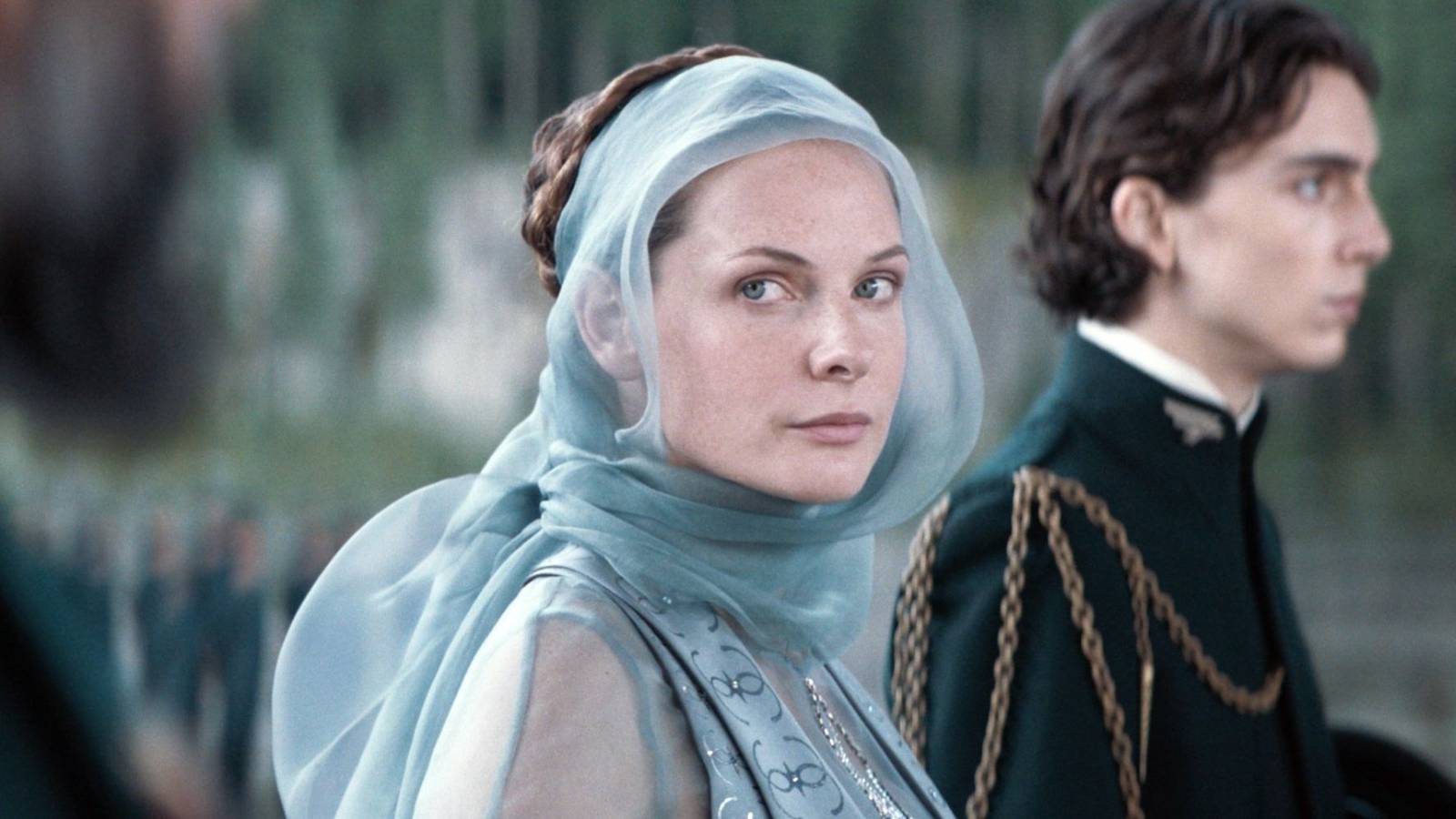
Image via Warner Bros. / courtesy Everett Collection Published Sep 30, 2026, 5:34 AM EDT Eddie Possehl is a dynamic and driven writer/director with a passion for the written word and all things film, television, comics, and games. His passion for storytelling led him to establish his own production company in hopes of achieving his dreams. His dedication to his craft has attracted renowned talent like Yuri Lowenthal to collaborate with him on his projects. As he grows and improves, Eddie is a shining example of a self-starter. Sign in to your Collider account Science fiction is one of the greatest, most popular fiction genres of all time. The ability to tell stories that audiences can relate to while taking place in worlds unlike anything they know is a great skill. There are some truly phenomenal sci-fi books across the ages, and it is extremely difficult to compare them all, given how many amazing novels are out there. It's hard not to love a good sci-fi book, whether one is an avid sci-fi reader or a casual one. If readers are looking for a read that feels perfect from cover-to-cover, then there are more than enough books that they can pick up to enjoy at any time. This is not to compare or make these great pieces of literature compete, but merely a way to show love to stories that really deserve it. 1 'Foundation' (1951) Image via Grafton Books There's no beating the classics, and one of the greatest is Isaac Asimov's Foundation. It follows a group of human scientists as they try to sustain and defend humanity amidst the fall of the Galactic Empire. With the fear of humanity falling into a new dark age nipping at their heels, Foundation has tension that radiates off of every page. The themes present in Foundation are excellent, and Asimov does a stellar job executing them. As the characters present in the story use what is called "psychohistory" to predict the future of the human race via math, history, sociology, and more, some real thought-provoking plot points and character arcs come about. 2 'Neuromancer' (1984) Image via Orion Publishing Group Cyberpunk worlds are some of the most popular in sci-fi stories. Worlds that look and feel like the technological future — seen in projects like Blade Runner, Cyberpunk 2077, and more — are some of the most memorable. Neuromancer, a 1984 novel by William Gibson, is argued to be the first novel to be released that can be considered what everyone now knows as cyberpunk. This project truly popularized the modern-day definition of cyberpunk and cyberspace, making it a generational novel. There's a plethora of style and identity within Neuromancer, and that leads to an unforgettable ride. The characters within it are also two great examples of how to execute anti-hero characters. In fact, this novel is so well-written that Gibson actually achieved what's known as "science fiction's triple crown" for it, winning the Hugo Award, the Philip K. Dick Award, and the Nebula Award. 3 'Frankenstein' (1818) Image via Castlesync Mary Shelley's Frankenstein is commonly considered one of the very first sci-fi novels ever written. Brought to life all the way back in 1818, Shelley is also a great example of an excellent early female author. Frankenstein has gone on to be one of the most impactful stories ever written, being adapted countless times in the last 200-something years. Even more times, there have been stories that take heavy inspiration from the plot of this smash hit. Frankenstein asks countless thought-provoking questions about the human condition, morality and ethics in the pursuit of science, and the cost loneliness can have on living beings. The philosophical ideas thrown in the way of the reader make this a truly engaging read and one that leads them to think about their own lives. Frankenstein is very memorable all across the board and is a genuine masterclass in storytelling. Collider Exclusive · Sci-Fi Personality Quiz Which Sci-Fi Hero Are You Most Like? Paul Atreides · Captain Kirk · Princess Leia · Ellen Ripley · Max Rockatansky Five iconic heroes. Five completely different ways of facing an impossible universe. One of them shares your instincts, your values, and your particular way of refusing to back down. Eight questions will tell you which one. 🏜️Paul Atreides 🖖Capt. Kirk ✊Princess Leia 🔦Ellen Ripley 🔥Max Rockatansky FIND YOUR HERO → 01 How do you lead when the stakes couldn't be higher? The way you lead under pressure is the most honest thing about you. AI absorb everything — every variable, every pattern — and move only when I know the path forward. BI read the room, make the call, and own the consequences. Hesitation costs more than mistakes. CI rally people. A cause needs a voice, and I refuse to let fear be louder than conviction. DI assess the threat, establish what needs doing, and get it done without waiting for permission. EI don't lead. I act. Others can follow or not — I'm already moving. NEXT QUESTION → 02 What is your greatest strength in a crisis? The quality that keeps you alive when everything else fails. APrescience — the ability to see further ahead than anyone else and plan accordingly. BImprovisation — I'm at my best when the plan falls apart and I have to invent a new one. CConviction — I know what I'm fighting for, and that certainty doesn't waver under fire. DComposure — I stay functional when everyone around me is falling apart. Panic is a luxury. EEndurance — I outlast things. I take the hit and keep moving long after others have stopped. NEXT QUESTION → 03 What is the thing you'd sacrifice everything else for? Your deepest motivation is your truest compass. AThe survival and dignity of my people — even if I have to become something frightening to ensure it. BThe safety of my crew — every single one of them. No one gets left behind. CFreedom — for my people, for every world still crushed under the weight of an empire. DThe truth — what actually happened, what's actually out there, whether anyone believes me or not. EThe one person — or the one memory — that still makes any of this worth surviving for. NEXT QUESTION → 04 How do you relate to the people around you? Who you are to others under pressure is who you really are. AWith intensity and distance — I care deeply, but the weight I carry makes closeness complicated. BWith warmth and irreverence — I take the mission seriously, not myself. CWith directness and trust — I say what I mean, and I expect the people I work with to rise to it. DWith professional care but clear limits — I'll protect you, but I won't pretend we're family. EWith wariness that slowly becomes loyalty — I don't trust easily, but when I do, it holds. NEXT QUESTION → 05 You're facing a threat that no one else believes is real. What do you do? How you respond when you're the only one who sees it defines everything. APrepare in silence. If they won't listen, I'll be ready when they finally have to. BKeep pushing until someone listens — and if no one does, handle it myself. CBuild the case, find the allies, and make the threat impossible to ignore. DDocument everything. The truth matters even if no one believes it yet. EStop trying to convince anyone. Survive it. That's the only argument that counts. NEXT QUESTION → 06 What has your heroism cost you personally? Every hero pays. The question is what — and whether they'd pay it again. AMy innocence — I've seen what I'm capable of, and I can't unsee it. BPeople I loved — the command chair has a view, but it's a lonely one. CA normal life — I gave up everything ordinary the moment I chose the cause. DMy sense of safety — I know exactly what's out there now, and I can't pretend otherwise. EAlmost everything — and I'm still not sure what I'm carrying it all for. But I keep going. NEXT QUESTION → 07 How do you feel about the rules of the world you're in? Every hero has a relationship with the system. What's yours? AI understand them deeply — and I know exactly which ones must be broken, and why. BI respect the spirit of them and bend the letter when the situation demands it. CThe system is the problem. I'm not here to work within it — I'm here to dismantle it. DI follow protocol until protocol stops being useful. Then I make the call myself. EThe rules collapsed a long time ago. What's left is instinct, and mine are reliable. NEXT QUESTION → 08 When everything is on the line, what keeps you going? The answer is the most honest thing about you. ADestiny — or something that feels so much like it that the difference no longer matters. BThe people on my ship — their faces, their trust, the fact that they're counting on me. CThe belief that what we're fighting for is worth every sacrifice, including this one. DSheer refusal to let it win — whatever it is. I don't stop. That's just who I am. EI'm not sure anymore. But the road is still there, and I'm still on it. REVEAL MY HERO → Your Hero Has Been Identified Your Sci-Fi Hero Is…Your answers point to the iconic sci-fi hero who shares your instincts, your values, and your particular way of facing the impossible. Paul AtreidesYou carry a weight most people would crumble under — the knowledge of what you're capable of, and the burden of what you might have to become. You see further ahead than others and you plan accordingly, even when the vision frightens you. You are driven by loyalty to your people and a sense of destiny you didn't ask for but can't escape. Paul Atreides is not simply a hero — he is someone who understands the cost of power and chooses to bear it anyway. That gravity, that willingness to carry what others won't, is exactly you. Captain KirkYou lead with instinct, warmth, and an absolute refusal to accept a no-win scenario — because you've always believed there's a third option nobody else has thought of yet. You take the mission seriously without ever taking yourself too seriously. Your crew would follow you anywhere, not because you demand it, but because you've earned it. Kirk's genius isn't tactical — it's human. He reads people, bends rules with purpose, and wills outcomes into existence through sheer conviction. That combination of warmth, audacity, and relentless optimism is unmistakably yours. Princess LeiaYou are the kind of person who holds the line when everyone else is losing faith — not because you're fearless, but because giving up simply isn't something you're capable of. You lead through conviction. Your voice carries because your belief is unshakeable. You gave up everything ordinary the moment you chose the cause, and you've never looked back. Leia is not a supporting character in her own story — she is the moral centre of the entire rebellion. That same fierce, principled, unbreakable core is what defines you. Ellen RipleyYou are not reckless, not grandiose, and not particularly interested in being anyone's hero — you just refuse to stop when it matters. You see threats clearly, you document the truth even when no one listens, and when the time comes you handle it yourself. Ripley's heroism is earned, not performed. She doesn't have a speech — she has a flamethrower and a plan. You share her composure under the worst possible pressure, and her refusal to pretend the monster isn't there. When it counts, you don't flinch. That's everything. Max RockatanskyYou have been through fire that would break most people — and what came out the other side is something the world underestimates at its peril. You don't ask for help, don't need validation, and don't wait for anyone to tell you the rules no longer apply. Your loyalty, when it finally arrives, is absolute — but it's earned in silence and tested in action, not in words. Max is not a nihilist. He is someone who lost everything and found, against his will, that he still has something worth protecting. That bruised, stubborn, ultimately human core is exactly yours. ↻ RETAKE THE QUIZ 4 'The Three-Body Problem' (2006) Image via Tor Books In 2006, author Liu Cixin wrote The Three-Body Problem, and the world clamored over it — so much so that it has now become a Netflix television hit. This story is incredibly smart, using actual astrophysics — the "three-body problem" being a concept in real-world math and physics — to move its story and concepts forward. The Three-Body Problem also deals with fun space ideas, such as the "dark forest" theory. There are so many fun sci-fi and space concepts that make this 2006 story feel unique and inventive. This, combined with the use of real-world science, makes this product feel highly engaging throughout the entire read. 5 'Kindred' (1979) Image via Beacon Press/Octavia E. Butler Some of the best sci-fi stories take real-world history and use it to enhance the more supernatural aspects of the world the story takes place in. Kindred, by Octavia E. Butler, takes a sci-fi concept like time travel to make a genuine problem like slavery something impossible for the reader to ignore. Kindred takes a Black woman named Dana from 1970 all the way back to a Maryland plantation in the 1800s via a time slip. Butler forces the reader to look at the horrors of the topic at hand with unblinking eyes, leading to Kindred being hard to read at times in a way that makes the project unforgettable and beyond compelling. 6 'Cello's Gate' (2025) Image via Second World Books Maurice Africh's 2025 novel about the ever-lovable Captain Grey and his crew of space pirates, Cello's Gate is a fun read. Every good sci-fi story needs some good worldbuilding at the center of it, and Cello's Gate is like opening a loot box at every new corner, with so much to enjoy and marvel at. Cello's Gate is a rip-roaring ride from the first to the final page. The characters are enjoyable, the galaxy is vast, and the action is exciting. For people looking to be among the first to hop onto a new series that will most definitely become the next big thing, there's no question that Africh's Cello's Gate is one of the best spots to look. 7 'The Martian Chronicles' (1950) Image via HarperCollins Publishers Everyone loves a good anthology project, and one of the best sci-fi anthology novels is The Martian Chronicles by Ray Bradbury. It's more accurate to call this a "fix-up novel," though, as the singular stories that make up the anthology are pre-published short stories put together with connective tissue between them to help them come together. This product from Bradbury is one that tells the story of humanity's numerous attempts to colonize Mars and the resulting negative effect and steady decline of the native Martian civilization. These separate stories come together to tell one large tale about the effect that humanity has on others with their need to colonize and expand. 8 'Stranger in a Strange Land' (1961) Image via G. P. Putnam's Sons Written by Robert A. Heinlein, Stranger in a Strange Land is the story of Valentine Michael Smith, a human born on the planet Mars and raised by the native Martians. Being a true fish-out-of-water story, the protagonist comes to Earth as a young adult, and due to his upbringing, he struggles to understand the planet's customs and how humanity works in general. What makes Stranger in a Strange Land so special is the fact that it helped push the 1960s and 1970s movements for sexual freedom and anti-establishment. This is also the very first sci-fi novel to make it onto The New York Times bestseller list. If these things aren't a testament to how great this book is, I don't know what is. 9 'Red Rising' (2014) Image via Del Rey Books Without a doubt, Red Rising by Pierce Brown is one of the greatest modern sci-fi franchises of all time. The first book of the same name is one that has gone on to be unforgettable for all the best reasons. Red Rising feels like a mix between The Hunger Games, Game of Thrones, and tales of classic Greek mythology. Darrow O'Lykos is a phenomenally written protagonist who is a joy to watch through everything he does. The setup for his character makes him engaging and someone the reader genuinely wants to root for. The worldbuilding within Brown's series that began here is legendary — truly. This world is something people want to explore more of, which is proof of how talented Brown is as an author. 10 'Dune' (1965) Image via Ace Books Currently one of the largest sci-fi film franchises of all time, Dune is a story that has gone on to be one of the most popular and impactful in the entire genre, so much so that it even inspired a ton of Star Wars. Frank Herbert is a highly skilled writer, and it's because of this that Dune has impacted so much of sci-fi as a whole. Dune is a massively detailed universe that is such a joy to explore via the journey of the engrossing Paul Atreides, played by the one and only Timothée Chalamet in the modern film adaptation. This book takes a deep look at politics, ecology, and organized religion. It feels like a space epic while also being extremely thought-provoking. Dune Release Date September 15, 2021 Runtime 155 minutes
10 Sci-Fi Books That Are Perfect From Start to Finish
Full Article
Original Source
Read the full article at Collider →KhanList aggregates and links to publicly available news content. We do not host full articles from third-party sources. Always verify important information with original sources.