
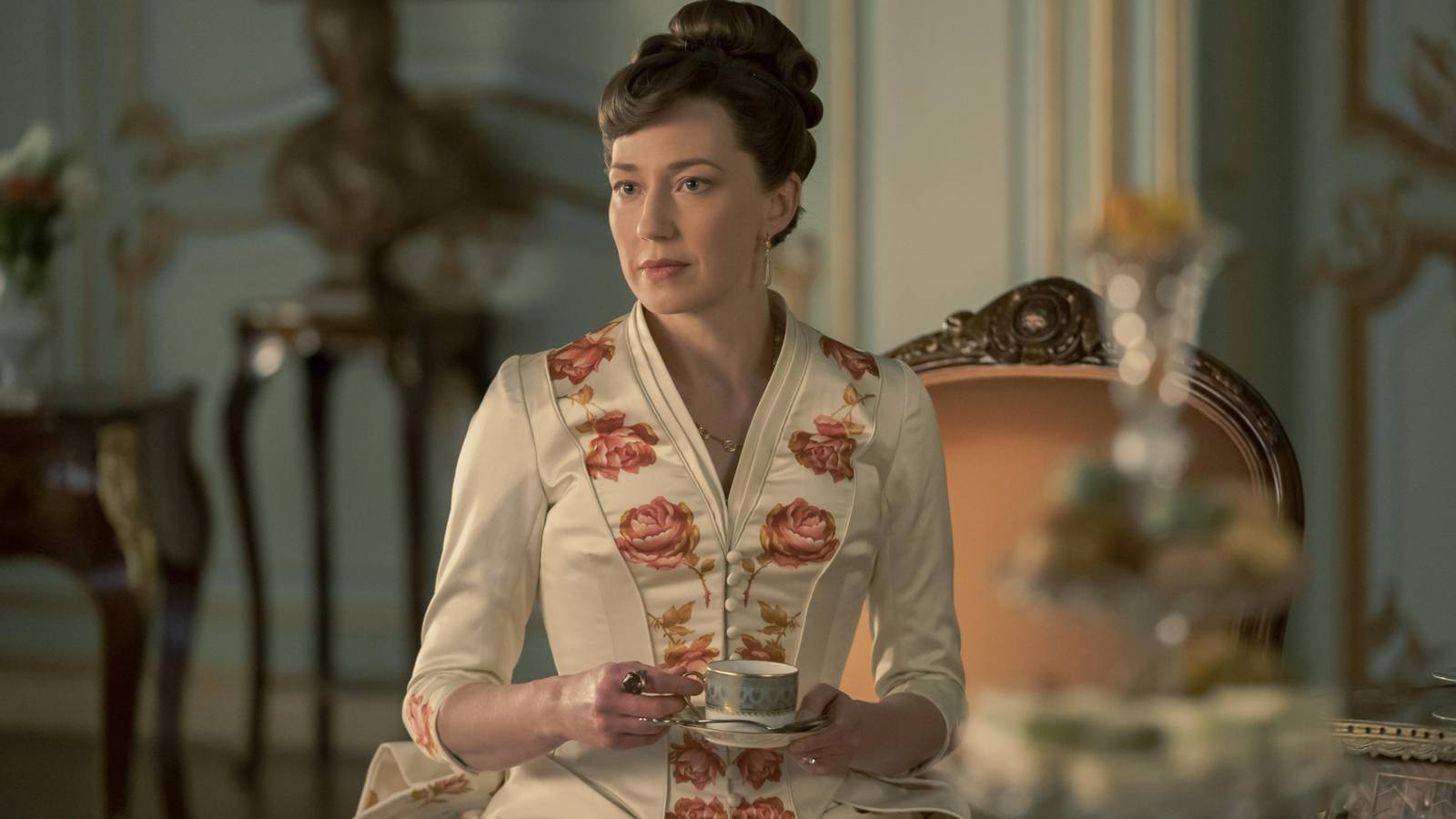
The Gilded Age is back and off to its best start yet. Season 4 of the cult-favorite HBO series finds its ensemble scattered across the globe, navigating romance with Peggy’s impending nuptials and Marian’s complicated relationship; scheming and scandal with Oscar and Enid’s sham marriage; and even mystery-solving, as George seeks to identify his would-be assassin. But if the one-week gap between episodes feels like too long a wait for your period drama fix, the good news is that the Gilded Age is just as ripe for fiction as it is for TV. Though the show takes place in the 1880s, the period lasted three decades, from 1870 to 1900. That period also produced some of the best authors of American fiction, from Mark Twain and Edith Wharton to Henry James and Kate Chopin. Gilded Age novels, both those written during the period and contemporary offerings set then, run the gamut of genres, from sweeping romance to murder mystery, political satire to ghost story. They masterfully capture the period’s class divides between “old money” elites whose family fortunes dated back centuries, “new money” entrepreneurs, and the working class, who struggled with brutal living conditions, poverty, and political corruption. But these novels also capture the glamour and majesty of the era, painting stunning, sweeping portraits of old New York and beyond. The Gilded Age: A Tale Of Today By Mark Twain (1873) The Gilded Age is all about old money vs. new money, juxtaposing the prestige of the Astors and Van Rhijns with the unabashed social climbing of the Russells. But just as central is the upstairs-downstairs dynamic between the wealthy and the working class. That theme—the excesses of the wealthy against the struggles of everyone else—shaped this period of American history. No one captured the era’s class divides more effectively than Mark Twain, who co-wrote this novel with friend Charles Dudley Warner. The Gilded Age, a political satire about two families consumed by greed and engaging in all manner of corruption to secure their fortunes, lays bare that juxtaposition between exorbitant wealth and political turmoil. This book is even where the era got its iconic nickname: the term refers to gilding, the process of painting a thin layer of gold over a cheaper metal—or the upper classes exhibiting unabashed excess while the rest of the country faces economic strife. You can purchase The Gilded Age: A Tale of Today here. The Age Of Innocence By Edith Wharton (1920) The Age of Innocence wasn’t published until two decades after the Gilded Age ended, but it may be the era's most iconic cultural product. Inspired by Edith Wharton’s real experiences as a prominent Manhattan socialite, this novel (which has an adaptation of its own on the horizon) made her the first woman to win a Pulitzer Prize for Fiction and cemented her legacy as one of the most incisive and eloquent social commentators of any period in American history. Set in 1870s Manhattan, where a forbidden love triangle unfolds between a wealthy young man, his straight-and-narrow fiancée, and her boundary-pushing, divorce-bound cousin, The Age of Innocence captured perfectly what made this era so fascinating. From old-money vs. new-money tensions among the upper class to evolving social boundaries for women, the world is rapidly changing around Wharton’s characters, and whether they like it or not, there’s no going back. You can purchase The Age of Innocence here. The Portrait Of A Lady By Henry James (1881) Though Henry James can hardly be defined by one work, or even one genre, this sweeping story about wealth and freedom in the Gilded Age is his masterpiece. The Portrait of a Lady follows a wealthy young woman from New York, but most of the novel is set in Europe. There, young Isabel Archer travels to inherit her family’s fortune, only to find her newfound wealth may come at the cost of her freedom. Think of this as a much darker version of Gladys Russell’s arc in Season 3 of The Gilded Age: though she's surrounded by old money and more excess than she could have imagined, the one thing this new-money American socialite can’t find in the British aristocracy is the freedom to live the life she wants. You can purchase The Portrait of a Lady here. A Well-Behaved Woman By Therese Anne Fowler (2018) Most characters in The Gilded Age are fictional, but new-money antihero Bertha Russell is heavily inspired by Alva Vanderbilt, the real-life matriarch of the now-iconic Vanderbilt family. Therese Anne Fowler’s bestselling novel is an even more direct fictionalization of Vanderbilt’s story. A Well-Behaved Woman follows a fictionalized version of the real Alva Vanderbilt as she makes remarkably familiar moves: though her own family is poor, she marries the newly wealthy railroad tycoon William Kissam Vanderbilt, and soon grows obsessed with earning the respect of New York’s old-money elite. As with Bertha Russell, her single-minded determination to dominate society makes for a complicated legacy, but a mesmerizing dramatic arc. You can purchase A Well-Behaved Woman here. The Davenports By Krystal Marquis (2023) One of the most interesting characters in The Gilded Age is Peggy Scott, the ambitious daughter of a wealthy Black family in Brooklyn, trying to make it on her own as a writer in the hyper-exclusive Manhattan social scene. The Davenports puts stories like Peggy’s at the center of its sprawling post-Gilded Age world. Though billed as YA, The Davenports is excellent coming-of-age historical fiction for any reader interested in this period. The duology (The Davenports and The Davenports: More Than This) follows a wealthy Black family in Chicago, 1910, navigating a social scene where people of color are few and far between. Inspired by the real-life Patterson family, who made their fortune as the first Black auto manufacturers in the country, The Davenports has all the romantic intrigue, lush settings, and period elegance of The Gilded Age, with an even more fascinating history behind it. You can purchase The Davenports here. My Notorious Life By Kate Manning (2013) If what draws you to The Gilded Age is watching the show’s younger generation, like Marian and Peggy, push the boundaries of societal expectations for women, this novel brings that element to the forefront and ramps up the action and intrigueto 10. Inspired by the true story of Madame Restell, a midwife who pioneered birth control and abortion medication in 1860s New York, My Notorious Life spins her story into an unforgettable period chronicle. Manning’s heroine, Axie Muldoon, feels like a character from The Gilded Age transposed into a sweeping adventure story—she travels from the tenements to the upper echelons of society as she dodges leering foes, navigates high society, and defies convention to usher in a new age of freedom for the women of New York. You can purchase My Notorious Life here. Murder At The Breakers By Alyssa Maxwell (2014) This season of The Gilded Age introduces an exciting new element to the show: the intrigue of a manhunt. George Russell’s cat-and-mouse chase with his attempted assassin adds a much darker, but welcome strain of mystery to this comedy of manners. If that storyline has felt right up your alley, Murder at the Breakers will surely be, too. Set in Newport, Rhode Island—a familiar spot for Gilded Age fans—Murder at the Breakers follows an ambitious young journalist who attends a glitzy ball at Cornelius Vanderbilt’s summer home, witnesses a murder, and finds her brother emerging as the prime suspect. Like The Gilded Age, Murder at the Breakers works real history into its storyline without ever feeling bogged down by the need to educate. Think Julian Fellowes meets Agatha Christie. You can purchase Murder at the Breakers here. The Widow Of Rose House By Diana Biller (2016) If you’re looking for a total genre departure from The Gilded Age, but don’t want to leave this era, look no further. The Widow of Rose House has a similarly lush period setting, but a much spookier vibe. This book has all the hallmarks of a great haunted-house story: a widow with a dark past returns to Chicago after weathering a scandal abroad, buys a crumbling mansion, and soon finds the house is concealing terrifying secrets of its own. Think Julia Quinn meets Bluebeard. Somehow, it also finds time to be a period romance: the widow commissions an eccentric, ghost-obsessed professor to prove the house isn’t haunted, but the pair get distracted studying each other. If what appeals to you most about grand historical manors is the prospect of them being haunted, The Widow of Rose House is the perfect entry point to historical fiction about this era. You can purchase The Widow of Rose House here. The Awakening By Kate Chopin (1899) The term “Gilded Age” immediately evokes 19th-century New York, with its exclusive society scenes and rapid industrialization. But this period of excess and strife affected the entire country, and the post-Civil War era looked wildly different from state to state. Set in New Orleans, this underrated classic by Kate Chopin was scandalous upon its initial release for its honest portrayal of a woman discovering her sexuality and desire for liberation. Protagonist Edna Pontellier holds the high-society status that Bertha Russell craves, but her story is about developing the courage to push back against every social constraint laid out for her, daring to want more than motherhood and a full social calendar. Today, The Awakening holds up as a seminal early feminist text and a critical reckoning with women’s status in a changing American South—and it feels more relevant than ever. You can purchase The Awakening here. Peregrine Hill By Nina de Gramont (2026) Peregrine Hill doesn’t feel directly correlated to one character or storyline from The Gilded Age—it’s more that these characters would fit seamlessly into that world. Set in New York at the turn of the century, it’s a story as full of suspense and anxiety as any storyline from the show about characters trying against the odds to thrive in a society built only to benefit the already wealthy. In Peregrine Hill, a cunning widow thinks she’s found her fortune when she meets one of the wealthiest men in New York, only to find he’s more interested in her teen daughter. When he threatens the family with blackmail, Isabelle is left with a devastating choice: sell out her only living child or see her darkest secrets exposed. Secrecy, scheming, and plenty of intrigue ensue. You can purchase Peregrine Hill here.
10 Must-Read Gilded Age Dramas for Season 4 Fans
Full Article
Original Source
Read the full article at Screenrant →KhanList aggregates and links to publicly available news content. We do not host full articles from third-party sources. Always verify important information with original sources.