
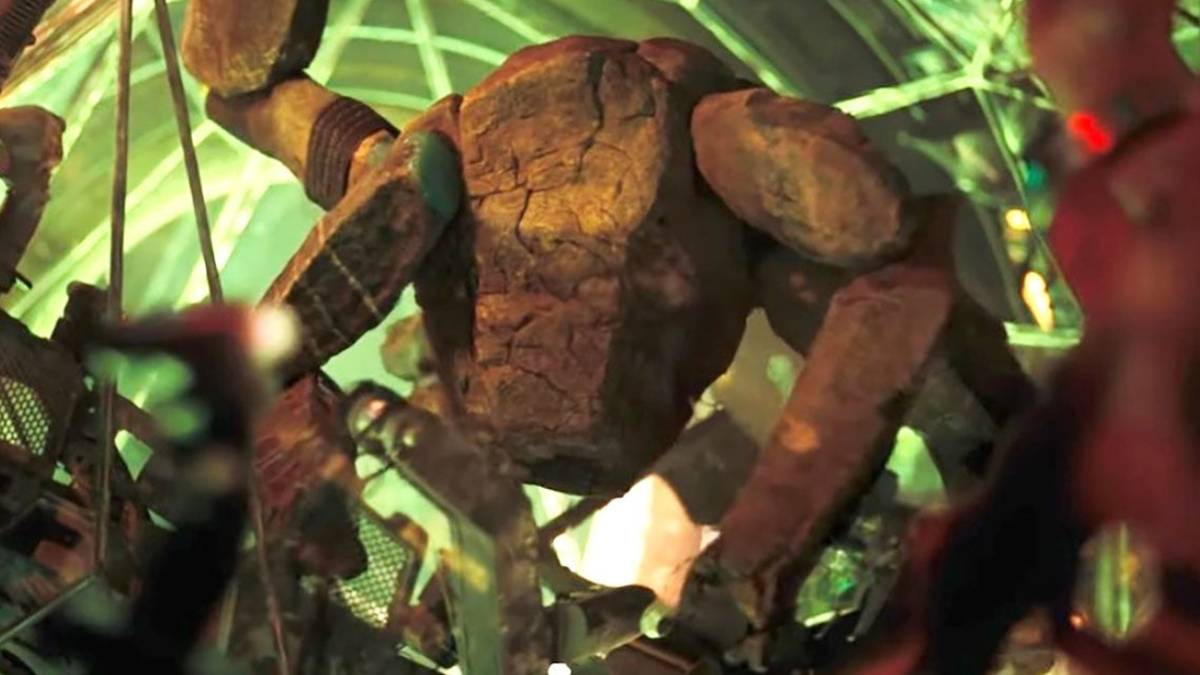
Image via Amazon MGM Studios Published Aug 13, 2026, 8:11 PM EDT William likes taking edibles, watching movies with his dogs, and then writing about those movies. He doesn't have social media so if you want more of his unhinged opinions or another place to comment hurtful things, you can check out his Letterboxd. Sign in to your Collider account Not so long ago, the 21st century itself seemed like a science fiction setting. While the century so far has failed to live up to the promises made by filmmakers, it has given us some truly stellar sci-fi movies. Modern masterpieces, massive blockbusters and cult classics alike, the 21st century has at least one essential sci-fi movie for every year that's passed. Not all of them have been successful or received glowing responses from critics or audiences, but there are those films that are, or have become, universally beloved. Personal preferences not withstanding, and objectivity be damned, some, if not all, of these films could be considered the best sci-fi of the 21st century, but that's not the purpose of this list. These are the movies that have been showered with praise, richly rewarded with gold statuettes, and adored by general audiences. Just as no film is perfect, no film is loved by 100% of the film-going population, but these ten sci-fi films from the 21st century are surely the most beloved. 'Eternal Sunshine of the Spotless Mind' (2004) Image via Focus Features The sci-fi genre can be used to tell all kinds of stories. Tales of horror, adventure or even romance can be elevated by science fiction concepts. The greatest sci-fi love story of all, though, involves two hopeless romantics and their attempts to erase each other from their memory. Using its high concept to dig deep into the nature of love, heartbreak and memory, Eternal Sunshine of the Spotless Mind is as emotionally satisfying as it is visually astounding. It was beloved by critics and audiences when it was originally released, and memories of it have only grown fonder since. Joel (Jim Carrey) and Clementine (Kate Winslet) have recently broken up. When Joel finds out that Clementine has undergone a procedure to have her memories of him wiped, he decides to do the same. Halfway through the procedure, Joel has second thoughts and tries to save every last memory of Clementine he can by retreating with her into his subconscious. The screenplay, by Charlie Kaufman, is clever but thoughtful, and Michel Gondry's direction is a perfect blend of realism and whimsy. Carrey and Winslet have incredible chemistry, capturing all the positive and negative nuances of relationships and why letting go of them can be so difficult. 'Children of Men' (2006) Image via Universal Pictures Alfonso Cuarón's dystopian sci-fi thriller Children of Men offered a pretty dire prediction about where society might be headed in the future. While it was made as a reflection of the political climate that was then current, and based on a book that was written more than a decade prior, it has remained frighteningly relevant. That relevancy, and the action sequences, which are still damned effective, are likely what has also allowed it to maintain such a high status with sci-fi fans and critics alike. It's often ranked among the greatest sci-fi films of this century, and its impact has only increased with every year. In a near future where all women are infertile, humanity, faced with a future of certain extinction, has devolved into war and authoritarianism. Theo (Clive Owen) is a former revolutionary turned feeble bureaucrat called back into the fight by his estranged wife, Julian (Julianne Moore), who needs his help getting a pregnant refugee to safety. Their flight to freedom is blocked by violent radicals and jackbooted thugs alike, and Cuarón, along with cinematographer Emmanuel Lubezki, stages the action in chaotic long takes that put the audience in the thick of it. Children of Men is a timeless sci-fi film that could have been released two decades earlier or later and still be just as potent. 'WALL-E' (2008) Image via Pixar Animation Studios By the time Pixar had made its first full-blown sci-fi film, the studio had already amassed a catalog of modern animated classics, so it's no faint praise to state that WALL-E is their greatest achievement. Directed by Andrew Stanton, the film is not only a touching robot love story, but also a pointed satire of corporate waste and technological dependence. WALL-E has a lot to say about the state of the world and how attached we've all become to our tech, but its prescient themes are all secondary to its universal story of love and the beauty of life. WALL-E is a trash-compacting robot, the last of his kind left on Earth, which has been abandoned by humanity and become one giant garbage dump. While he feels his days turning that garbage into cubes, he also longs for someone, or something, to hold hands with, and he gets that when the highly advanced EVE lands on the planet. No sooner than WALL-E makes a connection with EVE, she's recalled to her station of origin, a massive interstellar cruise where humans have devolved into giant, screen-obsessed babies. 'Interstellar' (2014) Image via Paramount Pictures No sci-fi film of the 21st century has had a quicker, or grander, reclamation than Christopher Nolan's Interstellar. The film certainly wasn't despised by critics or audiences when it was released, but it definitely received a more muted response compared to the director's more rapturously received prior films. It's an adventure film that wears its corny heart on its sleeve, and maybe audiences just weren't ready to embrace its sincerity in 2014, but the muted response it once received has since grown into a roaring adoration louder than Hans Zimmer's score. In a blighted future where humanity has stopped looking to the stars and is instead trying to stave off extinction, former NASA pilot Cooper (Matthew McConaughey) has resigned himself to his fate as a failing farmer. That's when he receives a seemingly supernatural message that sends him to a secret facility where the remaining NASA scientists are attempting a last-ditch effort to find humans a new home among a series of planets found through a wormhole. Cooper is recruited for the Hail Mary mission, and that's when the film becomes an absolutely stellar experience with the kind of grand visuals and staggering visual effects that Nolan has become known for. Collider Exclusive · Sci-Fi Survival Quiz Which Sci-Fi World Would You Survive? The Matrix · Mad Max · Blade Runner · Dune · Star Wars Five universes. Five completely different ways the future went wrong — or sideways, or up in flames. Only one of them is the world your instincts were built for. Eight questions will figure out which dystopia, galaxy, or desert wasteland you'd actually make it out of alive. 💊The Matrix 🔥Mad Max 🌧️Blade Runner 🏜️Dune 🚀Star Wars TEST YOUR SURVIVAL → 01 You sense something is deeply wrong with the world around you. What do you do? The first instinct is often the truest one. APull on every thread until I understand the system — then figure out how to break it. BStop asking questions and start stockpiling — food, fuel, weapons. Questions don't keep you alive. CKeep my head down, observe carefully, and trust no one until I know who's pulling the strings. DStudy the patterns. Every system has a rhythm — learn it, and you learn how to survive it. EFind the people fighting back and join them. You can't fix a broken galaxy alone. NEXT QUESTION → 02 In a world of scarcity, what resource do you guard most fiercely? What we protect reveals what we believe survival actually requires. AKnowledge. If you understand the system, you don't need resources — you can generate them. BFuel. Everything else — movement, power, escape — runs on it. CTrust. In a world of fakes and informants, a truly reliable ally is rarer than any commodity. DWater. And after water, information — the two things empires are truly built on. EShips and credits. The galaxy is big — you survive it by being able to move through it freely. NEXT QUESTION → 03 What kind of threat keeps you up at night? Fear is useful data — if you're honest about what you're actually afraid of. AThat reality itself is a lie — that everything I experience has been constructed to keep me compliant. BA raid. No warning, no mercy — just the roar of engines and then nothing left. CBeing identified. Once someone with power decides you're a problem, you're already out of time. DBeing outmanoeuvred — losing a political game I didn't even know I was playing. EThe Empire tightening its grip until there's nowhere left to run. NEXT QUESTION → 04 How do you deal with authority you don't trust? Every dystopia has a power structure. Your approach to it determines everything. ASubvert it from the inside — learn its rules well enough to weaponise them against it. BIgnore it and stay out of its reach. The further from any power structure, the better. CAppear to comply while doing exactly what I need to do. Visibility is the enemy. DManoeuvre within it carefully. You can't beat a system you refuse to understand. EResist openly when I have to. Some things are worth the risk of being seen. NEXT QUESTION → 05 Which environment could you actually endure long-term? Survival isn't just tactical — it's physical, psychological, and very much about where you are. AUnderground bunkers and server rooms — cramped, artificial, but with access to everything that matters. BOpen wasteland — brutal sun, no shelter, constant movement. At least the threat is honest. CA dense, rain-soaked city where you can disappear into the crowd and nobody asks questions. DMerciless desert — extreme heat, no water, and something enormous living beneath the sand. EThe fringe — backwater planets and busy spaceports where the Empire's attention rarely reaches. NEXT QUESTION → 06 Who do you want in your corner when things fall apart? The company you keep is the clearest signal of who you actually are. AA tight crew of believers who've seen behind the curtain and have nothing left to lose. BOne or two people I'd trust with my life. Any more than that and someone talks. CNobody, ideally. Alliances are liabilities. I work alone unless I have no choice. DA community bound by shared hardship and mutual survival — people who need each other to last. EA ragtag team with wildly different skills and total commitment when it counts. NEXT QUESTION → 07 Where do you draw the line — if you draw one at all? Every survivor eventually faces a moment that tests what they're actually made of. AI won't harm the innocent — even the ones who'd report me without hesitation. BI do what I have to to protect the people I've chosen. Everything else is negotiable. CThe line shifts depending on who's asking and what's at stake. DI draw a long-term line — nothing that compromises my people's future, even if it'd help now. ESome lines, once crossed, can't be uncrossed. I know which ones they are. NEXT QUESTION → 08 What would actually make survival worth it? Staying alive is one thing. Having a reason to is another. AWaking others up — dismantling the illusion so no one else has to live inside it. BFinding somewhere — or someone — worth protecting. A reason to keep moving. CAnswers. Understanding what I am, what any of this means, before time runs out. DLegacy — shaping the future in a way that outlasts me by generations. EFreedom — for myself, for others, for every world still living under someone else's boot. REVEAL MY WORLD → Your Fate Has Been Calculated You'd Survive In…Your answers point to the world your instincts were built for. This is the universe your temperament, your survival instincts, and your particular brand of stubbornness were made for. The MatrixYou took the red pill a long time ago — probably before anyone offered it to you. You're a systems thinker who can't help but notice the seams in things. You're drawn to understanding how the system works before figuring out how to break it. You'd find the Resistance, or it would find you — your instinct for spotting constructed realities is the machines' worst nightmare. You function best when you have access to information and the freedom to act on it. The Matrix built an airtight prison. You'd be the one probing the walls for the door. Mad MaxThe wasteland doesn't reward the clever or the well-connected — it rewards those who are hard to kill and harder to break. That's you. You don't need comfort, community, or a cause larger than the next horizon. You need a vehicle, a clear threat, and enough fuel to outrun it — and you're good at all three. You are unsentimental enough to survive that world, and decent enough — just barely — to be something more than another raider. In the wasteland, that distinction is everything. Blade RunnerYou'd survive here because you know how to exist in moral grey areas without losing yourself completely. You read people accurately, keep your circle small, and ask the questions others prefer not to answer. In a city where humanity is a legal designation rather than a feeling, you hold onto something that keeps you functional. You're not a hero. But you're not lost, either. In Blade Runner's world, that distinction is everything. DuneArrakis is the most hostile environment in the known universe — and you are precisely the kind of person it rewards. Patience, discipline, and political awareness are your core strengths — and on Arrakis, they're survival tools. You understand that the long game matters more than any single victory. Others come to Dune and are consumed by it. You'd learn its logic and earn its respect. In time, you wouldn't just survive Arrakis — you'd begin to reshape it. Star WarsThe galaxy far, far away is vast, loud, and in a constant state of violent political upheaval — and you wouldn't have it any other way. You find meaning in being part of something larger than yourself — a cause, a crew, a rebellion. You'd gravitate toward the Rebellion, or the fringes, or whatever pocket of the galaxy still believes the Empire's grip can be broken. You fight — not because you have to, but because standing aside isn't something you're capable of. In Star Wars, that willingness is what makes all the difference. ↻ RETAKE THE QUIZ 'The Martian' (2015) Image via 20th Century Studios One year after Matt Damon starred as a scientist marooned on a distant planet in Interstellar, he found himself in a similar predicament in Ridley Scott's The Martian. While Scott's earlier contributions to science fiction, with Alien and Blade Runner, were more focused on atmosphere and visuals, The Martian is far more driven by its characters and plot machinations. That isn't to say the film doesn't have spectacular visuals—its sweeping landscapes of Mars are striking—but it's really the hard sci-fi aspects anchored by human ingenuity and cooperation that made it such a hit with critics and audiences. After a mission on the red planet is cut short due to a devastating dust storm, botanist Mark Watney (Damon) is presumed dead. Left alone on the planet, Watney has to science the hell out of his resources to stay alive while the NASA scientists back on Earth devise a plan to bring him home. Based on the technically detailed novel by Andy Weir, the film does a remarkable job keeping itself grounded, aside from a few Hollywood deviations. What makes all the science jargon palatable is the humor, also present in the source material, in Drew Goddard's screenplay, which's magnified by the movie star persona of Damon. 'Ex Machina' (2015) Image via A24 Alex Garland's Ex Machina is a small, contained thriller about the ethics of artificial intelligence and gender dynamics. It elevated Garland from an acclaimed screenwriter to a successful director, and while he's delivered some cosmic horrors and gritty actioners since, Ex Machina is still his best and most beloved film. As a sci-fi chamber piece, it's entirely reliant on the strength of Garland's script and the performances of its small cast, who are all exemplary. Caleb (Domnhal Gleeson), is a young programmer for a tech company, who is given an opportunity to visit the home of the company's CEO, Nathan (Oscar Isaac), to test his newest creation, an artificial lifeform named Ava (Alicia Vikander). Caleb's testing of Ava not only forms a bond between them, but creates a rift with the narcissistic Nathan. While the men compete, the fembot plots, and the film culminates in high-tech treachery. Garland lets the bigger implications of his plot play out on a small scale, focusing on the microcosm of the characters to infer major implications for how our own moral codes can't be applied artificially. 'Mad Max: Fury Road' (2015) Image via Warner Bros. Pictures The third beloved sci-fi film of 2015, Mad Max: Fury Road couldn't be further from The Martian or Ex Machina in terms of its style, but it's just as immaculate in its execution. As George Miller's most streamlined expression of his signature sci-fi franchise, it takes three films' worth of worldbuilding and decades' worth of directorial development and combines it into a fuel-injected action masterpiece. The post-apocalyptic wasteland inhabited by the mad title character has become one of the most indelible and oft-imitated in film history, and for Fury Road, it gets a shiny and chrome upgrade for the 21st century. Max (Tom Hardy) is a man adrift in the desert and reduced to the single instinct of survival. He doesn't remain adrift for long when he's taken captive by some War Boys under the leadership of the tyrant Immortan Joe (Hugh Keays-Byrne). Just as quickly, Max finds himself in the middle of full-blown rebellion when war rig driver Furiosa (Charlize Theron) goes on the run with Joe's captive wives. The action is full tilt, and the film is filled with colorful characters and kinetic visuals that make it a singular spectacle. It's Miller's magnum opus, and it's a rightly beloved post-apocalyptic masterpiece. 'Everything Everywhere All at Once' (2022) Image via A24 In the 21st century, the multiverse went mainstream thanks to its use in Marvel blockbusters and the Best Picture winner of 2022, Everything Everywhere All at Once. That film itself is a multiverse of madcap ideas, grounded by its characters and the performances behind them. That such a wacky, wild film that features everything from a raccoon version of Ratatouille and a full-blown fight scene where butt-plugs play a crucial role was embraced by not only audiences and critics, but by Hollywood elitists as well, is a favorable development for the future of prestige cinema. Evelyn Wang (Michelle Yeoh) is unsatisfied in her current reality, where she runs a laundromat with her meek husband Waymond (Ke Huy Quan), is in constant conflict with her daughter, Joy (Stephanie Hsu), and is being audited by the IRS, personified by the imposing Deirdre (Jamie Lee Curtis). She gets a glimpse of what her many other lives could have been when she's introduced to the multiverse, which is in danger thanks to the villainous Jobu Tupaki. Everything Everywhere All at Once is the surreal, slapstick-filled brainchild of directors Daniel Kwan and Daniel Scheinert, who cram it with as many toppings as an everything bagel. 'Dune: Part Two' (2024) Image via Warner Bros. Pictures If any director can lay claim to creating the most beloved sci-fi films of the 21st century, it's Denis Villeneuve. The director entered the genre with the emotionally devastating Arrival, challenged himself further with the legacy sequel Blade Runner 2049, and then tackled Frank Herbert's seminal sci-fi saga Dune. Every film has been met with acclaim and excitement, but if there's one whose embrace has been overwhelming, it's the second part of the latter saga, Dune: Part Two. It's an epic continuation of the central conflicts on the planet Arrakis and the ascension of its messianic protagonist. Paul Atreides (Timothée Chalamet) is troubled by his desire to exact vengeance on the Harkonnens, who overthrew his family and killed his father to control the spice on the desert planet, and his reluctance to accept his role as a prophesied messiah. He aligns himself with the nomadic Fremen and wages war on the Harkonnens, setting the stage for a final confrontation. Dune: Part Two is a proper escalation of the first film, adapting the second half of Herbert's first novel with more lavish visuals and extravagant set pieces. The characters remain elliptical, with Villeneuve focusing on atmosphere over exposition. 'Project Hail Mary' (2026) Image via Amazon MGM Studios The most recent sci-fi film to win the hearts of audiences and critics alike is Project Hail Mary, the second film on this list to be adapted from a novel by Andy Weir. Like The Martian, it is filled with some beautiful imagery, but its greatest strengths lie in its screenplay, again written by Drew Goddard, and the charisma of its leading man. Ryan Gosling brings all his star power, sharing the majority of his screen time with a talking rock. Ryland Grace (Gosling) is a middle school science teacher whose theories on astrobiology earn him a place on a mission to save the dimming Sun, where he ends up being the sole surviving human crew member. He's joined by an alien he names Rocky (voiced by James Ortiz) who shares the same goal as him, and the two work together to save both their species. It's a sci-fi two-hander, or one-hander plus one rock-like appendage, and Grace and Rocky's chemistry together is truly wondrous. If the Academy Awards want to continue the subversiveness they showed when they awarded Everything Everywhere All at Once, they'd do the right thing and give Ortiz his due in the supporting category. Rocky, for your consideration. Project Hail Mary Release Date March 15, 2026 Cast Ryan Gosling, James Ortiz, Sandra Hüller, Lionel Boyce, Milana Vayntrub, Ken Leung, Priya Kansara, Mia Soteriou, Annelle Olaleye, Bastian Antonio Fuentes, Alice Brittain, Michael Akinsulire, Travis Jay, Geoffrey Lumb, Paul Lambert, Orion Lee, Aaron Neil, Michelle Greenidge, Bernhard Schütz, Amira Ghazalla, Malachi Kirby, Liz Kingsman, Piotr Baumann, Eunice Huthart, Damien de Froberville Runtime 157 minutes Director Christopher Miller, Phil Lord Writers Drew Goddard, Andy Weir
10 Most Beloved Sci-Fi Movies of the 21st Century
Full Article
Original Source
Read the full article at Collider →KhanList aggregates and links to publicly available news content. We do not host full articles from third-party sources. Always verify important information with original sources.